
The Genre of This Film
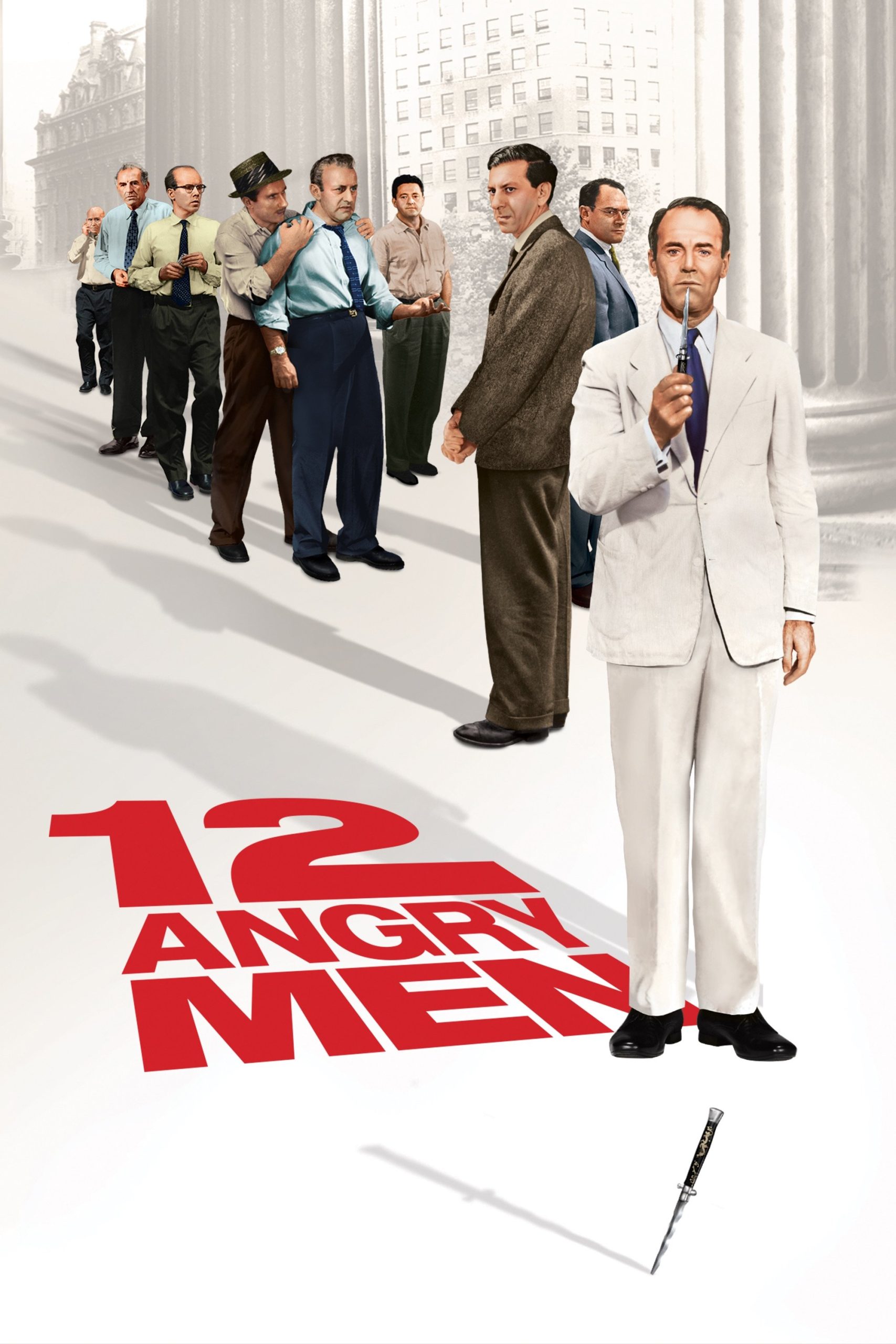
“12 Angry Men” (1957) is most accurately categorized as a courtroom drama. This film belongs to the courtroom drama genre because its entire narrative unfolds within the judicial process, focusing on the deliberations of a jury as they decide the fate of a young defendant accused of murder. The dramatic tension of the film is derived from legal and ethical dilemmas, character conflict, and the pursuit of justice within the legal system—hallmarks of the courtroom drama genre. While the film also contains elements of social drama and psychological drama, its primary and unifying genre identity is courtroom drama, as its core revolves around legal proceedings and the responsibilities entailed therein.
Key Characteristics of the Genre
- Common themes
- Justice versus injustice: Courtroom dramas often grapple with the concepts of fairness, due process, and the pursuit of justice, questioning whether the legal system truly serves those ideals.
- Moral and ethical dilemmas: These films typically present characters with difficult moral choices, set against the backdrop of laws and societal expectations, examining the tension between personal conscience and legal obligations.
- Prejudice and social bias: Many courtroom dramas explore how personal biases, prejudices, or societal norms influence the judicial process and affect verdicts.
- Search for truth: The genre commonly follows the uncovering of facts, testimony dissection, and the struggle to reveal or obscure the truth amidst conflicting evidence and conflicting perspectives.
- Power and powerlessness: There is often a strong focus on individuals’ relationships to institutional power, from defense attorneys’ struggles to systemic limitations faced by juries and defendants.
- Typical visual style
- Restrained, realistic sets: Most courtroom dramas are known for their contained settings—courtrooms, jury rooms, and legal offices—to heighten tension through confinement and intensify the focus on dialogue and character interaction.
- Emphasis on close-ups: Visual style in these films often involves frequent close-ups and medium shots, capturing actors’ facial expressions and emotional responses as they react to testimony and evidence.
- Minimal use of music: Music tends to be sparse or absent altogether, ensuring that dialogue and the weight of the spoken word remain at the forefront, maintaining authenticity and realism.
- Monochromatic or subdued color palettes: Many classic courtroom dramas, especially those from the mid-20th century, employ black-and-white cinematography or understated color tones to reinforce the seriousness of the subject matter and to prevent visual distraction from the legal debate.
- Narrative structure
- Linear progression: Courtroom dramas frequently follow a linear timeline, progressing in real time or near-real time as the legal process unfolds, leading up to verdicts or key decisions.
- Central conflict: The story is structured around a central conflict—typically a trial or legal dispute—driven by argument, examination, cross-examination, and jury deliberation.
- Revelations and turning points: The narrative structure leverages dramatic reveals, witness confessions, new evidence, or shifting perspectives to reframe the understanding of the case and move the plot forward.
- Resolution with moral weight: Courtroom dramas often conclude with a verdict or judgment, which carries significant moral and ethical implications, prompting reflection on justice and the characters’ journeys.
- Character archetypes
- The principled advocate: Lawyers, jurors, or judges who are unwavering in their commitment to justice, integrity, or personal codes of morality, often challenged by opposing forces.
- The skeptic or outsider: Characters who question the majority view or raise unpopular opinions, often acting as agents of change or catalysts for deeper examination of the evidence.
- The prejudiced antagonist: Individuals whose biases, stubbornness, or adherence to preconceived notions represent challenges to a fair trial and play critical roles in driving tension.
- The accused: Defendants whose guilt or innocence is in question, serving as the focal point of the legal drama and the audience’s moral engagement.
- The authority figures: Judges and legal professionals who enforce courtroom procedure, sometimes mediating or even embodying the tension between order and justice.
How This Film Exemplifies the Genre
“12 Angry Men” is a quintessential courtroom drama, despite the fact that the bulk of its action does not take place inside a physical courtroom. The judicial process remains at its core, as twelve jurors decide the result of a murder trial behind closed doors. The film demonstrates several key genre traits. First, it is centered directly on the theme of justice, as the jurors must decide on a “guilty” or “not guilty” verdict that will determine whether the defendant lives or dies. This setup introduces powerful ethical and moral dilemmas for each character; these dilemmas grow more complex as the possibility of a wrongful conviction emerges. The drama interrogates social biases and prejudices, as many jurors’ initial assumptions about the defendant’s guilt are revealed to stem from personal prejudice or societal stereotypes.
Visually, the film employs an intensely confined setting—the jury room—which serves as the singular arena for the entire story. The limited, almost claustrophobic space enhances both realism and psychological tension, focusing the viewer’s attention on nuance and dialogue rather than spectacle. The director, Sidney Lumet, uses a visual style dominated by tight shots and close-ups, which magnify emotion and highlight the evolving relationships among jurors. The lack of any distracting score or elaborate backdrops maintains dramatic realism and ensures the focus remains firmly on the characters’ reasoning and debate.
The narrative follows a linear structure, unfolding in nearly real time as the jury deliberates. It is propelled by evidence review, conflict, and gradual shifts in the jurors’ opinions, rather than by external action. The film’s turning points are driven by argumentation—such as when minor inconsistencies in testimony are highlighted or when jurors’ motivations and personal experiences are exposed. The final vote is reached through a combination of logical debate, emotional revelation, and appeals to conscience—classic methods for resolution in courtroom dramas.
Character archetypes abound in “12 Angry Men.” Juror #8 (played by Henry Fonda) embodies the principled advocate, steadfast in his insistence on careful deliberation and skepticism about the evidence. Several jurors represent various archetypes, including the skeptic, the antagonist clinging to prejudice, the easily swayed everyman, and those seeking to restore calm or enforce order. Although the defendant never appears as an active character during the deliberations, his presence is felt throughout, anchoring the jury’s debates and personal struggles. Authority is represented by the foreman and, in a broader sense, by the rules and procedures of the jury system itself. These elements make “12 Angry Men” a model example of the courtroom drama genre.
Other Essential Films in This Genre
- “To Kill a Mockingbird” (1962) – This film adapts Harper Lee’s novel and uses a racially charged trial in Depression-era Alabama as its central narrative. The story offers insight into justice, prejudice, and morality, focusing especially on Atticus Finch, the principled lawyer archetype.
- “Anatomy of a Murder” (1959) – Directed by Otto Preminger, this courtroom drama is known for its realistic portrayal of legal procedure and its exploration of ambiguous morality, complex character motivations, and the intricacies of the legal system.
- “Witness for the Prosecution” (1957) – Adapted from an Agatha Christie play and directed by Billy Wilder, this classic courtroom drama is notable for its dramatized trial sequences, sharp dialogue, twist-based narrative, and focus on uncovering the truth amid deception and conflicting accounts.
- “A Few Good Men” (1992) – This modern courtroom drama by Rob Reiner examines military code, honor, and responsibility through a riveting trial. It features archetypal characters such as the determined attorney and the formidable authority figure, culminating in a high-stakes legal confrontation.
Why This Genre Continues to Endure
The courtroom drama genre remains powerful and relevant because it dramatizes fundamental issues that are endlessly compelling to audiences: the search for justice, the battle between truth and prejudice, and the complexity of moral choice under pressure. Such films put the workings of society itself on trial, offering viewers the chance to reflect on their own values and the nature of justice. The genre’s stories are typically accessible, with clear stakes and all the ingredients of drama—conflict, suspense, character change, and revelation—brought together in a familiar setting. Moreover, its focus on argument, logic, and persuasion satisfies our deep-rooted fascination with debate and critical thinking, while its emphasis on realism and the human element keeps it grounded and broadly relatable. Courtroom dramas continue to foster meaningful dialogue about fairness, systemic flaws, and personal responsibility, ensuring their ongoing resonance with each new generation of viewers.