
Film Movement Context
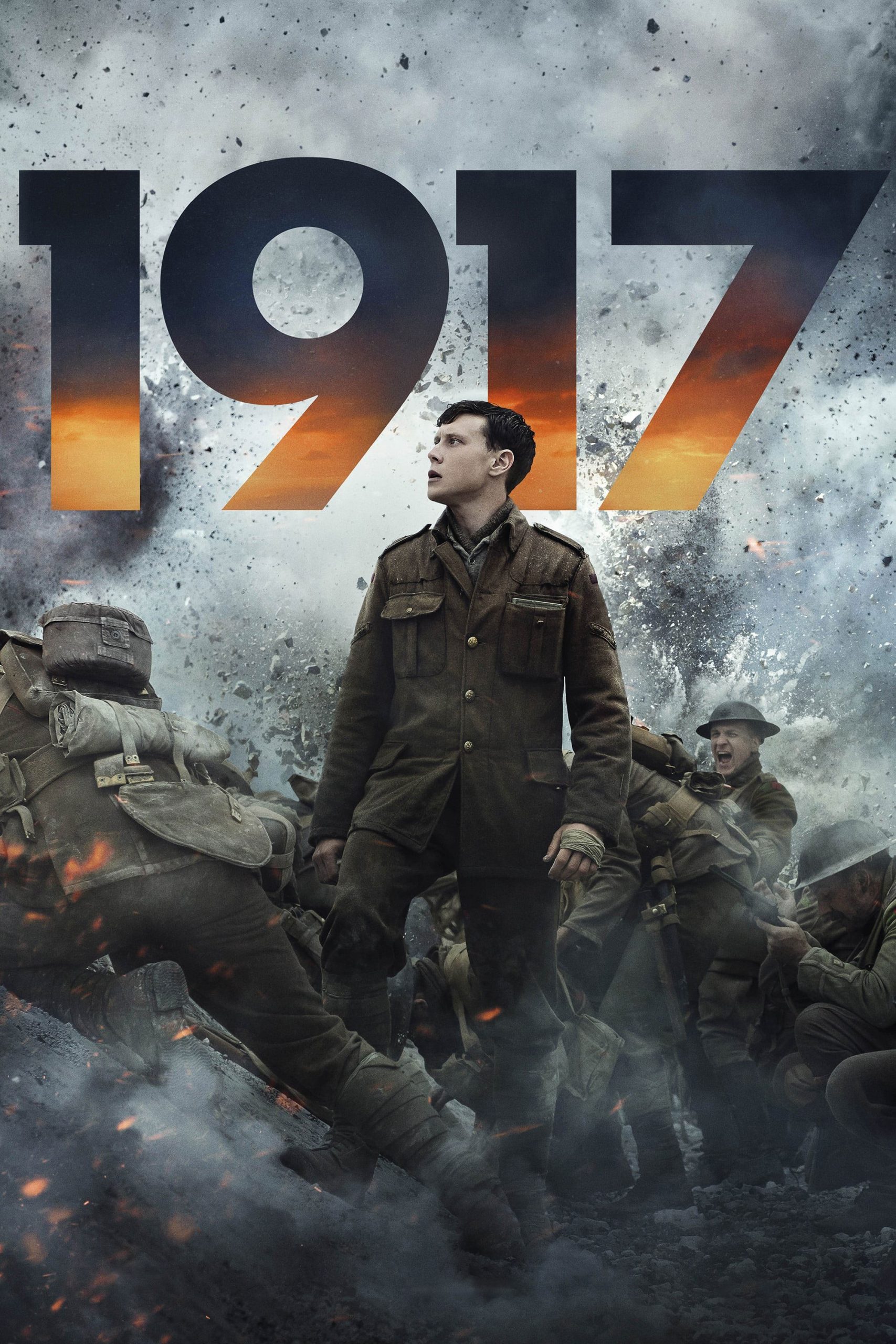
Sam Mendes’s 1917 (2019) is most closely associated with the contemporary revival and reimagination of Realism within the context of the war film, while also bearing significant connections to the long-take aesthetic championed by the “one-shot” movement. Realism, as a cinematic tradition, foregrounds the immersive recreation of lived experience, privileging authenticity, immediacy, and a sense of the ordinary even in extraordinary circumstances. While the work is anchored in the war genre and draws from conventions of past war films anchored in both classical Hollywood and European traditions (notably British realism), its most distinctive formal element—its seamless “one-shot” presentation—ties 1917 to the lineage of films known for extended, unbroken takes and a commitment to sustained temporal and spatial continuity. This places 1917 at the intersection of traditional Realism and a revived, technically ambitious form of long-take immersion that has garnered particular attention in contemporary cinema since the early 21st century.
Historical Origins of the Movement
The Realist movement in cinema traces its philosophical and aesthetic roots to the early 20th century, notably shaped by European, and especially Italian, neorealism in the aftermath of World War II. Italian neorealism, as epitomized by works such as Roberto Rossellini’s Rome, Open City (1945) and Vittorio De Sica’s Bicycle Thieves (1948), responded to the devastation of war by using non-professional actors, location shooting, and an understated narrative style to evoke the lived reality and everyday struggles of ordinary people. This movement presented an alternative to the artifice and escapism of studio cinema, seeking instead to depict an unvarnished truth. In parallel, British wartime documentaries and postwar drama exhibited a similar commitment to location realism, testimonial authenticity, and restrained sentiment, solidifying a tradition of Realist war cinema within European film culture.
By the end of the 20th century, Realism had evolved and diversified, informing various film movements and genres worldwide—from the French New Wave’s vérité techniques to the Dogme 95 collective’s manifesto-driven authenticity. In Hollywood, a revival of intensive realism appeared in the 1990s with films like Saving Private Ryan (1998), which employed visceral camera work and unflinching portrayals of war. Simultaneously, the long-take film movement, influenced by directors such as Alfred Hitchcock (Rope, 1948) and later expanded by directors like Aleksandr Sokurov (Russian Ark, 2002), began to challenge the conventions of film editing. These innovations were not about ostentatious technical prowess alone; rather, the long take was deployed to immerse viewers in unmediated, “real-time” experiences, often heightening the sensation of temporality and psychological proximity to character subjectivity.
This Film’s Contribution to the Movement
1917 stands as a sophisticated fusion of cinematic realism and the one-shot technique, revitalizing these movements for a new generation. The film’s acclaimed formal strategy is to appear as if it unfolds in a single, continuous shot, following two British soldiers across the trenches and no man’s land of World War I. This design is achieved through meticulously choreographed camera movements, extensive on-location set construction, and the seamless integration of visual effects. Cinematographer Roger Deakins and director Sam Mendes employ this approach not for spectacle alone, but to serve the film’s underlying realist ethic—immersing the viewer in the relentless uncertainty, exhaustion, and terror of warfare as experienced by its protagonists.
Where classic realist films rely on understated performances and unadorned visuals, 1917 intensifies the effect by collapsing the temporal distance between the audience and the characters. Its “real-time” progression means that the narrative unfolds with few ellipses, mirroring the ceaseless anxiety and emotional fluctuation endured by soldiers in the field. The absence of cuts compels the viewer to share the characters’ perspective, heightening empathy and engagement through an unbroken chain of subjective experience. Unlike earlier war epics that alternate between multiple perspectives, strategic editing, or bombastic set-pieces, Mendes’s film locates realism in the unity of perspective and the kinetic flow of time, thus advancing the tradition into ambitious territory that blends narrative immersion with technical innovation.
Moreover, 1917 exemplifies the contemporary movement to transcend mere historical recreation; it pursues an embodied truth—a phenomenological realism—that impels viewers to inhabit the sensorial world of its characters. This marriage of technical virtuosity and perceptual intimacy not only extends the premises of realism but also reinvigorates the war film genre, demonstrating how old themes (the futility, sacrifice, and trauma of conflict) can find new expressive modalities through formal experimentation.
Influence on Later Genres and Films
- Influence 1 – Revival of Immersive Realism: 1917 signals a renewed interest in immersive realism across genres, encouraging filmmakers to experiment with sustained “real-time” narratives and extended takes in contexts beyond the war film. Its critical and commercial success has inspired films and series, both within action and drama, to explore similar techniques for building tension and emotional engagement. For instance, TV episodes like “International Assassin” (The Leftovers, 2015) and movies such as Birdman (2014) have referenced or expanded upon the use of the continuous take to draw viewers into subjective experiences and heightened emotional stakes.
- Influence 2 – Hybridization of Technical and Emotional Engagement: By seamlessly blending sophisticated digital effects with traditional craftsmanship, 1917 exemplifies how new technologies can be harnessed not simply for spectacle but for deepening emotional realism. Its impact has been felt in action and thriller genres, where the blending of invisible digital transitions, location shooting, and elaborate choreography are increasingly used to heighten both the suspense and the verisimilitude of narrative immersion—evident in works like Extraction (2020), which explicitly evokes the “single take” aesthetic.
- Influence 3 – Reinvigoration of the War Film’s Ethical Dimension: 1917 reinvigorated the war film as a site of ethical exploration, underscoring not just the horrors of combat but the psychological burden of individual morality and compassion under duress. Its intimate, focused approach has prompted subsequent filmmakers to revisit war and conflict from more subjective perspectives, privileging the human dimension over military strategy or nationalist rhetoric. This influence is observable in films like All Quiet on the Western Front (2022), which foreground character subjectivity amidst the chaos of conflict.
The Movement’s Lasting Impact
The endurance of cinematic realism—and by extension, its “one-shot” offshoot—speaks to the lasting desire of filmmakers and audiences to access a sense of lived reality, even within the artifice of narrative cinema. 1917 not only demonstrates the flexibility and power of realism as an evolving cinematic strategy, but also affirms its relevance in an age increasingly dominated by spectacle, fragmentation, and digital mediation. The tradition of realism encourages filmmakers to interrogate the boundaries between representation and experience, challenging audiences to encounter historical and social realities through fresh forms of identification and empathy.
The “one-shot” movement, as revitalized by 1917, persists as a testament to cinema’s potential for sensory immersion and temporal elasticity. Its innovations lay groundwork for future experimentation, ensuring that realism remains a dynamic and adaptive force within both genre filmmaking and art cinema. Ultimately, the lasting impact of this movement is its capacity to render history, trauma, and subjectivity not as distant abstractions, but as palpable, immediate realities—reminding viewers of the unique power of film to collapse the gulf between the screen and the self.