
Film Movement Context
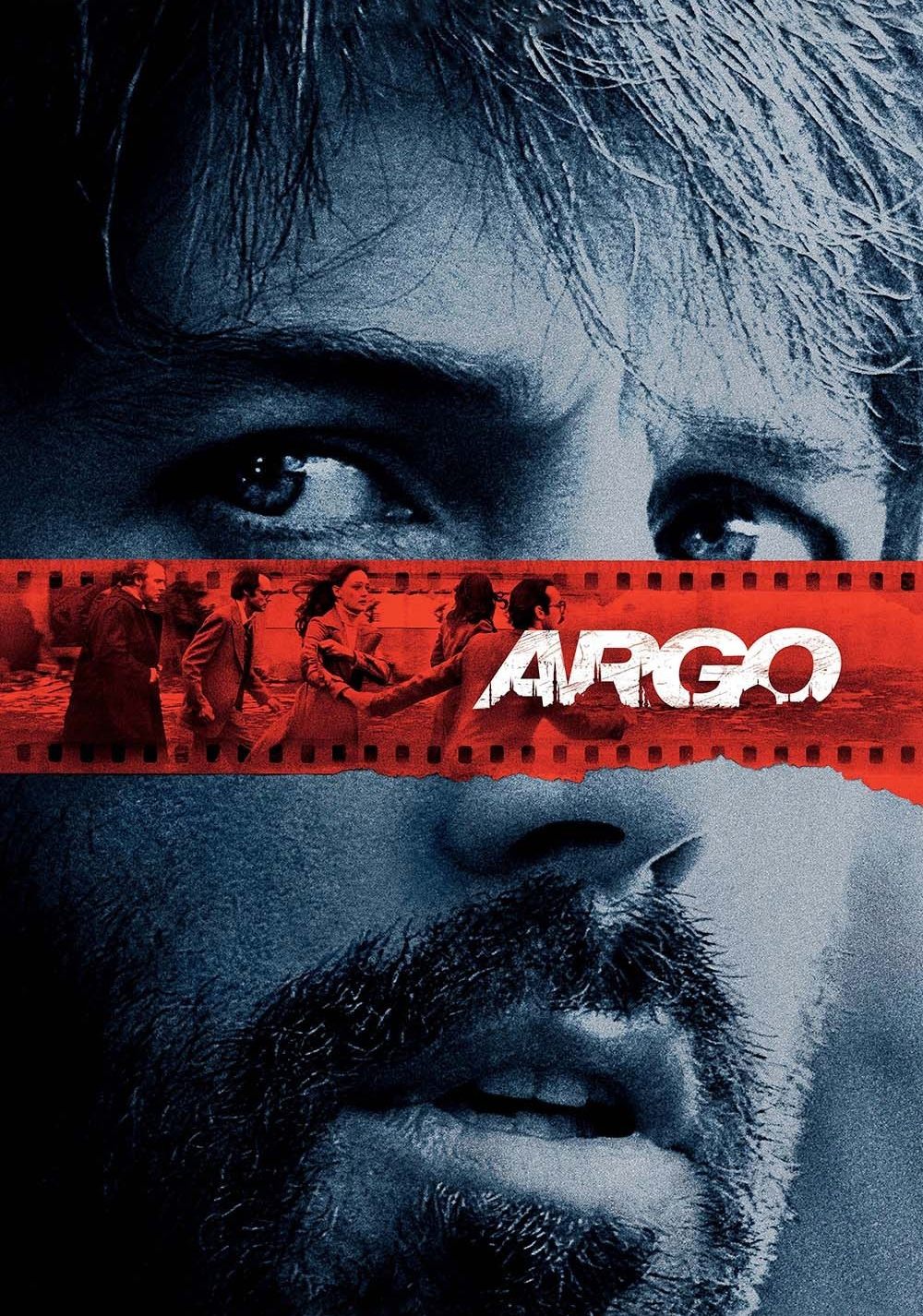
If you asked me to place “Argo” within a single cinematic tradition, I would immediately see it as a fascinating intersection of the political thriller and the so-called “neoclassical realism” revival that film critics and historians began to notice in the early 21st century. For me, “Argo” belongs to a lineage that treats recent history not just as subject matter but as a means to interrogate the methods and ethics of storytelling itself—an approach characteristic of the resurgence in political thrillers blending documentary-inflected verisimilitude with heightened classical suspense. Rather than falling into comfortable genre tropes, “Argo” offers what I recognize as an intricately self-aware mode of American cinema: it’s part of a style that openly acknowledges its constructedness while still striving for emotional authenticity.
I’m consistently drawn to how Ben Affleck’s film seems to stand with one foot in the legacy of 1970s Hollywood New Wave—a movement obsessed with power dynamics, paranoia, and the machinery of institutions—and the other in the post-9/11 era’s urgent questions about truth, image, and the politics of representation. In my experience, “Argo” exemplifies this hybrid movement: an era of cinema that weds precise genre engineering to a near-journalistic tension, inviting the viewer to both distrust and be seduced by cinematic illusion. That’s why, in my reading, “Argo” sits comfortably in the company of later political thrillers while maintaining roots in earlier traditions of procedural realism and self-reflexive narrative.
Historical Origins of the Movement
Whenever I reflect on the roots of this revitalized political thriller—what I might term “neoclassical realism”—I see a movement born of both creative reaction and historical necessity. The 1970s were ground zero for this mode, catalyzed by Americans’ growing skepticism about power in the wake of Vietnam and Watergate. Movies like “All the President’s Men” and “The Parallax View” captured a national mood: a profound ambivalence about institutions and the veracity of official narratives. For me, that moment in film history felt less like the birth of a new genre than the reconstitution of classic Hollywood suspense with a dose of gritty, world-weary realism and an often meta-cinematic awareness.
But as time rolled forward, traditional political thrillers lost their bite—at least until the new millennium, when a shattered public trust (after 9/11, after the Iraq War, after media omnipresence became inescapable) demanded a fresh kind of confrontation. My own studies have shown me how filmmakers reinjected the political thriller with documentary vigor, eschewing the baroque paranoia of earlier decades in favor of something leaner and more procedural, sometimes using handheld cameras and pseudo-documentary framing to place viewers alongside history rather than safely above it. By the late 2000s, I was seeing films—think “United 93,” “Syriana,” and eventually “Argo”—that revived and reformulated the genre for a world inundated with information yet desperate for discernment. The movement “Argo” embodies arose out of this historical crucible: an urgent need to make sense of real-world tumult using the tools of classical suspense and modern reflexivity.
This Film’s Contribution to the Movement
Watching “Argo” for the first time, I felt an exhilarating sense of déjà vu, as though I were witnessing an old-school thriller with all the tension and symmetry of a Hitchcock film—yet filtered through the moral and aesthetic anxieties that define our own era. What makes “Argo” so central to the neoclassical realist movement isn’t just its subject matter—the CIA orchestrating a movie production as cover for a covert rescue during the Iran hostage crisis—but its layered meditation on the fabrication of truth. The film’s major trick, in my view, is not in its recreation of late-1970s period detail or even its expert ratcheting of suspense, but in how it forces me to reckon with the power wielded by storytellers, whether they’re government agents or Hollywood producers.
Affleck’s choices behind the camera—employing grainy photography that evokes contemporary news footage, and framing scenes with a clinical, almost workmanlike precision—strike me as a conscious nod to the procedural realism inherited from historical antecedents. But it’s in the film’s self-conscious script that I see the true advance: “Argo” lays bare the absurdity and danger of blending reality with fiction, effectively inviting me, as an audience member, to consider my own complicity in these acts of representation. Moments when the characters pause to workshop their fake screenplay, or when real peril collides with the ludicrous ballyhoo of movie publicity, seem to comment slyly on the entire medium’s double-dealing.
I find it telling that “Argo” can sustain almost unbearable tension with scenes that adhere closely to the ordinary, the procedural, and the methodical. There’s a humility and discipline at work here—a refusal to glamorize tradecraft, instead presenting espionage as a logistical and psychological puzzle. Yet the film remains aware that every gesture toward authenticity is already infected by the performative, not least because the ‘rescue’ depends upon a literal act of filmmaking. In this sense, Affleck’s film advances the movement by giving me, the viewer, a simultaneous thrill and a cautionary warning about the powers—and dangers—of mediated reality.
Influence on Later Genres and Films
- Influence 1 – The Return of Procedural Realism: From my vantage point, “Argo” kicked off (or at least turbocharged) a wave of films that embraced granular, process-driven suspense. Subsequent movies, such as “Spotlight” and “The Post,” adopted a similar focus on institutional machinations and the painstaking nature of real-world investigation. What I appreciate most is how these films borrow “Argo’s” structural patience, trusting that deep attention to process—rather than flash or spectacle—can be absolutely riveting when anchored to real events.
- Influence 2 – Hybridizing Satire and Seriousness: I’ve noticed that “Argo’s” blend of grim realpolitik and showbiz satire gave room for more genre-bending efforts. Later films such as “The Big Short” and “Vice” play with tone in a manner reminiscent of “Argo”—mixing farce with procedural detail to reflect the absurdity of power. I see this as a profound evolution: the ability to use dry comedy and irony, even in historical dramas, without sacrificing narrative urgency or relevance.
- Influence 3 – Meta-Narrative Awareness in Political Cinema: Perhaps most intriguing to me is the way “Argo’s” winking acknowledgment of cinema’s complicity in shaping history has seeped into genre conventions. Documentaries like “The Act of Killing” and dramatic features like “BlacKkKlansman” have taken up the mantle: they reflect on their own artifice even as they dramatize real political stakes, encouraging viewers to consider how media not only reflects the world but also actively constructs it. I credit “Argo” with opening doors for a generation of films self-reflexive about their storytelling.
The Movement’s Lasting Impact
For me, the movement embodied by “Argo” matters because it transformed how I think about both the mechanics of suspense and the ethics of historical storytelling. It’s not just that this neoclassical realism breathes new urgency into political cinema; it’s that it foregrounds the fine line between illuminating history and manufacturing myth. I find myself drawn to these films not solely for their tension, but for their ability to generate dialogue—about the responsibilities of media, the pliability of truth, and the persistent allure of narrative as a means of control and catharsis.
When I revisit “Argo” and its kin, I don’t just see great thrillers; I witness an ongoing negotiation between authenticity and manipulation, a conversation that’s only grown more vital in an era of information overload and digital artifice. The movement doesn’t matter simply because it reestablished a dormant genre—it matters because it teaches me to watch with suspicion and engagement, to appreciate the craft while never forgetting the message. For contemporary audiences attuned to both spectacle and skepticism, this approach feels essential: a reminder that cinema’s greatest power is not merely to entertain, but to provoke critical thought about the very stories we choose to believe.
To connect style and technique with broader context, you may find these perspectives useful.
🎬 Check out today's best-selling movies on Amazon!
View Deals on Amazon