
Film Movement Context
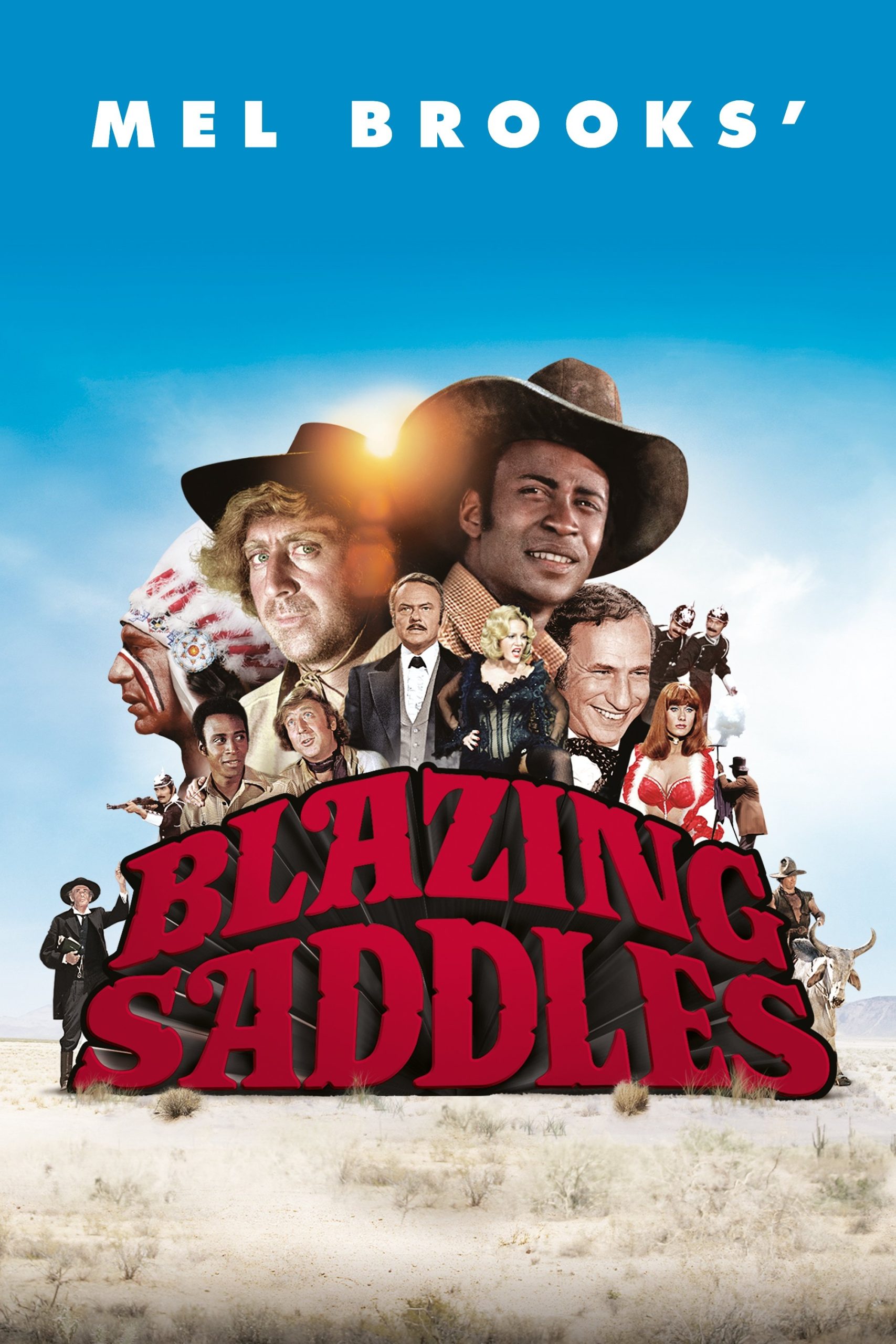
Whenever I return to “Blazing Saddles,” it feels like I’m opening a time capsule from the irreverent cinematic revolution of the 1970s. To me, the film is inseparable from the New Hollywood movement, but what’s most compelling is how deeply it draws from and skewers the traditions of both the revisionist Western and the self-aware, anarchic comedy genres that proliferated during this era. I don’t merely see it as a parody or a standalone comedy; it shamelessly rips open the classical Western aesthetic only to gleefully torch its sacred cows. In my view, what Mel Brooks accomplishes here is a direct engagement with the postmodern cinema that was coming to define the era: aware of genre rules, unafraid to break or mock them, and insistent on forcing audiences to confront long-concealed cultural hypocrisies, especially around race, gender, and American mythmaking. The blending of meta-cinema, satirical subversion, and genre collision I encounter in “Blazing Saddles” places it squarely within the larger rupture of late 20th-century film, when Hollywood itself had started questioning everything it once held sacred. The film’s roots are obviously in the Western, but its essence is defiantly post-classical, riding the wave of social ferment that defined the 1970s. That’s the context I always bring to it: as a product—and a challenge—of the New Hollywood and 1970s postmodern comedic film movements.
Historical Origins of the Movement
I always think of the New Hollywood movement as the moment when American directors, battered by a decade of social upheaval, finally took the reigns away from the old studio moguls and began to reflect a country that was equal parts cynical, self-aware, and eager to break its own taboos. My readings highlight that this movement arose in the late 1960s and early 1970s, birthed out of necessity as the old Production Code collapsed under the weight of new freedoms and the major studios struggled to draw youth audiences. There’s a sense, every time I watch a film like “Blazing Saddles,” that you’re witnessing the aftershocks of the sexual revolution, the civil rights movement, Vietnam disillusionment, and a rejection of tidy, formulaic narratives. What strikes me about New Hollywood’s emergence is the fusion of European art cinema’s self-reflection and the savvy cynicism of a generation of filmmakers who had grown up watching and critiquing classical Hollywood. In comedies specifically, this led to a subgenre I might call the “meta-parody”—films that are keenly conscious of their own construction and use humor to lay bare the codependence between cinema, mythology, and cultural power.
I’d argue that the comedic movement Brooks belonged to—not just New Hollywood in general, but the meta-satirical tradition—was deeply in debt to earlier American slapstick, Marx Brothers-style anarchic humor, as well as the biting, playfully subversive films of the French New Wave. Yet it was the American context that gave it its sharpest edge, precisely because the machinery of Hollywood mythmaking was being turned inward and subverted. By the early 1970s, nothing was sacred. Race, sexuality, the Western frontier, Hollywood itself—these were all fair game, resulting in films that constantly played with audience expectations and provocatively re-examined cultural givens. For me, the historical significance of this movement is that it forced cinema to acknowledge its own social complicity—and to do so with a confident, deeply irreverent style. In other words, films like “Blazing Saddles” emerged because American cinema was finally ready to laugh at its own foundational stories, and at the same time, probe their darkest undercurrents.
This Film’s Contribution to the Movement
If I had to articulate what makes “Blazing Saddles” such a watershed moment for this movement, I’d point first to its fearless collision of modes—slapstick, surrealism, and razor-sharp satire—all in service of interrogating the genre that perhaps best exemplifies American myth: the Western. What I find most bracing isn’t just that it lampoons the cliches—the poker-faced sheriff, the racist townsfolk, the villain twirling his metaphorical mustache—but that it drags the ugliest subtext of these archetypes to the surface. From the moment Cleavon Little’s character rides into Rock Ridge, I am forced to confront the overt racism and latent bigotry that classic Westerns not only ignored but sometimes perpetuated. Brooks and his co-writers (especially Richard Pryor, whose influence is felt in every dangerous punchline) don’t simply lampoon; they weaponize comedy, using it as a scalpel to dissect America’s long-standing hypocrisies.
The level of meta-commentary in “Blazing Saddles” blew me away the first time—and still does: the film doesn’t just break the fourth wall, it turns it into confetti. From the notorious pie-fight that erupts into the Warner Bros. backlot, to the knowing glances straight into the camera, Brooks insists I recognize the labor of mythmaking behind every gunfight and pratfall. This sort of self-awareness, this urge to pull the rug out from under my expectations, is the very heart of the New Hollywood and postmodern approach. For me, “Blazing Saddles” is delightfully irreverent, but it also perfectly demonstrates how cinema at this moment was unafraid to question its own medium. Brooks creates a dialogue between the audience and the narrative, demanding we participate in the discomfort—and the laughter—of seeing familiar narratives rewritten by those previously written out of history. The film’s explicit, often crude humor is no accident either; it is a deliberate explosion of what had previously been constrained by social and cinematic taboos.
In my analysis, “Blazing Saddles” embodies a central ambition of 1970s genre revisionism: to expose and reframe the values embedded in beloved American genres by holding them up to the light of biting parody. It’s a film that doesn’t just comment on the Western tradition, but actively seeks to break it open, reassemble it, and demand that I, as a viewer, consider not just what I’m laughing at—but why those laughs matter. It’s a deeply political act, masked by comic chaos.
Influence on Later Genres and Films
- Subversive Parody as Social Critique – What I find overwhelmingly influential about “Blazing Saddles” is how it bridged the gap between parody and pointed cultural commentary. Before this, parody often stopped at gentle ribbing, but Brooks’s ferocity paved the way for films and television that use comedy to lay bare uncomfortable truths. It’s hard not to see its DNA in “The Simpsons,” “South Park,” or even Tarantino’s gleeful genre deconstructions. Each of these works, in my view, inherits Brooks’s strategy of disguising critique as farce, all while inviting the audience to laugh at their own complicity. For me, this is a legacy that forever altered the way comedy and social issues intersect on screen.
- Meta-Filmmaking and Breaking the Fourth Wall – I adore how “Blazing Saddles” doesn’t just wink at the audience; it practically drags you into the production itself. This wasn’t the first film to shatter the illusion of cinematic reality, but I feel it popularized a style of irreverent, fourth-wall-breaking cinema that would later find its stride in works as diverse as “Ferris Bueller’s Day Off” and “Deadpool.” Each time I see modern movies self-consciously referencing their own artifice—be it for comedic or critical effect—I trace it partially back to Brooks’s 1974 opus. The humor becomes not just about the narrative, but about the process and the absurdity of filmmaking itself.
- Reclaiming and Demystifying Genres – Perhaps the most lasting influence for me is how “Blazing Saddles” made it possible for whole generations of filmmakers and comedians to treat sacred film genres—especially the Western—as material ripe for reinvention, subversion, or outright demolition. This isn’t just parody; it’s creative liberation. Watching its aftermath, I see echoes everywhere from “Spaceballs” (Brooks, again!) satirizing sci-fi, to new-wave odes like “Shaun of the Dead” (zombie horror meets romantic comedy), and revisionist Westerns that simultaneously embrace and critique their forebears. The idea that loving a genre meant you could, and should, also challenge it—that’s a revolution I wholeheartedly attribute to the path “Blazing Saddles” helped clear.
The Movement’s Lasting Impact
Why does all this matter to me, as someone obsessed with the evolution of film movements and the ongoing dialogue between cinema and culture? The postmodern, self-reflexive spirit of the New Hollywood era didn’t merely change how movies were made; it changed how I, and audiences like me, learned to watch them. Films like “Blazing Saddles” taught me that it’s not just acceptable but crucial to interrogate the stories, archetypes, and ideologies that we take for granted on screen. Brooks’s wild, anarchic comedy gave permission for future generations to laugh at—and thereby dismantle—the most rigid structures of genre and myth. I see its influence radiating outward: in contemporary satire, in political comedy, in the hyper-aware textuality of everything from superhero films to streaming sitcoms.
For me, the significance of this movement isn’t just academic; it’s intensely personal. It shapes the way I encounter, appreciate, and critique art. The willingness to break the rules, to expose the invisible machinery of entertainment, to demand that humor address the uncomfortable—these are values that didn’t just shift Hollywood; they shifted my own expectations as a viewer and analyst. The movement that produced “Blazing Saddles” is still alive every time I see a filmmaker or comedian take a genre, turn it inside out, and refuse to let me look away from the mess it reveals. It’s a legacy of courage, of humor as critique, and above all, of cinema as both a mirror and a hammer. That’s why it matters—and why I believe it always will.
To connect style and technique with broader context, you may find these perspectives useful.
🎬 Check out today's best-selling movies on Amazon!
View Deals on Amazon