
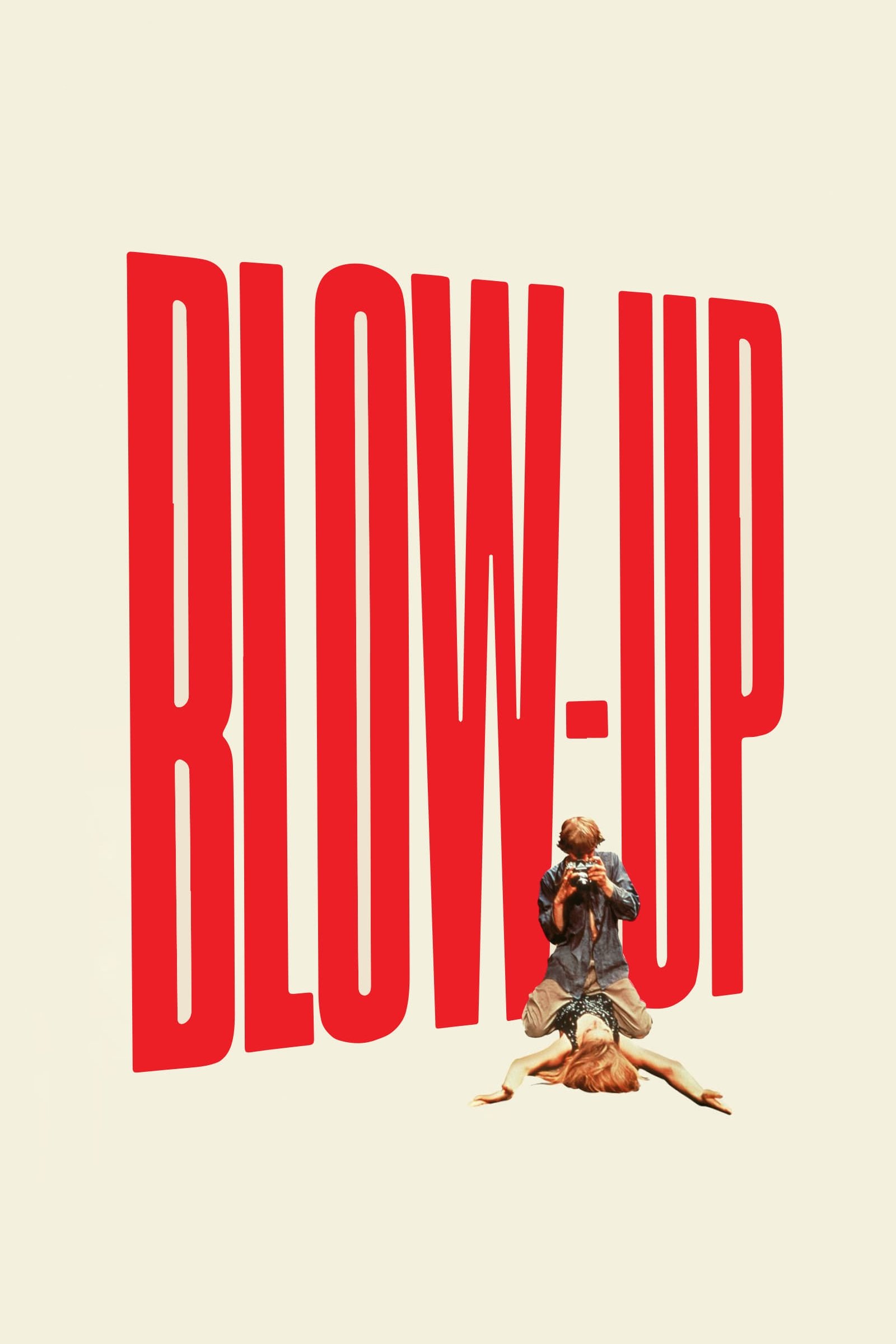
The Genre of This Film
The first time I watched “Blow-Up,” I found myself drawn not just to the vibrant imagery or the famous fashion photography, but to the unmistakable air of mystery that permeated every scene. For me, this film’s primary genre is the psychological mystery thriller. It’s not the sort of thriller decorated with car chases or relentless villains; rather, “Blow-Up” cultivates suspense through ambiguity, perception, and the unraveling mind of its protagonist. I consider it a psychological mystery because it turns the act of seeing—and doubting what one sees—into a source of uncertainty, challenging not only the character on-screen but also me as a viewer. My experience with the film goes far beyond the premise of a photographer who might have accidentally documented a murder. It’s about living inside questions, about the thrill of not knowing, and about searching for truth in a world where reality itself seems up for debate. That’s exactly what defines this genre for me: the merging of psychological tension with mystery, set against the fabric of everyday life.
Key Characteristics of the Genre
-
Common themes
In my eyes, the psychological mystery thriller always gravitates toward existential uncertainty, the limitations of perception, and the elusive boundary between reality and imagination. I often find myself engrossed in questions of identity, seeing characters attempt to reconstruct memories or decipher clues that may never fully cohere. Obsession, paranoia, and the search for hidden truths are at the heart of this genre. Frequently, the narrative doesn’t offer straightforward solutions. Instead, it immerses me in situations where the core mystery may never be solved, leaving me with lingering doubts and unresolved tensions long after the credits roll. -
Typical visual style
In classic psychological mystery thrillers, I notice a recurring emphasis on ambiguity within the mise-en-scène—shadows, fog, reflective surfaces, and shots that obscure as much as they reveal. These films tend to play tricks on my expectations, using composition and editing to make me wonder if what I’m seeing is real or filtered through a character’s uncertain mind. They rarely hand me certainties, instead employing muted palettes, disorienting angles, and lengthy silences to evoke a sense of anxiety and anticipation. Visual motifs, such as mirrors or blurred photographs, become more than props; they act as metaphors for the unreliability of vision and memory in the very experience of watching. -
Narrative structure
The structure that I associate with this genre is often nonlinear, recursive, or deliberately fragmentary. Rather than giving me a comforting beginning-middle-end, psychological mysteries draw me into a disorienting dance. I’m led down narrative rabbit holes, sometimes forced to re-experience events from alternate perspectives or to question the very chronology of what I’ve seen. The plot can loop back on itself, double back, or abandon solutions altogether, compelling me to live with ambiguity. In my exploration of the genre, I’ve become accustomed to stories that end without tidy resolutions, choosing instead to echo real life’s lingering uncertainties. -
Character archetypes
When I watch psychological mysteries, I’m rarely introduced to heroes in the classic sense. Instead, I encounter protagonists who are unreliable narrators—even to themselves. They’re often artists, detectives, or ordinary people drawn into extraordinary circumstances. For me, the most compelling characters in this genre are defined by their inner conflicts, susceptibility to obsession, and even their alienation from those around them. These are individuals who are haunted by doubt—haunted, in fact, by the slippery nature of the evidence they collect. Secondary figures serve to reflect, contradict, or confound the mystery at the core of the protagonist’s journey, rather than acting as clear allies or adversaries. In my view, this ambiguity in character motivation and allegiance only deepens the film’s psychological undertow.
How This Film Exemplifies the Genre
Whenever I reflect on “Blow-Up,” I’m struck by Antonioni’s genius in blending the everyday with the disturbing. The film doesn’t just exemplify the psychological mystery thriller—it embodies the genre’s very spirit, from the first disorienting camera movements to the last enigmatic frame. My journey through the film begins innocently enough, watching Thomas—a fashion photographer in Swinging Sixties London—drifting through his glamorous, but curiously empty, life. The drama is sparked for me not by violence or overt threat, but by the most mundane of acts: taking photographs in a park. Yet it’s the subsequent slow burn of uncertainty that pulls me in deeper, echoing the genre’s hallmarks.
What excites me about “Blow-Up” is how it anchors its sense of mystery to perception itself. As Thomas scrutinizes his photos, I find myself scrutinizing the images along with him, questioning what, if anything, we are seeing. The process of enlarging photographs doesn’t deliver answers; it only multiplies the ambiguities, making every shadow and blur a potential clue—or a red herring. For me, that’s a defining mark of films in this genre: suspense is not about danger in the external world, but danger in misapprehending reality.
I’m fascinated by Antonioni’s decision to withhold easy resolutions. Thomas becomes obsessed, spiraling into uncertainty, and as a viewer, I share his isolation. The film’s structure—wandering, almost circular—mirrors the genre’s tendency to shun simple solutions. There are moments in “Blow-Up” where I feel boxed in by the visual language: long takes linger far past comfort, compositions fracture Thomas’s image, and seemingly minor details are invested with profound uncertainty. These are all signatures of the psychological mystery thriller as I have come to recognize it.
But perhaps what captivated me most is the way “Blow-Up” uses character. Thomas is never a traditional detective; he’s a passive observer, ensnared not just by the possibility of a crime, but by the paralyzing effects of his own doubt. He embodies the unreliable protagonist—swept along by artistic impulse, self-alienation, and a gnawing anxiety about what lies beyond his perception. The supporting characters—models, friends, strangers in the park—move in and out of his world like apparitions. Their motives are inscrutable, their alliances shifting. This ambiguity, both narrative and personal, is precisely what keeps me both frustrated and bewitched. Antonioni cements the genre’s tendencies toward slippages in truth, emotional dislocation, and the endless lure of unsolved mysteries. Through its aesthetic precision and psychological depth, “Blow-Up” stands, for me, as an archetype of the modern psychological mystery thriller.
Other Essential Films in This Genre
- “The Conversation” (1974) – When I think of psychological mysteries that resonate, Francis Ford Coppola’s “The Conversation” immediately comes to mind. Watching it, I was drawn into the paranoid world of Harry Caul, a surveillance expert who gradually becomes unsure whether he’s complicit in a potential crime. The film immerses me in the protagonist’s sound-obsessed perspective, mirroring the uncertainties of “Blow-Up” but with audio instead of images. Subjectivity, moral ambiguity, and alienation are brought to vividly anxious life, cementing its place within the genre.
- “Repulsion” (1965) – Roman Polanski’s “Repulsion” left me unsettled for days after my first viewing. It channels the psychological mystery through the deteriorating mind of Catherine Deneuve’s character—her fearful, hallucinatory experience of her apartment encapsulates the genre’s focus on unreliable perception and collapsing reality. The minimalist plot thrusts me squarely into her paranoia, making me question whether the threats are real or solely within her mind.
- “Lost Highway” (1997) – When I reached for a film that uses narrative dislocation and surreal visuals to explore identity, David Lynch’s “Lost Highway” is what I recall most clearly. The film’s story spirals unexpectedly, eliding linear progression and inviting a multiplicity of interpretations. Watching it, I become both participant and witness to a mystery that refuses to resolve itself, encapsulating the psychological thriller with its kaleidoscopic, elusive sense of self and reality.
- “Zodiac” (2007) – David Fincher’s “Zodiac” gripped me with its procedural energy, but it’s the deepening effect of obsession—and lingering uncertainty—that underscores its status in the genre. Rather than solving the infamous case, the film subjects the investigators and viewers to mounting ambiguity. The cumulative effect is a cinematic portrait of the psychic toll of unresolved mystery, a theme central to my understanding of the psychological mystery thriller.
Why This Genre Continues to Endure
I often ask myself why I return, time and again, to psychological mystery thrillers like “Blow-Up.” While cinematic trends come and go, this genre’s magnetic pull hasn’t faded for me or, I think, for most viewers intrigued by life’s deeper uncertainties. There’s a fundamental kinship between the mysteries on-screen and the mental puzzles I, and so many others, grapple with in real life. The genre brilliantly captures that restless quest for meaning—my own need to understand what lies beneath the surface, to confront the uneasy questions that rarely find answers.
For me, the durability of these films lies in their capacity to involve rather than merely entertain. I’m not handed solutions; I’m asked to participate in ambiguity, to follow the protagonists as they struggle with the same blindness and doubt that haunt everyday existence. Rather than feeling frustrated, I find this uncertainty energizing. Every time I revisit “Blow-Up,” I discover new questions and possibilities nestled in its ambiguous spaces. The visual style, too, continues to evolve but never departs from the essential tricks of perception and reflection that made the genre so formally daring to begin with.
Another reason I remain captivated by this genre is its adaptability. The psychological mystery thriller is endlessly expansive, merging with elements of noir, horror, and drama, capable of morphing into contemporary forms like techno-thrillers or intimate, small-scale character studies. No matter its setting—urban metropolis, countryside, or dream-like suburbia—the tension between what’s real and what’s imagined always feels fresh to me. The genre’s inherent ambiguity allows it to reflect changing anxieties and societal tensions. I see its continuing relevance in the prevalence of unreliable information and skepticism in the digital age, where even a photograph or a recording can no longer be trusted at face value.
Ultimately, my enduring relationship with the psychological mystery thriller stems from the genre’s refusal to comfort me with finality. Instead, it urges me to wrestle with my perceptions and to revel in uncertainty. It reminds me that life is rarely as legible as a solved murder. Instead, like Thomas in “Blow-Up,” I move through shadows and possibility, never entirely sure where reality ends and illusion begins. That irresolution—and the fresh questions it poses with every viewing—ensures the vitality of this genre for anyone, like me, who finds beauty and excitement in the enigmas of consciousness and sight.
If you’re interested in how viewers respond beyond technique, you may want to explore audience and critical reception.
🎬 Check out today's best-selling movies on Amazon!
View Deals on Amazon