
Film Movement Context
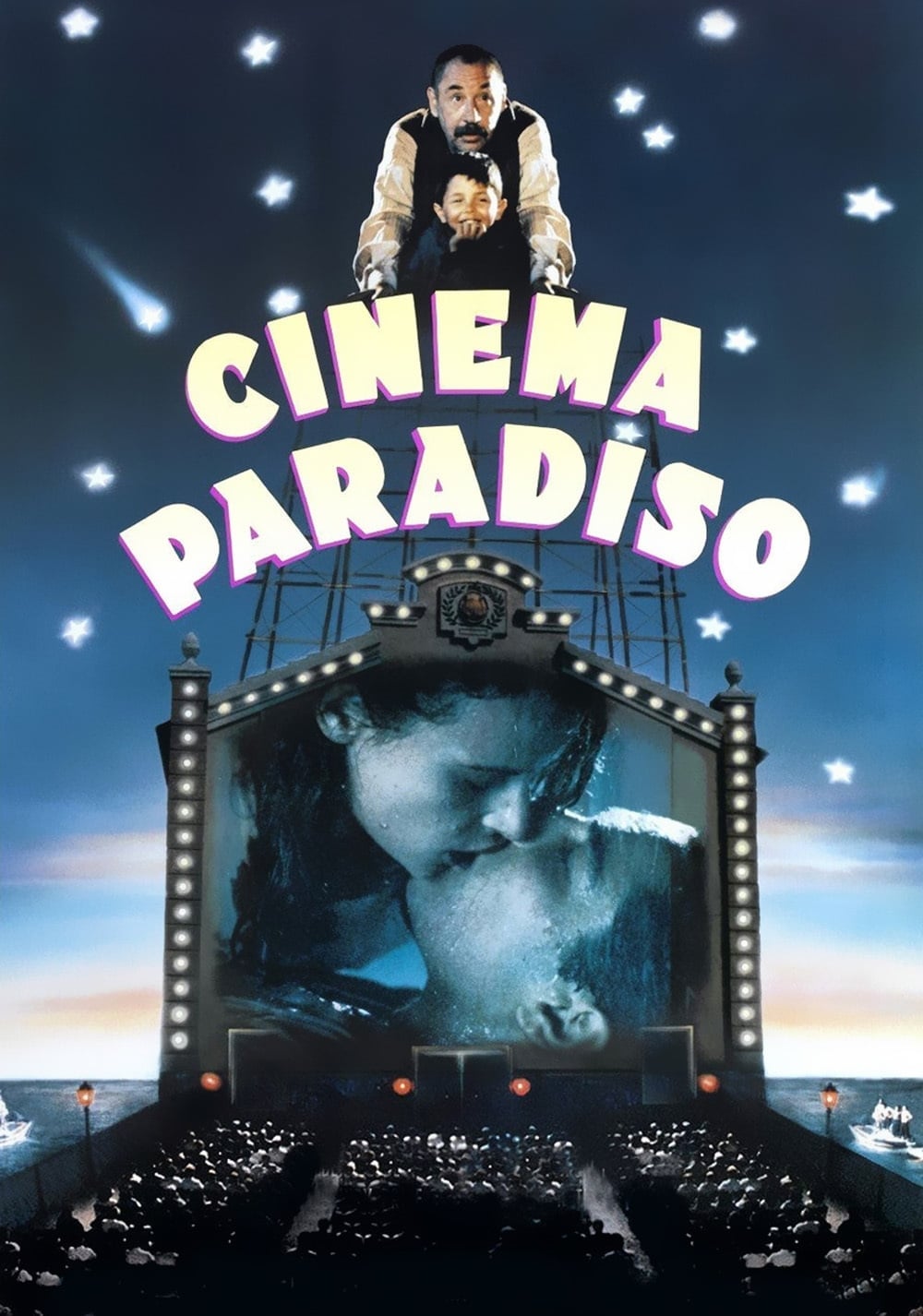
The first time I watched “Cinema Paradiso,” I felt as if I were entering not only a bittersweet memory but a movement—a current in film history that wraps nostalgia and reality together until neither is easily separated. For me, the film pulses unmistakably with the legacy of Italian Neorealism, yet doesn’t fit solely within its classical bounds. I see it as a lyrical successor: post-neorealism or, perhaps more accurately, a product of Neorealist heritage entwined with the traditions of the sentimental coming-of-age and the meta-cinematic elegy. “Cinema Paradiso” is a love letter to the vanished world of small-town Sicilian movie palaces, to the collective ritual of cinema-going, and above all, to the ways films help us process our own histories. I connect it directly to the thread running from De Sica, Rossellini, and Visconti, as well as later introspective, semi-autobiographical Italian works. For me, the film’s ardor for cinema as a communal and formative force situates it among those films that not only document but meditate upon cultural memory itself. Its expressive melancholy and gentle realism place it within a distinct cycle—let’s call it “post-neorealist nostalgia”—in which the past is cherished, interrogated, and, by turns, mourned and exulted.
Historical Origins of the Movement
When I trace where “Cinema Paradiso” comes from, I find myself looking at the aftermath of World War II, at Italian filmmakers who refused to gloss over hardship for the comfort of escapism. The movement that shaped and continues to haunt “Cinema Paradiso”—Italian Neorealism—was born from rubble, hunger, and political disillusionment. Directors like Vittorio De Sica, Roberto Rossellini, and Luchino Visconti turned their cameras outward: away from the studio, into the streets, and onto the faces of non-professional actors. Their goal, as I see it, was not only honesty but moral urgency: to bear witness, to dignify everyday struggle, to join the particular to the universal. As decades passed, the original conviction softened, refracted through nostalgia and memory: post-neorealist films, and later auteurs, began folding personal stories and historic perspective into their canvases. In the 1980s, as Italy—and much of Europe—grappled with cultural fragmentation and the loss of shared experiences, filmmakers such as Giuseppe Tornatore looked backward. They sifted sorrow and longing for vanished traditions: the cinema as sacred space, the projectionist as myth. This was not neorealism’s objective present, but the psychic afterlife of its images—a place I find both comforting and mournful. The films of this evolution, for me, embrace memory’s inconsistencies: they let nostalgia and realism coexist, honoring the messy ways we preserve what’s slipping away.
This Film’s Contribution to the Movement
When I revisit “Cinema Paradiso,” I’m struck by how it both inherits and remakes the movement’s language. The village of Giancaldo isn’t filtered through raw reportage; rather, it’s painted with the lush, melancholy brushstrokes of someone who lived there and cannot let go. This is no longer the urgent documentation of deprivation—it’s the reckoning with absence, with the loss of innocence, with the passage from communal ritual to atomized adulthood. For me, the film’s most radical gesture lies in how it entangles the viewer in a process of looking back. Where classical neorealism demanded attention to the present—bombed-out streets, broken families—Tornatore asks us to feel the ache of looking at photographs yellowed by time.
What resonates most for me is the way “Cinema Paradiso” transforms the neorealist interest in ordinariness into a longing for the ordinary things that are gone: the townspeople gathering weekly in the flickering theater, the ritual of film censorship by priestly authority, the childish awe at cinema’s illusions. Through Totò’s eyes, I am invited to relive discovery, disappointment, exile, and—most poignantly—yearning for what can be neither retrieved nor repeated. Yet even as it romanticizes, the film doesn’t spare the viewer the costs of time’s passage. People grow old, die; institutions crumble; passions fade or are left behind. What I love is that Tornatore doesn’t idealize nostalgia itself: he exposes its pain. There’s a clear-eyed acknowledgment that remembering is also a form of mourning, and that cinema is never only escape but also confrontation with the truth that nothing lasts. In this sense, I feel the film becomes a bridge—a work that uses neorealism’s emotional honesty as a springboard to a broader meditation on memory, loss, and the peculiar endurance of cinematic art.
The self-reflexive structure, the film-within-film montage—especially the final scene of expurgated kisses—use the tools of the medium to comment on its power over us. “Cinema Paradiso” is thus less about the events depicted, and more about their afterlife in memory: both the director’s and our own. In this meta-cinematic sense, I consider it a defining work of post-neorealist nostalgia, reimagining collective experience as something deeply personal, remixed and replayed endlessly inside us. It’s less a documentary about a place and time, and more an essay about how film itself mediates, transforms, and preserves longing.
Influence on Later Genres and Films
- I’ve seen “Cinema Paradiso” ignite a resurgence in cinema’s self-reflexivity, not just in Italy but globally. It opened the door for films that meditate on cinephilia—the love of the medium itself—not as a matter of theory, but as something rooted in childhood, community, and identity. Movies like “The Dreamers,” “Hugo,” and “Nuovo Cinema Paradiso’s” contemporary “The Artist,” all have, in my eyes, inherited its impulse to revisit the early romance with film: to make nostalgia itself cinematic subject matter.
- I also notice how its poetic, emotionally open style has influenced the evolution of coming-of-age dramas beyond Italy. The intimate passage from innocence to experience—lensed through personal and collective memory—echoes powerfully in movies like “Cinema Paradiso,” Richard Linklater’s “Boyhood,” or Alfonso Cuarón’s “Roma.” Like Tornatore, these films treat growing up not merely as individual transformation, but as drifting away from communal rituals that once structured meaning.
- Another ripple I trace is the film’s role in shaping the visual and narrative palette of so-called “nostalgia cinema.” Directors as different as Pedro Almodóvar and Wong Kar-wai, in works such as “Pain and Glory” or “In the Mood for Love,” appear to me deeply conscious of the ways “Cinema Paradiso” blends reminiscence with rich, sensuous aesthetics. The very lushness of longing—the bittersweet, almost tactile invocation of what has been lost—seems impossible to me to separate from the language of Tornatore and his contemporaries.
The Movement’s Lasting Impact
For all its quietness, I find the legacy of the neorealist and post-neorealist tradition remains a vital compass for anyone grappling with what makes cinema meaningful. It’s not just that these films showed that ordinary lives are worthy of attention, or that they mapped the intersection of history and memory; it’s that they invited me—and countless others—to feel, to recollect, and to interrogate why we reach for stories at all. Through “Cinema Paradiso” and its kin, I sense the enduring conviction that cinema is more than spectacle: it is a means of preserving, revising, and occasionally transforming the past within the imagination of a culture.
I keep returning, personally, to the discomforts and pleasures of this dual impulse: to bear witness to the real, but also to mourn and mythologize what fades. In this way, the movement matters now as much as when it began. Every new wave that grapples with memory, with loss, with the rituals of spectatorship—every director who treats film as a dialogue between the past and the imagined—draws, knowingly or not, from this foundation. “Cinema Paradiso” lives for me not just in its images, but in its insistence that our relationship to film is always emotional, always fragile, and always, in some way, about the ache of memory. That resonance, I believe, is what ensures the movement’s ongoing relevance—not just as history, but as a living, evolving conversation about why movies matter at all.
To connect style and technique with broader context, you may find these perspectives useful.
🎬 Check out today's best-selling movies on Amazon!
View Deals on Amazon