
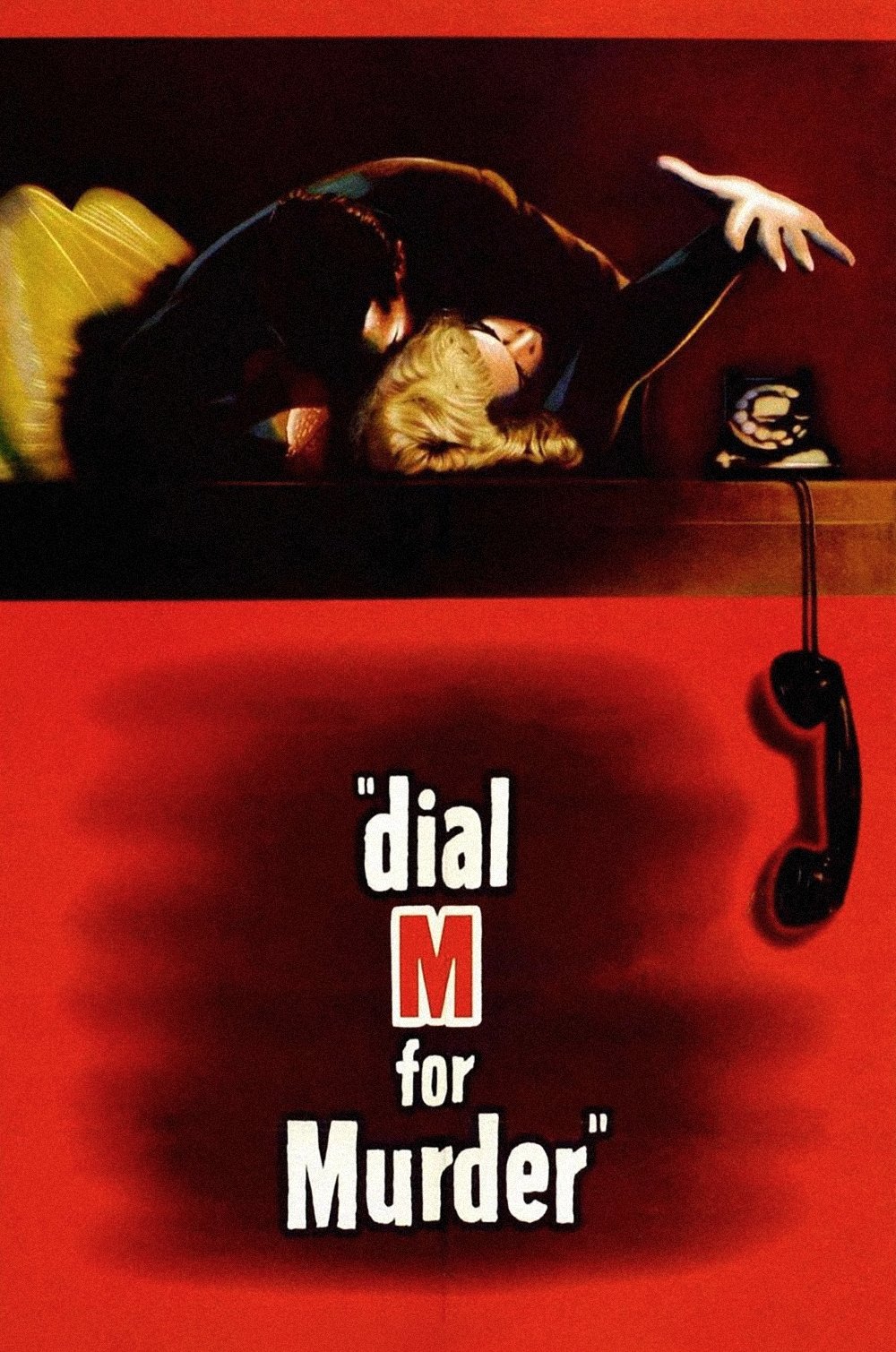
The Genre of This Film
Sometimes I sit back and remember my first encounter with “Dial M for Murder”—not just as a film, but as a tense, swirling exercise in the drama of suspicion. To me, this movie fits unmistakably within the crime thriller genre, specifically the subgenre of suspense thrillers. It doesn’t operate as a conventional detective story, nor does it rest squarely in pure crime melodrama or outright murder mystery territory. Instead, I am continually struck by how its greatest pleasures arise from the deliberate, almost surgical tightening of psychological tension. “Dial M for Murder” relies on manipulation, slowly mounting anxiety, and razor-sharp pacing, encapsulating nearly every ingredient I associate with the most gripping suspense thrillers. To me, it’s not merely about crime, but the methodical orchestration of dread—placing the audience in a predicament where trust and safety are in short supply and anticipation is everything.
Key Characteristics of the Genre
-
Common themes
In my experience, I’ve found that the crime thriller, and especially the suspense variant, repeatedly circles around themes such as betrayal, danger lurking behind domestic facades, ordinary people thrust into crises, and the incremental unraveling of “perfect” plans. For me, these films obsess over deception, moral ambiguity, and the peril associated with secrets. They often ask: What happens when personal relationships become battlegrounds? There is a steady current of mistrust, manipulation, and the unsettling realization that anyone—no matter how familiar—could pose a mortal threat. In the background, there’s often a subtext about justice, fate, and the roles of chance and agency.
-
Typical visual style
Whenever I immerse myself in a classic suspense thriller, I’m moved by the precision and intentionality of the visuals. The style isn’t flashy or chaotic; instead, it is controlled, calculated, and frequently claustrophobic. Directors in this genre, such as Hitchcock, tend to restrict the number of locations—creating box-like settings that amp up the sense of containment and inescapability. Lighting plays a key role, with high-contrast shadows, stark compositions, and strategic use of blocking and framing to intensify the viewer’s unease. Details are often presented in close-up, as if to reveal the deeper implications of every small gesture—a phone left off the hook, a pair of scissors out of place. Art direction usually emphasizes the ordinariness of the environment, subtly subverting the comfort of home by introducing visual cues that something is very wrong.
-
Narrative structure
I’ve noticed that suspense thrillers play out like elaborate chess games. There’s an initial setup, usually revealing an ordinary situation or a superficially harmonious existence. Then a catalytic event—often a crime or sinister plot—disrupts that order. What follows, in my view, is a careful escalation: the audience frequently knows more than the characters (dramatic irony), and the tension comes from waiting to see if and how the villain’s plan will unravel or succeed. Plot turns are essential; reversals, close calls, and last-minute saves or betrayals keep the audience guessing and second-guessing motivations. These films thrive on structure—pacing is crucial, and information is dispensed with precision, always keeping viewers a step ahead or behind the characters to maximize suspense. The climax usually involves a confrontation or revelation, followed by a swift resolution.
-
Character archetypes
When I break down the casts populating these thrillers, certain archetypes are ever-present in my mind. There’s the instigator—a planner, often outwardly suave and respectable, hiding darker motives. Then the intended victim: innocent, sometimes blissfully unaware, at other times gradually awakening to the plot against them. Investigative figures—professional or amateur, police detectives or unintentional sleuths—must sift through layers of deception. Finally, supporting characters often include reluctant accomplices, red herrings, or people whose very ordinariness makes them suspect. What fascinates me is how these roles are rarely static; the best thrillers play with shifting perceptions, making us question who’s really trustworthy or at risk.
How This Film Exemplifies the Genre
Every time I revisit “Dial M for Murder,” I am reminded of why it stands for me as a model of the suspense thriller’s defining traits. First, it leans into claustrophobia: almost the entire film is staged in a single London apartment, an everyday setting warped into a pressure cooker. This limited space becomes, in my experience, a psychological arena where every object—a telephone, a brooch, a set of keys—feels loaded with hidden potential. I’m constantly aware of how the confined setting amplifies even the smallest gesture.
What I love most is the film’s handling of tension. The audience, as I see it, is always made complicit. From the outset, we’re let in on the “perfect” murder plot, becoming conspirators as the would-be killer sets his trap. But Hitchcock, ever the master, turns the screws of suspense by making us acutely aware of every possible flaw in the scheme. I find myself holding my breath, watching helplessly as small mishaps threaten to upend everything: a phone call made at precisely the wrong moment, a mislaid pair of scissors, a door chain left unfastened. These minor details become the pivots upon which life and death turn. That sense of anxiety, where I’m perpetually anticipating disaster, is pure suspense craftsmanship.
It’s the characterization, though, that strikes me as uniquely emblematic of the genre. The protagonist-turned-antagonist is a former tennis star, projecting affluence and charm, but hiding self-serving cunning and deep-seated resentment—one of the most finely tuned examples of the suave yet sinister manipulator. The intended victim, played by Grace Kelly, is a textbook “innocent” whose vulnerability is complicated by secrets of her own. I am consistently amazed by how these roles twist and transform: sympathies shift, suspicions flare, and allegiances waver as the plot unfolds. No one stands still in the audience’s perception; the genre thrives on that mobility.
Finally, I see the film’s narrative as an intricate puzzle. Rather than focusing on a search for the culprit (since both the audience and at least some characters know the would-be murderer’s identity), the excitement—at least for me—derives from the suspense of whether the truth will emerge in time. It’s a brilliant use of dramatic irony: I know what’s at stake and what could go wrong, but I am locked into the helpless role of observer, invested in the tension between criminal ingenuity and the fragile unpredictability of human behavior. To me, this is the essence of the suspense thriller—why I keep coming back to it, and why I always find new details hiding in the shadows.
Other Essential Films in This Genre
- “Rear Window” (1954) – I see “Rear Window,” another Hitchcock masterwork, as the quintessential suspense thriller. Instead of following a detective, the film puts me, in the shoes of its protagonist, into a paralyzed observer’s role: peering across an apartment courtyard, slowly suspecting murder. Like “Dial M for Murder,” the confined setting and the delicate interplay of what’s seen and what’s unknown create an atmosphere of escalating dread. For me, the way the film invites the viewer to participate in the investigation is pure genre brilliance—it’s as if I’m complicit in the act of snooping, anxiously piecing together clues from fragments and shadows. I always find it fascinating how the film’s focus on voyeurism enhances the tension and places the audience directly in the line of suspense.
- “Double Indemnity” (1944) – Whenever I think of taut, psychologically rich thrillers, I can’t help but return to Billy Wilder’s “Double Indemnity.” Although it’s often classified under film noir, to me, it pulses with the same spirit of the suspense thriller: a perfect crime that slowly unravels, propelled by greed, betrayal, and an ever-increasing sense of doom. The intensity comes not from action sequences, but from the careful dance of suspicion between partners who don’t fully trust each other. I’m always gripped by the push and pull between complicity and self-preservation, keeping me on edge throughout. For my money, its exploration of trust destroyed by desire is evergreen—and it’s still a model of convoluted intrigue that feels as fresh as ever.
- “Witness for the Prosecution” (1957) – Courtroom dramas rarely maintain such high suspense for me as this adaptation of Agatha Christie’s play. The film sticks close to the suspense thriller mold by keeping me guessing not just about guilt, but about motive, about who possesses the upper hand, and about whose version of events I ought to believe. Every new revelation reorients my sympathies, and each piece of evidence builds toward a finale that’s both surprising and, in hindsight, inevitable. What I relish most is how the investigative process and dramatic reversals fuel the tension—each act twists expectations until the very last moment. For me, it’s a reminder that suspense needn’t rely on physical danger alone: intellectual battles can be just as pulse-quickening.
- “Charade” (1963) – I view “Charade” as the playful cousin to the more somber suspense thriller. It merges murder, international intrigue, and romance into a story where no one—least of all the heroine or the viewer—can be sure who to trust. Audrey Hepburn’s character is beset by a series of mysterious deaths and shady characters, all set against the glamorous but menacing streets of Paris. I find its blend of lighthearted moments and genuine peril both refreshing and anxiety-inducing, demonstrating just how flexibly the suspense thriller can stretch while still delivering on the promise of taut, edge-of-the-seat uncertainty. The way the film shifts tone but never loses sight of the stakes keeps me coming back to it whenever I want intrigue mixed with a dash of elegance.
Why This Genre Continues to Endure
Every time I revisit films like “Dial M for Murder” or discover new ones in the suspense thriller canon, I’m reminded that my fascination with the genre runs deeper than just a love for clever plots. There’s something almost primal in the pleasure I get from being manipulated—by a filmmaker’s sleight of hand, by the withholding and doling out of crucial information, by the creeping suspicion that anyone, or anything, could spell disaster. It’s that sense of being a participant in the unfolding drama, always a step ahead or behind, that keeps me hooked every time.
For me, the enduring energy of this genre can be traced to its perfect blend of familiarity and surprise. The settings are often ordinary, the characters relatable, and the initial problems small enough to be plausible. Yet, the slow escalation of threat—watching how a house, a marriage, or an everyday object can become perilous—crystallizes core anxieties I think most people harbor. We wonder what lurks beneath the surface of our own lives, and these films let us probe those fears in a safe, almost cathartic way. I know I always finish a great suspense thriller feeling both relieved and exhilarated, having ridden out the storm from the safety of my seat.
Another aspect that resonates deeply with me is the genre’s faith in intelligence—mine and the characters’. These films reward attention to detail and invite the audience to play detective, racing against or alongside the players to piece together the puzzle. I never tire of the feeling that my wits are being challenged and that the outcome is uncertain until the very end. The intellectual satisfaction I get when a twist lands just right, or when a seemingly innocuous clue snaps into focus, offers a kind of cinematic joy that feels unique to this form.
Finally, I believe the suspense thriller endures because it dramatizes ambiguity and moral complexity so well. Life’s dangers aren’t always cut and dried, nor are its heroes and villains. Films like “Dial M for Murder” dramatize the gray areas—trust, betrayal, calculation, and coincidence—in ways that mirror the unpredictability of life. Watching characters navigate messes of their own making, or become entangled in plots spun by others, affirms for me that uncertainty and risk are inescapable parts of the human experience. I think that’s why I always return: these stories tap into timeless questions about danger, deception, and the prospect of redemption, all while delivering relentless, meticulously crafted suspense.
If you’re interested in how viewers respond beyond technique, you may want to explore audience and critical reception.
🎬 Check out today's best-selling movies on Amazon!
View Deals on Amazon