
Film Movement Context
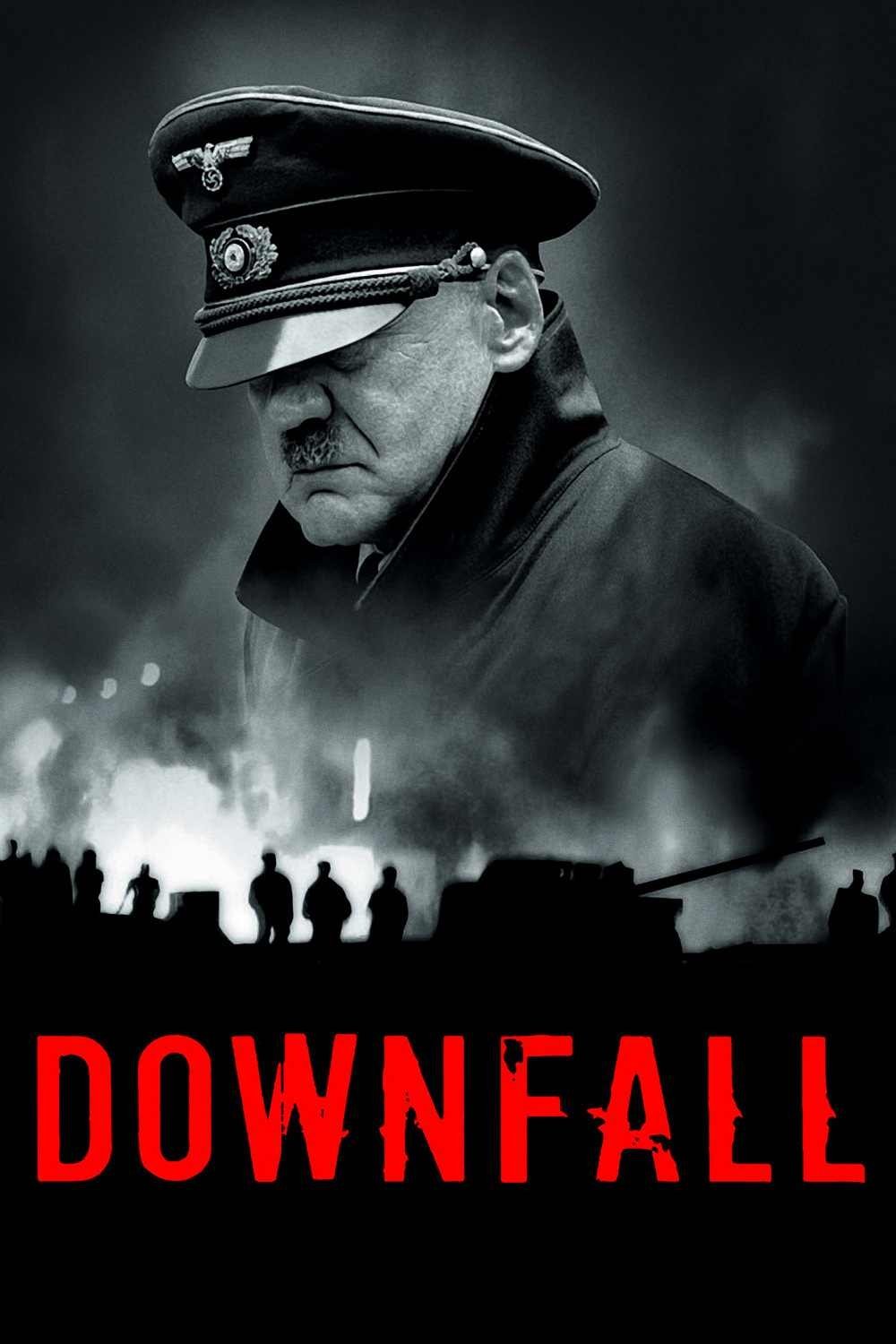
The first time I watched “Downfall” (2004), I felt that sense of historical reckoning crash over me—not just because of the events it depicted, but because of how resolutely the film situates itself within the tradition of European historical realism. From its severe commitment to environment, dialect, and physicality, to the way it eschews simple moral binaries, I immediately recognized its kinship to what I’d describe as the postwar wave of New German Cinema. Yet, it also draws on a broader lineage of European realism and the more loosely defined “historical drama” genre, especially as honed by filmmakers intent on confronting the traumas that shaped modern identity. For me, “Downfall” belongs to a strain that I’d call the “historical reckoning movement”—where cinema uses a veil of realism to force engagement with national memory and accountability. This is not the more impressionistic approach of the war film or the simplistic valedictory of classical Hollywood narratives about war; rather, it is a cold, often procedural dissection of a country’s darkest chapters.
Historical Origins of the Movement
To understand why “Downfall” sits at the intersection of New German Cinema and the larger tradition of European dramatic realism, I have to look back to postwar Germany itself. In the decades following World War II, German filmmakers were burdened with the legacy of their nation’s complicity in atrocity and the imperative to reclaim the image of German cinema from its Nazi-era propagandist stain. Something remarkable happened in the late 1960s and 1970s: directors like Rainer Werner Fassbinder, Werner Herzog, and Volker Schlöndorff began to shape a cinema that challenged, interrogated, and often indicted the German past. These creators, supported by new funding and a spirit of artistic rebellion, laid the foundation for what I now see as a movement oriented more around a set of ethics than a particular visual style. They embraced psychological realism, avoided hero-worship, and privileged stories of ordinary individuals swept up in, or complicit with, history’s grand narratives.
But what fascinates me most is how this movement never fixated on stylization for its own sake. Instead, directors would use long takes, natural lighting, underplayed performances, or the meticulous recreation of real events to sustain a sense of lived-in authenticity. Over time, their approach influenced broader currents in European cinema, such as the British “kitchen sink” dramas and, later, Italian neorealism—with the significant difference that German cinema’s social concerns were inextricably tied to the specific horror of the Nazi period and the collective need for Vergangenheitsbewältigung—a German word with no direct English equivalent, meaning “coming to terms with the past.” For me, the central concern here is not only about truth-telling, but about the morality of representation itself.
This Film’s Contribution to the Movement
Watching “Downfall,” I am struck by how the film refuses to dilute history through either spectacle or sentiment. This, in my view, is one of the film’s most significant contributions to the tradition of historical realism. Its depiction of Hitler’s final days in the Führerbunker, as seen through the eyes of his secretary Traudl Junge, feels less like a stylized re-telling and more akin to a clinical case study—intimate, unsettling, and rigorously unsparing. To me, the decision to root much of the perspective in a young, initially naive woman is not a gambit for audience sympathy, but a clear-eyed attempt to probe the question of complicity on an everyday, granular scale.
What lingers most deeply with me is the film’s ethical tension. In the hands of director Oliver Hirschbiegel and screenwriter Bernd Eichinger, Hitler is neither a sensational monster nor a figure of sympathy; he is devastatingly, uncomfortably human. I see the film pushing the boundaries of what my own sensibilities want from representation: is it right or dangerous to show the architect of such evil as someone capable of fondness, vulnerability, and even moments of deluded hope? I’ve wrestled with the unease the film induces—especially in moments when its realism feels like it’s brushing up against the forbidden, threatening to evoke not so much pity as a sense of commonality that is frankly disturbing. But that’s exactly what marks it as part of its movement: “Downfall” risks moral ambiguity to force the viewer to stop hiding behind explanatory myths or easy condemnation.
The strict attention to period detail—the ticking of clocks, the drip of water, the daily banality of meals juxtaposed against the chaos of war—further aligns “Downfall” with the New German Cinema ethos. I see echoes of Fassbinder’s “The Marriage of Maria Braun” or Schlöndorff’s “The Tin Drum” in its willingness to embed personal experience amid the machinery of social catastrophe. Yet it also challenges some tendencies of its predecessors: where earlier German cinema occasionally flirted with abstraction or allegory, “Downfall” insists on the unimpeachable physical realities of history. Here, even the camera itself seems to lack judgment; it follows, it records, it refuses to let viewers shift their gaze away from the everyday rituals of perpetrators and victims alike. In this, the film becomes not only a product but also a critical evolution of the cinematic movement it extends.
Influence on Later Genres and Films
- Influence 1 – The Procedural Historical Drama: After absorbing the relentless specificity of “Downfall,” I now spot its fingerprints everywhere in the surge of “procedural” historical dramas that emerged in Europe through the late 2000s and 2010s. Take “The Baader Meinhof Complex,” which uses similar methods to dissect the rise and fall of radical groups in postwar Germany, or the meticulously-rendered “United 93,” which privileges real-time tension and refrains from melodrama. “Downfall” made me realize how effective the procedural mode is at stripping away cinematic comfort: the real terror of history is the ways in which it proceeds with such ordinary, mechanistic precision.
- Influence 2 – Reframing Villainy: One of the most controversial legacies of “Downfall,” in my eyes, has been its recalibration of how cinema depicts historical evil. The film’s viral afterlife—memes appropriating Bruno Ganz’s fevered Hitler rants—paradoxically testifies to the enduring power and risk of portraying monstrous figures as, above all, humans. Since “Downfall,” I’ve noticed a marked shift in World War II films and prestige TV that dare to complicate their antagonists: think of Christian Petzold’s “Phoenix,” or even the more ambiguous Nazi officers in modern Holocaust dramas. This trend is not without backlash, of course, as audiences and critics remain divided over whether such portrayals risk accidental rehabilitation or force a more critical, mature engagement with the past.
- Influence 3 – Ethics of Representation in Historical Cinema: Perhaps the most lasting impact, at least from where I stand, is how “Downfall” reignited debate over the ethics of representing historical trauma. The film continues to be a reference point in academic debates—should filmmakers show evil as mundane? Can realism ever be neutral, or does it always risk normalization? These questions have spilled into later releases like “Son of Saul” or “The White Ribbon.” With “Downfall” foregrounding these dilemmas, subsequent filmmakers have either embraced uncomfortable ambiguity or sought more distant, allegorical means of addressing evil, as Michael Haneke does in his work. No matter which path they choose, the conversation is richer, and I often find myself revisiting “Downfall” as a touchstone.
The Movement’s Lasting Impact
Reflecting on why the historical reckoning movement—and its mid-2000s resurgence through films like “Downfall”—continues to matter, I keep circling back to one central idea: memory is a battleground. Films in this tradition, for me, are not about condemnation or vindication but about bearing unflinching witness to the realities of our shared past. In the process, they serve as tools for national introspection, inviting future generations to interrogate not just what happened, but how those events are re-presented, mythologized, or sanitized by culture. I see “Downfall” as proof that the cinematic form can shoulder this responsibility without retreating to spectacle or melodrama—or, worse, cozy nostalgia.
As someone deeply invested in the evolution of film movements, I view these films’ legacy not only as artistic achievement but as civic intervention. They have complicated our relationship with the figures and events that define contemporary identity. The movement’s works—whether they depict the banality of evil, the blindness of ordinary citizens, or the bureaucratic grinding of historical machinery—continue to urge me (and all viewers) to examine the subtle ways we participate in, inherit, or resist the forces of history. It’s a cinema for the long reckoning, one whose value endures precisely because it offers discomfort rather than closure.
To connect style and technique with broader context, you may find these perspectives useful.
🎬 Check out today's best-selling movies on Amazon!
View Deals on Amazon