
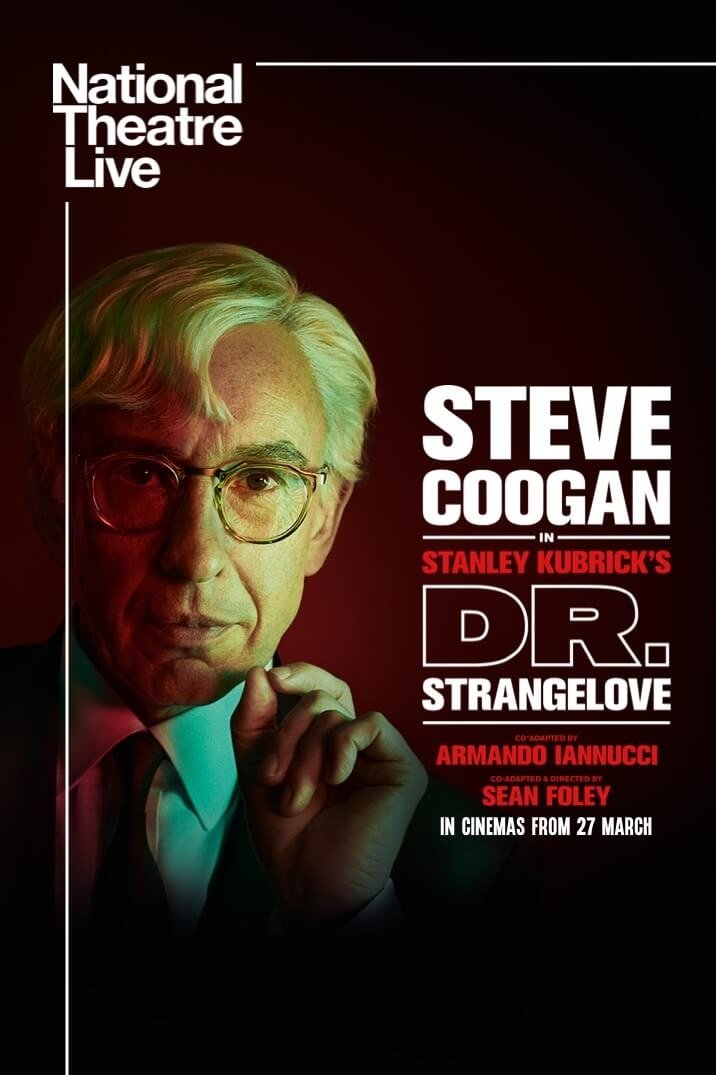
The Genre of This Film
Whenever I revisit “Dr. Strangelove or: How I Learned to Stop Worrying and Love the Bomb,” I’m always struck by how the film’s boldest and most enduring traits land squarely within the realm of political satire. For me, this isn’t just a comedy with a dark undercurrent; it’s a masterpiece of satirical filmmaking, using humor to dissect the errors and anxieties of Cold War politics. I don’t just see this as a comedy or a political thriller; I see it as one of the most incisive satires ever constructed on film. Its primary genre is, without question, political satire—more specifically, the satirical dark comedy. The way it blends absurdist humor with biting commentary on the arms race, war bureaucracy, and the fallibility of leaders fundamentally defines its genre. I’ve always felt that this film serves as a touchstone for understanding how satire can completely transform our view of history and politics through exaggeration and irony.
Key Characteristics of the Genre
-
Common themes
In my experience, the very heart of satirical cinema, especially within the political domain, is a deep skepticism toward established power structures—be it governments, military hierarchies, or ideological dogma. Films in this genre continually challenge the idea of rational actors at the helm, preferring to highlight incompetence, hypocrisy, or corruption. I’ve noticed that these stories often tackle themes like the absurdity of war, the dangers of blind patriotism, and the existential threats created by those making decisions behind closed doors. Occasionally, there’s an undercurrent of fatalism, a sense that the world is being steered by individuals whose self-interest or incompetence put everyone at risk. These films rarely comfort; instead, they urge awareness and critique of institutional behavior. -
Typical visual style
What has always stood out to me about satirical dark comedies is their refusal to rely on the conventional trappings of slapstick or overt visual gags. Instead, I notice a penchant for stark, often austere cinematography with visuals that can feel almost documentary-like, even while the dialogue and scenarios spiral into the ridiculous. In classic political satire, black-and-white cinematography is frequently leveraged to give events a sense of seriousness that collides ironically with the madness on-screen. I often find that directors embrace static, symmetrical compositions—staging scenes almost like political cartoons, where the framing is as much a comment as the script. Dramatic lighting and a careful avoidance of vibrant colors add to a sober atmosphere that makes the humor land with even greater bite. The mise-en-scène typically furthers the sense of institutional irony: long conference tables, military settings, and imposing government architecture are rendered simultaneously grand and farcical. -
Narrative structure
If I trace the rhythms of satirical films, I’m always struck by the linear momentum that mimics “serious” political thrillers or war movies—only to subvert those expectations at nearly every turn. These narratives unfold in tightly regimented environments: war rooms, government offices, or, as I often observe, any place where important decisions are made. The essential trick is the build-up: tension rises as in a standard thriller, but is systematically deflated by ludicrous events, farcical misunderstandings, or the slow revelation of human folly. The dialogue is typically quick, witty, and multilayered, packed with irony, double meanings, and allusions. I love how such films avoid neat, tidy conclusions, often closing with bleak or ambiguous endings that reinforce the peril of their subject matter. -
Character archetypes
When I think of political satires, I immediately see a gallery of outsized yet eerily plausible figures. There’s usually the hapless leader, utterly out of his depth yet desperately projecting competence. Alongside him, I invariably find the hawkish military officer—a cartoon of militancy and paranoia—pushing the most extreme solutions. There are also bureaucrats, politicians, and advisors, each representing different shades of sycophancy, cowardice, or megalomania. The “voice of reason” sometimes makes an appearance, but their warnings are routinely ignored or drowned out. Many films of this genre also deploy a comic figure who embodies the absurd—the mad scientist, the overzealous subordinate, or the cunning provocateur—characters designed to both amuse and unnerve. I find that these archetypes are not there for depth, but for what they symbolize about the real institutions being lampooned.
How This Film Exemplifies the Genre
Every time I watch “Dr. Strangelove,” I’m struck anew by how perfectly it embodies the defining characteristics of political satire. I can’t think of another film that marries absurdist humor and existential dread with such precision. The themes are unmistakable: paranoia, the fragility of human systems, and the uncontrollable momentum of military machinery. Rather than treating these as abstract threats, the film plunges me into a world where the fate of humanity hinges on a series of bureaucratic errors, eccentric personalities, and unchecked egos. I appreciate that the jokes are not throwaway gags; they are the very critique, revealing the foolishness upon which world-ending decisions are based.
Visually, the choice to shoot in black and white gives everything an illusion of seriousness, which only heightens the absurdity playing out. Every time I see the War Room, with its impossibly large circular table and looming overhead lights, I’m reminded of how set design itself can serve as commentary. There’s a crisp, clinical style to Stanley Kubrick’s framing—characters are dwarfed by the architecture, suggesting their individual impotence within the machinery of government. The frequent use of static shots, as well as the long, tense takes, reinforces a feeling of watching history unravel in real time, even as the conversations turn madcap.
The narrative construction is a marvel to me: a ticking-clock scenario, escalating through bureaucratic miscommunication and grotesque militarism, always teetering between suspense and farce. I relish how each subplot—whether following the crew of the B-52 or the cross-talk in the War Room—ratchets up the stakes while offering no real avenue for rescue. In my eyes, there’s a fatalistic propulsion to the plot: once set in motion, disaster becomes inevitable, and even those who seek to avert it contribute unwittingly to the chaos.
What truly cements the film’s satirical identity for me are the characters. Peter Sellers’s triple performance is pure genre perfection: his President Muffley is flustered and reactive, his Group Captain Mandrake is the ineffectual voice of reason, and his titular Dr. Strangelove embodies the nightmarish logic of scientific hubris. George C. Scott’s General Buck Turgidson is just the kind of paranoid, blustering militarist I associate with this genre—his bravado is so outsized that it walks the razor’s edge between threatening and ridiculous. Each role is a caricature, yet each feels uncomfortably close to reality—a trick I find unique to satirical cinema at its best.
In a broader sense, “Dr. Strangelove” exposes me to the depths of human irrationality by letting institutions and their representatives run wild, unchecked. The film weaponizes laughter as a mirror—forcing me to confront the insanity at the core of mutually assured destruction, all while laughing with disbelief. Every time I encounter its closing montage—those chilling mushroom clouds under a bittersweet love song—I’m reminded that this is not just a comedy, but a warning delivered at the peak of its genre’s capabilities.
Other Essential Films in This Genre
- “The Great Dictator” (1940) – Charlie Chaplin’s classic delivers biting satire about fascism and the cult of personality. I see echoes of “Dr. Strangelove” in the way Chaplin lampoons totalitarian leaders and constructs scenes where power-hungry behavior is pushed to hilarious extremes, exposing the folly behind it. The film uses slapstick and sharp monologues to critique the rise of authoritarianism while maintaining a comedic surface.
- “Wag the Dog” (1997) – To me, Barry Levinson’s spin on political scandal stands as a modern torchbearer for the genre. It satirizes media manipulation and government deception by imagining spin doctors fabricating a war to distract from presidential misconduct. I admire how the humor emerges from the casual way lies become truth in the hands of those who control the narrative, exposing institutional cynicism with wit.
- “In the Loop” (2009) – Armando Iannucci’s sharp, profane dialogue is the heartbeat of this sardonic look at governmental blundering before a potential war. I find its portrayal of politicians, advisors, and bureaucrats to be depressingly funny; every character defends their incompetence with creative doublespeak. The film’s acerbic tone perfectly captures how a single decision can spiral into global catastrophe, showing me that the DNA of satirical dark comedy lives on in new generations.
- “Brazil” (1985) – Terry Gilliam’s dystopian black comedy resonates with me for its visual bravado and relentless ridicule of bureaucratic excess. The film’s surrealist imagery and labyrinthine institutions exaggerate governmental inefficiency and repression, often in ways that remind me of “Dr. Strangelove.” Every visual gag and narrative twist deepens the sense of a society lost to absurdist red tape, making it a vital entry in the satirical canon.
Why This Genre Continues to Endure
I find myself repeatedly drawn to political satire and dark comedy, despite the changes in social climate or cinematic trends, because these films never stop feeling relevant. I think audiences—myself included—are compelled by the way this genre exposes the contradictions and weaknesses in even the most powerful systems. The humor creates a buffer: it lets us process anxieties that might be unbearable if presented straight. When I laugh at the incompetence or insanity of those in charge, I’m also reckoning, in a safer way, with the fear that those absurdities may actually be guiding real-world decisions.
These films thrive because they remain reflections of the times, constantly adapting their targets but never their methods. I see satire as a kind of cinematic alarm bell—it takes familiar archetypes and throws them into exaggerated chaos, encouraging me to question what I see and hear from those in authority. As new technologies develop, new threats arise, and new political crises dominate the headlines, the genre just keeps finding new material. I sense that this becomes a kind of catharsis—I laugh, but I also learn, and sometimes I leave the theater a little more wary of what leadership really means.
Most importantly, I feel that satirical dark comedies grant me a sense of agency. By stripping power figures of their mystique and exposing their flaws, these films invite me to see the world not as immutable, but as a place where even the most entrenched institutions are vulnerable to criticism and, ideally, reform. In the long run, I believe the genre endures because it bridges entertainment with activism: it invites laughter and anger at the same time, and it reminds each viewer—myself included—that sometimes the only way to tell the truth is through the lens of comedy.
If you’re interested in how viewers respond beyond technique, you may want to explore audience and critical reception.
🎬 Check out today's best-selling movies on Amazon!
View Deals on Amazon