
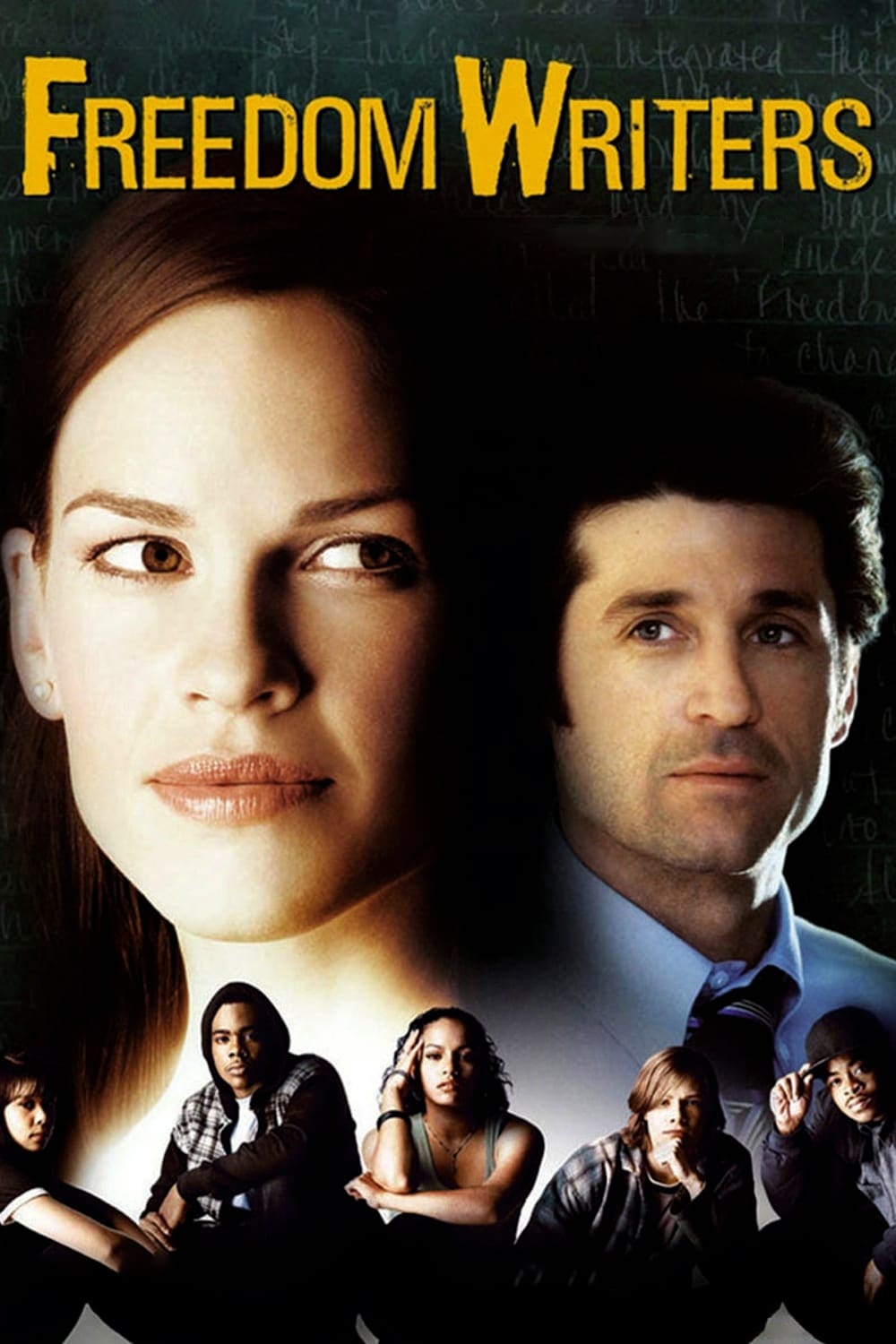
The Genre of This Film
There are moments when I watch a film and immediately sense its allegiance to a particular cinematic tradition—“Freedom Writers” struck me right away as a modern incarnation of the drama genre, with a strong leaning toward what I have always considered the “inspirational teacher” or classroom drama subgenre. My familiarity with the patterns and expectations of this set of films makes it clear why I view “Freedom Writers” through the lens of drama: every scene feels packed with emotional stakes, conflicts rooted in real social hardship, and the tension and release that defines great dramatic storytelling. The central narrative, revolving around a teacher’s journey to reach marginalized students and ignite change, uses the classroom as a crucible for character growth and societal questioning—a hallmark of this specific subgenre.
Key Characteristics of the Genre
-
Common themes
What always strikes me when I revisit dramas centering on educators or troubled students is their preoccupation with transformation—personal, communal, sometimes even systemic. Stories like these consistently tackle issues of social disparity, prejudice, empowerment, and reconciliation. I notice that a strong current of resilience runs through them, mixed with hope battling cynicism. Narratives often wrestle with questions of identity, the limits and power of empathy, and the value of challenging the status quo. At their best, I find these films unravel generational trauma and examine whether genuine connection can spark change within institutions resistant to it. -
Typical visual style
From my perspective, classroom dramas generally rely on a sense of heightened realism—a visual approach that aims for emotional honesty over stylistic gloss. I pay attention to the subdued, unshowy cinematography: muted palettes dominate the school interiors, often accentuating the concrete realities of underfunded environments. The camera, more often than not, is at students’ or the teacher’s eye level, investing the audience in their struggles. There’s limited stylization, but directors tend to favor close-ups in emotionally charged moments, which I believe brings a powerful sense of intimacy. It feels like the camera is determined to bear witness rather than manipulate. -
Narrative structure
One pattern I’ve noticed and come to expect in these dramas is the arc that takes us from initial dysfunction to hard-won breakthroughs. Most of these stories, including “Freedom Writers,” open with a fractured group—usually a class beaten down by adverse life circumstances and an outsider teacher facing skepticism and institutional barriers. The structure then moves through escalating conflicts (both personal and societal), small victories, setbacks, and ultimately, a climactic affirmation of mutual understanding. There’s a strong sense of progression, with the narrative’s emotional rhythm shaped by the teacher’s persistence and the students’ incremental growth. It’s rare for the neatest of resolutions; what really matters in this genre, I find, is the journey itself. -
Character archetypes
When I think of educational dramas, I immediately recall certain archetypes: the idealistic newcomer teacher, determined to make a difference; the hardened administrator or veteran colleague, wary or resistant to change; a mix of students, often painted as troubled, alienated, but individually distinct—the angry leader, the withdrawn observer, the comedian masking pain, the skeptical cynic, and the quietly ambitious. Each is shaped by their backstories, all colliding in the volatile space of the classroom. These films always foreground the collective dynamic, yet ensure that a few students emerge with detailed arcs, showing personal vulnerabilities or previously hidden strengths. The teacher, despite initial optimism, usually must confront their own limitations and blind spots, making the narrative as much one of mutual transformation as of instruction.
How This Film Exemplifies the Genre
For me, “Freedom Writers” stands as an almost textbook case of the classroom drama—yet its effectiveness comes from how it embodies, rather than merely reproduces, the genre’s essential features. What I find most powerful is the film’s unwavering commitment to the idea that storytelling can liberate, and that education, while often presented as a battleground of control, is also a space where empathy can slowly destabilize entrenched biases. Watching Erin Gruwell’s journey, I recognize the familiar arc of resistance and incremental breakthrough: students initially closed off, their apathy camouflaging deep wounds and survival skills honed by a harsh world. The film orchestrates key classroom scenes—tense, argumentative, at times chaotic—which to me reflect the genre’s tradition of using group dialogue as a crucible for individual revelations.
One aspect I especially appreciate is how the film treats the classroom’s visual and emotional atmosphere with such authenticity. The lighting and color, in my view, achieve that specific blend of drabness and warmth, emphasizing how a bare, gray space becomes, through shared effort, a haven for difficult truths. The use of close-ups during students’ confessions and reading of diaries pulls me into their stories—there’s an emotional rawness that I consider a vital trait of the best dramas about education. I never doubt, for even a minute, that the stakes are personal. The script and performances dig into the intricacies of classroom power dynamics and individual transformation without sugarcoating. It’s the gradual evolution of Gruwell—her mounting frustration, her learning curve, her realization that compassion alone is not enough—that most resonates with me as a reader of the genre’s conventions.
The film’s array of student characters offers precisely the cross section I expect from this genre, but I appreciate how it takes time to nuance their stories. Instead of using students merely as narrative props, “Freedom Writers” makes room for several to have their stories told in their own voices. This aligns with my preference for character-driven drama over calculated messaging. The antagonism from the educational system and family pressures is neither faceless nor melodramatic, but instead woven believably into the narrative obstacle course. What truly moves me, though, is how the film delivers moments of earned hope: not in grand triumphs, but in the act of writing, sharing, and being heard. That to me is where its genre heart beats loudest.
Other Essential Films in This Genre
- To Sir, with Love (1967) – I always return to this Sidney Poitier classic because, in many ways, it established the very framework for the inspirational teacher storyline. Set in a tough London school, the teacher’s efforts to win over disaffected students through respect and tough love remain poignant. What has always stayed with me is the film’s focus on dignity and cultural conflict—markers of this subgenre’s DNA.
- Stand and Deliver (1988) – Watching Edward James Olmos as Jaime Escalante, I’m struck by how this film emphasizes the frustrations and victories of engaging disadvantaged students in mathematics. What stands out to me is its attention to real-life stakes—the risk of failure, the skepticism of outsiders, and the power of one stubborn teacher’s belief in his students. Its narrative shares a kinship with “Freedom Writers”: perseverance, incremental trust, and a setting that’s more obstacle course than classroom.
- Dangerous Minds (1995) – Though often cited alongside “Freedom Writers,” I find this film’s tone a bit more melodramatic, but its depiction of an ex-Marine tackling an underfunded, inner-city school covers much of the same ground. I appreciate the toughness of its protagonist and the way the film uncovers both the bureaucracy and camaraderie of school life. For all its conventions—and occasional clichés—I see it as a defining entry in the genre, if only because it so clearly dramatizes the stakes and challenges of transformative education.
- Dead Poets Society (1989) – Every viewing of this film leaves me awash in the emotional gravity of teaching and the importance of self-expression. Even though the setting is more privileged than in “Freedom Writers,” the genre through-lines of inspiration, rebellion, and the teacher as a catalyst for change remain central. Robin Williams’ performance gives the film a sense of gentle subversion that I find makes the genre resonate both within and outside the classroom setting.
Why This Genre Continues to Endure
Whenever I reflect on why these classroom dramas maintain such a vital cinematic presence, I realize that the answer lies in their honest confrontation with the possibility of change. I constantly encounter stories of bureaucratic, societal, and personal dead-ends in real life—yet these films create a space where effort, empathy, and dialogue genuinely matter. For me, that is irresistibly compelling. The conflicts are never distant: education is innately personal, and everyone recognizes themselves somewhere in the web of authority, rebellion, hope, or disappointment that these films weave.
What keeps me returning to this genre is its balance between realism and aspiration. I am deeply aware that the world seldom offers the cathartic breakthroughs shown on screen, yet the films don’t promise easy victory—they show the cost and complexity of real progress. These stories continue to resonate for me and so many others because they ask what it would take—personally and collectively—to break through hardened attitudes, prejudice, and self-doubt. In watching these films, I’m constantly reminded of the power of listening, of not giving up, and of the courage to reimagine traditions and expectations that feel immovable.
I believe that, while fashions in cinema come and go, the classroom drama endures because it addresses perennial questions: Can authority and empathy coexist? Can young people really find their voices, and what happens when they do? Do we accept the world as it is, or step bravely into the challenge of making it better? As long as those questions matter, there will always be a place for movies like “Freedom Writers”—films that don’t just entertain, but encourage us to reflect and, maybe, to try a little harder for connection in our own worlds.
If you’re interested in how viewers respond beyond technique, you may want to explore audience and critical reception.
🎬 Check out today's best-selling movies on Amazon!
View Deals on Amazon