
Film Movement Context
Watching “Groundhog Day” for the first time, I remember being instantly struck by how it blended genres and emotional registers with a lightness that defied categorization. Although some have tried to slot it into purely comedic or even fantasy realms, I see “Groundhog Day” as deeply rooted in the lineage of the “High-Concept Hollywood” movement, with a distinct inflection of what I’d call philosophical comedy—a subgenre that itself evolved out of several New Hollywood trends. Its effortless looping of time and innovative narrative structure fits snugly within the larger tapestry of American postmodern cinema, especially those films that challenge narrative continuity and embrace metafictional playfulness. The film rewards repeat viewing because it is itself about repetition and self-awareness. For me, “Groundhog Day” epitomizes a moment when mainstream American movies not only absorbed experimental and international influences (like narrative circularity from European art film) but also domesticated them, giving this bold tradition a blockbuster sensibility and a philosophical punch within a genre context.
When I teach or write about “Groundhog Day,” I always categorize it alongside those late 1980s and early 1990s films that transformed Hollywood’s approach to story logic—building on the legacy of everything from Frank Capra’s moral universe to the ironic reflexivity of Woody Allen, yet cementing a unique identity. I view it as standing at the crossroads of fantasy, comedy, and existential inquiry, but with a commitment to emotional engagement that makes it more than mere pastiche. The movement I find most relevant here isn’t just a formalistic one: it’s an era where the narrative device becomes a vessel for pressing ethical and spiritual questions, tightly woven with genre evolution.
Historical Origins of the Movement
The roots of the high-concept, narratively innovative movement that nurtured “Groundhog Day” trace back, in my understanding, to Hollywood’s struggle with New Hollywood’s disruptions in the 1970s. I often address how, after the uncertainty of the post-Production Code years and the influences imported from France, Italy, and Japan, American filmmakers began to experiment with narrative time, subjective reality, and genre blending. By the 1980s, there was a push to harness those experimental instincts for mass appeal. Plots became more marketable, often expressed as easily pitchable “What if?” scenarios (“What if you relived the same day endlessly?”). Still, the movement was more than clever loglines; it was about finding new containers for old philosophical and psychological dilemmas.
I’ve always felt the emergence of this movement is best understood in the context of both technological and social change. The rise of video rental culture meant audiences grew bolder about repeated viewings, so filmmakers leaned into layered narratives and unconventional structures. Directors and screenwriters sought ways to provoke thought without losing the mainstream crowd. In the case of “Groundhog Day,” this meant infusing a fantastical premise—a time loop—with a thoroughly relatable, existential crisis and redemption arc. The result: a movement in which movies like “Back to the Future,” “Big,” and, later, “Eternal Sunshine of the Spotless Mind,” provided easy access to big questions about free will, self-improvement, and the meaning of everyday life.
This Film’s Contribution to the Movement
What sets “Groundhog Day” apart, in my view, is how it leverages the movement’s broad tendencies and then deepens them. Rather than simply using a high-concept premise for laughs or spectacle, the film engages with its central time loop as a crucible for philosophical and ethical self-exploration. When I watch Bill Murray’s Phil Connors, I can’t help but see the way the film refuses to offer shortcuts: the narrative forces both its character and its viewers to grapple with the real-time slog of transformation, not just magical quick fixes.
For me personally, “Groundhog Day” advances the movement by subverting expectations at every turn. Where other high-concept fantasies might allow their protagonists to quickly “solve” the problem (think of the brisk wish-fulfillment in “Big” or the adventure-centric cycle of “Back to the Future”), “Groundhog Day” forces confrontation with monotony and despair. The movement is not just about breaking rules—it’s about the consequences of those broken rules. In showing Phil’s journey through narcissism, depression, indulgence, and finally compassion, I feel the film uses repetition not merely as a gimmick, but as an engine for authentic change.
I’m especially drawn to the film’s unhurried, methodical structure. There’s an almost Zen-like rhythm to its endless days, and I find it remarkable that such a repetitive conceit never feels like a mechanical exercise. It’s this nuance—the steady accumulation of minor, almost imperceptible changes—that’s emblematic of the movement’s best films. The emotional impact comes not from plot twists, but from the resonance of small gestures and choices, revealing how genre mechanisms can lay the groundwork for spiritual introspection and social critique. “Groundhog Day,” for me, is a landmark: it draws on the movement’s formal playfulness while daring to ask whether true change is really possible, and what it might cost.
Influence on Later Genres and Films
- Expanded Narrative Innovation – I’ve noticed that after “Groundhog Day,” filmmakers were emboldened to experiment more aggressively with unconventional temporal structures. Movies like “Edge of Tomorrow” and “Russian Doll” on TV borrow the cumulative, time-loop mechanism to probe character development in ways that feel directly descended from the patient, ethical exploration found in “Groundhog Day.” This isn’t just mimicry: it’s a full embrace of high-concept as a philosophical catalyst.
- Genre Hybridization – I often cite “Groundhog Day” when discussing the blurring of strict genre demarcations. In its wake, comedies became more dramatic, fantasies more psychological, and even romances more metaphysical. You can see its fingerprints on films as varied as “About Time” and “Palm Springs,” where the time loop acts as a metaphorical and emotional testing ground, rather than just a plot device. The film’s approach to blending comedy with existentialism became a template, pushing subsequent works toward richer, more layered storytelling.
- Mainstreaming Philosophical Cinema – One of the most profound influences, in my opinion, is how “Groundhog Day” stripped the barrier between philosophical inquiry and mainstream accessibility. I see echoes of its sensibility in everything from Pixar’s “Soul” to Charlie Kaufman’s scripts and the rise of what’s sometimes called “smart films for everyone.” Audiences, post-“Groundhog Day,” became more receptive to films that nudged them to consider the cyclical, repetitive nature of life, the struggle for meaning, and the question of self-improvement—without sacrificing entertainment value.
The Movement’s Lasting Impact
When I reflect on why the high-concept, postmodern movement endures, especially in the context of films like “Groundhog Day,” it comes down to its ability to bridge the gap between philosophy and mass-market narrative—between seriousness and playfulness. What continues to draw me back to this tradition isn’t just the cleverness of its premises, but the way those premises are harnessed to ask why we are the way we are, and who we might become. The movement matters for me because it invites audiences into philosophical territory using the very tools of genre entertainment—and, maybe paradoxically, manages to make those big questions more urgent by cloaking them in familiar forms.
I also value the movement’s refusal to see the audience as passive recipients of moral lessons. Instead, as in “Groundhog Day,” it implies that repetition, reflection, and struggle are themselves sources of meaning. The open-endedness, the focus on process rather than immediate results, keeps me thinking about these films long after the credits roll. I marvel at how the movement’s innovations have now seeped into mainstream storytelling so thoroughly that nonlinear timelines, metaphysical conceits, and genre-mixing are no longer considered risky—they’re the new toolkit for filmmakers who want to both entertain and challenge us.
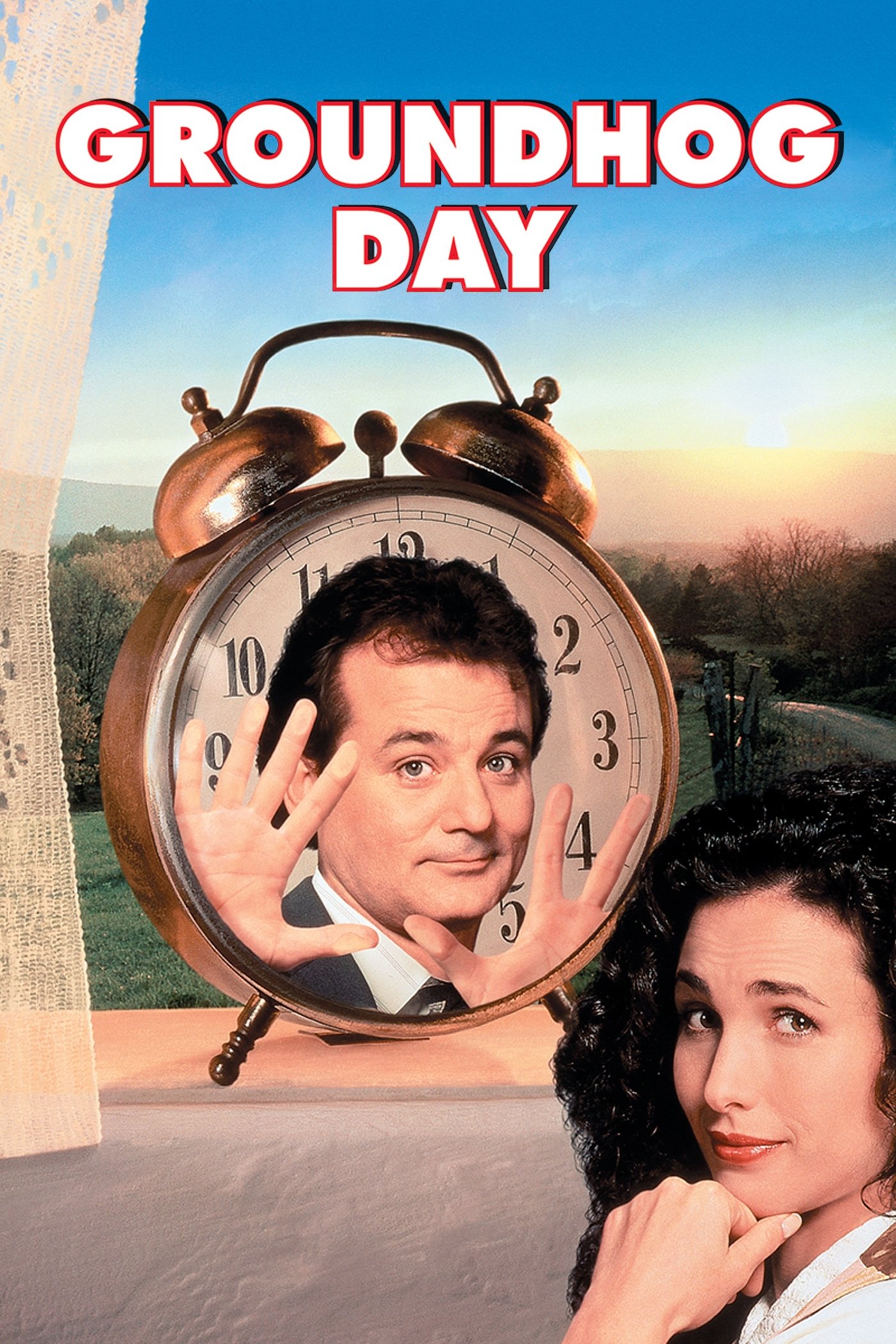
Ultimately, my engagement with postmodern, high-concept cinema—as embodied by “Groundhog Day”—is continually refreshed by how it taps into deeper patterns of human experience. We all revisit the same themes and behaviors in our lives, just as Phil Connors wakes to his alarm clock each morning. The movement’s gift, I believe, is reminding us that our stories, circular as they may seem, are always worth telling anew.
To connect style and technique with broader context, you may find these perspectives useful.
🎬 Check out today's best-selling movies on Amazon!
View Deals on Amazon