
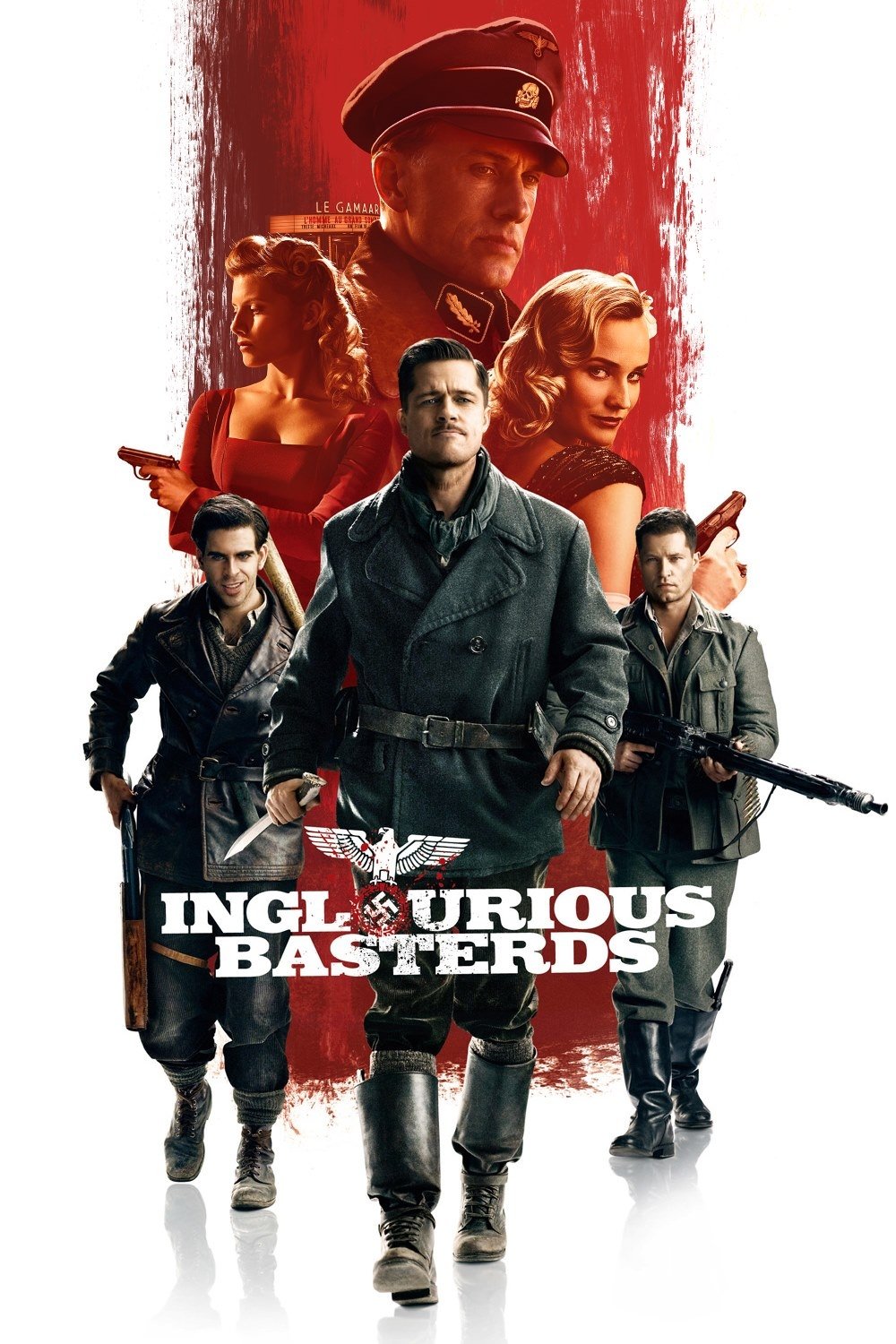
Film Movement Context
Every time I recall my first encounter with “Inglourious Basterds,” Quentin Tarantino’s audacity struck me—it was obvious I wasn’t just watching a World War II movie; I was entering the realm of postmodern cinema in its most exuberant form. I saw an unapologetic tapestry woven from filmic references, stylized violence, and genre subversion—hallmarks not only of Tarantino’s authorial signature, but of the postmodernist film movement at large. It would be easy to categorize “Inglourious Basterds” as part of revisionist history or war film traditions, but to me, its allegiance lies most strongly with postmodernism, especially as it has percolated through contemporary cinema. The film’s brazen intertextuality, genre mixing, and playful disregard for historical accuracy position it within a lineage that challenges, destabilizes, and reinvents cinematic conventions.
What makes this matter? For me, the significance lies in how postmodern filmmaking—at its most convincing—breaks cinema out of old constraints, allowing stories to simultaneously reference, question, and reconstruct the very genres and mythologies they spring from. “Inglourious Basterds” does not merely tell a story; it compels me to reflect on how stories are told, how history is visualized, and how filmmakers can rearrange the past to comment on culture, trauma, and the movies themselves. This blending of self-awareness and genre manipulation is what situates the film unmistakably within postmodernist tradition.
Historical Origins of the Movement
Whenever I trace the roots of postmodern cinema, I always find myself returning to those transformative decades between the late 1960s and the 1980s. These were years when filmmakers across the US and Europe, disillusioned with modernity’s promises and weary of classical narrative certainties, started to gravitate towards irony, pastiche, and multilayered textuality. I think of Jean-Luc Godard, whose French New Wave masterpieces like “Breathless” fractured genre rules and toyed with narrative logic, or Robert Altman’s sprawling, self-reflexive films. In Hollywood, the slow disintegration of the studio system and advent of “New Hollywood” created a fertile ground for innovation—movies began to quote other movies, not out of reverence, but as critique or playful homage.
For me, the emergence of postmodernism in cinema always felt like a rebellion—against grand narratives, against stable meaning, and against notions of linear, reliable reality. The movement’s roots are tangled up with broader shifts in Western thought: poststructuralist philosophy, the loss of faith in institutional authority, the explosion of mass media, and (in cinema) the recognition that images have their own power to seduce and deceive. What persists in postmodernist film, and what “Inglourious Basterds” so gleefully practices, is an emphasis on fragmentation, the mixing of high and low culture, and intertextual playfulness. It’s no coincidence these films thrive on allusions and genre cross-breeding, or that they call attention to their own construction—they emerged from an age obsessed with surfaces, simulacra, and the unstable nature of representation itself.
This Film’s Contribution to the Movement
When I first watched “Inglourious Basterds,” I was stunned by its sheer bravado. Here was Tarantino at his most unrestrained, offering me a film that doesn’t just invite comparison to cinematic history—it devours, regurgitates, and rewrites it. I noticed the audacious historical revision: the fantasy of assassinating Hitler in a movie theater was less a rewrite of history than a cinematic revenge on history’s atrocities. For me, this was pure postmodern bravura: by exposing the absurdity of the very narrative tropes on which war movies have long relied, Tarantino compelled me to question what movies are supposed to accomplish when they engage with real trauma. He gives us not the past as it was, but the past as pop culture wishes it could have been, filtered through grit, bravado, and metacinematic awareness.
I always marvel at the way the film’s structure calls back to pulp magazines, spaghetti westerns, and 1970s exploitation flicks, while still wrapping itself within the stately trappings of a period drama. Every time I hear the eclectic, anachronistic soundtrack, or see grainy insert shots that overtly reference earlier war and action films, I am reminded: this is cinema about cinema. Tarantino laces references (the Ennio Morricone cues, nods to classic war films and the French New Wave) with such shameless gusto that I feel the cinematic language itself is being remixed, celebrated, and gently mocked all at once.
But this isn’t mere pastiche for its own sake. I found myself gripped by the film’s sense of play—Tarantino’s segmented narrative and chapter headings both honor and destabilize genre tropes. Dialogue is protracted, almost theatrical, pushing suspense to uncomfortable breaking points; language itself becomes the battlefield, echoing postmodernism’s fixation on communication and miscommunication. The film’s violence is spectacular and cartoonish, operating not just as shock but as another reminder of artifice, refusing to let me forget that the spectacle is constructed. This perpetual self-referentiality, to my mind, is what makes the film’s commentary on cinema and history so provocative; it’s a work that interrogates the very function of narrative and genre while reveling in their possibilities.
Ultimately, I see “Inglourious Basterds” as expanding the boundaries of postmodern film. If earlier postmodern works dabble in allusion and irony, Tarantino amplifies these strategies, turning historical trauma into the material of grand, subversive entertainment—while prompting me to ask uncomfortable questions about complicity, catharsis, and the power of the screen to shape memory. For me, its enduring genius lies in how it oscillates between critique and celebration, using the past not as fact, but as canvas.
Influence on Later Genres and Films
- Embracing Intertextuality and Metafiction – What always fascinates me is how “Inglourious Basterds” emboldened a new wave of filmmakers to foreground intertextuality and metafictionality in mainstream cinema. After its release, I noticed how movies ranging from Taika Waititi’s “Jojo Rabbit” to the more playful Marvel entries started incorporating not just historical or pop-cultural references, but a sense of dialogue with cinema itself. These films invite me to recognize and relish references, to enjoy not only the stories they tell, but the very act of storytelling and genre manipulation.
- Normalization of Genre Blending – Another striking legacy, in my view, is how “Inglourious Basterds” accelerated the normalization of mixing genres once kept firmly apart. Before, World War II dramas seldom intersected so seamlessly with comedy, spaghetti western, and exploitation film DNA. After Tarantino, hybrid genres became not just acceptable but fashionable: I see echoes of this in David Mackenzie’s “Hell or High Water,” Edgar Wright’s “Baby Driver,” and even superhero films that ping-pong between tonal registers. This willingness to blend and bend genres is now almost expected, and I credit “Inglourious Basterds” as a touchstone for this phenomenon.
- Historical Revisionism as Play – I’ve observed that post-“Inglourious Basterds,” historical films felt freer to play fast and loose with their material—not out of disrespect, but as a kind of counter-narrative or cultural wish-fulfillment. Tarantino’s film showed that audiences could embrace, and even revel in, historical what-ifs when couched in knowingly artificial play. “Abraham Lincoln: Vampire Hunter” may be a camp outlier, but even more serious-minded works like “Once Upon a Time in Hollywood” (another Tarantino film) and the modern re-tellings of classic myths (like “The Favourite”) owe something to this realization: alternative histories, when openly performative, can function as both critique and catharsis.
The Movement’s Lasting Impact
Whenever I write about postmodern cinema and its legacy, I find myself grappling with why it remains so vital, even after decades of critical debate. To me, the enduring value of the postmodern movement is its invitation to keep questioning—questioning narrative, representation, identity, the power of images, and the boundary between what happened and how we remember it. Movies like “Inglourious Basterds” matter not only because they entertain, but because they ask me to become more active as a viewer—to notice the interplay between homage and critique, to recognize artifice, and to interrogate the stories films have taught us to cherish. In a media-saturated world, where genre boundaries have eroded and histories are endlessly mediated through screens, this kind of self-awareness feels ever more relevant. The movement encourages me to appreciate film as both an art form and a conversation: messy, multivoiced, and always unfinished.
To connect style and technique with broader context, you may find these perspectives useful.
🎬 Check out today's best-selling movies on Amazon!
View Deals on Amazon