
Film Movement Context
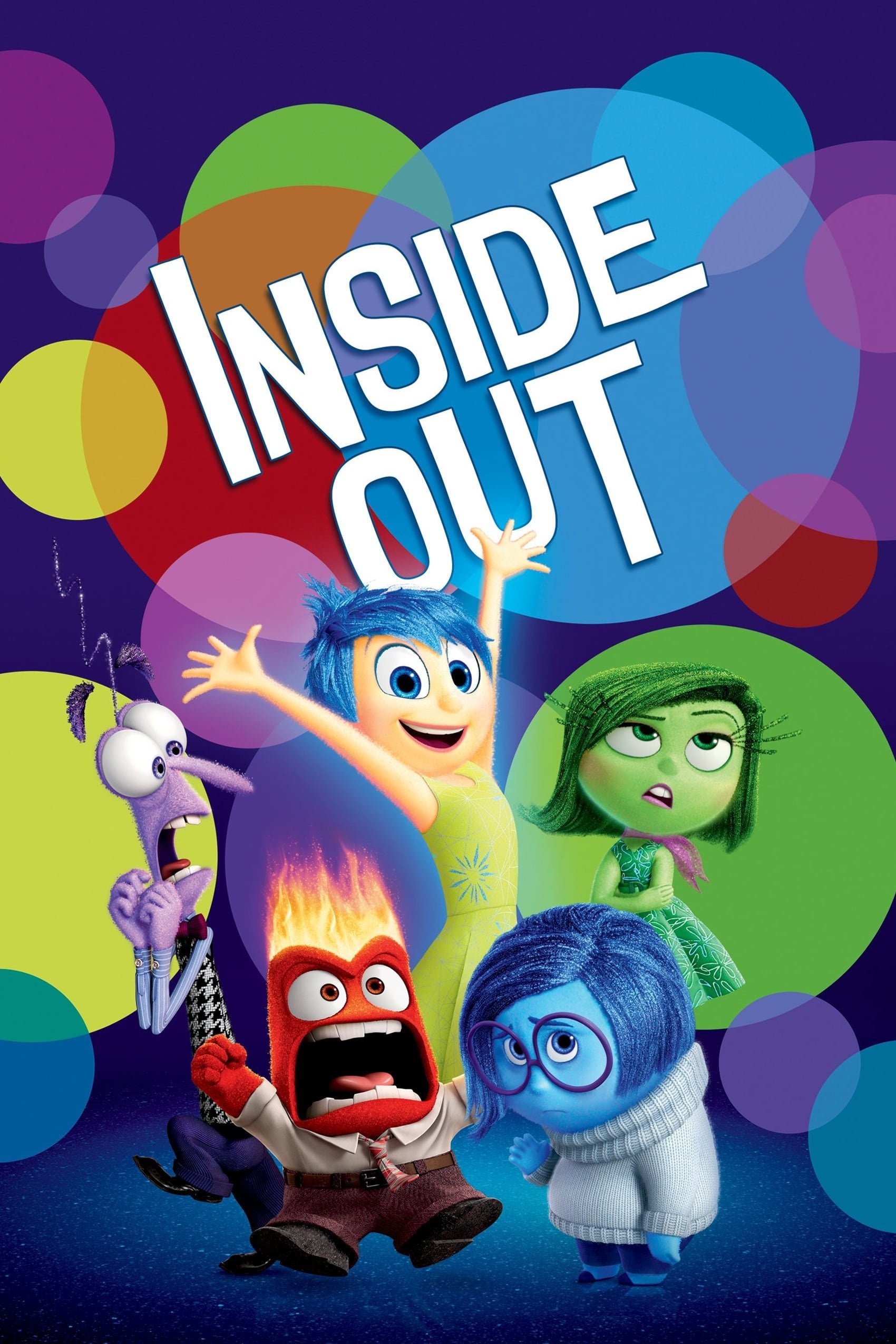
Whenever I think back on watching Inside Out, I’m struck by how deeply it exemplifies the characteristics of contemporary animation within the Psychological Realism movement—sometimes called the “Emotion Animation Wave.” This wasn’t just an animated film for me; it felt like a meditation on the inner workings of childhood and memory, echoing traditions that eschew cartoon antics in favor of human truth. As I perceive it, this film belongs squarely to a lineage that includes the Pixar School of Storytelling’s emotionally intelligent animation, but with roots that reach toward psychological interiors reminiscent of late-20th-century character-driven cinema (think of how Italian Neorealism wasn’t afraid to show internal struggle, despite being live action). I’d argue that Inside Out synthesizes two traditions: the imaginative elasticity of modern Western animation, and a deeper, almost therapeutic interest in how everyday experiences shape who we become. In my own view, it matters precisely because it conveys real psychological struggles through an accessible lens, transcending the shallow dichotomy of “adult” versus “children’s” films.
Historical Origins of the Movement
Tracing the lineage of Psychological Realism in animation, I can’t help but reflect on the anxieties and aspirations of the late 20th century. Animation, long dismissed as mere children’s amusement, underwent seismic evolution in the 1990s. Pixar’s emergence was, at least in my experience, more than a technical revolution—there was a shift in what stories animation could tell. I see roots in the countercultural comics of the 1960s and 1970s, where artists like Art Spiegelman interrogated identity, selfhood, and trauma through expressive, often anthropomorphic figures. Miyazaki’s My Neighbor Totoro and Grave of the Fireflies signaled a willingness to confront childhood vulnerability head-on, making visible those emotions I’d previously only seen buried beneath dialogue in live-action films. With Inside Out, the tradition matured into a mainstream artifact. For me, it’s a reflection of how, by the 2010s, audience tastes had changed—people craved authenticity, complexity, and films that could honor the messy inner languages of sadness, joy, and change without recourse to easy answers. This movement isn’t simply about representing real emotions; it’s about making the invisible architecture of the mind visible, and dignifying the psychological realities of all ages.
This Film’s Contribution to the Movement
What continues to astonish me about Inside Out is the sheer ambition behind its narrative conceit—visualizing the shifting, often contradictory nature of emotion as tangible characters in a child’s mind. Most animated films before it gestured at “feeling” through metaphor, but here, I felt the film quite literally offered an illustrated diagram of the psyche. It’s not a children’s adventure with feelings on the periphery; the emotions themselves are the protagonists. That’s a radical inversion I’ve rarely seen achieved with such grace. Watching Riley’s inner world—how the abstraction of memory, core values, and trauma is rendered as playful, animated geography—I understood this was an explicit answer to the movement’s call to honor psychological nuance. The film’s refusal to demonize sadness, to insist (as I interpret it) that being whole means embracing even the feelings we try to exile, is a profound contribution to cinematic storytelling.
In my personal assessment, Inside Out also bravely resists the didactic tendencies that have plagued many “message-driven” films, both animated and live action. It doesn’t preach; it allows the process of self-discovery to unfold visually, harnessing the movement’s faith in allegory as a tool for self-knowledge. From my point of view, its innovations lie in the formal blending of genre—comedy, adventure, coming-of-age (Bildungsroman), and high-concept fantasy—infused with authentic emotional stakes. It felt revolutionary to me that children and adults alike could find themselves mirrored here, validating experiences that might otherwise feel too delicate for mainstream cinema. I was particularly struck by the meticulous way the film animates the construction and collapse of “personality islands”—unveiling, for perhaps the first time in animation, the architecture of growing up as an active process, fraught with risk and potential renewal. Where past films in this movement implied these themes via character arcs, Inside Out brings them to the forefront, discovering a universal visual language for complexity in human feeling.
Influence on Later Genres and Films
- Influence 1 – Mainstreaming Emotional Complexity in Animation: For me, the most immediate impact was how Inside Out emboldened later animated features to address nuanced mental health issues—a territory previously considered too mature for the “family film.” I see clear echoes in movies like Coco and Encanto, both of which dare to situate trauma, generational conflict, and reconciliation at their core. The film’s empathetic approach, its willingness to present characters in emotional upheaval without clear right answers, broke open the narrative palette for mainstream studios. In my observation, this movement helped to dissolve the taboo surrounding cinematic depictions of sadness and anxiety in children’s experiences.
- Influence 2 – Hybridization of Genre Boundaries: After Inside Out, I noticed a marked increase in films that blended adventure, psychological drama, and fantasy, refusing the neat categories that used to define genre animation. The Mitchells vs. the Machines and Turning Red immediately spring to mind—they harness genre conventions not merely for spectacle, but as metaphors for growing up and negotiating the push-pull of family and individuality. Personally, I credit this shift to the precedent set by Inside Out in embracing both the internal (emotion) and external (plot-driven) dimensions of character development, signaling a broader openness in film structure.
- Influence 3 – Integration of Cognitive Science Themes in Narrative: I’ve noticed that, after Inside Out, studios seemed emboldened to explore scientific ideas about how minds work—not just feelings, but memory, trauma, cognitive habits, and resilience. When Soul arrived, its lyrical exploration of personalities and life’s meaning felt like a direct descendant. Even live-action films like Everything Everywhere All at Once have borrowed animation’s penchant for internal mapping, visualizing consciousness as mutable and multidimensional. I read this as a testament to how Inside Out and its movement made psychology itself a worthy subject—the mind became plot, rather than just motivation.
The Movement’s Lasting Impact
Why does the Psychological Realism movement—and the “Emotion Animation Wave” that Inside Out so powerfully represents—remain vital to me and to the broader cinematic landscape? Because it finally reclaims animation as a tool for serious, collective emotional inquiry, not merely escapist entertainment. As I see it, the movement’s legacy is in creating a kind of storytelling that honors the full spectrum of feeling without condescension: children are treated as complex, resilient thinkers; adults are reminded of the subtle interplay between joy and sorrow shaping the human experience. These films urge me, and those I share them with, to accept vulnerability as strength—to see the beauty in imperfection and transition. The movement’s visual and narrative innovations have inspired an entire generation of filmmakers who now dare to imagine what cinema can do when it peers inside us, not just at the world we inhabit. In my estimation, this movement’s insistence on empathetic, psychologically rich storytelling doesn’t just entertain—it heals, provokes, and endures as an artistic force redefining what animation, and perhaps all film, can aspire to be.
To connect style and technique with broader context, you may find these perspectives useful.
🎬 Check out today's best-selling movies on Amazon!
View Deals on Amazon