
Film Movement Context
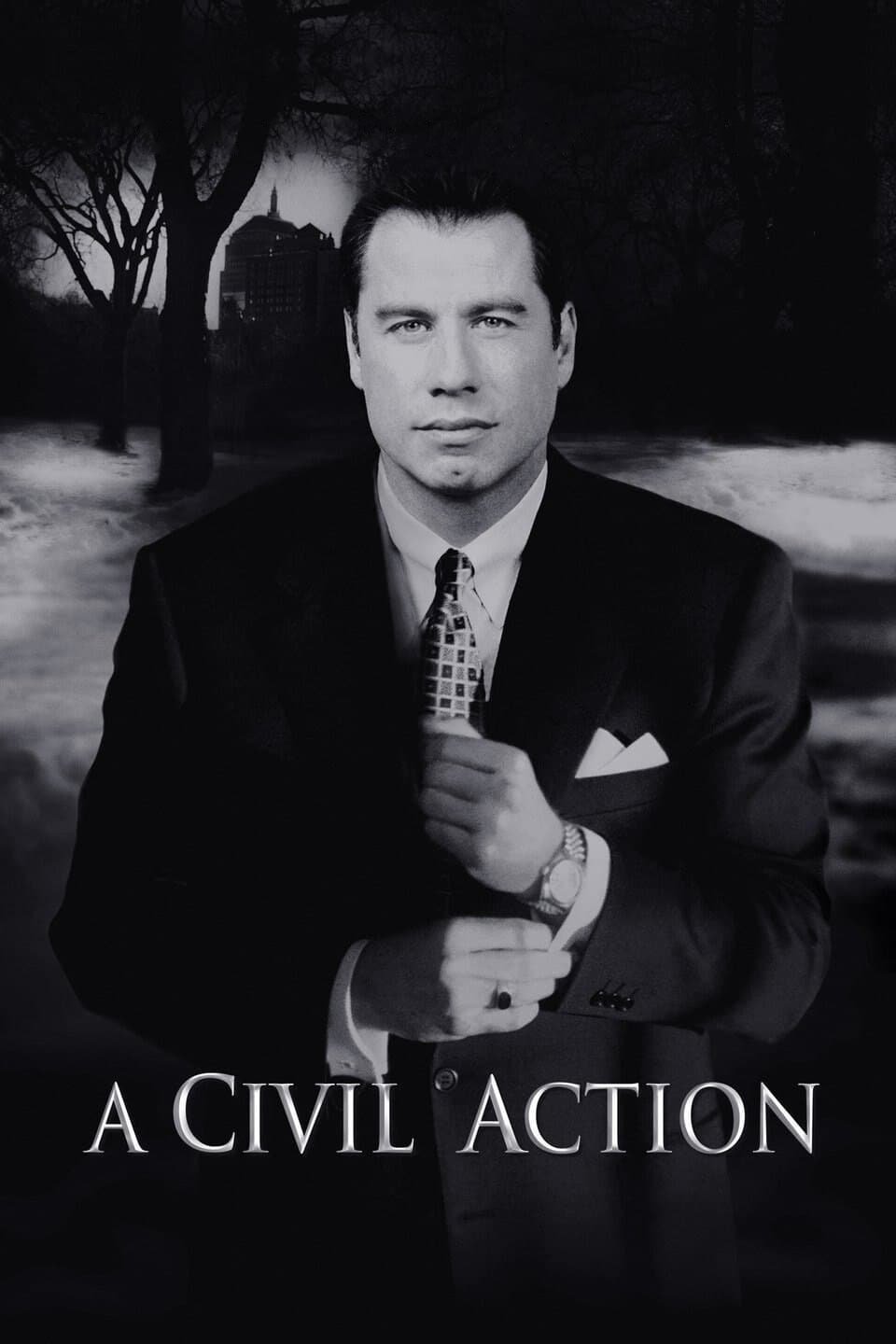
“A Civil Action” (1998), directed by Steven Zaillian and starring John Travolta, is best situated within the American legal drama tradition, itself a significant subset of the social problem film movement. More precisely, the film exemplifies the wave of 1990s legal dramas influenced by the realist and socially conscious impulses of the New Hollywood movement (late 1960s-early 1980s) as well as the heritage of 1970s issue-based cinema. “A Civil Action” stands at the confluence of the legal procedural film and the contemporary social justice narrative, inheriting the stylistic sobriety and moral complexity that define these overlapping genres and movements.
Historical Origins of the Movement
The legal drama genre in American cinema dates back to at least the 1930s, but its broader context as a movement is rooted in the social problem films that gained prominence during the 1940s and postwar years. The conventions of the legal drama were further cemented and complicated during the New Hollywood era, when a new generation of filmmakers sought to foreground social issues through a mix of procedural realism and moral ambiguity, reflecting the country’s anxiety over institutional integrity and justice.
The emergence of this movement can be traced to various factors: the increased media coverage of high-profile court cases, broader societal concerns regarding civil rights, individual liberties, and government accountability; and the influences of both literary naturalism and the postwar documentary impulse. Landmark films such as “To Kill a Mockingbird” (1962), “Twelve Angry Men” (1957), and later, “The Verdict” (1982) contributed to establishing the courtroom as a central cinematic stage for dramatizing ethical dilemmas. By the 1990s, the genre was reinvigorated by both a wave of best-selling legal thrillers (often adapted from novels by authors such as John Grisham) and a broader cultural conversation about environmental risk, corporate malfeasance, and the limits of the justice system.
Simultaneously, social issue cinema experienced renewed momentum, focusing on the legal system not just as a venue for jurisprudential drama but as an apparatus reflecting and reproducing broader societal inequities. The movement increasingly emphasized process over spectacle, realism over melodrama, and character-driven explorations of moral uncertainty. In this sense, the legal drama moved beyond individual cases to interrogate systemic failures. By the time “A Civil Action” entered production in the late 1990s, the movement’s concerns had broadened to encompass environmental activism, tort reform, and the growing unease over corporate ethics—key anxieties of late-20th-century American culture.
This Film’s Contribution to the Movement
“A Civil Action” is significant for the way it synthesizes elements from previous legal dramas with the specific concerns and stylistic tendencies of its late-20th-century context. Rather than being a straightforward hero-versus-villain narrative, the film offers a nuanced account of legal struggle, moral compromise, and procedural complexity. Based on Jonathan Harr’s nonfiction account of a real-life environmental lawsuit in Woburn, Massachusetts, the film is shaped by documentary inflections—foregrounding facts, meticulous legal detail, and the emotional toll exacted by the case.
One of the film’s key contributions lies in its demystification of the legal process. The protagonist, Jan Schlichtmann (John Travolta), is not rendered as a flawless champion of the underdog. Instead, the film portrays him as an ambitious, occasionally self-interested attorney whose moral awakening is as central to the story as the fight for justice. In this way, the film highlights the ambiguities embedded in the system, aligning its approach with the broader social problem film movement. The film privileges an atmosphere of realism: the courtroom is neither a temple of unequivocal justice nor a theater of grand moral pronouncements, but a bureaucratic, sometimes capricious forum where even righteous causes may falter due to procedural complexities, legal technicalities, or the overwhelming resources of corporate adversaries.
Further, “A Civil Action” updates the legacy of the legal drama by embedding it within the context of environmental activism, thus merging the procedural subgenre with the emergent trend of eco-conscious cinema. The film uses its real-life case as a microcosm for dilemmas that transcend law: questions about the ethical obligations of corporations, the costs of pursuing justice, and the boundaries of legal advocacy. Moreover, the film’s refusal to offer neat resolutions—its acknowledgment of partial, difficult victories—reflects the increased sophistication and world-weariness of the movement during this era.
Formally, the movie employs a restrained visual style and eschews melodramatic excess, focusing instead on tightly observed performances and a dense narrative structure, in keeping with the realistic and socially engaged priorities of its movement. In doing so, “A Civil Action” helped usher legal drama further along the path toward authenticity, ambiguity, and engagement with real-world issues.
Influence on Later Genres and Films
-
Influence 1 – The Expansion of Legal Drama Into Environmental and Public Health Issues:
“A Civil Action” demonstrated that legal dramas could serve as powerful vehicles for dramatizing stories of environmental damage and public health crises. Its success and seriousness paved the way for films such as “Erin Brockovich” (2000), which adopted a similar approach in examining corporate negligence and environmental activism. The blending of legal procedural with eco-social themes has since become a recognizable strand within both mainstream and independent cinema, inspiring subsequent filmmakers to grapple with complex, real-world issues through the lens of the courtroom. -
Influence 2 – Nuanced Characterization of Lawyers and Institutional Critique:
The film’s portrayal of its protagonist as both flawed and idealistic, and its willingness to question the fundamental limitations of the legal system, contributed to a broader trend within legal and issue-based dramas. Later films such as “Michael Clayton” (2007), “The Constant Gardener” (2005), and even certain television series like “The Good Wife” or “Damages” echo its interest in the intersection between personal ethics, institutional inertia, and the unpredictability of justice. These narratives often occupy the gray area between heroism and complicity, reflecting a post-1990s cynicism and realism in the depiction of legal professionals. -
Influence 3 – Documentary Realism in Narrative Feature Filmmaking:
“A Civil Action” advanced the integration of documentary aesthetics—attention to detail, factual precision, and process-oriented storytelling—within the dramatic feature film tradition. It influenced both legal dramas and other genres (such as investigative journalism films like “Spotlight” [2015]) by affirming that commercial cinema could successfully engage dense procedural subjects without diluting complexity for dramatic effect. Directors and screenwriters increasingly trusted audiences to follow multi-threaded, character-centered narratives that did not shy away from ambiguity or the messiness of real-life resolution.
The Movement’s Lasting Impact
The American legal drama, as it evolved within the broader social problem film movement, endures as a touchstone for socially conscious narrative cinema. Its lasting influence is twofold: on one hand, it helped legitimize popular cinema as a forum for serious social interrogation; on the other, it continually refines audience expectations about the nature of justice, institutional accountability, and the complexities underlying legal decision-making.
Films such as “A Civil Action” continue to inspire filmmakers to engage with the tedious, morally complicated, and often frustrating mechanisms of social change, rather than relying on simplistic resolutions or the mythos of the infallible crusader. The movement matters because it has shaped how cinema addresses the law not just as a setting, but as a battleground for competing ethical visions—a place where individual stories intersect with systemic forces, and where popular entertainment can become a space for critical reflection on the possibilities and limits of justice in society. The tradition remains relevant in the 21st century, with ongoing global issues—climate change, corporate governance, civil rights—demanding ever more nuanced cinematic engagements that are both entertaining and ethically sophisticated. In this light, the legacy of “A Civil Action” and its movement endures as both cultural artifact and call to continued inquiry.