
Film Movement Context
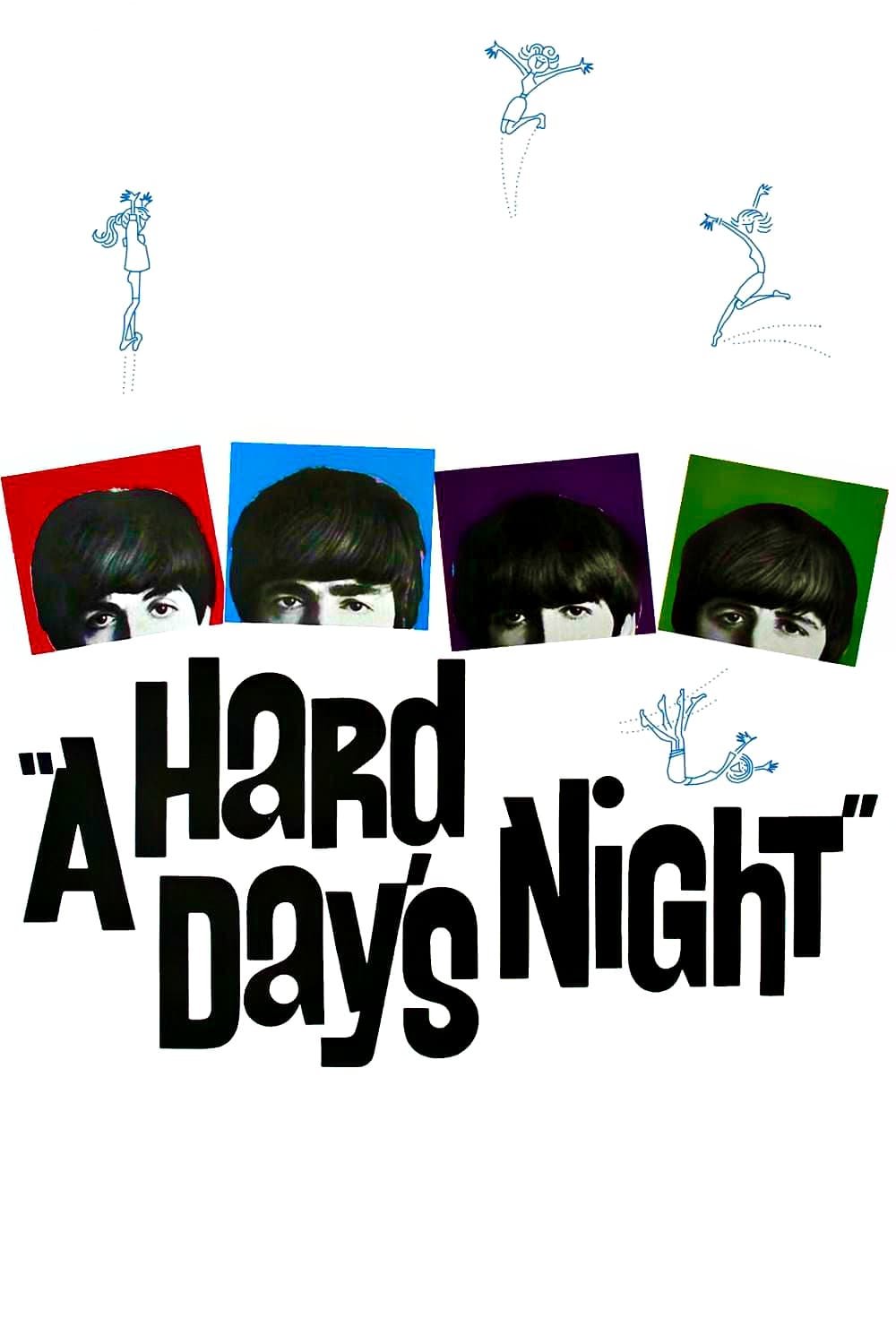
“A Hard Day’s Night” (1964), directed by Richard Lester and starring The Beatles, is most accurately situated within the British New Wave movement—sometimes alternatively referred to as the “kitchen sink realism” school when considering dramatic works, but in this context broadened by its innovative engagement with pop culture, youth consciousness, and formal experimentation. The film also aligns with the emerging tradition of musical narrative subversion and serves as a vital forerunner to the “music video” format, distancing itself from classical Hollywood musicals by adopting documentary-styled spontaneity and modernist techniques. Thus, the film both inherits and reimagines British New Wave traits for a new era, at the intersection of postwar social realism and 1960s pop modernism.
Historical Origins of the Movement
The British New Wave arose in the late 1950s and early 1960s, against a backdrop of profound social and cultural change in the United Kingdom. This film movement was initiated by a cadre of directors and writers determined to reflect the complexities of British working-class life, often drawing inspiration from the “Angry Young Men” of contemporary theater and literature. Early exemplars—such as Karel Reisz’s “Saturday Night and Sunday Morning” (1960) and Tony Richardson’s “A Taste of Honey” (1961)—favored naturalistic performances, authentic settings, and a rejection of escapist ideals, all while utilizing portable equipment and non-professional actors to bring immediacy to the screen.
However, by the early ‘60s, this realism began to intertwine with the burgeoning pop and youth culture. The aftermath of World War II had left Britain grappling with austerity, but the advent of rock music, increased disposable incomes, and mass media led to a democratization of cultural production. This climate fostered experimentation in cinematic form—visual innovation, playful narration, and direct engagement with the rhythms of modern life. Directors like Richard Lester, who hailed from outside the typical film establishment, were thus uniquely positioned to channel the restless energy of a new generation into works that disrupted narrative convention and placed pop as a serious subject of artistic inquiry.
This Film’s Contribution to the Movement
“A Hard Day’s Night” uniquely synthesizes the spirit of its age with the methods of the British New Wave, while simultaneously pushing the boundaries of musical cinema. The film foregrounds spontaneity and a quasi-documentary verisimilitude, following The Beatles through an exaggerated day in their lives, complete with liminal backstage moments, physical comedy, and unscripted-feeling dialogue. The grainy black-and-white cinematography, extensive use of handheld cameras, and on-location shooting mirror the techniques of social realism, lending an immediacy and authenticity rarely associated with films about world-famous musicians.
Yet the film departs from somber realism by embracing a buoyant, avant-garde sensibility. Lester’s dynamic montage sequences, abrupt cuts, and playful breaking of the fourth wall dynamically evoke the exuberance of the 1960s youth explosion. Instead of deploying musical numbers as grandiose staged interludes as was traditional in Hollywood, songs erupt organically from the action, underscoring the narrative and reflecting characters’ moods with postmodern reflexivity. The Beatles’ own charm, wit, and self-awareness conspire with Lester’s off-kilter pacing to fashion a film that is simultaneously anarchic and incisive.
Through this blend, “A Hard Day’s Night” acts as a critical bridge between the social observation of the British New Wave and the formally adventurous pop art that would come to characterize British and global cinemas in the ensuing decades. It validates youth culture not just as subject, but as author, and in doing so it lays the groundwork for later hybridizations across genre and medium.
Influence on Later Genres and Films
- Genesis of the Music Video Form – The quick-cut editing, dynamic camera work, and narrative use of song in “A Hard Day’s Night” provided a direct blueprint for the music video aesthetic that would flourish on television two decades later. Directors of MTV-era promotional videos, such as Russell Mulcahy or Steve Barron, directly cite the film’s freewheeling visual energy and montage as formative, while performers from Madonna to Duran Duran have echoed its playful merging of music and image.
- Birth of the Pop Mockumentary and Rock Cinema – By blending pseudo-documentary observation with absurdist humor, Lester’s film prefigured the rock and pop “mockumentary” tradition. Later works, notably Rob Reiner’s “This Is Spinal Tap” (1984), rely on the same mixture of realistic backstage situations and exaggerated character play. The film also paved the way for biopics and ensemble musical comedies that portray musicians from a backstage, self-mocking perspective, as seen in films like “Almost Famous” (2000).
- Influence on Youth-Oriented Cinematic Storytelling – The irreverent depiction of adolescent rebellion and everyday minutiae, coupled with spontaneous narrative digressions, influenced coming-of-age and youth ensemble films throughout the 1970s and beyond. The freeform style and focus on authentic generational voice is visible in works as diverse as Lindsay Anderson’s “If….” (1968), Richard Linklater’s “Dazed and Confused” (1993), and even Wes Anderson’s stylized youthful ensembles.
The Movement’s Lasting Impact
The British New Wave, as reframed and popularized by films like “A Hard Day’s Night,” continues to reverberate throughout global cinema for its dual legacy: the democratization of both subject matter and storytelling technique. By championing the experiences, idioms, and artistic agency of ordinary—and, in this case, newly celebrated—youth, the movement recalibrated cinematic focus toward authenticity and immediacy, encouraging the probing of formerly marginalized lives and subcultures.
Moreover, the formal innovation propelled by Richard Lester and his contemporaries seeded an attitude of aesthetic freedom that advanced across genres, ultimately underpinning subsequent revolutions in editing, narrative structure, and cross-media storytelling. Today, filmmakers and artists routinely draw upon the movement’s ethos in telling stories that break with tradition, foreground subcultural or generational identity, and fuse the boundaries between “real life” and performance. Thus, the movement matters not merely as a historical artifact, but as a living influence shaping the ongoing evolution of cinematic language and genre innovation.