
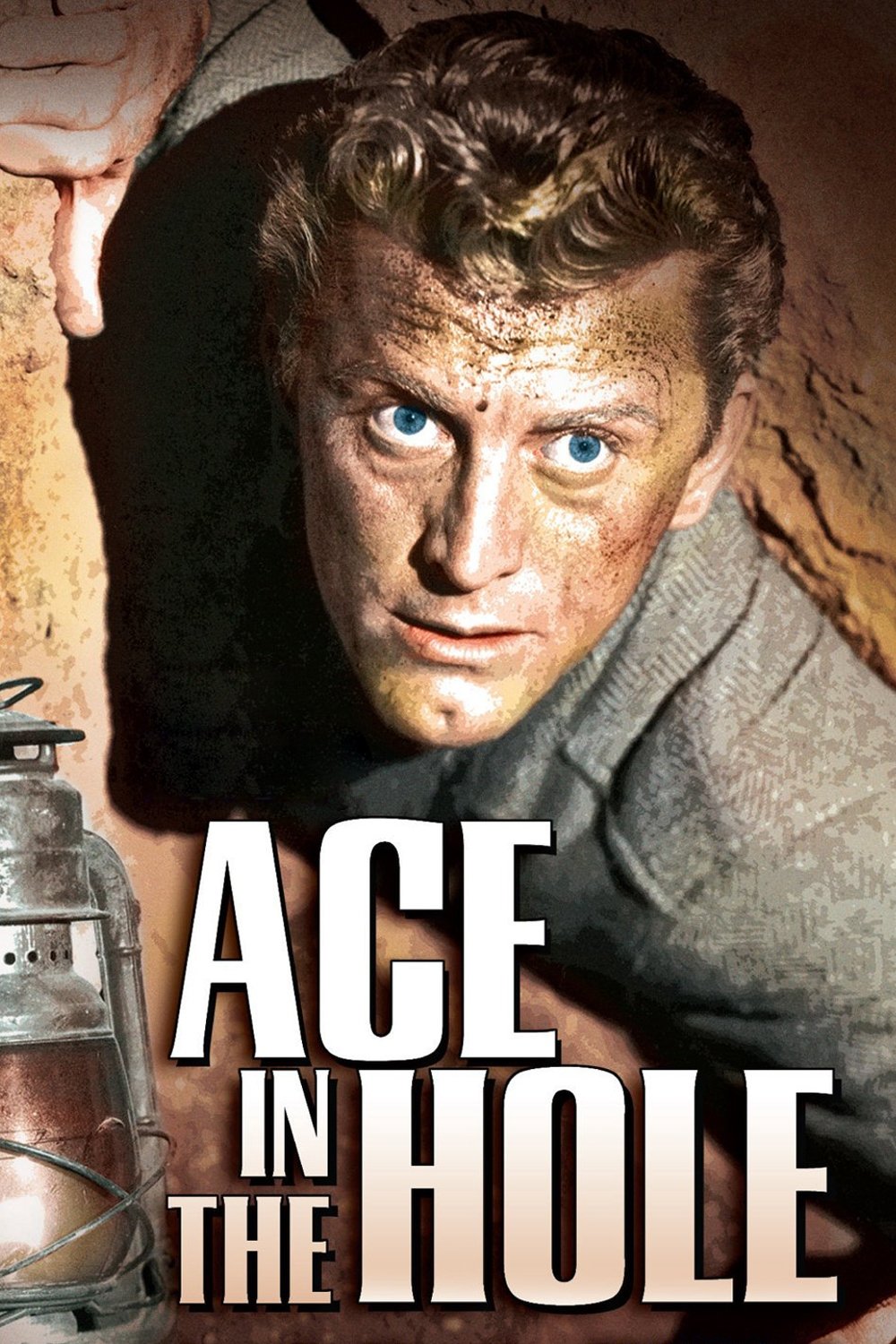
The Genre of This Film
“Ace in the Hole,” directed by Billy Wilder in 1951, is firmly rooted in the film noir and drama genres, with its primary identity leaning toward film noir. This film is characterized by its cynical worldview, bleak subject matter, moral ambiguity, and shadowy visual style. “Ace in the Hole” centers on a morally compromised newspaper reporter who manipulates a tragic accident for personal gain, showcasing the dark and critical tone that is a signature of film noir. The story’s focus on societal corruption, a deeply flawed protagonist, and the use of expressive cinematography makes the film noir classification clear and justified.
Key Characteristics of the Genre
-
Common themes
Film noir often explores themes such as moral ambiguity, corruption, greed, the destructive consequences of ambition, alienation, and existential despair. Protagonists frequently grapple with complex inner conflicts, societal failures, and characters confront the darkest capabilities of human nature. Cynicism pervades film noir, and the stories rarely provide reassuring resolutions. -
Typical visual style
This genre is visually defined by stark, high-contrast lighting, deep shadows, and dramatic use of light and darkness—a technique known as chiaroscuro. Camera angles tend to be off-kilter, reinforcing moods of entrapment, unease, and tension. Urban settings, cramped interiors, and rain-soaked streets often appear, contributing to the atmosphere of despair and moral decay that typifies film noir. -
Narrative structure
Film noir narratives commonly employ nonlinear timelines, voiceover narration, flashbacks, and complex plot twists. The stories usually unfold around crimes, betrayals, or investigations, with the protagonist progressively drawn into a moral or practical quagmire. Endings are typically downbeat, ambiguous, or tragic, reflecting the underlying pessimism of the genre. -
Character archetypes
Film noir features distinct archetypes including the antihero—often a weary, self-interested protagonist whose motivations are suspect or even sordid; the femme fatale, whose allure may lead others to ruin; manipulative authority figures; and a cast of morally complex supporting characters. While gender roles vary, almost all characters operate under self-interest and flawed morality, with no clear lines separating right from wrong.
How This Film Exemplifies the Genre
“Ace in the Hole” is a textbook demonstration of film noir conventions. The film’s protagonist, Chuck Tatum, is the embodiment of the genre’s antihero: an opportunistic, morally compromised journalist determined to exploit a man’s tragedy for his own career advancement. His decisions are motivated by self-preservation and ambition rather than any higher principles, and the film starkly delineates the ugly consequences of unchecked greed and cynicism.
Visually, “Ace in the Hole” leverages noir techniques with shadow-filled compositions and claustrophobic settings, particularly within the mine and the press encampment. The lighting emphasizes high contrasts, reinforcing the psychological tension and oppressive atmosphere as the story unfolds. The camera movement and angles create a sense of confinement—both physical, as with the man trapped in the cave, and moral, as Tatum’s decisions trap him deeper in ethical quicksand.
Regarding narrative structure, “Ace in the Hole” avoids sentimentality and embraces the fatalistic arc characteristic of film noir. The escalation of Tatum’s scheme and the public’s complicity deepen the narrative’s complexity, and the film concludes without redemption, consistent with the genre’s preference for unresolved or grim endings.
The film’s supporting characters also fit noir archetypes: the complicit sheriff, the opportunistic wife, and amoral members of the public and media. While the film lacks a traditional femme fatale, it compensates with characters who are nuanced in their self-interest, thus sustaining the genre’s tradition of blurred morality lines. By foregrounding the darker aspects of human behavior and institutions, “Ace in the Hole” stands as a prime example of American film noir.
Other Essential Films in This Genre
- Double Indemnity (1944) – A seminal film noir directed by Billy Wilder, starring Fred MacMurray and Barbara Stanwyck. It centers on an insurance salesman who is manipulated into a murder plot by a seductive femme fatale. The film popularized many noir conventions, including the use of first-person narration, doomed romance, and the shadowy visual style that has come to define the genre.
- The Big Heat (1953) – Directed by Fritz Lang, this hard-edged noir follows a righteous police officer who challenges organized crime and systemic corruption. The film’s relentless pace, stark violence, and depiction of the blurring line between law enforcement and criminality make it an enduring classic of the genre.
- Out of the Past (1947) – Directed by Jacques Tourneur, this quintessential noir employs flashbacks and an intricate plot involving betrayal, blackmail, and doomed love. The film’s brooding protagonist and complex femme fatale played by Jane Greer are particularly notable, encapsulating both thematic and stylistic standards of film noir.
- Sunset Blvd. (1950) – Another dark and introspective work from Billy Wilder, “Sunset Blvd.” is a noir-infused drama about the dangers of ambition and delusion in Hollywood. Through expressive visuals, a cynical perspective, and unsettling narrative, it reveals the psychological cost of fame and obsession, contributing to film noir’s reputation for social critique.
Why This Genre Continues to Endure
Film noir remains compelling for audiences because it explores the complexities and contradictions of the human experience. Its narratives never settle for simple answers or easy heroes but instead present a world shaped by flawed decisions, ambiguous motives, and unforeseen consequences. This frank approach to human nature and societal institutions resonates because it feels authentic; many viewers recognize elements of these struggles in their own lives and contemporary events.
The visual style of film noir, with its bold interplay of darkness and light, continues to influence filmmakers and viewers. Its aesthetics heighten emotional engagement and lend an instantly recognizable mood of tension and suspense to its stories, making them captivating both artistically and dramatically.
Furthermore, the genre’s focus on crime, corruption, and personal downfall offers timeless cautionary tales. Film noir’s skepticism toward institutions, public opinion, and personal motives remains relevant across generations and cultural contexts. Even as contemporary audiences become more sophisticated, the layered storytelling, psychological depth, and visual artistry of film noir ensure its persistent appeal and cultural influence.