
Film Movement Context
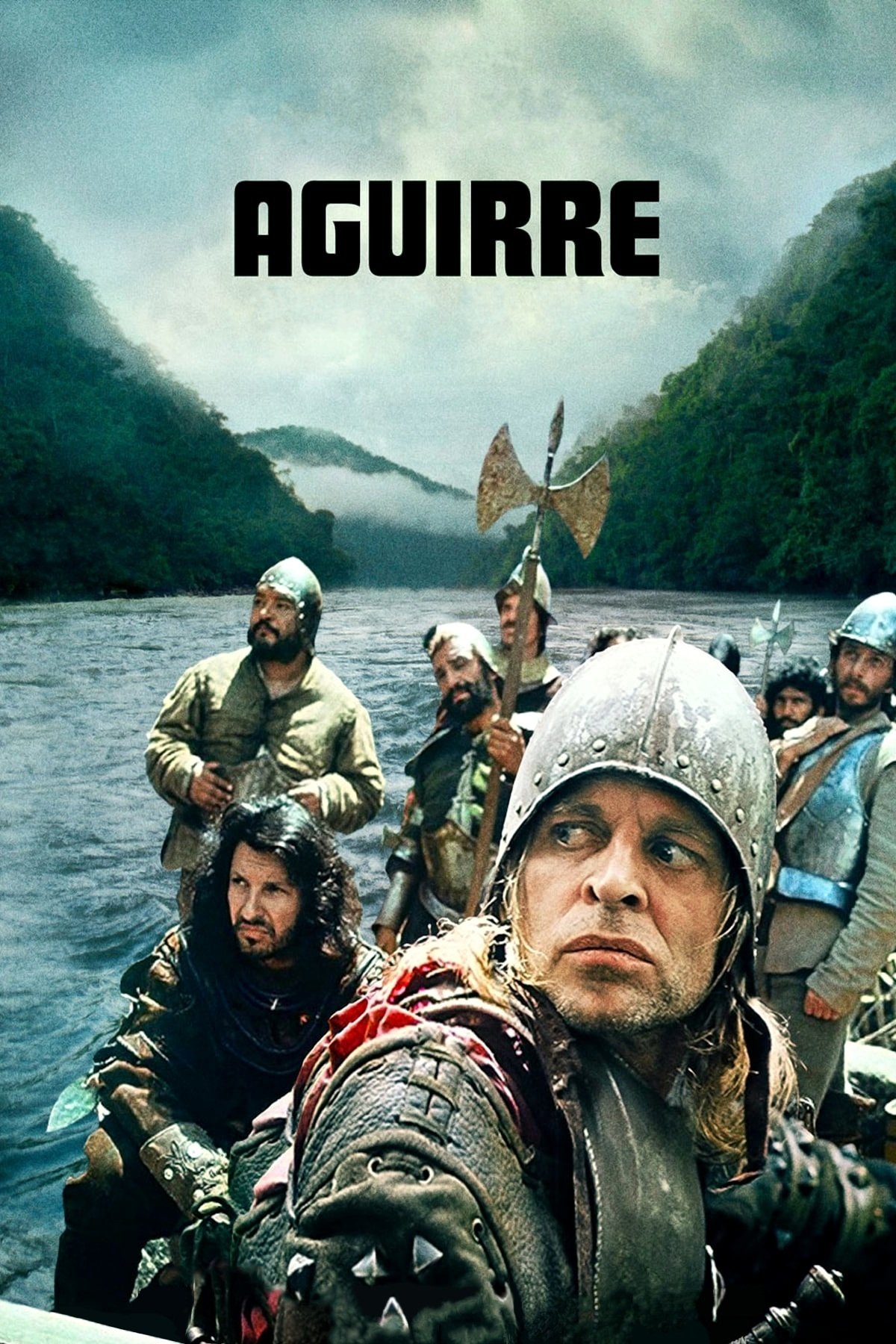
“Aguirre, the Wrath of God,” directed by Werner Herzog and released in 1972, is most closely aligned with the New German Cinema movement. This cinematic wave, arising in West Germany in the late 1960s and enduring through the 1980s, is characterized by its radical departure from conventional narrative filmmaking and its critical examination of history, authority, and identity. While “Aguirre” certainly participates in the larger tradition of European art cinema, its ethos and stylistic choices make it emblematic of New German Cinema: a movement that prized auteur-driven storytelling and thematically complex, often unsettling explorations of human ambition, folly, and isolation.
Historical Origins of the Movement
The New German Cinema movement emerged as a response to both domestic and international pressures on the West German film industry during the post-World War II era. After the war, Germany’s film production was largely characterized by escapist genres such as the “Heimatfilm” (homeland films), which ignored the country’s difficult history and contemporary realities. By the 1960s, box office decline and cultural dissatisfaction prompted a group of young filmmakers to seek new approaches that would challenge established forms and content.
The origin of the movement is often linked to the 1962 Oberhausen Manifesto, a declarative document signed by 26 young directors, including Alexander Kluge and Edgar Reitz. They proclaimed, “The old cinema is dead. We believe in the new cinema.” Their aim was to forge a film culture reflecting contemporary West German society, addressing its taboos, anxieties, and suppressed memories, particularly those related to the Nazi past and the nation’s fragmented identity. State-funded grants became available as a means of fostering artistic experimentation, allowing filmmakers like Herzog, Rainer Werner Fassbinder, and Wim Wenders to realize distinctly personal visions and narratives untethered from mainstream commercial pressures.
Stylistically, New German Cinema was known for its willingness to experiment with narrative ambiguity, minimalist performances, and landscape imagery as a vehicle for psychological or sociopolitical commentary. Directors embraced location shooting, non-professional actors, long takes, and a contemplative approach reminiscent of both Italian Neorealism and the French New Wave. Yet, the German variant was marked by a distinctly intellectual sensibility, often grounded in existential themes and an uneasy reckoning with national identity.
This Film’s Contribution to the Movement
“Aguirre, the Wrath of God” stands as a singular achievement within the New German Cinema, both for its visionary style and its thematic preoccupations. The film dramatizes the disastrous 16th-century quest of Spanish conquistadors, led by Fernando de Guzmán and Lope de Aguirre (portrayed by Klaus Kinski), as they descend into madness while searching for El Dorado in the Peruvian jungle. Herzog deploys spare dialogue and haunting visuals shot on location in the Amazon, favoring atmosphere and existential questioning over conventional historical drama.
Herzog’s idiosyncratic directorial choices—lengthy tracking shots through forbidding terrain, elliptical editing, and a disorienting soundscape supplied by the band Popol Vuh—reinvented the period epic as an almost hallucinogenic experience. Through the implacable Amazon environment, the river voyage becomes a reflection of psychological collapse and the futility of imperial ambition. Herzog subverts narrative expectations by denying viewers conventional character arcs or redemption, instead focusing on themes of obsession and megalomania.
The film’s narrative dislocation and refusal to deliver clear moral conclusions echo New German Cinema’s preoccupation with ambiguity and disillusionment. Herzog’s preference for on-location realism also underscores the movement’s commitment to authenticity and its suspicion of studio-bound artificiality. Furthermore, “Aguirre” explores the consequences of collective historical delusion—an implicit critique resonant with the movement’s aim of grappling with Germany’s own unresolved past.
As a work of New German Cinema, “Aguirre, the Wrath of God” not only fulfills the movement’s charter by defying mainstream forms, but it also expands the scope of German filmmaking, demonstrating that narratives grappling with myth, memory, and existential dread could be infused with poetic, visually arresting strategies. Herzog’s uncompromising pursuit of personal vision, often to the point of physical risk, became a touchstone for both his contemporaries and subsequent generations of filmmakers globally.
Influence on Later Genres and Films
- Influence 1 – Redefinition of the Historical Epic:
“Aguirre” radically reconceptualized how filmmakers approached the historical epic. Rather than using grand spectacle to glorify historical events or heroes, Herzog’s film centers on moral ambiguity and existential despair. This influenced later filmmakers—such as Terrence Malick in “The New World” (2005) and Lucrecia Martel in “Zama” (2017)—who crafted period pieces that foreground character psychology and the inscrutability of history over straightforward narrative triumph. - Influence 2 – Evolution of the Psychologically-Driven Adventure Film:
The film’s focus on madness, isolation, and an environment hostile to human meaning inspired a lineage of psychological adventure cinema. Films like Francis Ford Coppola’s “Apocalypse Now” (1979), though inspired primarily by Conrad’s “Heart of Darkness,” openly echoed the mood and stylistic approach of “Aguirre,” conveying the deterioration of reason in unfamiliar or forbidding landscapes. Subsequent works, such as Claire Denis’s “Beau Travail” (1999) or Ciro Guerra’s “Embrace of the Serpent” (2015), tapped into this blend of expeditionary storytelling and interior breakdown. - Influence 3 – Aesthetic Legacy in Art House and Auteur Cinema:
The hallmarks of Herzog’s method—long, uninterrupted takes; immersive location sound; and the persistent image of the landscape as an active agent—became influential in international art cinema. Directors from Andrei Tarkovsky (“Stalker”) to Kelly Reichardt (“Meek’s Cutoff”) cite the atmospheric and philosophical depth of “Aguirre.” The film drew attention to the possibility of using minimal dialogue and ambiguous plotting to create emotionally and intellectually resonant experiences, broadening the vocabulary of auteur-driven filmmaking worldwide.
The Movement’s Lasting Impact
The significance of New German Cinema, as exemplified by “Aguirre, the Wrath of God,” continues to reverberate through global film culture. The movement’s legacy lies in championing the filmmaker as visionary, capable of interrogating history and the psyche with rigor and poetic force. New German Cinema’s innovations—its insistence on challenging narratives, moral complexity, and the interplay of image and meaning—have shaped not only European cinema, but also the language of independent and art house filmmaking across continents.
This movement’s persistence in the cinematic imagination serves as a reminder that national film cultures can reinvent themselves through intellectual courage and creative risk. By demanding more from both filmmakers and audiences, New German Cinema, and films like “Aguirre,” instructed the world’s cinemas on the transformative potential of the medium. The movement’s lasting impact is seen in the ongoing valorization of personal vision, the push for stylistic experimentation, and the uncompromising exploration of difficult historical and existential questions—attributes now central to the most compelling works in international cinema.