
Film Movement Context
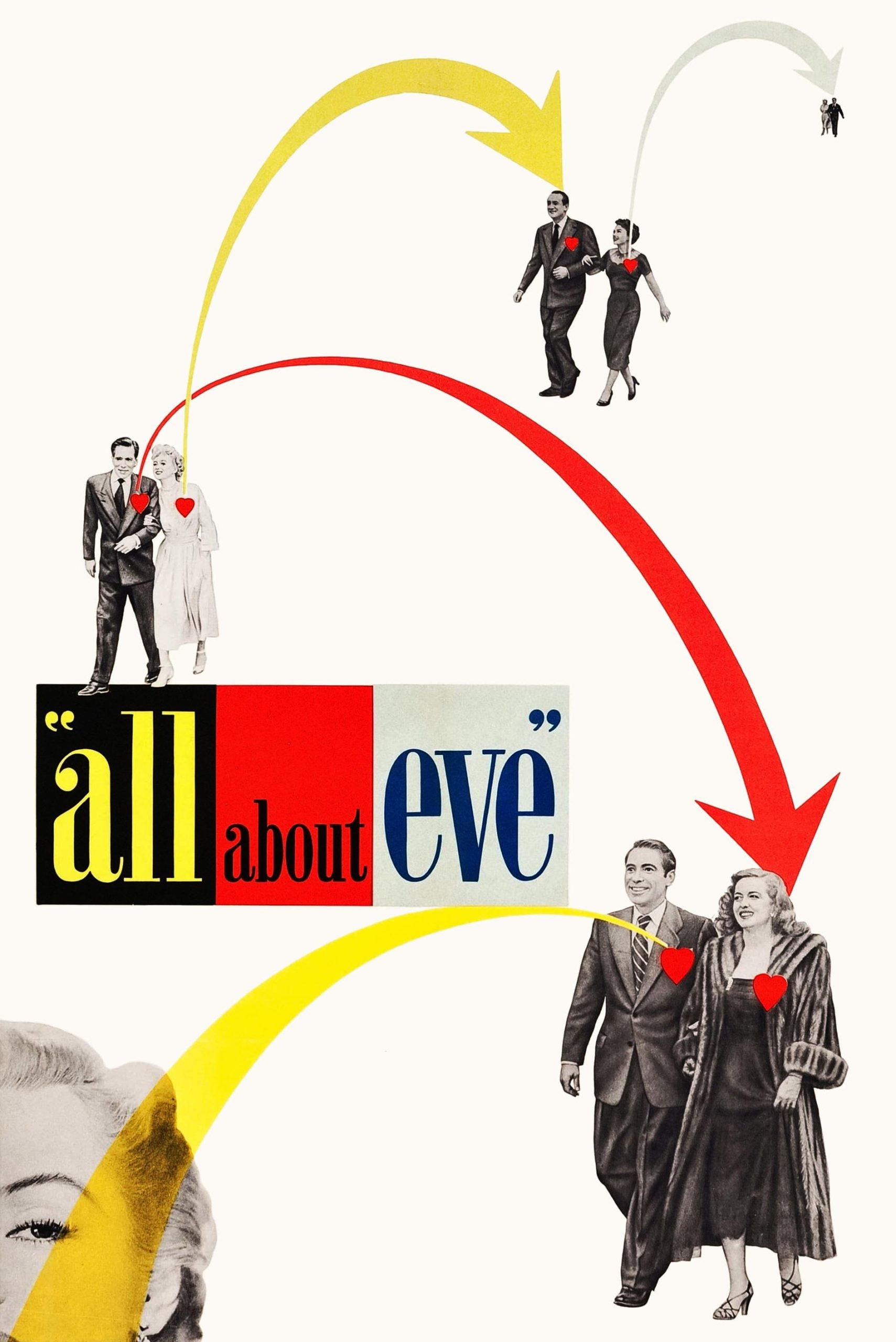
“All About Eve,” released in 1950 and directed by Joseph L. Mankiewicz, is most closely associated with the Classical Hollywood Cinema movement—also known as the Studio Era. This era was characterized by polished narrative filmmaking, an emphasis on stars, and seamless cinematic techniques that privileged storytelling clarity. Within this broad movement, “All About Eve” aligns particularly with the sophisticated drama and so-called “women’s picture” subgenre that flourished in the 1940s and 1950s. These films foregrounded women’s perspectives, relational dynamics, and social critiques, all within the high-gloss trappings of Hollywood production values. Additionally, the movie incorporates social realism, offering a sharply observed, behind-the-scenes portrait of ambition, performance, and societal norms within the American theatrical backstage milieu. Thus, “All About Eve” acts as a nexus, reflecting the evolution of character-driven drama in Classical Hollywood Cinema, while also pushing the boundaries of the genres it inhabits.
Historical Origins of the Movement
The Classical Hollywood Cinema movement traces its origins to the 1910s and solidified over the ensuing decades, peaking from the 1930s through the late 1950s. The rise of the studio system—dominated by companies like MGM, Warner Bros., Fox, and Paramount—ushered in an era marked by control over all aspects of film production and distribution. Crucial to this system was the continuity style, a set of formal conventions ensuring the narrative was immediately comprehensible, emphasizing cause-and-effect logic, coherent time and space, and invisible editing.
Key catalysts for this movement were both technological and industrial: the introduction of synchronized sound, advances in lighting and cinematography, and the growth of a stable workforce of writers, directors, and actors under long-term contracts. Genre filmmaking thrived within this context, allowing studios to maximize audience appeal by offering familiar conventions enhanced by unique elements or star power. Postwar America saw the continued dominance of this approach, but also the gradual infiltration of realist influences brought by émigré directors and the shifting tastes of an increasingly sophisticated, urban middle-class audience.
Within the Studio Era, the “women’s picture” evolved as a subgenre that examined the social and psychological realities of female experience—with particular attention to themes like ambition, age, romance, and social mobility. The increased participation of screenwriters and directors interested in more complex, adult-oriented themes, alongside the wider accessibility of Broadway and literary adaptations, paved the way for cynical, witty, and character-driven narrative forms. In this environment, movies like “All About Eve” could flourish, offering both escapist entertainment and nuanced, critical takes on contemporary society and the performing arts.
This Film’s Contribution to the Movement
“All About Eve” exemplifies Classical Hollywood Cinema at its most refined, merging sophisticated narrative structure with incisive thematic exploration. The film advances the movement by taking the “women’s picture” genre in a more acidic, psychologically complex direction. Rather than centering solely on romance or melodrama, it focuses on the corrosive effects of ambition, the shifting boundaries of mentorship and rivalry, and the performance of femininity both on and off the stage.
Mankiewicz’s screenplay deploys classical narrative techniques, including voice-over narration, flashback structures, and meticulously crosscut mise-en-scène, to maintain temporal clarity and emotional engagement. At the same time, the film subverts audience expectations by presenting morally ambiguous characters: Margo Channing (Bette Davis) is a celebrated but insecure stage actress confronting professional and personal obsolescence, while Eve Harrington (Anne Baxter) is an outwardly guileless fan whose machinations reveal the era’s anxieties about authenticity, success, and female solidarity.
Through acidly witty dialogue and multilayered characterization, “All About Eve” stretches the bounds of the “women’s picture,” weaving social critique directly into its narrative structure. Its backstage Broadway setting allows for a sophisticated intertextual commentary on fame, artistry, and gender. Visually, the film employs expressive lighting and fluid camera movement—rooted in Classicism but informed by subtle touches of Realism—to evoke both glamour and vulnerability. In doing so, “All About Eve” both typifies and innovates upon the conventions of its cinematic tradition, pointing toward future evolutions in narrative complexity and critical engagement with gender and celebrity culture.
Influence on Later Genres and Films
- Influence 1 – The Psychological Drama: “All About Eve” deepened the psychological portraiture of female characters in American cinema, offering a template for subsequent dramas centered on complex, multidimensional women. Its depiction of ambition and identity crises influenced later films such as “The Apartment” (1960) and “Network” (1976), which similarly probe the moral ambiguities of professional life and personal relationships. The film’s nuanced approach paved the way for more daring character studies in both Hollywood and international cinema, encouraging filmmakers to explore women’s inner lives with greater honesty and acuity.
- Influence 2 – The Satirical Backstage Narrative: The film’s self-reflexive look at show business inspired a subgenre of backstage satires and “insider” dramas exposing the ruthlessness and theatricality underlying creative industries. Movies like “The Player” (1992) and “Birdman” (2014) owe a clear debt to Mankiewicz’s fusion of glamour and cynicism, offering meta-narratives about fame, aging, and authenticity. Even television series such as “Smash” and “Feud: Bette and Joan” draw directly from “All About Eve”‘s marriage of narrative sophistication and industry critique.
- Influence 3 – Genre-Bending Storytelling: By bridging the gap between melodrama, comedy, and social critique, “All About Eve” expanded the formal possibilities for adult-oriented dramas. Later films—including “Terms of Endearment” (1983) and “Working Girl” (1988)—adopted its tonal complexity, balancing irony and empathy to create stories that transcend simplistic genre categorization. This open-ended approach continues to shape contemporary cinema, where hybrid forms and multi-layered characterizations have become increasingly central.
The Movement’s Lasting Impact
The Classical Hollywood Cinema movement endures as the foundation of contemporary narrative filmmaking, both in its technical mastery and in the genres it cultivated. Its focus on clarity, emotional resonance, and the star system shaped not only the language of global cinema but also the ways audiences connect with stories on screen. “All About Eve” is a work that exemplifies the classic style while gesturing toward modern complexity; it shows how this movement could accommodate irony, self-reflexivity, and adult subject matter. As an exemplar of carefully balanced storytelling, sophisticated characterization, and cultural commentary, it remains instructive for filmmakers and scholars alike. The movement’s ideals—seamless narrative, elegant form, and a willingness to probe the heart of social anxieties—continue to inform and challenge filmmakers, demonstrating why this period deserves ongoing critical attention in the study of film art and industry evolution.