
Film Movement Context
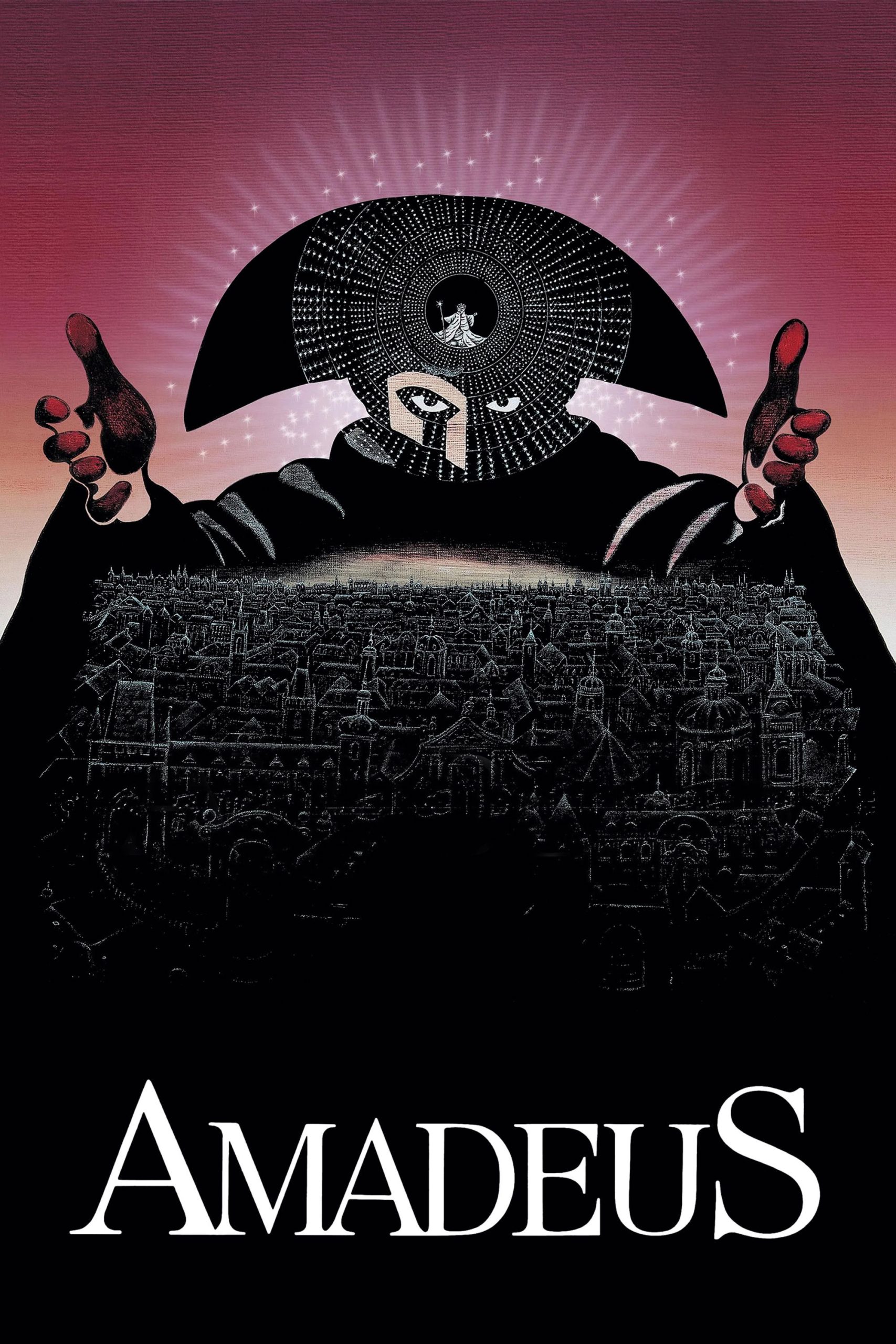
“Amadeus” (1984), directed by Miloš Forman, is most closely associated with the tradition of the historical epic and costume drama, but more specifically, it exemplifies a modern evolution of the Post-New Hollywood historical biopic. This movement blends the character-driven psychological depth of the 1970s New Hollywood with classical period filmmaking, infusing lush historical spectacle with postmodern sensibilities, skepticism, and subjective narration. Rather than subscribing rigidly to Classical Hollywood or European art cinema models, “Amadeus” reflects a hybrid sensibility that reinterprets the biographical and historical film for contemporary viewers, focusing on unreliable narration, moral ambiguity, and the dramatic possibilities of subjective history.
Historical Origins of the Movement
The movement represented by “Amadeus” emerged in the late 1970s and early 1980s as filmmakers responded to the creative upsurge and narrative experimentation of the New Hollywood era. During New Hollywood’s dominance from the 1960s to early 1980s, directors increasingly abandoned the clear moral binaries and authoritative perspectives typical of Golden Age Hollywood in favor of psychological complexity, fragmented structure, and ambiguous protagonists. As this movement evolved and international co-production became more viable, there was a renewed appetite for stories set in the past but told through contemporary lenses.
This shift gave birth to what scholars sometimes term the revisionist or postmodern biopic and subjective historical drama. Key historical impulses included the impact of Federico Fellini’s playful, memory-based films, Ken Russell’s irreverent artist biopics like “The Music Lovers,” and the earlier “Barry Lyndon” by Stanley Kubrick, which softened the distance between past and present sensibilities. Add to this the influence of Eastern European émigré filmmakers in Hollywood, such as Forman himself, who brought a more ironic, existential attitude toward history, and the groundwork was laid for films that interpreted history not as settled fact, but as contested, psychologically mediated experience.
In the 1980s, these trends converged with advancements in production design, music integration, and narrative complexity. This led to costume dramas and biopics that used voiceover, unreliable narration, theatricality, and aesthetic stylization, representing a clear evolution from both Classical Hollywood’s reverence for historical ‘truth’ and the solemnity of British heritage cinema.
This Film’s Contribution to the Movement
“Amadeus” offers a landmark contribution to this movement through its highly subjective and dramatically unreliable presentation of history. Rather than providing a straightforward account of Mozart’s life, the film is filtered through the jealous, guilt-ridden perspective of Antonio Salieri, Mozart’s contemporary and alleged rival. This narrative structure foregrounds questions of memory, envy, authorship, and historical distortion, demonstrating how personal obsession shapes our understanding of ‘truth.’
Forman’s adaptation employs numerous postmodern devices: direct address to the audience via Salieri’s confessional, anachronistic dialogue rhythms, and a theatrical style borrowed from Peter Shaffer’s original stage play. The film’s lavish mise-en-scène, award-winning production design, and passionate integration of Mozart’s music exemplify the sensual possibilities of historical filmmaking, while its central dramatic structure—the unreliable narrator—disrupts any easy reconciliation of fact and fiction. By doing so, “Amadeus” transforms the historical biopic into an arena for existential reflection and moral ambiguity, standing in contrast to earlier, more reverential artist biopics.
Additionally, the film broke new ground in how it treated artistic genius: rather than sanctifying Mozart, it presents him as both sublime and vulgar, a figure at odds with social convention. This approach both humanizes and problematizes the myth of the Romantic genius, making the film resonate with contemporary anxieties about talent, mediocrity, and cultural legacy. “Amadeus” thus operates as a bridge between New Hollywood’s psychological realism and the formalist spectacle of period cinema, shaping the course of modern historical film in the process.
Influence on Later Genres and Films
- Influence 1 – The Fragmented Biopic: “Amadeus” inspired subsequent biographical and historical films to embrace subjective narration and psychological depth over simple hagiography. Later works like “The People vs. Larry Flynt” (also directed by Forman), “The Last Emperor,” and Todd Haynes’ “I’m Not There” demonstrate the enduring appeal of subjectively filtered biographical storytelling, often using unreliable narrators or multiple perspectives to interrogate the boundaries of truth and myth.
- Influence 2 – Integration of Theatricality and Spectacle: The film’s seamless melding of theatrical performance, grandiose set design, and diegetic music had a significant impact on later period films and ‘meta’ costume dramas. Examples such as “Shakespeare in Love,” Sofia Coppola’s “Marie Antoinette,” and the television series “The Great” adapt stylized, overtly performative techniques, including breaking the fourth wall or using pop-infused historical settings, to prevent history from feeling stuffy or remote.
- Influence 3 – Moral Ambiguity and Irony in Historical Storytelling: By normalizing moral complexity and even dark humor in the biopic, “Amadeus” paved the way for films like “Capote,” “Steve Jobs,” and Pablo Larraín’s “Jackie,” all of which center on iconic figures but foreground their contradictions, flaws, and psychological struggles. Modern historical dramas and biopics now often resist clear hero/villain binaries, favoring instead a deeper investigation of character, motivation, and the reliability of perspective, a direct inheritance from Forman’s film.
The Movement’s Lasting Impact
The subjective, postmodern historical drama that “Amadeus” embodies continues to shape how cinema approaches the past. The film’s combination of psychological insight, narrative innovation, and aesthetic boldness established new conventions for both the biopic and prestige costume genres. By emphasizing the instability of memory, the distortions of personal bias, and the theatrical potential of history, the movement democratized historical storytelling, encouraging filmmakers and viewers alike to question received truths and recognize the role of interpretation, envy, and imagination. This approach has enabled greater inclusivity, thematic richness, and critical self-awareness within period filmmaking and remains deeply influential in how artists, critics, and audiences negotiate the relationship between history and drama.
To connect style and technique with broader context, you may find these perspectives useful.