
Film Movement Context
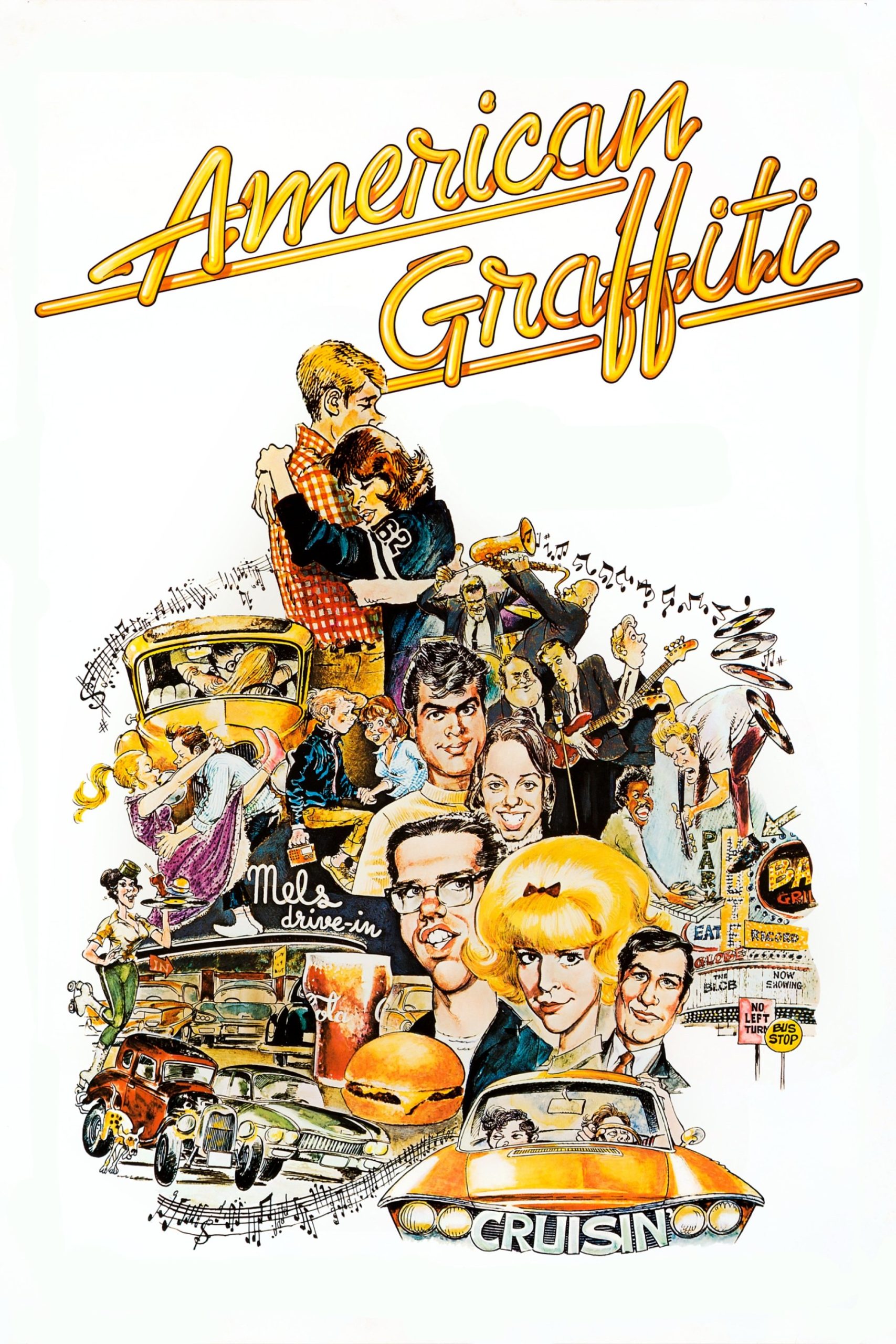
When I first watched American Graffiti, the distinct flavor of nostalgia and youth culture swept me up immediately, but what truly made the film an enduring piece in my mind was its clear link to the American New Wave—or “New Hollywood”—film movement. I could sense that George Lucas’s approach, from the seemingly casual narrative to the intoxicating rock-and-roll soundtrack, channeled the energy and visual style of the New Hollywood directors who reimagined American cinema in the late 1960s and early ’70s. Yet, unlike some of the movement’s grittier, urban tales, I find American Graffiti to be a reflective, almost romantic take on the era’s possibilities. The film immerses itself in the daily rhythms and rebel aesthetics of teenagers on the brink of adulthood, and I see this as embodying a fresh willingness to experiment with form, tone, and subject that was a signature of the New Hollywood sensibility. Instead of reinforcing the glossy dreams of postwar studio films, Lucas and his peers began to question, reframe, and ultimately reinvent the rules of mainstream American filmmaking. To me, Lucas’s deep immersion in a very specific time and place—early 1960s California—is what anchors the film as both a love letter and a critical examination of a fading moment, rendering it a distinct expression of its movement’s spirit.
Historical Origins of the Movement
My exploration of the American New Wave always leads me back to the turbulent confluence of cultural and industrial shifts that overtook Hollywood by the late 1960s. I see the collapse of the studio system as more than an economic crisis; it was the breaking point that allowed new voices—many educated in film schools, inspired by European cinema, and attuned to social unrest—to burst onto the scene. Traditional formulas had grown stale, and censors lost their stranglehold. When I study these years, I notice that filmmakers like Arthur Penn, Mike Nichols, Dennis Hopper, and Francis Ford Coppola not only sought creative freedom, but also demanded that movies address their own time, their political and psychological uncertainties, and their fascination with the margins of American life. The “film school generation,” as they’re often called, rallied behind innovations in camera work, editing techniques, casting, and the integration of contemporary music to evoke a greater proximity to real experience. Personally, I appreciate how they challenged narrative closure and happy endings—their movies seemed to say that life didn’t always tie itself up in neat packages. This rejection of cinematic orthodoxy shifted Hollywood’s momentum, opening my eyes to the medium’s capacity for more ambiguous, character-driven, and sometimes melancholic storytelling.
For me, American Graffiti stands out in how it reframes the concept of nostalgia near the tail-end of New Hollywood’s first great wave. Rather than merely glorifying the past, it locates tension between memory and reality, and I see this as a defining move of its era. The choice to relive a single night, with its myriad anxieties and delirious pleasures, is emblematic of a generation wrestling with lost innocence—something I have felt resonates not just in films, but in the broader culture of the early ’70s, marked by aftershocks of the Vietnam War, the disintegration of social consensus, and a broader crisis of confidence in American identity. To my mind, New Hollywood’s historical role was to engage with these fractures, often through genre revisionism, anti-heroes, and a collapse of the old order—Lucas, perhaps unexpectedly, executes this through teenagers, drag races, and diner parking lots.
This Film’s Contribution to the Movement
Every time I return to American Graffiti, I’m reminded how pivotal it was for the movement, both as a technical and thematic landmark. The film’s improvisational structure, weaving together loosely-connected vignettes, directly counters the rigid three-act scripting I associate with prior generations. I marvel at how the film resists neat resolution; by the final moments, the characters’ fates are spelled out in abrupt, almost cruel fashion, mimicking the movement’s broader skepticism towards easy closure. This narrative approach struck me as exhilaratingly honest—life, like adolescence, is unresolved business. The camera glides through sun-bleached boulevards and neon-lit diners, picking up snatches of laughter, heartbreak, and bravado, all set to a continuous jukebox playlist. In my eyes, the soundtrack is not mere nostalgia: it is diegetic, lived experience—at once transporting and grounding—which few films prior dared attempt so immersively. To me, Lucas’s use of period pop isn’t decorative, but transformative, foreshadowing how future filmmakers would use existing music to anchor emotion and time.
I’m always struck by how the performances in American Graffiti feel both heightened and naturalistic. Lucas encouraged improvisation, allowing actors—many on the cusp of their own careers—to infuse scenes with awkward pauses, sudden bravado, and real vulnerability. This was another badge of New Hollywood’s ethos, where “authenticity” trumped polished artifice. The performances invite me not to judge these characters or reduce them to symbols, but to live with them, to inhabit their momentary joys and anxieties. This specificity is heightened through the film’s documentary-like cinematography: I feel like a bystander, drifting through the restless, hormonal energy of these suburban teens. By eschewing a clear protagonist, Lucas democratizes the drama. Each storyline runs parallel, sometimes intersecting, echoing the way memory recalls a crowd, not a solitary hero. For me, this is what elevates the film beyond mere pastiche—it becomes a text about memory, transition, and America’s awkward ritual of letting go.
Lucas’s technical choices push boundaries, especially in sound design. I hear the overlapping dialogue, the constant din of rock radio, the roar of engines; the entire soundscape envelops me, collapsing the barrier between screen and audience. This level of sonic immersion did not exist in older studio films, and for me, it was not simply innovation for its own sake—it was a philosophy of presence. The film’s temporal compression—a single night, all frenzy and anticipation—mirrors the historical period’s sense of things coming to an end, just as the movement itself would soon be eclipsed by the blockbuster era Lucas helped usher in. Ironically, I view American Graffiti as both the culmination of New Hollywood’s risk-taking and a bridge to a more commodified, nostalgia-driven cinema in the decades that followed.
Influence on Later Genres and Films
- Influence 1 – The Ensemble Coming-of-Age Film – Personally, I see American Graffiti as the template for countless ensemble-driven coming-of-age films. I recall watching movies like Dazed and Confused or Fast Times at Ridgemont High, instantly picking up on the way these films organize sprawling casts of teenagers around a single compressed timeframe. Like Lucas, Richard Linklater and Amy Heckerling crafted worlds where teenage experience wasn’t reduced to stereotypes, but given the scope to be chaotic, contradictory, and deeply personal. The episodic structure and willingness to dwell on fleeting moments, not only plot developments, have become the established grammar for youth cinema—a tradition, I’d argue, shaped in large part by American Graffiti’s willingness to celebrate character over plot.
- Influence 2 – The Soundtrack as a Narrative Device – In my view, the film’s omnipresent, diegetic music fundamentally altered how filmmakers considered the role of soundtracks. Rather than simply accompanying the story, the music in American Graffiti guides it—songs bleed into scenes, marking time as viscerally as the action itself. Later films like Goodfellas or Boogie Nights owe much to Lucas’s example, weaving continuous playlists into the bones of their narratives. When I hear how Scorsese uses popular music to bracket scenes or transition between storylines, I’m always reminded of Lucas’s model. Soundtracks became marketing tools and windows into nostalgia, thanks directly to the success of American Graffiti, which demonstrated that a curated tracklist could be as evocative as a score.
- Influence 3 – Nostalgia as Cultural Critique – What fascinates me is how American Graffiti popularized the use of nostalgia not just as comfort, but as subtle critique. I believe that later films—and even TV shows like Mad Men and Stranger Things—follow its lead in depicting the recent past as a site of loss, tension, and cultural contradiction. The film’s bittersweet undertones, underscored by the abrupt “where are they now?” epilogue, cast the supposedly innocent early ‘60s in a new, more complicated light. I notice in my own reception of the film that its tone of wistfulness and regret has been carried into a host of works that see nostalgia not as rose-tinted fantasy, but as a reckoning with the present’s disappointments and the failures of collective memory. The recognition that good times are fleeting, irrecoverable, and colored by hindsight is, I think, one of the film’s most important gifts to modern storytelling.
The Movement’s Lasting Impact
Reflecting on New Hollywood’s legacy, I feel its influence is found less in commodified tastes than in the conviction that cinema does not need to choose between art and entertainment, nor between individual subjectivity and shared experience. The movement illuminated the possibility that a film could ask questions without offering definitive answers, and that ambiguous, personal stories could resonate on a national, even global scale. With American Graffiti, I see the American New Wave culminating in a work that blends social observation, formal innovation, and emotional candor—all with a lightness of touch that belies its deeper anxieties. Watching Lucas’s film today, I am more conscious than ever of the invisible threads tying teenage anxiety to national identity, period piece to urgent present. I find that the movement’s willingness to investigate interiority, to dismantle boundaries between high and low culture, and to explore genre as both inheritance and playground, continues to shape contemporary cinema’s boldest efforts. For me, this matters because it preserves a sense of experimentation and vulnerability at the heart of film—a medium forever in search of the new, but always haunted by what it leaves behind.
To connect style and technique with broader context, you may find these perspectives useful.