
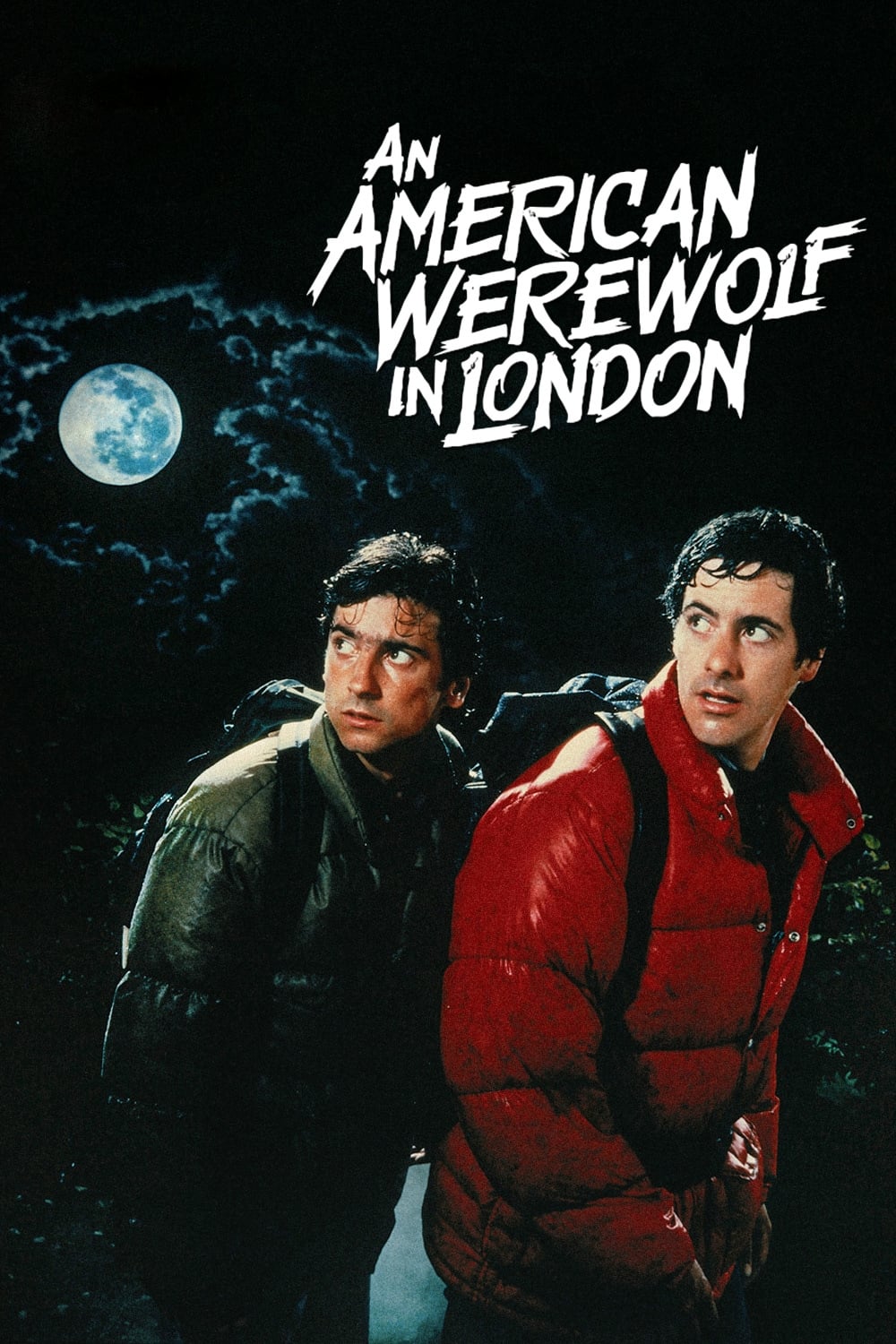
Film Movement Context
The first time I watched “An American Werewolf in London,” I felt a jolt—here was a film gleefully uninterested in fitting the expectations of a single genre. I saw it as a decisive work within the horror-comedy movement, but more than that, it resonated as a reflection of the 1980s resurgence of postmodern genre hybridization. What tends to set “An American Werewolf in London” apart, for me, is how it leans into the irreverence and genre-mixing of late 1970s British horror, yet still pulses with the anxieties and black humor of New Hollywood experiments that dared to revise what genre could do. I have always been drawn to the film’s flirtation with horror’s traditions while simultaneously undercutting them with a comedic edge, placing it, in my analysis, right at the crossroads of horror-comedy and the self-reflexive movements that grew in parallel with postmodernism in cinema. This is not a simple send-up of werewolf lore; it is a film alive to its own artifice, slyly ever aware, and never quite playing by the old rules.
Historical Origins of the Movement
Tracing the film movement that “An American Werewolf in London” channels requires me to consider the shifting tides of genre cinema from the mid-twentieth century through the late 1970s. Horror, by the 1970s, was ripe for transformation. The Hammer films of Britain had exhausted their gothic palettes, and American horror—fresh off the psychological brutality of “The Exorcist” and “The Texas Chain Saw Massacre”—craved new directions. What resonates with me about this transitional period is how horror and comedy both, in their own ways, provided conduits for audiences’ collective anxieties, yet rarely converged with true intent. By the late 1970s, though, cinematic postmodernism blossomed: genres collided and old forms were parodied, shattered, or mashed together for new effects. Mel Brooks’s “Young Frankenstein” (1974) and John Landis’s own earlier work in comedy (“Animal House”) primed audiences for irreverence, but it was in “An American Werewolf in London” that I first saw horror and humor fuse so seamlessly that each elevated, not diminished, the other.
The reasons behind this new movement in hybrid genre filmmaking seem, to me, intertwined with a larger cultural skepticism toward institutional authority and a newfound self-awareness within popular cinema. As a film historian, I interpret this as the moment western genre films began interrogating themselves—horror stopped being mere shock or suspense; it became open to questioning its mechanics. Comedy, no longer simply slapstick, veered toward social critique by lampooning the very stories that once enthralled. These shifts answered a world where mass media and pop culture could no longer be consumed naively but demanded constant negotiation—irony, detachment, and knowing winks became, for my generation, almost a form of survival. “An American Werewolf in London” exemplifies all this, emerging from a marriage of horror’s visceral power and comedy’s critical distance, and daring to ask whether one can coexist with—or indeed undercut—the other.
This Film’s Contribution to the Movement
What strikes me still about “An American Werewolf in London” is not just its place within horror-comedy, but the confidence with which it expands what that movement really means. The movie, in my analysis, refuses comfort: I’m rarely allowed to settle into laughter for long before horror intrudes; nor does terror ever fully push out the absurdity. The film’s technical bravura—most famously, the werewolf transformation sequence—was, to my mind, a statement of intent: special effects were not merely tools for cheap spectacle but could themselves become the site for the hybridization of horror’s shock and comedy’s grotesque exaggeration. Watching the infamous transformation, I am keenly aware that this is not slapstick or parody; it is true, unblinking body horror that just happens to be punctuated by morbid wit and awkward, unwelcome levity.
To me, Landis’s willingness to destabilize tone—to make us laugh nervously, to jump in our seats, often at the same moment—felt like a deliberate provocation. I never get the sense that the humor is there only to “soften” the horror; rather, both are heightened by their collision. The jokes are contextually jarring, the violence sudden and unadorned, leaving me unsettled in a manner wholly distinct from earlier horror-comedies, which often winked too openly at their own silliness. In this work, the unease feels purposeful. For instance, the spectral visits of David’s increasingly decayed friend Jack are written and performed with a kind of everyday banality—quipping about death, ticking off the bureaucratic requirements of the afterlife—yet rendered with such startling makeup and gore that I’m never allowed to forget the gravity beneath the gags.
What also fascinates me is how Landis uses London as a site of cultural displacement—melding American brashness with understated British restraint. The movement he engages here is not just stylistic but social; the “outsider” narrative is folded into the horror-comedy hybrid as a metaphor for cultural friction. For me, these nuances elevate “An American Werewolf in London” into a commentary on cinematic globalization, where old genres are peeled up from their roots and forced to mutate, quite literally, on foreign soil. The tension between familiarity and alienation—between laughter and fear—is, I think, the truest signature of its postmodern impulse.
Influence on Later Genres and Films
- Influence 1 – Recalibrating the Horror-Comedy Balance: I see this film as a pivot point because it treats both horror and comedy with equal seriousness, refusing to let one serve merely as a relief to the other. Many films followed this model—among them, “Shaun of the Dead” (2004) and “Idle Hands” (1999)—treating zombie apocalypses or supernatural chaos as ripe for legitimate terror even as they embedded sharp comic observations. For me, the DNA of “An American Werewolf in London” is legible wherever horror is played straight and comedy is unafraid to go dark.
- Influence 2 – Advancing Practical Effects as Narrative: Rick Baker’s transformative makeup effects in this film astonish me even after decades. The extended, agonizing metamorphosis of David into a werewolf isn’t just technical wizardry; it’s a narrative punctum, a physical embodiment of horror and comedy colliding. Later works—“The Howling” (1981), Sam Raimi’s “Evil Dead II” (1987), and even non-horror films like “Beetlejuice”—owe debts, using innovative practical effects to deepen genre subversion and punch up surreal humor with tactile, gruesome beauty.
- Influence 3 – Encouraging Genre Self-Reflexivity: What I find most radical about this movement, as channeled through “An American Werewolf in London,” is its insistence on genre self-awareness. The film toys constantly with horror’s clichés—the full moon, the doom-laden locals, even the werewolf curse—while letting its characters remain grounded and naturalistic. I see echoes of this reflexivity in later works like Wes Craven’s “Scream” (1996), where genre-savvy protagonists navigate the rules of cinema as much as their own survival. The film’s willingness to address its own absurdity while still delivering real menace set a tone for the clever, winking meta-horror that would become increasingly popular.
The Movement’s Lasting Impact
For me, the key reason why this movement endures is its capacity to renew cinema’s emotional resonance and cultural insight. When I reflect on my own experience, I find postmodern horror-comedy—especially in the wake of “An American Werewolf in London”—freeing us from the shackles of genre convention. The movement’s willingness to merge dread with derision, to disrupt tension with laughter and then restore it in the next breath, is still unmatched in how it mirrors the fragmented, contradictory ways we experience fear and joy in our own lives. Watching newer horror films, I’m always alert to echoes of Landis’s approach: an understanding that horror at its best is not always solemn, and comedy is often more powerful for embracing the macabre.
On a broader level, the hybridization and self-reflexivity introduced by films like this one unlocked new possibilities in genre filmmaking. I see today’s filmmakers constantly bending, remixing, and interrogating genre DNA, from Jordan Peele’s satirical horror to Taika Waititi’s irreverent genre-blending comedy. To me, the movement is very much alive wherever filmmakers and viewers refuse to treat genre as a fixed recipe, turning horror—and every genre it touches—into a living, evolving conversation. “An American Werewolf in London” isn’t just a cult film or a technical landmark; it’s a turning point in the language of cinema itself, and I can’t help but see its impact in every film that dares to let us laugh in the dark.
To connect style and technique with broader context, you may find these perspectives useful.