
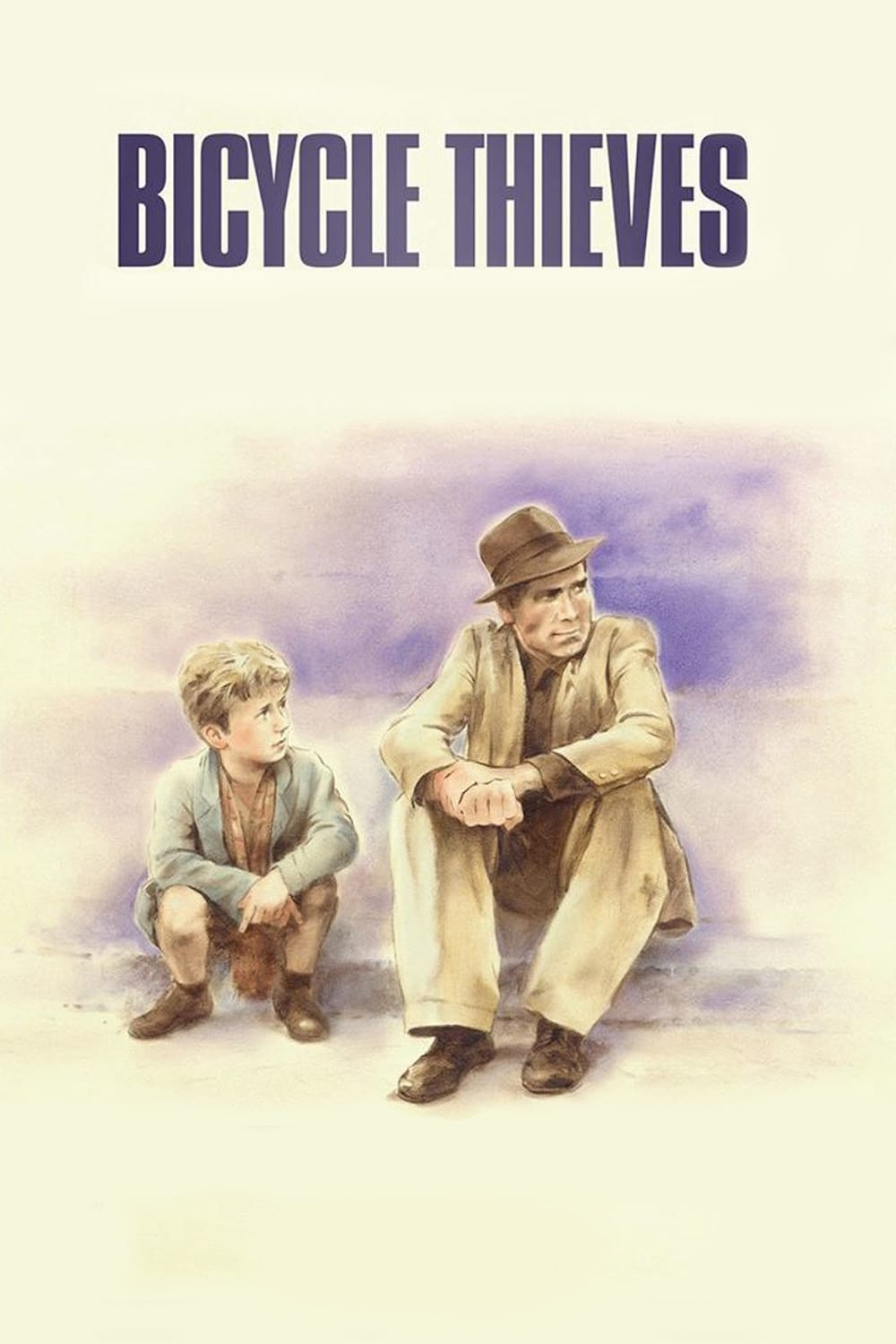
The Genre of This Film
Every time I watch “Bicycle Thieves,” I’m struck by how deeply the film pulls me into the daily struggles of ordinary people. I genuinely identify it as a landmark example of Italian Neorealism, a genre that, for me, speaks louder than almost any other about the dignity and hardship of real life on the margins. Italian Neorealism isn’t just a label I attach for the sake of convenience—this film embodies it from every angle. The raw authenticity, the untrained actors, and the focus on working-class Rome after World War II all merge to place “Bicycle Thieves” firmly within this genre. It is more than a crime drama or family tale; it is, in my view, the genre’s purest expression.
Key Characteristics of the Genre
- Common themes
- Typical visual style
- Narrative structure
- Character archetypes
When I think of Italian Neorealism, certain themes immediately spring to mind: poverty, perseverance, social injustice, and the very real, sometimes cruel, mechanics of existence. These films don’t glamorize life. Instead, they glance unflinchingly at postwar society’s fractures. The depictions of unemployment, familial obligation, and moral choices under pressure help define these narratives. For me, the everyday heroism and defeats of ordinary people—quiet, desperate, sometimes tragic—are at the core of what this genre conveys.
My appreciation for this genre often grows from its remarkable aesthetic. The visual style relies on natural lighting and on-location shooting to achieve unfiltered realism. I’m always impressed by the unnerving simplicity: dusty streets, cramped interiors, and the chaos or quiet of authentic city life, captured without elaborate sets. I find that handheld cameras and lengthy takes reinforce the sense of immediacy. Nonprofessional actors add to this rawness, making the footage feel almost documentary-like. Every shot seems to bear the weight of truth over technical polish.
Italian Neorealism resists conventional Hollywood plotting, and this fascinates me as a viewer. I notice that these films often adopt episodic structures, where the journey unfolds through minor incidents rather than neat dramatic turns. The narrative arc feels less about achieving a goal and more about enduring experience; the stakes are urgent, but the resolutions are rarely tidy. For me, this genre is all about the momentum of necessity: characters are propelled forward by their needs, not their ambitions. The endings, in my experience, seldom offer triumph, but rather a sober acceptance or unresolved loss.
I often find myself drawn to the characters crafted within this tradition. The protagonists are seldom larger-than-life. Instead, they are men and women—often unemployed, struggling parents, restless youths—believably flawed and profoundly human. Children play significant roles too, serving as witnesses or innocent casualties of adult hardship. I notice authority figures—police, bureaucrats, landowners—rarely help, serving instead as part of the oppressive machinery. The supporting characters, often as vivid as the leads, seem plucked directly from the milieu, making every interaction feel authentic.
How This Film Exemplifies the Genre
When I consider “Bicycle Thieves,” every scene reminds me of why Italian Neorealism has such staying power in my own cinematic education. This film, to me, is a living, breathing sketch of postwar hardship, and it achieves this not through grandiose storytelling, but by narrowing its lens onto a single, seemingly modest crisis: the loss of a bicycle, the bedrock of one man’s precarious hope. For me, the genius of the genre is its refusal to sensationalize poverty. The stakes in “Bicycle Thieves” are gutting precisely because they are modest and relatable—the desperation of a man trying to recover the means to survive and support his family. The city itself becomes a kind of living organism, its crowded streets and indifferent crowds amplifying feelings of futility.
Working with nonprofessional actors, the film strips away affectation. I always find myself moved by Lamberto Maggiorani and Enzo Staiola’s performances; they are not acting so much as enduring, and I sense their exhaustion, shame, and hope at every turn. There are no stylized plots or romanticized obstacles—just setback after setback, with each interaction revealing something unvarnished about urban life. When I watch the episodic pacing, I’m reminded of daily routines rather than narrative blueprints: a job found, a theft, futile searches, each moment leading not toward a solution but toward a kind of hard-fought empathy.
The visual austerity never fails to absorb me. Every shadow, every bustling marketplace, every rain-soaked alley feels chosen for authenticity rather than effect. I feel as if I’m tagging along through a living city—Rome, stripped of beauty but rich in truth. Even the soundscape, with street noise and distant conversations, builds the sense of immersion I always crave in realism. Perhaps most powerful, though, is the film’s reluctance to provide catharsis. The story’s conclusion left me awestruck; it’s a masterstroke of the genre. There is no clean victory, just that walk into a faceless crowd—a gesture that encapsulates what I believe is the true spirit of neorealism: survival, not triumph, is often the reality.
Other Essential Films in This Genre
- Rome, Open City (1945) – I often return to Roberto Rossellini’s “Rome, Open City” when discussing the foundations of Italian Neorealism. This film, set during the Nazi occupation, strikes me for its fierce urgency and commitment to unfiltered storytelling. Its use of war-torn locations and the lived-in energy of the cast make it a forerunner of the movement. When I watch it, I feel confronted by the chaos of liberation and the blurred lines of collaboration and resistance—classic Neorealistic ambiguities rendered with astonishing immediacy.
- Shoeshine (1946) – Vittorio De Sica’s “Shoeshine” shaped my understanding of how Neorealism could focus on children to mirror a nation’s disillusionment. The film, for me, lays bare the emotional violence inflicted by poverty and institutional cruelty. The narrative tracks two boys whose friendship is tested by the adult world’s indifference. When I see their innocence chipped away piece by piece, I recognize the genre’s central heartbreak—societal failures are mapped onto individual suffering, especially that of the young.
- La Terra Trema (1948) – Luchino Visconti’s “La Terra Trema” is an immersive, almost anthropological dive into the travails of Sicilian fishermen. I’m always impressed by the depth of realism—Visconti shot the film in a real village, using actual locals, and had them speak in their dialect. This dedication to authenticity reinforces, in my view, the genre’s aim to depict struggle with respect and accuracy: the grinding weight of tradition, poverty, and the intrusion of outside forces plunges every gesture and exchange into a context that feels lived, not written.
- Umberto D. (1952) – For me, De Sica’s “Umberto D.” is a heartbreaking portrait of elderly vulnerability, echoing many of the motifs found in “Bicycle Thieves,” but with a softness all its own. The central figure’s solitude, his devotion to his dog, and the silent humiliations doled out by an uncaring city never fail to move me. I find that the film distills Neorealism to its essence: the heroism of everyday survival in a world all too willing to look away from those who are suffering.
Why This Genre Continues to Endure
I’ve always believed that Italian Neorealism persists in captivating audiences because it grants a dignity to the overlooked facets of human experience. Whenever I introduce newcomers to these films, I notice how quickly the initial distance—the black-and-white film, the unfamiliar city, the faces far from Hollywood glamour—gives way to identification. Viewers see themselves, their families, or their neighbors in these stories. For me, the power lies in the simplicity and honesty of what’s portrayed: hunger not as metaphor, but as a real ache; job loss not as a plot complication, but as a tidal wave that changes the course of a life.
As I see it, there is a democratic energy in the genre—anyone’s story is worthy of the closeup, no matter how humble. By rejecting artifice, Italian Neorealism has inspired filmmakers across decades and continents; I often spot its influence in movies about immigration, economic struggle, or marginalized communities today. These films’ refusal to wrap hardship in comforting resolutions means that their lessons and questions linger long after the credits roll. That, to me, is the secret to their relevance: they offer no easy answers, but they leave their audience changed, and more attuned to the struggles and strengths of people all around them. I carry these films with me, always; their lessons color the way I watch cinema and the way I understand my own role in the world.
If you’re interested in how viewers respond beyond technique, you may want to explore audience and critical reception.
🎬 Check out today's best-selling movies on Amazon!
View Deals on Amazon