
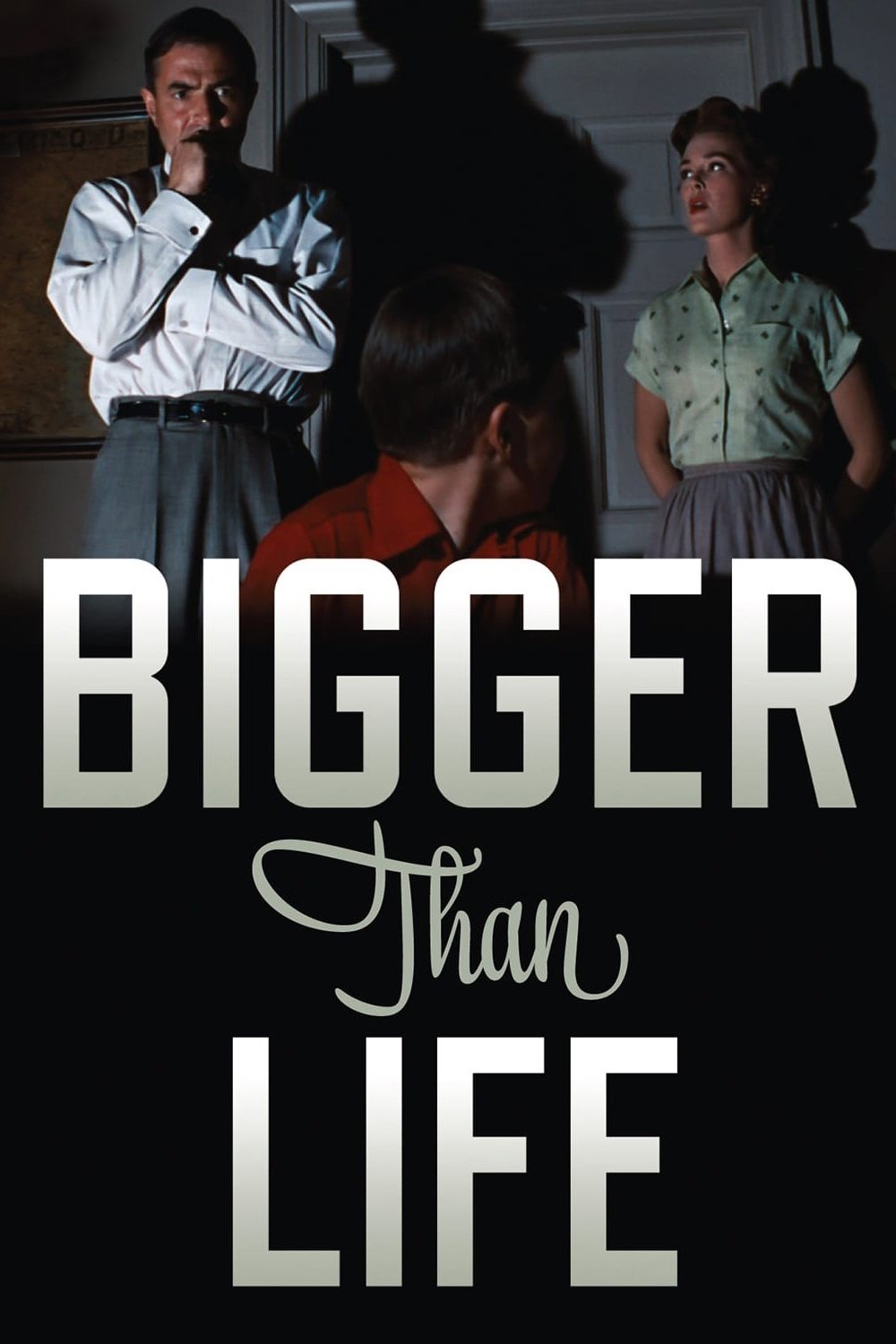
The Genre of This Film
From the moment I first experienced “Bigger Than Life,” I felt powerfully struck by its resonance within the melodrama genre. For me, melodrama isn’t just about dramatizing everyday life—it’s about pushing the limits of ordinary situations until they become sites of emotional combustion. This is exactly what I find in “Bigger Than Life.” The film’s primary energy comes from its ability to heighten personal and familial crisis, rendering the domestic sphere as intense and volatile as any battlefield. While there are certainly elements that could place this film within the psychological drama genre or even medical drama, I always return to its roots in classic American melodrama. Its narrative infrastructure transforms the archetypal portrait of middle-class stability into a clash of ideals, desires, and despair that spills into every frame. I have always seen melodrama as the only genre that could accommodate and amplify the film’s emotional excesses and its critique of social norms, giving “Bigger Than Life” its lasting power and relevance in cinematic history.
Key Characteristics of the Genre
- Common themes
- Typical visual style
- Narrative structure
- Character archetypes
Looking at my own journey with melodramatic films, I consistently encounter certain recurring themes: the strain between personal desire and social expectation, the thin spaces between public facades and private torments, and a relentless focus on heightened emotional confrontation. These films take the tensions lurking beneath the surface of everyday life—issues of authority, repression, anxiety, and alienation—and magnify them with a sense of urgency. Family, marriage, illness, sexuality, and power frequently act as thematic anchor points. For me, the best melodramas probe what happens when the fabric of domestic life threatens to unravel—when an ordinary family is thrust into extraordinary distress and the consequences ripple outward.
I always notice how melodramatic films, especially those born during the Technicolor era, rely heavily on expressive visual cues. Deep, saturated colors, dramatic lighting, and carefully orchestrated set designs are all techniques that help to visually reflect a character’s inner turmoil. In my experience, directors in this genre often employ composition in depth, framing, and mise-en-scène to turn living rooms or kitchens into stages where psychological battles play out. Shadows are used to underscore tension, and even the most mundane objects gain symbolic relevance through their careful placement. This hyper-stylization is never ornamental to my eyes—rather, it’s always in direct service of the narrative’s emotional currents. Melodrama’s stylistic excesses parallel the exaggerated passions and anxieties its characters undergo.
Melodramas, as I’ve seen time and again, rarely operate in a linear, cause-and-effect logic; they are constructed instead around escalating emotional dilemmas and turning points. The genre favors a structure that centers on personal transformation sparked by a crisis—a sudden illness, an unexpected loss, a secret revealed. There’s often a slow build toward a moment of rupture, followed by a cascade of emotional consequences. I find that the structure is broad enough to accommodate extremes: private heartbreak can become public spectacle, and a single domestic event might feel as impactful as a global catastrophe. Typically, the resolution doesn’t restore the neat order that was disrupted at the outset, but instead leaves characters permanently changed and the audience compelled to consider the implications.
What sets melodrama apart for me is its ability to elevate ordinary people into mythic figures, largely through reliance on specific archetypes. These include the tormented protagonist (often a figure of authority brought low by illness, ambition, or emotional breakdown), the suffering spouse, the innocent or endangered child, and the concerned outsider—be it a friend, neighbor, or professional. Yet, these roles are never static in the best examples; melodrama allows for complex reversals, where a nurturing spouse becomes an obstacle, or a well-meaning friend is suddenly complicit in tragedy. Characters exist not just as individuals, but as allegories for larger social struggles—often pinned between personal integrity and societal pressure.
How This Film Exemplifies the Genre
Every time I revisit “Bigger Than Life,” I’m struck by how thoroughly it embodies the melodramatic tradition, using each generic trait to amplify its critique of American domestic life. The film’s central crisis, James Mason’s transformation under the effects of cortisone, doesn’t just serve as a medical anecdote—it taps into deeper anxieties about masculinity, parental authority, and the fragility of suburban security. As I see it, the melodrama emerges not simply from the dramatic changes in the protagonist’s behavior, but from how those changes shatter the illusions of a perfect nuclear family.
Visually, “Bigger Than Life” is masterful in its use of color and space. I am still astonished by how director Nicholas Ray turns cramped interiors—kitchens, hallways, bedrooms—into psychological battlegrounds. The lush Technicolor palette doesn’t offer warmth; instead, it oppresses and isolates. Every frame seems to vibrate with meanings just on the edge of breaking through spoken dialogue. I’ve always appreciated how reflective surfaces and distorted space convey the breakdown of the protagonist’s sense of reality, underscoring his journey from devoted teacher and father to a man unmoored by both drugs and cultural expectation.
Narratively, the film escalates emotion with barely a pause for breath. What begins as a quietly observed portrait of a schoolteacher morphs into a relentless emotional crisis. The plot follows melodrama’s signature arc—a steady build of domestic tension culminating in terrifying outbursts and desperate attempts to reclaim control. For me, the most wrenching moments stem from the impossibility of resolution; there is no true restoration of order, only a dim hope that the family might survive the ordeal, forever altered.
I am always moved by how “Bigger Than Life” handles character archetypes. Mason’s Ed Avery is both hero and villain, victim and tyrant; Barbara Rush’s role as his wife Lucy becomes a study in repression, fear, and loyalty. The child, Richie, is more than an innocent—he represents both the stakes of domestic collapse and society’s investment in preserving order. The film wrings raw emotional impact from the shifting roles and alliances inside the Avery household, delivering all the cathartic turmoil that defines melodrama at its most potent.
Other Essential Films in This Genre
- All That Heaven Allows (1955) – When I watch this Douglas Sirk classic, I see the same strategies of visual excess and emotional turmoil that I find so powerful in “Bigger Than Life.” The story of a widow falling in love with a younger man isn’t only about forbidden romance; it’s an inquiry into class, conformity, and the sacrifices demanded by American suburbia. The use of color—vivid reds, autumn golds—and mirrors transforms each suburban sitting room into an emblem of inner conflict. I’ve returned to this film many times to marvel at how melodrama packages seismic emotional shifts inside the most unassuming of settings.
- Written on the Wind (1956) – If I were to choose one film that represents melodrama’s appetite for exaggerated passion and family dysfunction, it would be this explosive Sirk production. Every frame feels saturated with desire and self-destruction, and the performances push the boundaries of emotional projection. I find the character dynamics—especially the alcoholic playboy, the repressed heiress, and the ‘outsider’ hero—quintessential. The exaggerated visual style, full of stormy weather and swirling gowns, makes the inner chaos impossible to ignore, embodying the genre’s drive to expose what polite society aims to conceal.
- Now, Voyager (1942) – As I reflect on classic melodrama, I think of how “Now, Voyager” uses the journey of a repressed woman toward self-actualization as both a personal and a social act. Bette Davis’s performance is the anchor of the film, but it’s the steady progression from emotional suppression to anxiety and liberation that feels so intrinsically melodramatic to me. The film manipulates lighting and music to heighten each step of the character’s transformation. Each act of rebellion, however small, resonates like a seismic event when pushed through the genre’s expressive lens.
- Imitation of Life (1959) – No other melodrama to me lays bare the intersection of personal longing and social constraint quite like this Sirk masterwork. I find this film’s layers—race, class, motherhood—handled through character archetypes that represent every corner of American aspiration and heartbreak. Every layer of suffering is rendered with visual and emotional excess, making individual choices feel like public reckonings. Scenes between mothers and daughters, friends and lovers, are staged for maximum emotional impact, drawing out melodrama’s investment in exposing deeper societal wounds.
Why This Genre Continues to Endure
When I try to understand the timeless appeal of melodrama, what stands out most is the way it renders private struggles, so often invisible, into public spectacle. The genre has always invited me to look beyond surface respectability, to question what sacrifices are made so that families appear harmonious and communities seem stable. I don’t just watch melodramas—I experience them, letting myself get swept up in the excess of feeling, the dramatic reversals, the lush visuals. There is something cathartic about seeing the dramas of everyday life magnified in such a way that I have no choice but to empathize with characters at their most vulnerable and extreme.
I also believe melodrama remains vital because it evolves. Contemporary films and television series regularly borrow its core elements—crisis, confession, confrontation—adapting them to explore new anxieties about gender roles, economic insecurity, or the pressures of social media. Even as the stylistic excesses of classic melodrama may appear dated to some, I find their emotional intensity, visual inventiveness, and commitment to issues of identity and authority are utterly modern. The genre endures because it gives voice to the powerless, finds poetry in pain, and teaches me, again and again, that beneath the idealized image of home lie stories that are always bigger than life.
If you’re interested in how viewers respond beyond technique, you may want to explore audience and critical reception.
🎬 Check out today's best-selling movies on Amazon!
View Deals on Amazon