
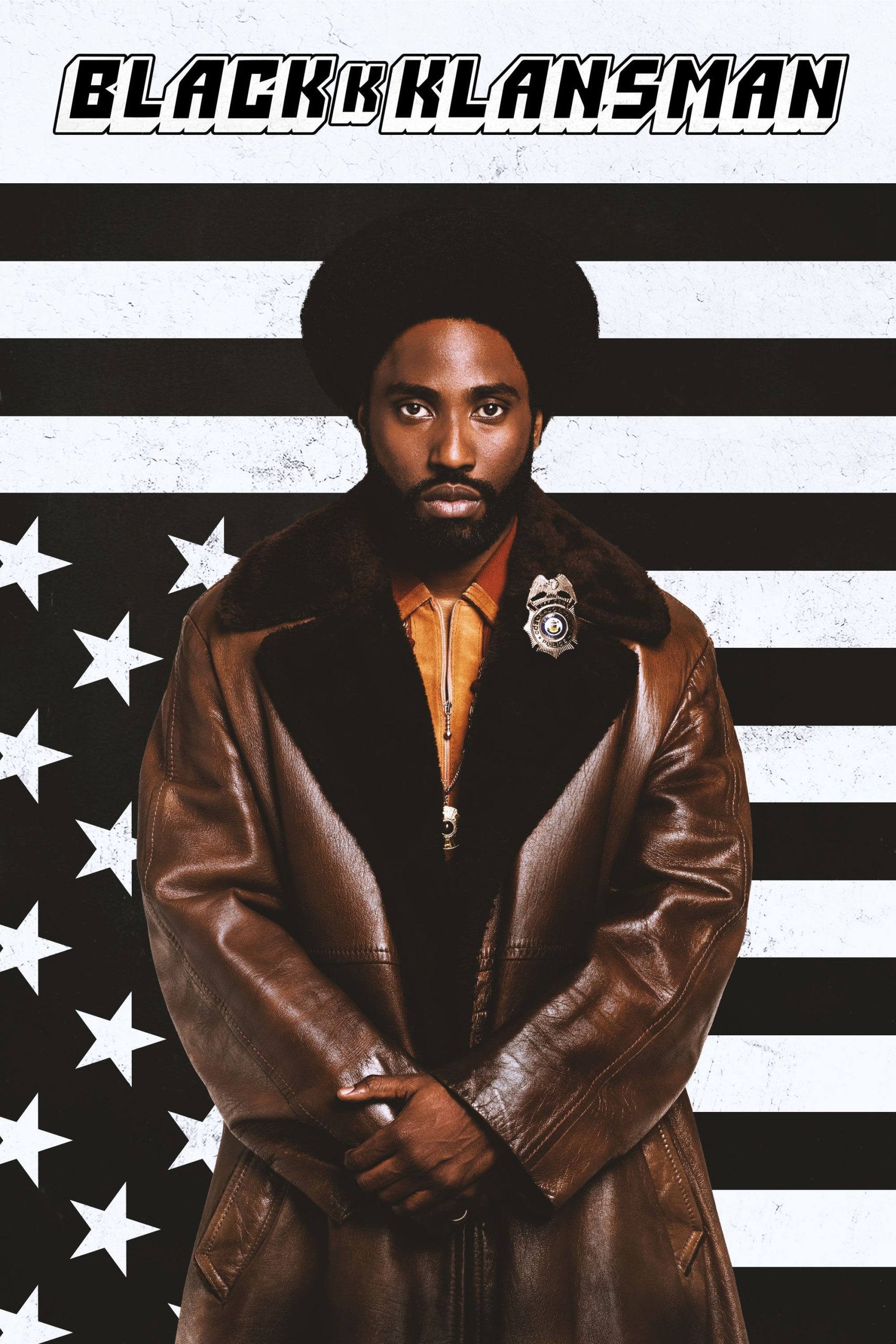
Film Movement Context
What continually draws me back to BlacKkKlansman is that uneasy cocktail of anger and satire I can only associate with the late-wave resurgence of American political cinema. If I had to locate it within a single movement, I’d say it is part of the contemporary revival of the “New Black Cinema” tradition—a lineage that, for me, stretches from the audacious energy of the LA Rebellion movement in the 1970s, through the spike in Black auteurs in the 1980s and 1990s, and into the present with a distinctly postmodern, genre-savvy touch. As I watch Spike Lee lean into and invert conventions of the buddy-cop genre while overlaying real-world outrage and sorrow, I’m confronted with a synthesis of social engagement and genre that only recent decades could have produced. While some would be tempted to label it as part of mainstream social thriller or political satire, I see its pulse as more intimately entwined with the Black independent film current—injecting sharp historical consciousness and formal experimentation into a format usually reserved for lighter fare.
Historical Origins of the Movement
When I trace the roots of what I see in BlacKkKlansman, I find myself examining the ruptures and reconfigurations of cinema that accompanied the civil rights transformations of the late 1960s and 1970s. In my experience, the LA Rebellion filmmakers—Charles Burnett, Julie Dash, Haile Gerima—sparked a certain visual and narrative dialectic, committed to revealing Black lives as fully human, nuanced, and, above all, political. Their hostility toward both Hollywood stereotypes and docile “integrationist” tales marked a break: style and voice mattered as much as message. The movement I’m looping Lee into is, in my reading, less a strict school and more a migratory influence that shaped later generations of Black directors who deployed Hollywood genre for their own ends. This hybrid approach—critical of mainstream form but willing to wield its devices—was reenergized during the 1990s as Black directors like John Singleton, Kasi Lemmons, and Spike Lee himself leveraged the tools of melodrama, comedy, and thriller to lay bare racial fictions and institutional violence. By the 2010s, I saw a reinvigorated discourse around Black identity, propelling filmmakers to utilize not just drama, but also biting satire and hybridized genres, to respond directly to resurgent racism and digital-age spectacle.
Unlike earlier “blaxploitation” cycles, which were often packaged by white-run studios for largely white audiences, this new wave bore the stamp of authorial agency. I’m always struck by how these films refuse to separate their aesthetic strategies from their political imperatives. The history, as I see it, has been shaped by the struggle for control over image and narrative—who gets to tell whose story, and in what terms. For me, this movement is inseparable from moments of American upheaval: the end of the Vietnam War, crack epidemics, the Rodney King beating, and more recently, the rise of Black Lives Matter. Each era fed back into the films’ modes of address, making the movement less a fixed aesthetic program and more an evolving strategy for confronting the violence and hypocrisy that saturate American culture.
This Film’s Contribution to the Movement
Witnessing BlacKkKlansman in the context of this history, I can’t help but see it as both a homage to and a reinvention of everything that’s come before. For me, its true innovation lies in how it juggles irony and sincerity, using the trappings of a familiar genre—the undercover cop film—to dissect the viral persistence of white supremacy in America. I’m fascinated by how Lee, always a self-conscious formalist, shuffles tones: comedy morphs into horror, period detail blurs into newsreel contemporaneity. In those moments where archival footage cuts into the fiction, I find myself jolted awake, reminded that history is not a closed loop but an ongoing wound.
To my eye, Lee is not simply “updating” the genre; he’s weaponizing it. By foregrounding the absurdity of a Black police officer infiltrating the Ku Klux Klan, the film courts the kind of double-take I associate with the best of the New Black Cinema. It is as if Lee is daring us to laugh, only to transform that laughter into unease as events spiral toward their unresolved conclusion. What moves me most is his refusal to offer closure: instead of resting on a triumphalist note, Lee tacks on footage from the 2017 Charlottesville rally, collapsing past and present. I interpret this as a confrontation with American mythmaking itself—the same sort of mythmaking that classic Hollywood Westerns and musicals peddled for decades, but now exposed as lethal fantasy.
For me, BlacKkKlansman is essential precisely because it refuses to exist in a vacuum. Lee positions his work as part of an intertextual tapestry: callbacks to the Birth of a Nation screening, references to 1970s Blaxploitation, and explicit echoing of contemporary activism. It’s as if Lee sees the entire apparatus of American cinema as both a weapon of white supremacy and, potentially, a tool of liberation, depending on whose hand holds the camera. I admire how the film reveals genre itself—comedy, thriller, buddy-cop—as something that can be turned against its origins, transformed from an agent of escapism into one of radical critique. My experience watching Lee’s film is thus always doubled: I’m seduced by the rhythm and spectacle, but never allowed to forget the brutality behind the laughter.
Influence on Later Genres and Films
- Genre Subversion – As I reflect on films that came after, it’s impossible not to see how BlacKkKlansman emboldened a new wave of genre subversion in American cinema. I see works like Jordan Peele’s Get Out and Boots Riley’s Sorry to Bother You as direct descendants—employing horror, satire, or magical realism to skewer structural racism. Personally, I notice that audiences have become more attuned to the layered intentions behind what might otherwise appear as outlandish or comic set-pieces. Spike Lee’s willingness to undercut every resolution with a cold dose of reality now feels like a standard operating procedure among contemporary filmmakers aiming to reach beyond mere entertainment.
- Political Cinema’s Mainstreaming – My sense is that the film’s relentless confrontation of white supremacist history helped mainstream a form of “didactic,” overtly political filmmaking that had once been isolated to indie or foreign sectors. After BlacKkKlansman, I see even major studio productions—like Ava DuVernay’s Selma or Shaka King’s Judas and the Black Messiah—embracing direct sociopolitical address, never shying away from uncomfortable truths. Unlike some prestige films that wrap politics in respectability, the emboldened approach I perceive in these newer works has, to me, shattered taboos about what topics and language are allowed into the mainstream, daring to say the quiet part loud.
- Reclaiming Historical Narrative – Watching the cascade of films and limited series about Black resistance and survival since 2018, I keep returning to how Lee’s blend of past and present has inspired a reclamation of historical storytelling. I observe projects like Barry Jenkins’ The Underground Railroad or Regina King’s One Night in Miami… reworking history as living memory, refusing to allow sanitized or conciliatory retellings. The structural juxtapositions—past and present, fantasy and realism—have, in my view, become a guiding principle for how contemporary filmmakers tackle the legacy of American racism, insisting on the messiness and immediacy of history rather than its closure.
The Movement’s Lasting Impact
When I grapple with why this movement still resonates for me, I think it’s because it insists on a continual state of political and aesthetic alertness. Its practitioners, including Spike Lee, refuse to let audiences off the hook. The movement’s energy, in my eyes, is located in that tension between spectacle and critique: it grabs my attention with genre pleasures, only to deny simple catharsis. I find that this refusal to offer easy answers—its embrace of contradiction, discomfort, and direct address—has ensured its ongoing relevance not just as social commentary, but as a test for the ethical capacity of cinema itself.
Even years after encountering BlacKkKlansman, I’m left feeling that the fight over meaning and memory in American movies is still actively contested ground. The most consequential legacy, for me, is the way this movement encourages filmmakers and viewers alike to think about whose stories are being told, by whom, and to what ends. By injecting artistry directly into the bloodstream of activism, I witness the movement continually challenging both aesthetic conventions and cultural amnesia, forcing me to reckon with the ongoing stakes of representation and resistance on screen.
To connect style and technique with broader context, you may find these perspectives useful.
🎬 Check out today's best-selling movies on Amazon!
View Deals on Amazon