
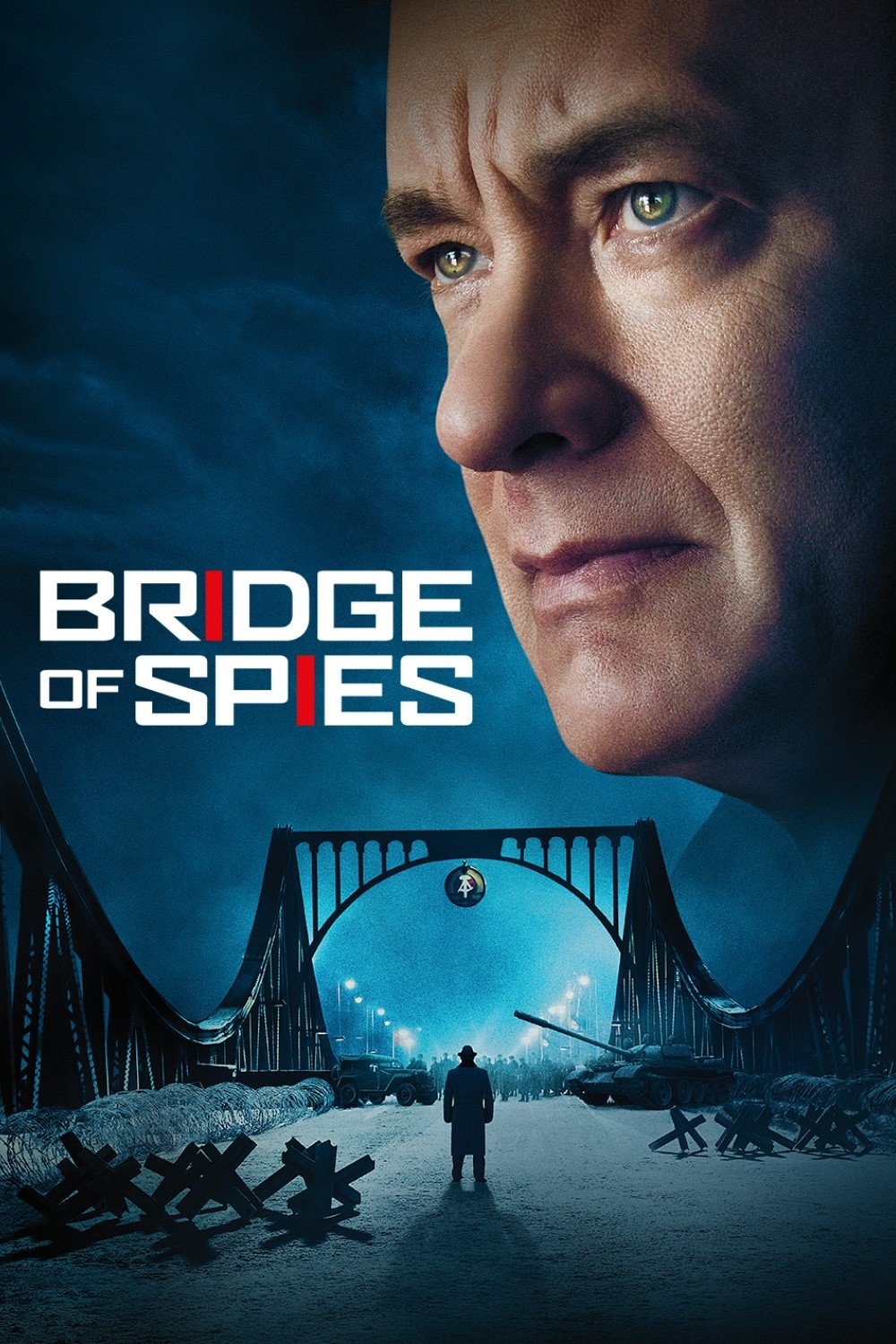
The Genre of This Film
When I sat down to watch “Bridge of Spies,” there was this immediate recognition deep within me that I was engaging with something distinctively rooted in the historical drama and political thriller genres. If I had to commit to a primary classification, I would say without hesitation that “Bridge of Spies” is, above all else, a historical drama. To me, its careful recreation of Cold War atmosphere, its reverence toward true-life events, and its prioritization of nuanced character interactions over pure spectacle sealed that designation right away. Of course, it borrows certain tensions from the thriller mode, but at its core, the film immerses me in the gravity and texture of a very real, deeply consequential moment in recent history. Rather than relying on escapist flourishes or fantasy, it anchors every beat in the careful unfolding of historical circumstances, always mindful of the real people whose lives were swept up in global machinations.
Key Characteristics of the Genre
- Common themes
- As someone drawn to historical drama, I consistently notice that these films operate as both time machines and moral laboratories. They’re built around themes like integrity in the face of pressures, the burden and responsibility of individual choices, and the way politics invades personal lives. For me, the genre recurrently tackles questions about national identity, the moral ambiguities of power, and the ordinary person’s role within extraordinary circumstances. The impact of ideology on daily life, as well as the cost of courage or compromise, comes up again and again.
- Typical visual style
- Visually, I find historical dramas depend on authenticity. Cinematography often leans toward realism—muted color palettes, meticulous period costumes, lived-in sets, and lighting that echoes the technological limits of the era being depicted. Instead of the sharply saturated or hyperstylized choices found in some genre films, these works persuade through subtlety. Every element—from analog props to measured camera movements—adds to my sense of immersion, convincing me that I’ve been transported to a time I never lived through, but feel as if I have.
- Narrative structure
- I’m always struck by the genre’s patient, often methodical approach to storytelling. Historical dramas don’t rush—they let events unfold with gravity, placing structure above spectacle. The narrative often follows a central protagonist through a carefully constructed arc against a backdrop of major true events. It’s not uncommon for such films to chart the personal evolution of a character as they become entwined in incidents with far-reaching consequences. The stories typically weave between private dilemmas and public dramas, aligning my sympathies closely with the individuals at the heart of history.
- Character archetypes
- Through my lens, these films nearly always spotlight principled but flawed individuals. There’s the reluctant hero—an everyday person called to courage or sacrifice; the bureaucratic antagonist, often representing institutional inertia or suspicion; collaborators or confidantes who test the hero’s convictions; and public figures whose motivations are shaded by their era. These are stories of real people in extraordinary situations, so their actions feel consequential, imperfect, and above all, deeply human.
How This Film Exemplifies the Genre
When I reflect on “Bridge of Spies,” it’s impossible for me not to marvel at how fully the film embodies historical drama at its highest level. Immediately, I was drawn into a world meticulously reconstructed to echo the late 1950s and early 1960s—a world awash with political suspicion, rigid boundaries, and the persistent threat of global catastrophe. What struck me most was Steven Spielberg’s ability to evoke the textures of the Cold War era not through bombast, but through detail: the washed-out colors of a rain-soaked Berlin, the precise lines of period-accurate legal chambers, the ever-present unease humming beneath polite exchanges.
But more than the setting, it was the internal journey of James Donovan, played with such understated conviction by Tom Hanks, that I found so deeply resonant. Here, the protagonist is not a man of action or violence, but instead a man of principles forced to navigate treacherous waters. I was deeply absorbed by the questions the film posed: What does it mean to do the right thing in a situation that punishes compassion? How much difference can one person make when caught between national interests and personal ethics? These are questions that, in my experience, lie at the beating heart of the historical drama genre.
The film’s structure never felt hurried. I watched, almost with bated breath, as Donovan was drawn deeper into layers of negotiation, political chess, and personal peril. The way the story juxtaposed private conversations—sometimes tense, sometimes painfully awkward—with the vast machinery of governments and worldwide conflict is, to me, precisely what distinguishes historical drama. There’s this tangible sense of witnessing history from the inside: I wasn’t merely told what happened, I was invited to feel it unfold through the eyes of someone who bore the cost firsthand.
Visually, everything supported this immersion. Shadows and cold tones enveloped characters in Berlin, creating a mood that I could almost feel in my bones—a palpable chill, both literal and metaphorical. The use of lighting, costuming, props, even background extras, worked together to situate me firmly in the austerity and tension of the period. There were no anachronistic winks or breakneck chases to remind me I was watching fiction; every element reinforced the film’s historical fidelity and dramatic sobriety.
I also found the character archetypes fully in line with what I expect of this genre, but never in a way that felt predictable. Donovan feels relatable, never sanctimonious—his struggles seem entirely plausible for a man thrust into unwanted responsibility. Equally, the supporting characters—ranging from the wary Soviet officials to Donovan’s suspicious American peers and the quietly dignified Rudolf Abel—are crafted with nuance and complexity. They each embody their respective positions within the historical landscape, but they are not reduced to simple mouthpieces for ideology or exposition. I found their choices and dilemmas authentically shaded, reflective of the immense uncertainty that defined the era.
Ultimately, I see “Bridge of Spies” as a statement about the endurance of humanity in a world prone to division and suspicion. It doesn’t glorify heroism in the traditional, action-oriented sense; instead, it honors quiet resilience, the courage to stand firm in the face of bureaucratic resistance, and the belief in basic decency. This, for me, is the essence of historical drama—an engagement with the past that feels immediate, urgent, and emotionally truthful.
Other Essential Films in This Genre
- “Tinker Tailor Soldier Spy” (2011) – Explanation
- For me, Tomas Alfredson’s “Tinker Tailor Soldier Spy” is perhaps one of the most atmospheric historical thrillers ever made. Its slow-burn pacing, offset by minutely observed period details, throws me right into the distrustful labyrinths of Cold War espionage. The film’s focus on interiority and subtle maneuvering over outright conflict echoes why I appreciate historical drama: it’s about the spaces between words, the unseen stakes, and how the course of history can pivot on the integrity (or lack thereof) of individuals who are rarely celebrated.
- “The Queen” (2006) – Explanation
- “The Queen,” directed by Stephen Frears, has always felt like a masterclass in portraying national crisis through the lens of private emotion. Watching Helen Mirren’s singular performance, I see the way historical drama can take a very public event and humanize it, teasing out the conflicting duties and emotions that define leadership under scrutiny. Rather than focusing on spectacle, the film roots itself in character and context, allowing me to reconsider how history is experienced behind closed doors.
- “Good Night, and Good Luck” (2005) – Explanation
- George Clooney’s black-and-white meditation on Senator McCarthy and journalistic courage captivated me with its style as much as its substance. Here, the genre’s dedication to period detail and atmosphere is front and center, creating a sense of immediacy despite the events unfolding over half a century ago. The film exemplifies for me how historical dramas don’t simply recount the past—they interrogate it, drawing out present-day resonances and reminding the audience that the dilemmas of the past remain lived dilemmas for us all.
- “Argo” (2012) – Explanation
- When I first saw Ben Affleck’s “Argo,” I was taken aback by how skillfully it balanced white-knuckle suspense with an almost journalistic attention to historical context. The film’s craftsmanship lies in how it transforms a real, unlikely rescue into a gripping narrative without sacrificing credibility. I feel the tension between bureaucracy and boldness, public duty and personal risk, all hallmarks of the best historical dramas.
Why This Genre Continues to Endure
I often find myself returning to historical dramas not just for their aesthetic pleasures, but because they act as a kind of bridge to empathy and understanding. There’s something uniquely rewarding about experiencing history—not as a series of dry facts, but as a tapestry woven through the lives of people who, despite being separated from us by time, seem acutely familiar in their struggles, desires, and convictions. It’s this human scale that allows me, and so many others, to feel the pulse of another era and wonder what choices we might have made in their place.
The genre’s ability to connect public events and private lives is, for me, at the heart of its staying power. People have an enduring hunger to understand how our world was shaped, and historical dramas let us do so in a way that lectures or textbooks cannot. Through story, performance, and meticulously recreated worlds, I get to experience history from the inside out. This immersion invites me to sympathize with individuals who risked everything for values, principles, or simple survival—and that empathy often remains long after the credits roll.
Moreover, I believe that the persistent resonance of these films stems from their engagement with ongoing questions: What is justice? How does power corrupt or redeem? When is it right to resist, and when must we compromise? These aren’t concerns locked in the past; they are perennial themes that pulse through our own troubled times. Whenever I watch a film like “Bridge of Spies,” I sense these deeper currents at work, subtly tying my experience to those who lived—and struggled—before me.
By continually inviting audiences to step into the shoes of real people at defining moments, historical dramas remind me that history is not fixed or distant, but alive and ever relevant. That’s why I keep coming back, and why I know audiences will, too.
If you’re interested in how viewers respond beyond technique, you may want to explore audience and critical reception.
🎬 Check out today's best-selling movies on Amazon!
View Deals on Amazon