
The Genre of This Film
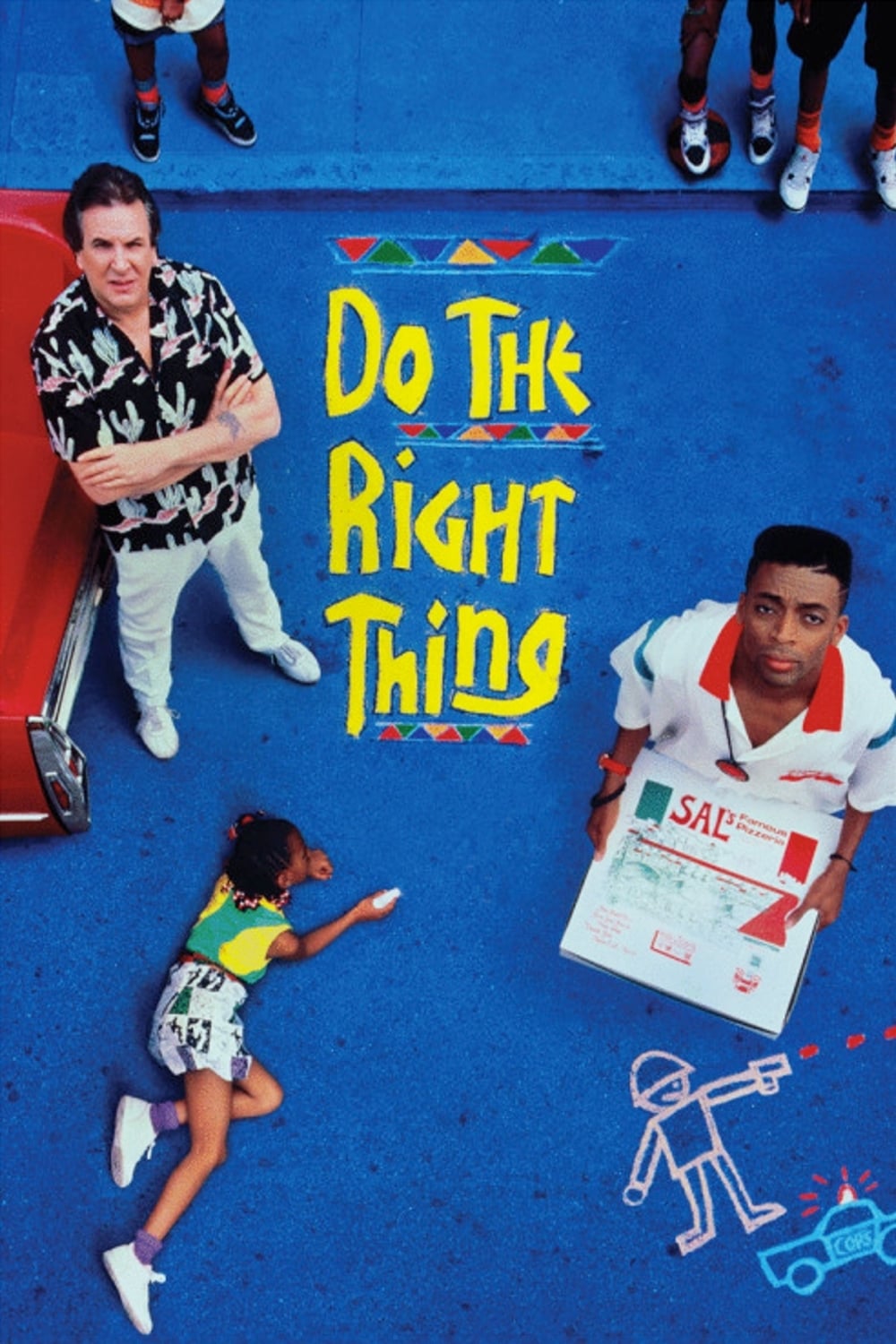
Contemplating Do the Right Thing always brings me back to how powerfully it fits within the social drama genre. It strikes me that, while some viewers might associate it superficially with comedy or even call it a “slice of life,” the experience of watching the film is fundamentally defined by its engagement with the intricate web of social tensions. My sense is that what sets this film apart is not just its gritty depiction of a neighborhood in Brooklyn on a sweltering day, but the way it brings to life real, complex issues of race, community, and justice. To me, it stands out as social drama because everything in the film serves to provoke thought, challenge assumptions, and spark conversations about the world off-screen as much as on-camera. I see this as a film designed to articulate the struggles and friction points woven into everyday urban existence, holding up a mirror not just to a fictional neighborhood, but to America itself.
Key Characteristics of the Genre
- Common themes
- Typical visual style
- Narrative structure
- Character archetypes
When I think about social dramas, the themes that consistently stand out are injustice, inequality, social tension, and the individual’s place within a broader community. What grabs me about this genre is its refusal to shy away from uncomfortable truths or gloss over friction between groups of people. Instead, I find these films often head straight for the heart of issues like systemic bias, generational divides, or the collision between tradition and change. In my experience, the genre’s best works are those that make me ask, “What would I do in this situation?” or leave me pondering the gap between the world as it is and the world as it could be. Stories in this genre rarely offer easy answers—which, frankly, is what I respect most about them.
Whenever I watch social dramas, I’m struck by how directors use their visual choices to immerse viewers in the world of the characters. There’s often a raw, immediate quality to the cinematography, with handheld cameras and close-up shots making me feel as though I’m right there in the center of the action or conflict. I notice that the color palettes usually reflect the setting’s reality—sometimes gritty and muted, other times, like in Do the Right Thing, vibrant and almost hyperreal, amplifying the emotional heat of both the weather and the clashes on-screen. I love how filmmakers exploit space—depicting cramped apartments, bustling streets, or oppressive urban environments—to underscore both belonging and alienation. Sound design, too, is used to ground the narrative, often featuring an eclectic mix of diegetic sounds and pointed musical cues that remind me that I’m not just a passive viewer, but a participant in the world created on-screen.
Social dramas, as I see them, tend to eschew neat, conventional story arcs in favor of narratives that spiral and collide. Rather than following a single protagonist’s journey, many of the genre’s most memorable films weave together multiple perspectives, each character’s choices rippling outward and affecting the lives of those around them. I find that there’s a deliberate sense of escalation: an ordinary day spirals toward extraordinary circumstances, fueled by small misunderstandings and longstanding resentments. Often, there’s a “ticking clock” element, where events are contained to a single location or time frame, lending an urgency and inevitability to the story’s climax. Endings hardly ever resolve every conflict. Instead, they leave me with lingering questions, or the bitter aftertaste of ambiguity—which, in my view, is exactly how social reality feels.
The people who inhabit social dramas are, to me, less like characters and more like real neighbors or strangers I might encounter on the street. There’s often a cross-section of society—old and young, hopeful and disillusioned, authority figures and rebels. Archetypes emerge: the local business owner trying to survive, the young idealist frustrated by injustice, the community elder who remembers “how things used to be,” and those caught between conflicting loyalties. What fascinates me is the way these archetypes are used: not to simplify, but to complicate my understanding of the “right” or “wrong” side of conflicts. I see the genre as deliberately challenging the viewer’s empathy, making it impossible for me to label anyone a straightforward hero or villain. Flaws and virtues are always intertwined, and that’s exactly what makes these films stick with me long after the credits roll.
How This Film Exemplifies the Genre
Reflecting on why Do the Right Thing is such a signature work for the social drama genre, I keep coming back to the feeling that every layer of the film works as a tightly wound exploration of community and conflict. The themes the film chases—race, power, cultural pride, and the struggle for respect—are all so central to social drama that I can hardly imagine the genre without them. I was especially struck by how the tensions in the film’s Brooklyn neighborhood aren’t sudden or isolated, but have been simmering just below the surface long before the day depicted in the movie. This slow burn is a hallmark of the genre, where festering, unresolved resentments can make the most ordinary day feel like a powder keg.
Visually, I am always captivated by how Spike Lee uses bold colors—deep reds and yellows—to make the viewer feel the relentless heat both in the air and among the residents. The camera rarely lets me relax; it’s constantly moving, keeping me in close proximity to arguments, laughter, or the charged silences that tell me everything words can’t. The use of canted angles and direct-to-camera addresses disrupts my passivity, making it impossible not to engage emotionally with the rapid escalation of conflict. It’s as if Lee wants me to stop being a mere spectator and instead reflect on what I would do in the same situation.
The film’s structure reinforces the genre’s tendencies I’ve described. Rather than adhering to a conventional hero’s journey, I watch as the perspective shifts between a wide array of neighborhood figures: Mookie, Sal, Radio Raheem, Da Mayor, Mother Sister, and others. Each one represents a distinct response to the day’s social pressures, and yet none are offered as the definitive moral center. I find myself pulled between competing points of view, forced to recognize the complexity of resolving entrenched divisions. The result is a narrative that captures the messiness of real-life social relations, declining any easy catharsis and persisting in my mind as an unresolved, persistent challenge.
As far as character archetypes go, Do the Right Thing brings them to life in uniquely memorable ways. Instead of flattening them for the sake of clarity, Lee lets his characters be contradictory: likable but flawed, sympathetic but capable of harm. I think here of Da Mayor, the old, gently alcoholic observer; Mookie, drifting between self-interest and responsibility; Sal, at once proud of and embattled by his position; and Radio Raheem, whose very presence in the film acts as a living protest against both community oppression and stereotyping. It’s the collision of these personalities, all drawn with specificity and depth, that anchors the film as a work of social drama. Watching it, I’m reminded that the genre’s real power is in making every individual feel authentic and every conflict feel disturbingly possible.
Other Essential Films in This Genre
- A Raisin in the Sun (1961) – I’m continually moved by how this adaptation of Lorraine Hansberry’s play portrays a Black family’s conflicted dreams and compromises as they navigate a segregated Chicago. The household’s intimate arguments and aspirations become a microcosm of broader American racial and economic anxiety, reflecting the same thematic currents that drew me to Do the Right Thing.
- Boyz n the Hood (1991) – What always draws me in about John Singleton’s film is how deeply invested it is in showing the impact of environment and social context on the daily lives of young men in South Central Los Angeles. Singleton’s compassionate lens, much like Lee’s, balances violence and hope, giving faces and stories to issues that might otherwise remain abstract headlines.
- Crash (2004) – Watching Paul Haggis’s Los Angeles-set mosaic of intersecting lives, I feel the same disorientation that comes from Do the Right Thing. The film’s deliberate shifting of perspectives and themes of misunderstanding and latent prejudice contribute to its status as a contemporary example of urban social drama that leaves me wrestling with my own assumptions.
- The Corner (2000, HBO miniseries) – Though presented as a miniseries rather than a feature film, I’ve always thought David Simon’s and David Mills’s study of a Baltimore neighborhood struggling under the weight of addiction and poverty fits squarely within social drama’s tradition. Its mosaic approach, following multiple characters with neither judgment nor sentimentality, recalls the genre’s commitment to immersion and unflinching honesty.
Why This Genre Continues to Endure
Revisiting classic and contemporary social dramas, I realize what keeps drawing both me and countless others back to these films is their relentless honesty about the world we share. There’s something bracing, even exhilarating, about seeing stories that ask difficult questions without concern for whether the answers will be easy or comforting. For me, the genre’s continued vitality comes from the way it insists on reflecting the frictions around us—inequality, bias, generational strife, economic hardship—without ever suggesting that these are problems only for “someone else.” Instead, I often find myself implicated, forced to recognize the ways my own choices ripple outward or intersect with the larger story of my community.
I also suspect that the visual strategies I described earlier—immersion, immediacy, a focus on real spaces and faces—give these films a kind of staying power in a world increasingly dominated by spectacle or escapism. Social dramas don’t promise escape so much as understanding. Even after the credits roll, I carry the film’s questions with me, and I notice how viewers are energized not just to talk, but to reconsider the complexity of “right” and “wrong” within their own neighborhoods.
Most crucially, I recognize the genre’s importance in giving voice to underrepresented experiences and communities. When I see a film like Do the Right Thing getting screened today—still stirring heated debate, still offering no neat closure—I’m reminded that social drama’s true genius is in fostering conversation. It invites audiences not to consume a simple story, but to grapple with the messiness of the world as it is, and maybe—just maybe—push for what it could become. This genre endures not only because of the craft behind it, but because it teaches me, and everyone willing to engage, to look closer, listen harder, and question more deeply.
If you’re interested in how viewers respond beyond technique, you may want to explore audience and critical reception.
🎬 Check out today's best-selling movies on Amazon!
View Deals on Amazon