
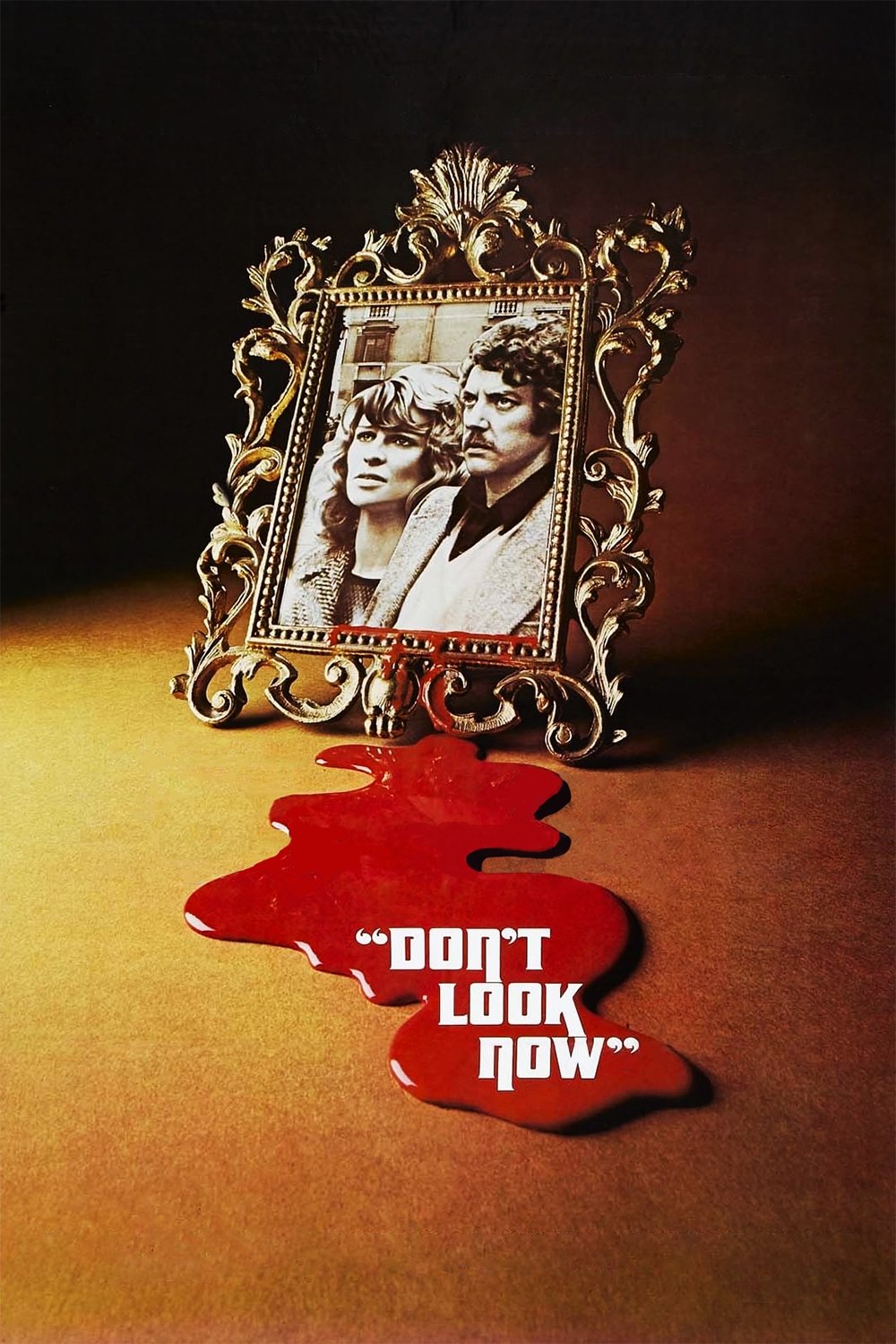
Film Movement Context
Few films have left me so entranced and unsettled as Nicolas Roeg’s “Don’t Look Now.” From the first minutes, I recognized that I wasn’t simply watching a thriller set in Venice, but entering a world shaped by the sensibilities of European art cinema—particularly the modernist psychological horror tradition birthed out of the 1970s. When I try to situate “Don’t Look Now” within a cinematic movement, I am most compelled to link it with the European art film, itself deeply entwined with the late modernist movement in cinema. But this film’s slippery genre identity and innovative form also attach it to the New Wave’s legacy, especially in how it disrupts classical narrative structure and courts ambiguity. There are waypoints that echo the psychological horror revival of the time, but for me, what most defines it is its profound allegiance to the tenets of post-classical, modernist filmmaking—the emphasis on raw realism laced with dreamlike subjectivity, and a focus on fractured perception rather than traditional horror payoffs.
The film sits at the crossroads of several traditions: its gothic dread aligns it with the Euro horror renaissance; its temporal shuffling and emotional ambiguity owe much to the French New Wave’s narrative freedom; its painterly visual style draws from Italian cinema’s sensual surfaces. Yet I always return to its modernist heart—that insistence on confusion, on exposing the messiness of subjective experience—when I consider where “Don’t Look Now” belongs. This is not horror dictated by monster or plot mechanism; it’s horror as fraught psychological interiority, indistinguishable from the grief and memory at the story’s core.
Historical Origins of the Movement
When I reflect on where such modernist, psychologically-inflected cinema emerged, I’m struck by how the late 1950s and the 1960s were crucibles for new ways of seeing. The exhaustion with the formulaic, tightly plotted Hollywood style had begun to spread. Young filmmakers, emboldened by the likes of Fellini, Antonioni and the pioneers of the French New Wave, began to formalize a new relationship between film and viewer: one that eschewed certainty in favor of ambiguity, associative editing, and unresolved meaning. It was a cinematic language built for a world where easy answers had grown suspect, and where the camera might linger on the uncertain, interior thoughts of its characters. Subjectivity, not objective reality, was the order of the day.
For me, the DNA of modernist European cinema can be traced back to the breakdown of grand narratives in postwar Europe. The world was fragmented, economies were rebuilding, and the notion of a single, universally agreed-upon reality shattered in the face of existential dread and societal upheaval. Filmmakers, seeking authenticity, found themselves drawn to stories that followed malfunctioning psyches, that mapped cities by way of emotional geography, that resisted tidy closure. Horror itself was morphing—no longer merely the playground of supernatural creatures, it became a way of talking about trauma, alienation, and loss. By the 1970s, these trends had cross-pollinated: modernist fragmentation, art cinema’s visual experimentation, and the psychological complexity of postwar literature began to fold into the thriller and horror genres, giving rise to films like Roeg’s that were as much about perception and grief as they were about suspense and fear.
Crucially, the loosening of censorship in the late 1960s gave directors like Roeg license to directly depict sexuality, violence, and emotional extremity—further dismantling the sanitized, cause-and-effect universes of earlier mainstream film. Film movements are often born out of constraints, but here I saw a movement born from a temporary abandonment of boundaries: narrative, temporal, visual. All were ruptured, remade in the image of a more confused and unstable human experience.
This Film’s Contribution to the Movement
Every time I revisit “Don’t Look Now,” I’m reinvigorated by its bracing refusal to comfort me—or even to explain itself. It’s as though Roeg, instead of presenting trauma as a narrative puzzle with a clean solution, forces me to live inside the protagonist’s confusion and longing. The film’s fractured editing—its abrupt, associative cuts that link memories, present fears, and flashes of the unknown—mirrors for me both the workings of grief and the core aesthetic of modernist cinema. Rather than laying out information in reassuring, chronological arcs, Roeg splices together time and space to disorient, to make the past continually leak into the present. For me, this approach places “Don’t Look Now” at the apex of post-classical European art film’s interest in fragmented consciousness.
The use of color, particularly the recurring red, strikes me as emblematic of its modernist poetry—red as a signifier not only of loss and foreboding but also of sexual energy and childhood innocence. Rather than mere visual motif, it becomes a code the viewer is challenged to decipher. Scenes feel simultaneously intimate and uncanny: moments of explicit sexuality are rendered with startling frankness but never simply to titillate; instead, I see in them the physical desperation of characters clawing for connection against the void of grief. It goes further than most contemporaries by making the erotic a space of vulnerability, even fear, entwined with memory and dread rather than separated from them.
The psychological horror in “Don’t Look Now” is resolutely modernist in that it dwells within its characters’ anxieties, never allowing me to step fully outside for a detached view. The supernatural elements aren’t comfortingly otherworldly; they feel like expressions of subconscious tension, unable to be extricated from the everyday, decaying world of Venice. I am left, not with revelation, but with the sensation of having experienced someone’s private torment from the inside out—one of the surest marks of late modernist cinema, to me.
I also see “Don’t Look Now” contributing to the evolution of film grammar. Traditional cause-and-effect editing dissolves here, replaced by a kind of poetic montage that at times confuses the diegetic present with flashback, premonition, and fantasy. I find its associative structure reminiscent of Alain Resnais’ greatest experiments or early Antonioni, but with a sense of urgency that makes its horror uniquely existential. I’m particularly compelled by how Roeg incorporates Venice itself as a labyrinth, a city of endless dead ends and doubles, which seems to mirror the psychic labyrinth of the grieving parent. The tension, then, is never only about external threat but about the impossibility of truly knowing one’s own mind or escaping the past.
As someone who cares deeply about the trajectory of film style, I can’t help but view “Don’t Look Now” as a radical point in the journey from classical storytelling to the splintered, subjective cinema we now associate with psychological horror and art film. Roeg was not merely contributing to a movement—he was expanding its lexicon, showing that horror could be fused with art cinema’s visual complexity and emotional ambiguity, and that genre could be a vehicle for the most personal, inarticulate human pain.
Influence on Later Genres and Films
- Influence 1 – The Unreliable Narrative Structure: I often notice how filmmakers after Roeg became emboldened to fracture their storylines and toy with temporality. The non-linear, flash-cut editing of “Don’t Look Now” reverberates in later psychological thrillers and horror films—from Nicolas Winding Refn’s visually cut-up nightmares to the way Christopher Nolan’s “Memento” organizes memory as a puzzle to reflect trauma. Roeg’s method of embedding the audience in a protagonist’s troubled mind gave a template for narrative subjectivity—one that refuses omniscience and instead captures how the psyche actually experiences loss, regret, and supernatural suggestion.
- Influence 2 – Psychological Horror’s Ambiguity: What I find so striking is how films like Lars von Trier’s “Antichrist” and Jonathan Glazer’s “Under the Skin” owe a debt to “Don’t Look Now” in treating psychological horror not as a matter of external threat, but as an unsettling expansion of what’s already lurking beneath the surface of everyday life. Both borrow the idea that horror can be a form of psychological exploration rather than a genre of narrative reveal. The ambiguous supernatural, too, finds echoes in films like “The Others” or “Personal Shopper,” where what’s “real” remains elusive, shaped by wounds the characters carry but never fully understand.
- Influence 3 – The Art-Horror Hybrid: Whenever I see elevated horror emerging as a critical label—applied to films like “Hereditary,” “The Babadook,” or “Saint Maud”—I’m reminded of how “Don’t Look Now” demonstrated that horror could be artistically ambitious without sacrificing intensity. The film’s meticulous formalism, painterly compositions, and elliptical, character-driven plotting built a blueprint for a generation of directors eager to merge psychological depth and high-craft visual storytelling. I often argue that the current renaissance of “art-horror” would be unthinkable had Roeg not shown how style could magnify horror’s emotional impact rather than tame it.
The Movement’s Lasting Impact
Standing at the threshold between classical genre and experimental personal vision, I see the late European modernist movement—and the sort of psychological-horror hybrid represented by “Don’t Look Now”—as a vital transformation in how cinema addresses inner life. The films of this movement grant me no easy answers, demand my engagement with open-ended, sometimes uncomfortable ambiguity, and invite me to reflect not only on what happens on the screen, but how I interpret what I’ve just seen through the prism of my own anxieties and desires. This is a movement that insists cinema can mirror the confusion, elation, and uncertainty of real experience, refusing to flatten emotion into simple narrative disarray.
What resonates for me, years after first encountering Roeg’s Venice, is how the modernist approach continues to inform the most innovative genre storytelling being made today. Whether in horror, neo-noir, or experimental art film, I sense that refusal to simplify, the willingness to place us inside an unstable mind, and the belief that the visual construction of meaning can be as fluid and subjective as human consciousness itself. The films in this lineage leave me questioning what is real, and who is really in control—reminding me that cinema at its best is as unresolvable and rich as life itself.
To connect style and technique with broader context, you may find these perspectives useful.
🎬 Check out today's best-selling movies on Amazon!
View Deals on Amazon