
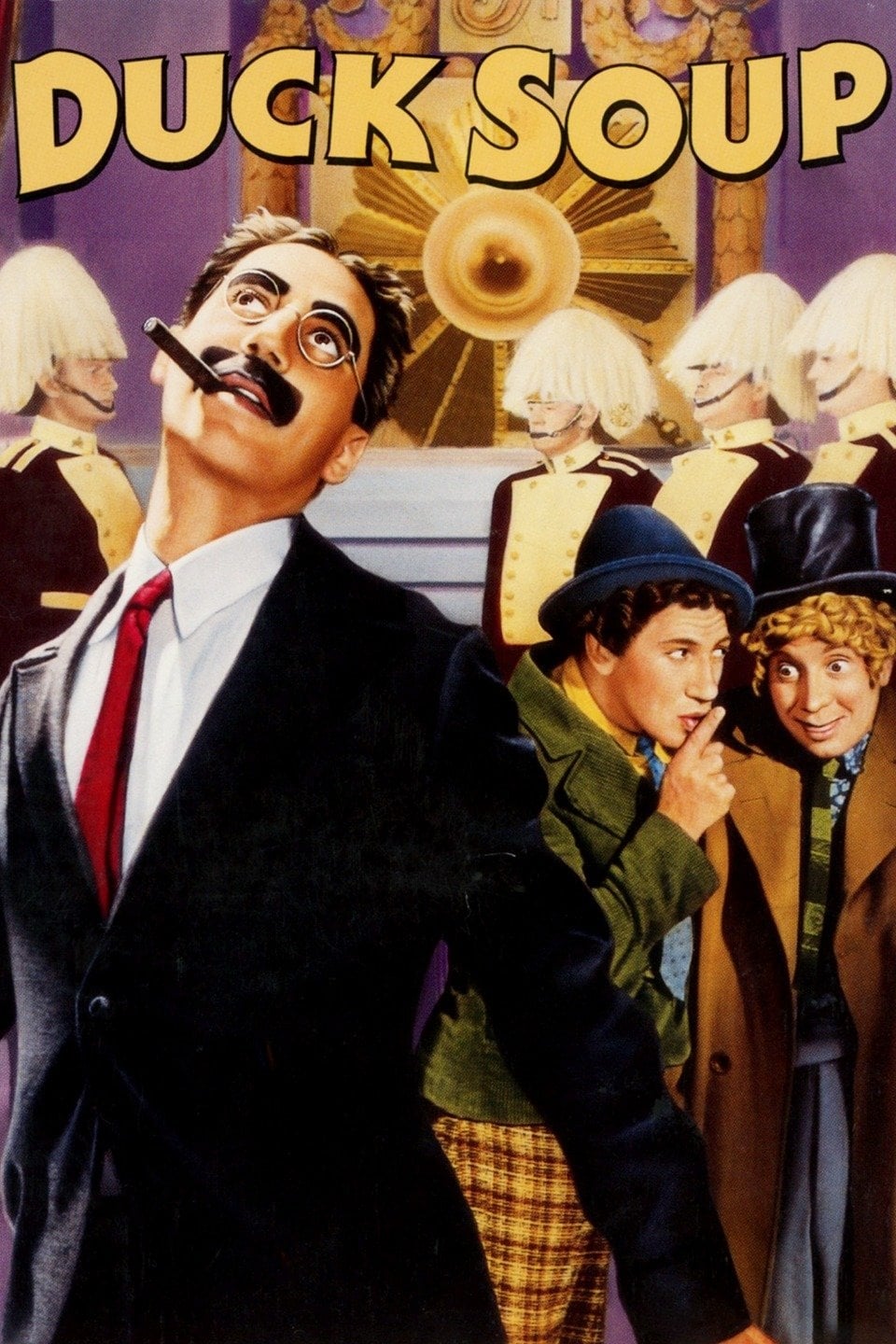
The Genre of This Film
Every time I revisit Duck Soup, I am swept away by how utterly, unmistakably it thrives as an anarchic comedy, a subgenre within classic American comedy films. I can’t help but marvel at how the movie gleefully discards narrative rules and logic for the sheer thrill of spectacle, rapid-fire wit, and physical lunacy. From my perspective, it’s not just a comedy—it’s the quintessential screwball farce, saturating each scene with zany gags, absurd situations, and an irreverent tone that lampoons societal institutions. For me, the film’s singular identity as a political satire only sharpens its comedic edge; though it parodies international relations and government, everything serves the relentless momentum of chaos and laughter. Without hesitation, I place Duck Soup squarely in the slapstick screwball comedy genre, because no other classification so fully encompasses the relentless barrage of verbal jokes, visual pranks, and contagious energy that define my every viewing.
Key Characteristics of the Genre
- Common themes
Personally, I see the recurring themes of screwball and slapstick comedy as rooted in mocking authority, undermining social conventions, and celebrating the triumph of absurdity over order. Many films in this tradition, including Duck Soup, seem to view institutions—whether government, law, or high society—as ripe targets for ridicule and subversion. The humor often builds on exposing the pretensions of those in power, detonating expectations of decorum, and highlighting the unpredictability of human behavior. I find that rebellion and irreverence echo through every conversation and chase—it’s clear to me that these comedies rarely take anything at face value, preferring playful anarchy over solemnity. - Typical visual style
When I immerse myself in films of this genre, I always notice the visual style leans into expressive physicality and meticulously orchestrated chaos. The camera work allows for wide shots that capture frenzied group antics, while close-ups spotlight exaggerated facial expressions, often amplifying the impact of sight gags. Lighting remains bright and clear—there’s no room for ambiguity in a world where the punchline is everything. I’ve always admired how even the costumes and set designs in these movies tilt toward caricature, playing up the surreal or artificial nature of their fictional worlds. Props, too, seem to have a life of their own, orchestrated for comedic mishaps and slapstick violence. - Narrative structure
I’m drawn to the looseness of the genre’s storylines—a narrative often acts as the thinnest of threads, a pretense to collect a series of escalating gags and misadventures. Rather than a tightly plotted arc, these films seem more invested in momentum, rhythm, and surprise. I notice a tendency for scene-to-scene transitions to abandon logic in favor of comic escalation, with recurring bits and running jokes replacing traditional character development. The plot, to my eyes, is a vehicle—sometimes as insubstantial as a stage set—meant to whisk audiences from one absurd situation to the next. - Character archetypes
If I break down the typical cast, I see outsized personalities designed to clash and collide for maximum comedic effect. There’s often a gleefully disruptive protagonist—sometimes a trickster, sometimes an innocent—whose behavior defies convention. Alongside them are dim-witted officials, pompous authority figures, straight-faced foils, and a rotating gallery of stooges and sidekicks. In my experience, these archetypes are exaggerated for effect: the shameless conman, the unflappable oddball, the blustering henchman. This format gives license for all manner of comic invention, with the humor emerging as much from personalities as from the relentless pace of their antics.
How This Film Exemplifies the Genre
For me, Duck Soup captures the anarchic heart of classic American slapstick comedy more than almost any film of its era. I’m endlessly fascinated by how it launches the viewer straight into a parade of gags, barely pausing for breath or exposition. When I watch Groucho Marx’s Rufus T. Firefly, I see the archetypal chaos agent—his quick wit, surreal logic, and utter disdain for authority feel like the very embodiment of the genre’s ideals. I find it impossible not to be swept up in his verbal dexterity, which ricochets between clever insult and total nonsense, always destabilizing whoever dares challenge him. The supporting cast—Harpo, Chico, and Zeppo—each bring their own flavors of madness: silent slapstick, mock-Italian wordplay, and deadpan straight-manning, respectively. Their interactions with Margaret Dumont’s perfectly oblivious socialite provide some of the sharpest contrasts between sanity and pandemonium—a hallmark of screwball ensembles as I understand them.
In my experience, no element in Duck Soup is left untouched by the compulsion for chaos. The famed mirror scene, for instance, stands out in my mind as a masterclass in visual inventiveness: Chico and Harpo’s uncanny mimicry of Groucho across a missing glass pane is pure physical bravura, leveraging timing and body language to achieve both absurdity and elegance in a single moment. When the film lampoons the machinery of war—soldiers marching backward, generals on tricycles—I see the clearest evidence of the genre’s aversion to solemnity. The filmmakers conjure up a world where nothing’s sacred if it can provoke a laugh, and officialdom is exposed as hopelessly brittle in the face of absurd logic. I’ve seldom seen a movie so thoroughly upend decorum with a barrage of punning dialogue, musical interludes that spiral into chaos, or rapid-fire costume gags, all while maintaining a gleeful disregard for narrative comfort.
What consistently strikes me is how Duck Soup doesn’t just make fun of politicians or governments; it satirizes the very idea of order and rationality. The plot is ostensibly about revolution and national pride, yet I quickly realize that it’s merely a launchpad for the Marx Brothers’ comic assaults. I’m especially drawn to how even visual details—like the decorated sets in the Freedonia council chambers—become accessories to comic disruption, with banners falling, furniture being repurposed as makeshift barricades, and dignitaries reduced to straight men for the brothers’ mischief. I’m left with the sense that every shot is one illogical step away from something more outrageous, always teetering on the edge between the familiar and the joyously unhinged. For anyone wondering what true screwball slapstick looks like, I can’t think of a purer, more distilled example than what I find in Duck Soup.
Other Essential Films in This Genre
- A Night at the Opera (1935) – I often bring up this Marx Brothers classic when discussing the genre because, much like Duck Soup, it pairs manic wordplay with elaborate set-pieces that spiral out of control. What I love here is the blend of musical performance and farcical interruption—the stateroom scene, crammed with bodies, is a pinnacle of comedic escalation.
- Horse Feathers (1932) – Whenever I want to illustrate the genre’s readiness to mock social norms, this earlier Marx Brothers entry never fails me. The skewering of academia, nonsensical football matches, and the relentless barrage of gags show the group operating at their most confident and subversive.
- Bringing Up Baby (1938) – Though not a Marx Brothers film, I always cite this Howard Hawks screwball as a masterclass in comedic rhythm and unpredictable relationships. Katharine Hepburn and Cary Grant’s performances create a relentless pace where misunderstandings and physical mishaps build into sheer comic mayhem.
- The Bank Dick (1940) – I return to this W.C. Fields vehicle as a distinctly American version of slapstick, rife with self-appointed incompetence, bureaucratic spoofing, and the sensation that everyday life, from the local bank to family picnics, teeters on the edge of dramatic collapse.
Why This Genre Continues to Endure
I honestly believe that the slapstick screwball comedy genre continues to thrive because it fulfills an essential human craving for disorder and relief from the pressures of structured life. Whenever I rewatch films like Duck Soup, I feel the magnetic pull of comedy that refuses to make sense, a kind of gleeful rebellion that lets us laugh at authority, conventions, and even ourselves. There’s something in the genre’s break-neck pacing and disregard for realism that still feels radical to me—it taps into our desire to see the rules bent, broken, or turned upside down without consequence.
What keeps me coming back, and why I see newer generations drawn to these classics, is the way slapstick and screwball comedies set us free from logic and rigidity. The humor, often rooted in physicality or linguistic games, transcends language and time. Young or old, I find audiences can instantly grasp the absurdity of a pie in the face or the contradiction inherent in a dignified official made ridiculous. Beyond just gags, though, I think there’s an underlying reassurance: if even the gravest institutions can be laughed at, then the burdens of daily life become a little lighter. Watching these films, I always sense a communal permission to let go—to laugh at chaos, celebrate unpredictability, and feel comforted in life’s unpredictability. This durable connection between laughter, rebellion, and liberation is why, in my view, the genre will always hold a special place in cinematic history—and in my heart.
If you’re interested in how viewers respond beyond technique, you may want to explore audience and critical reception.
🎬 Check out today's best-selling movies on Amazon!
View Deals on Amazon