
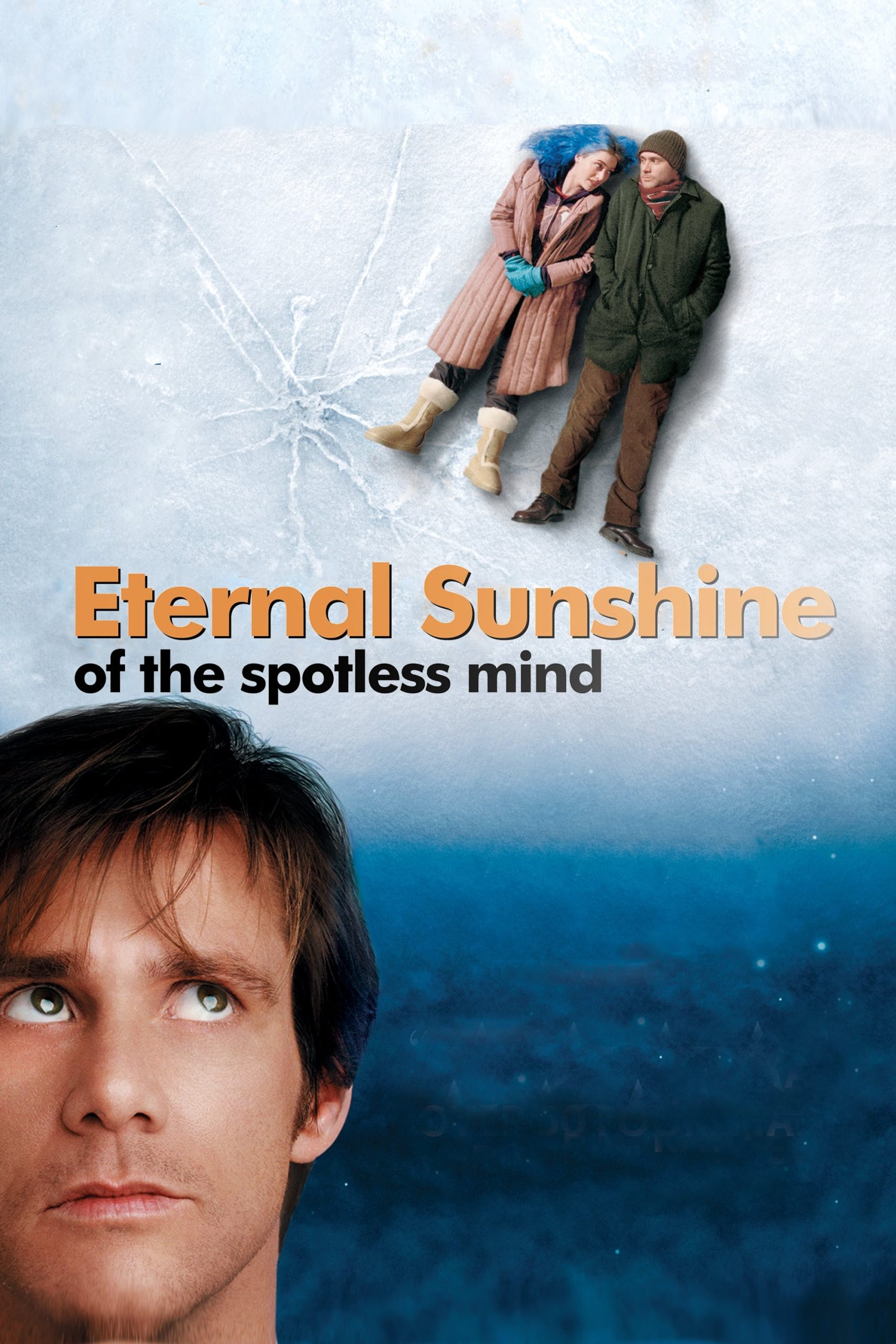
Film Movement Context
I’m constantly pulled back to the first time I watched Eternal Sunshine of the Spotless Mind; it struck me as a cinematic anomaly—disarmingly intimate and at the same time audaciously experimental. Over the years, my understanding of film movements has helped me situate this film most compellingly within the American Independent Cinema tradition of the late twentieth and early twenty-first centuries. Yet, what lingers for me is how deeply the film absorbs and remixes elements of magical realism, French New Wave aesthetics, and postmodern narrative play, converging these threads into what I’d call a distinctly “21st-century indie surrealism.” When I place this film on the broader cinematic map, I see it as an inheritor of the fragmented, emotionally rich lineage emerging from the likes of Alain Resnais’ Hiroshima mon amour and the personal, dreamlike spaces carved out by the American New Wave of the 1970s, yet rendered through a digital, turn-of-the-millennium sensibility. Ultimately, I feel the movie belongs most closely to the post-1990s American indie movement, with its willingness to blur realism with fantasy in the service of emotional resonance, and to an emergent wave that I call “narrative surrealism,” which privileges subjective memory over linear plot. This movement matters to me because it represents a genuine, personal engagement with the inner landscapes of love and loss, rather than the tidy, formulaic genres that often dominate mainstream cinema.
Historical Origins of the Movement
When I dig back into the story of this movement, I’m always reminded how American independent cinema’s roots aren’t neatly confined to one era. For me, it truly begins with the countercultural explosion of the late ‘60s and early ‘70s, when studios lost their grip on the kinds of stories audiences cared about. The spirit of experimentation—narrative disjunction, psychological complexity—had already been germinating overseas through the French New Wave’s personal, elliptical films by Godard and Truffaut, and the emotional memory puzzles of Resnais. These movements prized authenticity over commerciality, and I see echoes of that in the way the American indie wave blossomed: through low-budget productions, unconventional stories, and directors obsessed with emotional truth, not box-office receipts.
During the 1990s and early 2000s, the American independent movement underwent another transformation—one I watched unfold with awe as filmmakers like Spike Jonze, Sofia Coppola, and Charlie Kaufman (the screenwriter here) seized on new digital technologies and the slackening boundaries between art film and pop culture. This era, for me, was defined by a willingness to play with genre—romantic comedy, science fiction, psychological drama—and twist it with absurdism, nonlinear chronology, and blurred fantasy/reality lines. The films didn’t offer escape or spectacle in the old Hollywood sense; instead, they turned inward, mapping emotions, desires, and anxieties within ingeniously stylized frameworks. It’s from this ferment, this hunger for honest subjectivity and inventive form, that Eternal Sunshine of the Spotless Mind emerges as more than just an “indie romance”—it’s a landmark in the tangled evolution of what I’d call postmodern, emotionally driven narrative surrealism.
This Film’s Contribution to the Movement
Whenever I return to Eternal Sunshine of the Spotless Mind, what thrills me isn’t just its clever structure or visual ingenuity; it’s how thoroughly it reorients the romantic drama through the lens of memory and subjective experience. To me, this film is both a product and an expansion of American indie surrealism—the movement that delights in presenting raw emotion and internal struggles with a kind of magical, often dissonant honesty. Michel Gondry’s direction, layered with Kaufman’s shell-game screenplay, doesn’t just depict a doomed relationship; it imagines the narrative logic of a broken heart as a literal erasure machine, a memory palace crumbling in real time.
What I find so distinctive is how the film’s technical experimentation feels tethered to meaning rather than self-indulgence. The use of jump cuts, handheld camera swoops, naturalistic lighting, and practical in-camera effects recalls for me the agile, improvisational aesthetic of European art cinema. Yet Gondry pushes these tools to excavate not just the protagonist’s memories, but the universal ache of regret. I’m drawn to the way scenes flicker between subjective states—present, imagined, reconstructed—blurring any neat boundary between what “happened” and what’s emotionally true for Joel and Clementine. There’s no omniscient narrator; instead, I walk the foggy corridors of the mind right alongside the characters, feeling the slippage between memory and reality, and recognizing that emotional healing rarely follows a linear path.
For me, this marks the film as an evolution of the indie/art-house movement, one that pushes genre boundaries and re-centers the love story as something elastic and mind-bending. Unlike sanitized romantic comedies or staid dramas, Eternal Sunshine of the Spotless Mind is thrillingly ambiguous: it’s a romance, a science fiction parable, an existential puzzle, and a surrealist interior drama all at once. Its refusal to provide neat answers, or even a traditionally cathartic narrative conclusion, places it squarely within a film movement more interested in the authenticity of confusion than the comfort of closure. That matters to me, because it’s ultimately a film that trusts the audience to navigate heartbreak and healing on their own terms, recognizing the messiness, repetition, and possibility inherent in every act of forgetting and remembrance.
Influence on Later Genres and Films
- Influence 1 – Elevating Subjective Memory as Narrative Structure – I am continually struck by how the film’s memory-erasure conceit breathes new life into the fragmented narrative tradition. After this film, I noticed a surge of movies and series that aren’t afraid to unravel subjective memory in service of story. For instance, Charlie Kaufman’s own later works (Synecdoche, New York; I’m Thinking of Ending Things) owe much to the intricate, inwardly spiraling structure deployed here. Even commercial works like Inside Out and Westworld seem to me indebted to this film’s trust in the audience’s ability to navigate non-linear storytelling, where emotional truth often eclipses literal fact and the plot emerges from the details of internal experience.
- Influence 2 – Mainstreaming Surrealism and Magical Realism in Romance – Before Eternal Sunshine, surrealistic motifs were largely sequestered to art cinema or genre fringe. The audacity with which Gondry and Kaufman married surreal formal techniques to a central love story showed me—and, I suspect, countless subsequent creators—that audiences could thrive on the uncanny and the poetic within even the most “everyday” emotional content. I see echoes of this in films as disparate as Her (where technology and love intersect in fantastical ways), Safety Not Guaranteed, and even popular streaming dramas like Russian Doll. It becomes clear to me that the division between realism and the fantastic is no longer a barrier, but rather, an invitation to explore love—and pain—in richer, stranger contexts.
- Influence 3 – Emotional Authenticity and Indie Aesthetic – What matters most in Eternal Sunshine, in my view, is its relentless pursuit of emotional vulnerability, aestheticized through low-fi means. This approach—eschewing polish for rawness, embracing natural performances and tactile effects—ensured that a generation of directors (think Greta Gerwig, Barry Jenkins, Richard Linklater’s later work) would feel validated in foregrounding lived-in detail and emotional messiness. Even films outside the overtly surreal register, such as Blue Valentine or Moonlight, feel to me spiritually descended from Eternal Sunshine’s commitment to laying bare the contradictory, non-linear nature of human connection.
The Movement’s Lasting Impact
I can’t help but view the American indie surrealist/postmodern movement as one of cinema’s ongoing revolutions—a quiet, often internal, yet deeply necessary corrective to homogenous mainstream formulas. Through films like Eternal Sunshine of the Spotless Mind, I’ve come to appreciate how deeply the medium can dive, not into spectacle, but into the tangled, contradictory textures of genuine human experience. This film reminds me that formal experimentation isn’t just an aesthetic choice; it’s a way of honoring the ambiguous, shifting realities of our hearts and minds. I value its movement’s willingness to break genre, to collide the fantastic with the mundane, to stake out interior spaces as sites for storytelling grandeur.
What feels most urgent to me now—long after the critical buzz and awards—is how movements like this one continue to ripple across both studios and grassroots filmmaking. Whether I’m watching a cerebral streaming series, an experimental romance, or a deeply personal indie drama, I sense that contemporary filmmakers are heirs to this movement’s insistence: that stories can be disjointed, that magic can erupt from ordinary pain, and that formal innovation isn’t a threat to accessibility but an invitation to deeper empathy. The persistence of these ideas, these ways of telling and feeling, reassures me that cinema will always matter most when it risks everything—structure, expectation, genre—for the sake of real, messy, beautiful feeling.
To connect style and technique with broader context, you may find these perspectives useful.
🎬 Check out today's best-selling movies on Amazon!
View Deals on Amazon