
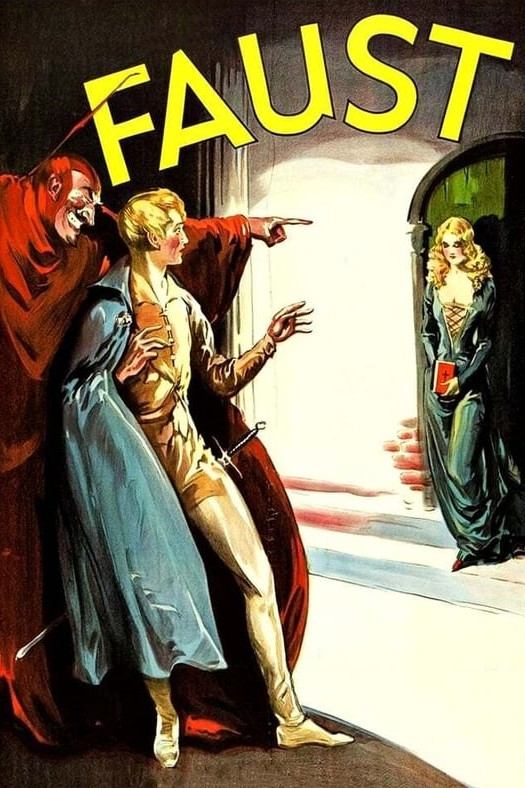
The Genre of This Film
Watching F.W. Murnau’s Faust (1926) for the first time, what struck me immediately was how the movie breathes and bleeds the essence of silent-era horror. For me, its mood, iconography, and subject matter place it squarely within the horror genre, specifically in the tradition of early supernatural horror. What clinched this for me isn’t just the supernatural premise—the classic deal-with-the-devil motif—it’s the pervasive sense of dread, the visual realization of evil, and the focus on spiritual struggle. Despite overlaps with fantasy and drama, I can’t help but see Faust as a horror film at its core because it unspools like a visual nightmare, manipulating fear through images and atmosphere rather than shocks or gore. The horror in Faust arises from the transformation of metaphysical evil into something intensely, visually real.
Key Characteristics of the Genre
- Common themes
- Typical visual style
- Narrative structure
- Character archetypes
For me, horror in the silent era revolves around the battle between good and evil, the infiltration of otherworldly forces into the mortal plane, and the fragility of the soul. There’s always this undercurrent of moral consequence—choices lead to damnation or salvation, and those stakes feel cosmic. In Faust, I’m drawn to the existential despair, the hopelessness that pervades much of its runtime, and the immense power of temptation. These are all themes I repeatedly find in the silent horror canon: corruption, redemption, dread of the unknown, the power of belief, and the frailty of human morality when tested by supernatural agencies. The horror genre, as I see it, is obsessed with the boundaries between life and death, the visible and the invisible, the material and the ethereal.
When I picture horror films from this period—especially German ones like Faust—I immediately think of stark contrasts, shadows, and exaggerated sets. My appreciation for Murnau’s style is rooted in the way he borrows from German Expressionism: dark silhouettes, distorted architecture, and fog-laden landscapes. Silent horror is all about visual storytelling, and what makes it so unsettling, to me, is the sense of the uncanny. The genre was defined by visual trickery: double-exposures to render ghosts or demons, canted angles and looming sets to conjure unreality, and deep contrasts between light and dark that evoke a world teetering on the edge of collapse. Special effects aren’t just for show; they express deep anxieties, and I always see them as crucial to making the horror tangible when dialogue is absent. The grotesque, the exaggerated, and the nightmarish come alive without words.
For me, horror stories often take shape as cautionary tales—a protagonist stumbles into forbidden territory, faces the wrath of supernatural beings, and is tested before fate renders its verdict. I notice how these films usually employ a structure of temptation, fall, punishment, and sometimes redemption. There’s always a palpable sense of inevitability, as if the characters are ensnared in a grand, inescapable design. Faust is archetypal in this respect: I feel the narrative unfolding like a morality play, where choices can never be undone, only suffered or redeemed. The structure is cyclical—damnation and salvation are always paired. Horror films often sustain tension by delaying decisive resolution, keeping the audience in suspense about whether good will triumph.
Throughout silent horror, I find myself relating to a cast of instantly recognizable archetypes: the corrupted innocent, the tempter (or devil), the helpless victim, and occasionally, the redemptive force. Faust crystallizes these—Faust himself as the tortured scholar whose ambition is his undoing, Mephisto as the charming agent of chaos, Gretchen as the suffering innocent, and the public as a fickle, judgmental mob. These archetypes are universal across horror, but what captivates me in silent horror is their exaggeration—their purity or evil feels larger than life because there’s no dialogue to dilute their essence. Emotion is writ large on every face and gesture, making the archetypes feel iconic.
How This Film Exemplifies the Genre
Whenever I revisit Faust, I’m reminded why it remains quintessential horror. The atmosphere is thick with dread from the opening scenes. In Murnau’s adaptation, horror is not just a backdrop—it’s the air the characters breathe. I see horror in the smothering fog that creeps through every frame and in the monstrous design of Mephisto, who for me stands shoulder to shoulder with other icons of movie evil. What most excites me about Faust is its deep commitment to the supernatural. Unlike some horror films that only flirt with suggestion, Faust drags the otherworldly into the foreground. The film’s special effects—the swirling plagues, growing shadows, fiery conjurations—don’t simply startle; they immerse me in a universe with its own eldritch rules. I constantly feel the presence of danger, not only to body but to soul.
What completes the horror experience for me is how every technical element serves the genre’s goals. I notice that the cinematography—those bold, inky shadows and spectral apparitions—makes evil as concrete as flesh. The performances, too, are stylized almost to the point of pantomime, which, in this context, makes terror even more potent. I’m always caught off-guard by how quickly the film shifts from awe-inspired wonder to abject fear; the pace and tone are as unpredictable as a nightmare. In the context of horror, Faust’s downward spiral feels nightmarish not just in theme, but in the relentless, visual onslaught of the uncanny and unnatural.
As a fan of the genre, I often look for films that understand horror isn’t just about monsters, but about psychological torment and the terror of being trapped by fate or one’s own desires. Faust embodies this for me more than most. Its horror feels metaphysical: every desperate bargain, every tragic consequence, is transmitted through haunted visuals and emotional performance. This is a film where the horror comes not from a killer in the shadows but from the idea that evil is a living, cosmic force—one that can tempt, corrupt, and destroy almost anyone.
Other Essential Films in This Genre
- The Cabinet of Dr. Caligari (1920) – For me, this film is a bedrock of horror cinema. Its jagged sets, dreamlike story, and sinister hypnotist echo through all of German silent horror. I see Caligari as a twisted labyrinth of mind and morality, where the line between sanity and evil blurs under the weight of surreal visuals.
- Nosferatu (1922) – Every time I revisit Nosferatu, also from Murnau, I’m blindsided by the primal fear it invokes through its skeletal vampire and shadow play. For me, it holds a mirror to our deepest night terrors and sets the standard for supernatural horror’s visual language.
- The Golem: How He Came into the World (1920) – I vividly recall how this film’s ancient, haunted Prague, brought to life through monumental sets and ominous lighting, evokes supernatural dread. The Golem, an earthy sentinel animated by arcane forces, makes me feel the tremor of folklore horror entering cinema.
- Häxan (1922) – This one fascinates me because it merges documentary experimentation with witchcraft horror. I constantly come back to its provocative imagery and reenactments, which for me underscore the ways superstition and the fear of the unknown feed horror’s potency.
Why This Genre Continues to Endure
I often find myself wondering why, across decades, horror remains so vital—even as storytelling and technology evolve. What keeps me personally invested is the genre’s power to tap into ancient anxieties through timeless archetypes and fears. No matter how the world changes, the uncertain boundaries between good and evil, the mortal and the supernatural, never lose relevance. I connect with silent horror on a gut level because it invites me to feel unease, awe, and precariousness in ways that transcend rational explanation. By stripping away spoken words, the genre magnifies raw emotion—fear, longing, guilt, dread—until they become almost overwhelming. I think we’re drawn to horror because it distills and externalizes our secret dreads, letting us encounter them at a distance while reminding us that unseen forces—within and without—still shape our fates.
For me, horror endures not because it shocks, but because it reveals. Films like Faust show that our struggles with temptation, mortality, and forgiveness are as old as storytelling itself. Each new incarnation of horror calls us to reckon with the things that haunt us, insisting that, at least in the darkness of the theater, we are never as safe or as solitary as we imagine. The images of shadowy bargains, wandering spirits, and cosmic evil that captivated me in silent horror continue to resonate, no matter how much time separates us from the flickering shadows on the screen.
If you’re interested in how viewers respond beyond technique, you may want to explore audience and critical reception.
🎬 Check out today's best-selling movies on Amazon!
View Deals on Amazon