
Film Movement Context
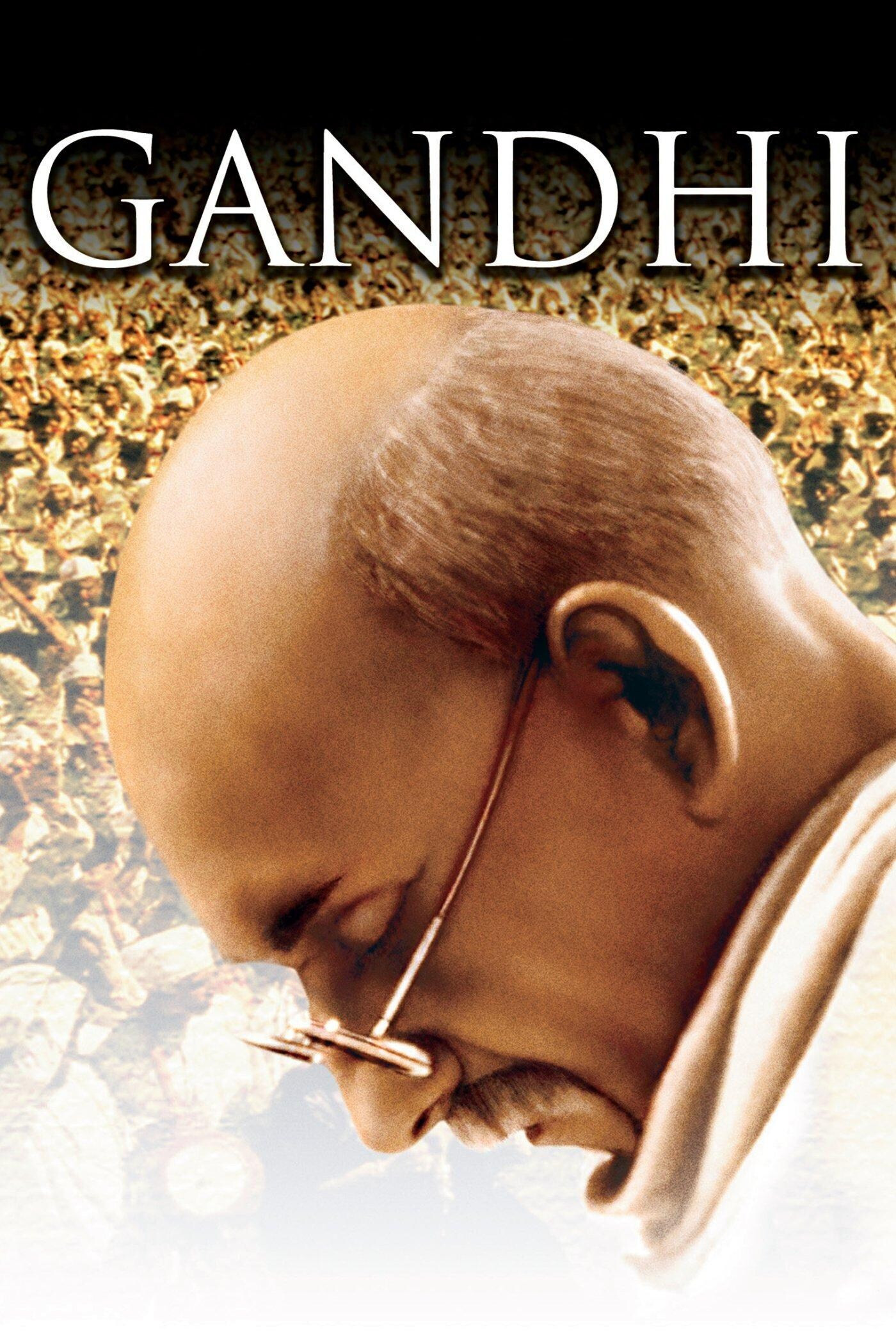
Few films have stayed with me quite like Richard Attenborough’s Gandhi (1982). When I sit with what makes it so memorable, I’m always drawn to its sweeping visual language and epic sensibility. Yet the film’s heart lies in its commitment to historical realism, a trait that links it intimately with the movement commonly described as the Historical Epic, itself an offshoot of Classical Narrative Cinema. But unlike the often bombastic, spectacle-driven works of the Hollywood Golden Age—for example, Ben-Hur or Lawrence of Arabia—I see Gandhi aligning more closely with the tradition of serious biographical historical dramas developed in the latter half of the twentieth century. In its meticulous realism, its prioritization of authenticity over action, and its reverent tone, the film positions itself within a unique intersection between the British prestige film (sometimes called “Heritage Cinema”) and a revisionist approach to the Western “epic.” For me, watching Gandhi is to witness a movement that insisted history be experienced not as myth, but as human struggle—intimate and, above all, ideological. The film stands as a bridge between the mythmaking traditions of earlier epic cinema and the more nuanced, character-driven explorations of historical reality that became prevalent in late-century world cinema.
Historical Origins of the Movement
When I trace where this movement came from, I’m always struck by how much it reflects uneasy relationships with national identity—usually British, but connected to other post-colonial or post-imperial societies as well. The so-called “Heritage Cinema” emerged as a counterpoint to the frenetic, political energies of 1960s and 1970s New Wave movements. By the late 1970s and early 1980s, audiences in Britain and elsewhere seemed hungry for films that reclaimed historical narratives, not through revolutionary technique, but through considered, almost painterly realism. While Hollywood had long dominated the “epic” genre with stories of spectacle and scale—think of the chariot races of Ben-Hur—filmmakers like Attenborough, and to some extent David Lean before him, shifted the genre’s focus: the spectacle became not only the setting, but the crowd itself—a living history conscious of both its grandeur and its trauma. Films in this lineage—often locked in literary adaptation or biographical representation—emerged partly as a reaction against a rapid, consumerist present, and partly from a desire to rediscover national stories amidst Thatcher-era economic and cultural uncertainty. What fascinates me most is that these films traded action for interiority, visual extravagance for a kind of “prestige” gravitas. A movement like this could only have emerged at a moment when history itself needed rescuing—not from obscurity, but from oversimplification. Gandhi embodies this impulse, blending realism with reverence to create a cinema of witness, not just entertainment.
This Film’s Contribution to the Movement
When I attempt to articulate why Gandhi matters within this wider historical movement, I must acknowledge the film’s absolute faith in the power of representation. Attenborough, to me, creates not just a historical record, but an ideological one—a work deeply invested in biography as national allegory. This film does more than dramatize events; it insists on emotional authenticity, casting Ben Kingsley (in a career-defining performance) as not a mythic prophet, but a frail, stubborn, endlessly complex human being. This foregrounding of vulnerability was, in my view, a radical act, especially for a film of such scope.
Crucially, Gandhi resists melodramatic shortcuts: Attenborough lingers on silent suffering, on the logic of nonviolent resistance, on ethical ambiguities. In doing so, he advances the movement’s commitment to “the slow burn”—a patience uncommon to earlier epic traditions. The scale is undeniably grand—crowds, colonial pageantry, sweeping landscapes—but the camera’s attention is always on faces, on lived experience within the grand sweep of history. I find it significant that the film’s most iconic scenes—the Salt March, the massacre at Amritsar—are shot with a kind of documentarian detachment, refusing the bombast that might trivialize suffering. This is where I most feel the influence of the British heritage aesthetic, itself derived partly from postwar art cinema: lavish yet restrained, critical yet reverent.
What Gandhi delivers to this movement is a template for measured, morally serious political cinema. Unlike the revisionist Westerns or the self-aware new waves of Europe, Attenborough’s technique is sober, almost conservative, but deployed in service of radical subject matter. For me, this pairing of familiar cinematic grammar with unfamiliar moral focus—especially on the mechanisms of peaceful resistance—transformed what the “epic” could mean. The personal is political here, not through the high-voltage dynamism of agitprop, but through the persistence of ethical example. I often sense Attenborough’s biographical cinema animating later filmmakers’ search for authenticity, grounding even the grandest of stories in lived, contradictory human experience.
Influence on Later Genres and Films
- Reinvention of the Biopic – I’ve noticed that after Gandhi, the biographical film underwent a period of reconsideration. The film’s refusal to simplify Gandhi’s philosophy or edit out his contradictions helped make complexity fashionable in biopics. I see this echoed in later films like Schindler’s List, A Beautiful Mind, and Lincoln—each of which wrestles not only with the greatness of its subject, but the cost and ambiguity of such greatness. The willingness to dwell in messiness, both personal and historical, stems in part from Attenborough’s template.
- Political Consciousness in Mainstream Cinema – Watching popular cinema in the years that followed, I was often struck by how politics moved from the background to the foreground. Gandhi proved that audiences could be captivated by procedural, intellectual, and collective forms of political struggle. I see this shift reflected in activist dramas—like Invictus or Milk—where the central tension is ideological, and the climax is as likely to be a speech or a protest as a battle.
- Ethical Realism and Visual Restraint – The film’s aesthetic choices—its drained color palette, its avoidance of grandiose musical cues at moments of violence—helped reorient epic filmmaking away from spectacle and towards a kind of ethical realism. I believe modern historical films like Hotel Rwanda or Selma borrow directly from this sensibility, using simplicity and restraint to confront viewers with the true scale of historical suffering.
The Movement’s Lasting Impact
I often ask myself why the traditions exemplified by Gandhi still retain cultural urgency. For me, the answer lies in their insistence that history be experienced—and interrogated—as a living dialogue between individuals and their societies. The movement’s techniques—attention to authenticity, to dilemmas over dogmas, to public consequence over private fantasy—continue to orient how both filmmakers and audiences decipher the past. I find that the values underlying this “epic realism” radiate forward into contemporary cinema. Each time I watch a modern historical drama that refuses the simple catharsis of victory in favor of process and complication, I trace echoes of Attenborough’s slow, unflinching eye.
On a more personal level, I’m always grateful for the way these films validate ambivalence as much as conviction. The “heritage” movement’s ethos, for all its critics, remains one of respect—for history’s textures, for the contradictions of its players, for the quiet persistence of human dignity amidst upheaval. Gandhi, in my experience, does not mythologize its subject merely for inspiration; it invites a rigorous, ongoing engagement with historical possibility. In our era—so saturated with revisionism, cynicism, and political spin—this movement endures as a model for how cinema can stage not only a narrative, but a public reckoning. What I take from it, and what I see others still drawing from it, is the reminder that film remains a battleground for memory itself—a place where empathy is constructed, and where accountability is possible.
To connect style and technique with broader context, you may find these perspectives useful.
🎬 Check out today's best-selling movies on Amazon!
View Deals on Amazon