
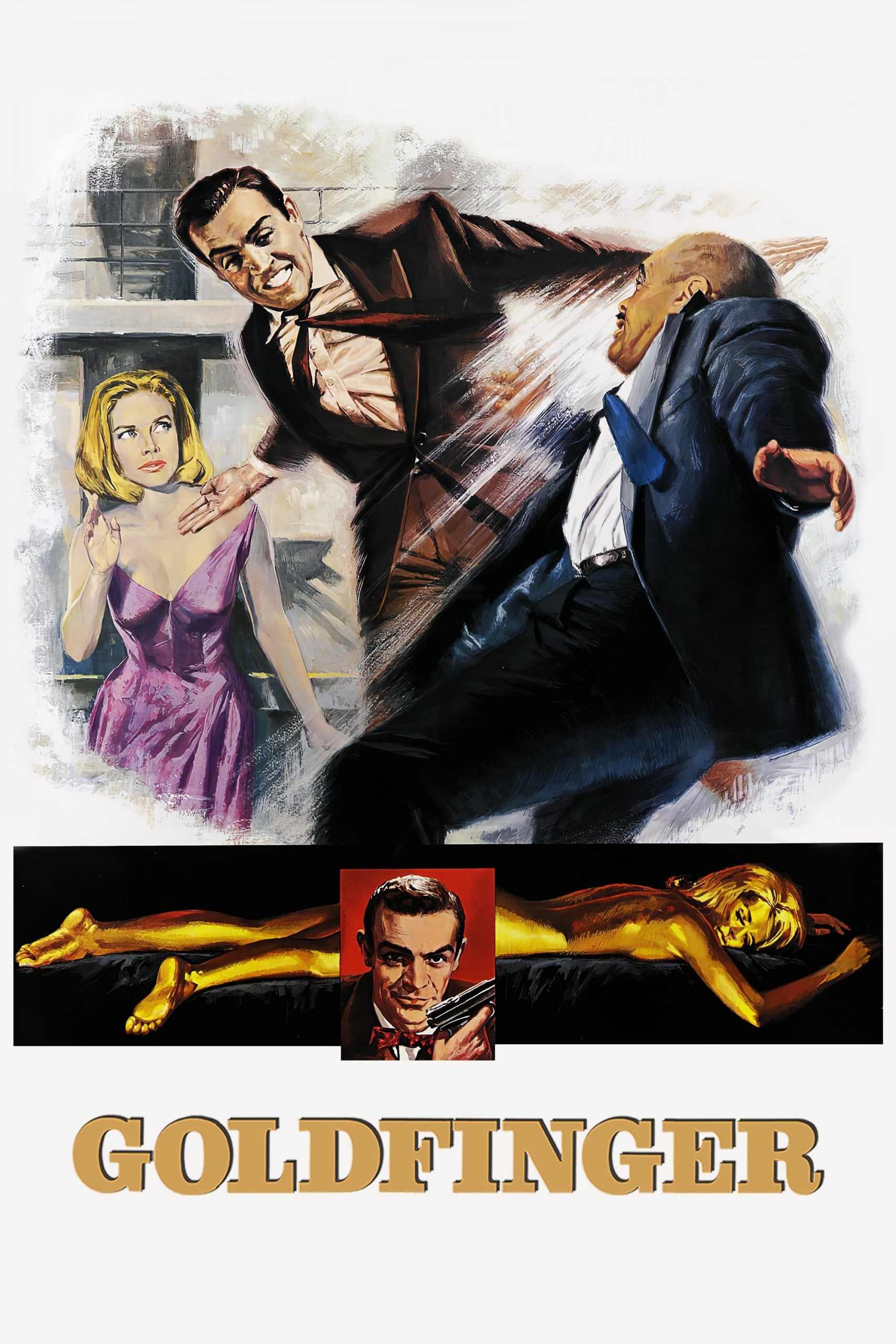
Film Movement Context
When I first encountered “Goldfinger” (1964), it struck me as a defining artifact not just of British cinema, but as the very crystallization of the “spy-fi” movement—an exhilarating collision of spy thriller and science fiction stylings that flourished in the postwar era. To me, it operates at the crossroads of the British New Wave’s style-conscious skepticism and the energetic, mass-appeal sensibilities of the global blockbuster genre that would follow. More specifically, I situate “Goldfinger” squarely within the 1960s global Spy Film Movement—a cinematic current that synthesized cold war anxieties, technological fetish, and suave cosmopolitanism into an entirely new formula. This is more than a mere genre piece; I see it as a film that participates in and defines a broad visual and thematic tradition: the “Espionage Spectacle,” a movement that reconfigured both the look and feel of adventure cinema, and redefined what it meant to portray heroism, seduction, and antagonism on the big screen. Retracing my steps through this film’s glittering halls, I see not only the DNA of its own movement, but the roots of action-adventure cinema as we know it.
Historical Origins of the Movement
Something about “Goldfinger” always brings me back to the cultural substratum of the early 1960s: anxiety, optimism, and the shadow of global conflict. The Spy Film Movement didn’t materialize from thin air—I see its lineage in the frothy, post-war cocktail of burgeoning technology, mass consumerism, and the omnipresent Cold War tension between East and West. In my research, I’m persistently drawn to the late 1950s as a transformative moment: espionage was everywhere, etched into the headlines, and the atomic age had intensified public interest in secret technologies and hidden threats. The literary phenomenon of Ian Fleming’s Bond novels provided the scaffolding, but it took cinema’s particular blend of spectacle and seduction to give it tactile life. The movement’s emergence felt, to me, like a kind of necessary illusion—an escapist balm for a public caught between the dread of nuclear annihilation and the lure of technological progress.
This movement’s early forerunners—films like Carol Reed’s “The Third Man”—leaned more into psychological suspense and noirish fatalism. But what fascinates me is the way the 1960s spy thrillers, and especially the Bond films, chose spectacle over anxiety, affirmation over ambiguity. The early Bond films, beginning with “Dr. No” and then “From Russia with Love,” spoke more directly to the new possibilities of global mobility and gadgetry. The genre as a whole rapidly mutated—French and Italian espionage pictures, American knockoffs, and television serials all sprouted in its wake—but nowhere do I see the era’s anxieties and desires channeled as sharply as in “Goldfinger.” It was clear that a movement had solidified: an international embrace of a hero who navigated a treacherous, divided world with skill, wit, and a sense of unstoppable flair. Watching “Goldfinger,” I can’t shake the feeling that I’m witnessing cinema both reflecting and shaping the era’s dreams of mastery over chaos and danger.
This Film’s Contribution to the Movement
For me, “Goldfinger” does far more than merely reiterate the by-then familiar formulas of its predecessors. I consider its meticulously orchestrated blend of style, narrative propulsion, and thematic resonance to be a genuine inflection point in the Spy Film Movement. What stands out is its self-assured mastery of cinematic language: the pop-art color palette, the audacious set design by Ken Adam, the almost mythic choreography of violence and seduction. I find that this film perfects the movement’s codes—it doesn’t just follow a tradition but hardens it into its clearest form, making “Goldfinger” a Rosetta Stone for understanding everything the Spy Film aspired toward.
When I break down the film’s style, I’m always struck by director Guy Hamilton’s ability to thread a thin line between irony and sincere heroism. The opening pre-title action sequence, to me, encapsulates the movement’s confidence—a self-contained, balletic action film that foreshadows the modular structure now ubiquitous in blockbuster cinema. “Goldfinger” also establishes the modern language of the “gadget”—the Aston Martin DB5’s arsenal not only drives the plot but visually embodies the merging of commerce, masculinity, and technological power. Because of this, I see “Goldfinger” as a perfect illustration of the era’s fascination with objects as extensions of agency—not just plot devices, but symbols of control in a treacherous world.
The characterization is also crucial. Sean Connery’s Bond projects an unshakable confidence masking layers of exhaustion and cynicism—traits I associate with the new wave of postwar masculinity. Unlike the earnestness of earlier screen spies, Bond in “Goldfinger” seems profoundly aware of his own myth, oscillating between caricature and genuine pathos. The villains, meanwhile, especially Goldfinger himself and the iconic Oddjob, transform the movement’s antagonist figure into something grander than mere opposition: they become avatars of greed, excess, and the dangers of unchecked technological ambition. Watching these performances, I’m consistently drawn to how the film both satirizes and worships its own mythology, providing the Spy Film genre an ironic self-consciousness that persists to this day.
Influence on Later Genres and Films
- Reshaping the Action Template – As I reflect on modern action blockbusters, from the “Mission: Impossible” series to the “Jason Bourne” films, it’s clear to me that “Goldfinger’s” modular narrative structure and preposterously inventive set-pieces set the standard. I often detect the DNA of that film in the “cold open” teasers that now dominate franchise movies, as well as the escalation from grounded spy craft to spectacular, improbable action. The film’s seamless fusion of stylish violence, rapid pacing, and irreverent humor became the gold standard (pun intended) for subsequent decades of action cinema.
- Impacts on Pop Mythology and Satire – What astounds me about “Goldfinger” is how it didn’t just produce imitators, but provided a template for both homage and parody. I see its imprint not only in direct spoofs like the “Austin Powers” series but in the entire tone of spy parody that flourished in the 1970s and beyond. It’s that uneasy balance between earnest adventure and tongue-in-cheek flamboyance that, in my view, made the film infinitely quotable and its imagery perpetually recycled—you can’t watch a laser beam perilously approach a hero without thinking back to Bond’s iconic table moment. The film injects itself into the cultural bloodstream, enabling both reverence and irreverence with equal force.
- Reconceptualizing the Franchise Mentality – To me, one of “Goldfinger’s” subtler legacies is how it normalized the idea that franchises could sustain not just recurring characters but elaborate thematic and visual motifs. I notice that the serialization and world-building, which modern audiences take for granted in cinema universes from Marvel to “Fast & Furious,” were essentially beta-tested by the Bond series with “Goldfinger” as its breakout moment. Its gadgets, musical cues, and villain archetypes form a lexicon—a kind of cinema “branding” that has influenced transnational production and marketing strategies for decades.
The Movement’s Lasting Impact
Sometimes, amidst the ever-accelerating churn of genre cinema, I’m prompted to ask what keeps the Spy Film Movement’s legacy alive. When I return to “Goldfinger,” I’m reminded that its lasting impact is more than technical innovation or box office dominance. The movement, as I interpret it, speaks fundamentally to our anxieties and aspirations—the fantasy of individual agency within massive, inscrutable systems of power. It matters because it channeled a particular moment in history, using stylish artifice as a way to process genuine dread. For me, the enduring popularity of this tradition is proof of the audience’s ongoing need both to fear and to master invisible threats. Movies like “Goldfinger” provide an imagined sovereignty, if only for two hours: power, control, and a dash of debonair irony in place of helplessness. That balance between escapism and engagement—that transformative promise at the heart of the Spy Film Movement—is why I find myself returning to its roots again and again. Cinema continues to mine its visual language, its irony, its belief that coolness can puncture even the darkest threats. And in that persistent cultural echo, I see the movement’s true, inextinguishable influence.
To connect style and technique with broader context, you may find these perspectives useful.
🎬 Check out today's best-selling movies on Amazon!
View Deals on Amazon