
Film Movement Context
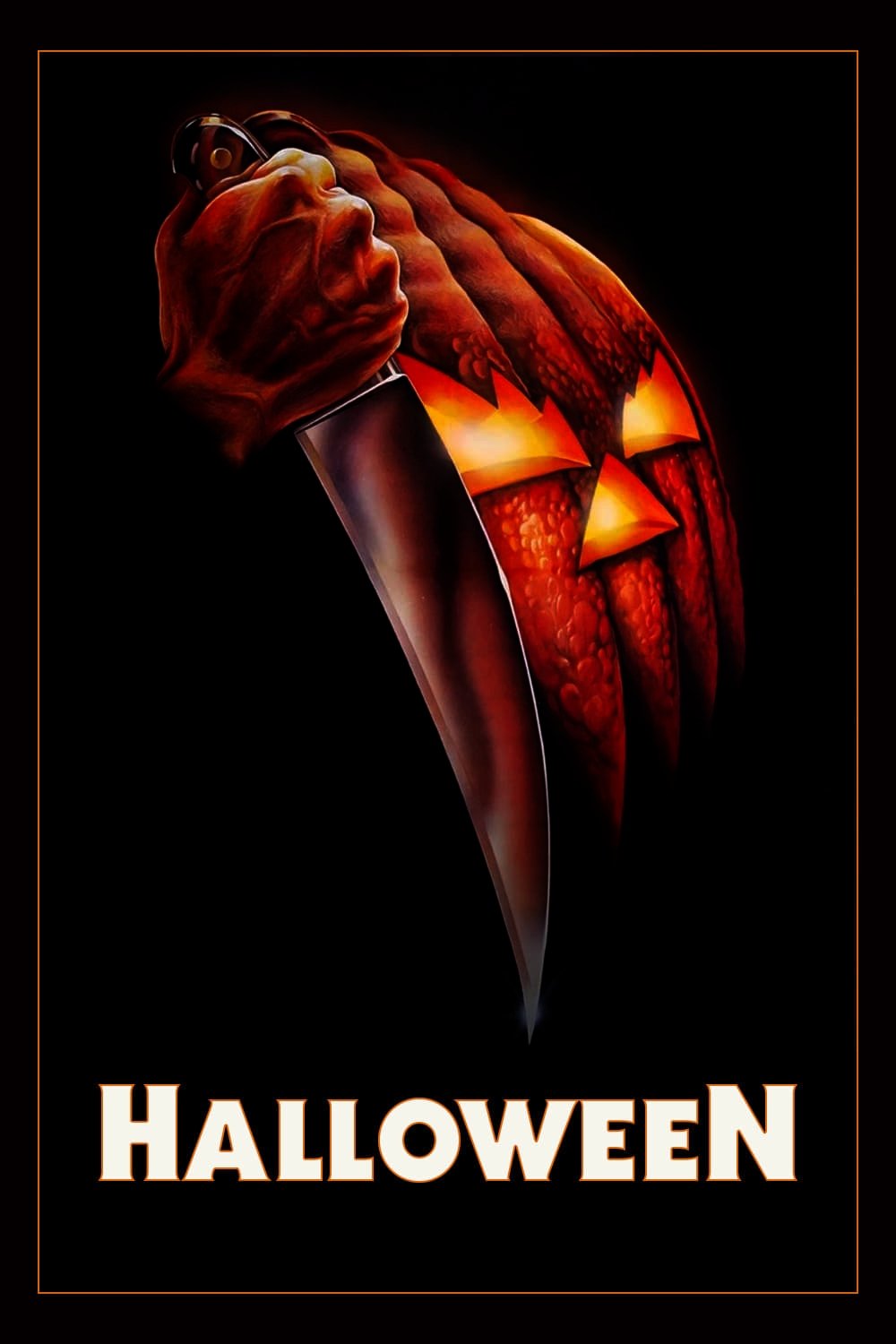
When I first watched John Carpenter’s Halloween (1978), I felt like I was stepping into a cold, moonlit corridor of cinematic history—a corridor echoing with the terrified breaths and hushed footfalls of an entire genre on the cusp of reinvention. For me, Halloween doesn’t just belong to the slasher film movement; it is, in many ways, the movement’s sacred text. I see this film as inseparable from the late-1970s and early-1980s American independent horror renaissance that birthed the “slasher” genre proper. As I dissect my memories and academic readings of its era, I recognize Halloween as both a product and an architect of the slasher tradition, a pivotal figure in shaping the movement’s thematic and aesthetic obsessions—especially its engagement with suburban dread, the vulnerability of the everyday, and the construction of fear through form. It’s not just a horror film; it’s a ghostly mirror reflecting the anxieties and cinematic ambitions of its time.
Historical Origins of the Movement
Reflecting on the roots of the slasher film, I’m always drawn back to the social and artistic upheavals of the late 1960s and 1970s. The slasher genre arose from a landscape marked by disillusionment and the breakdown of traditional social structures in America. Growing up immersed in film history, I realized that audiences had seen the bloody violence of war on their television sets daily, and a new generation of filmmakers came of age craving to shatter the polite distance between viewer and subject. I see the seeds of the slasher movement germinating in earlier genre experiments: Hitchcock’s Psycho (1960), Michael Powell’s Peeping Tom (1960), and Mario Bava’s A Bay of Blood (1971) each played with the interplay of audience complicity, violence, and suspense.
My research led me to understand how American society, feeling the aftershocks of Watergate, Vietnam, and surging urbanization, began projecting its fears onto the sanctity of the home and the clean suburban streets. Horror cinema, starved for innovation after the Gothic excess of old Hollywood monsters, looked inward—towards the terrors that might lurk underneath a familiar façade. The slasher movement was precipitated by the taste for realism and grit popularized by the New Hollywood revolution. These filmmakers were less interested in charming monsters and more in the terror of the anonymous, unmotivated killer. Halloween emerged during this aesthetic drift: made on a shoestring budget, unburdened by studio interference, and driven by a director intent on wringing dread from the mundane. I felt as though the film crystallized the movement’s anxieties into a clean, almost minimalist parable of evil striking anywhere, anytime.
This Film’s Contribution to the Movement
My experience dissecting Halloween always leaves me astonished by its audacity. This film is, to my mind, the pure distillation of slasher cinema’s formal ambitions, marrying technical discipline to primal fear. While earlier proto-slashers flirted with point-of-view shots and chilling murder scenarios, I see Halloween bringing these motifs to new extremes of efficiency and poetry. Carpenter’s long, stalking shots—especially the now-iconic panaglide sequences where Michael Myers’s perspective merges with the camera’s—felt to me like an invitation to share complicity with the killer. I couldn’t help but notice how this implicates us, the viewers, in the violence as silent bystanders or even co-conspirators, blurring the boundary between observer and participant. This, to me, is essential to the slasher’s enduring legacy: the way the camera doesn’t just show, but stalks.
Of course, I would be remiss if I ignored how Halloween codified what I call the “suburban mythos” of the genre. By placing its violence in the unremarkable town of Haddonfield, I think Carpenter was tapping into a post-1960s anxiety about the fragility of the American Dream. It’s the sense that evil doesn’t whisper from Gothic ruins, but emerges from behind the white picket fence, a monstrous eruption in Ordinaryville, USA. This setting—its crisp autumn lawns, its narrow, oppressive houses—intensifies the sense of violation. I always found the simplicity of Michael Myers’s mask to echo these themes: a blank, anonymous presence that could be anyone, anywhere. In terms of movement history, Halloween gave the slasher genre its central motif: the terror of the familiar as much as the unknown.
I have also been fascinated by the way Halloween elevates its “final girl,” Laurie Strode (portrayed by Jamie Lee Curtis), into an archetype. The film’s construction of Laurie—a young woman who survives through wit, vigilance, and resilience—laid down what would, for better or worse, become a template propagated through the genre for decades. As a historian, I see Laurie as a harbinger: the film crystalized the slasher’s interest in gender dynamics, linking survival to a contested notion of “purity,” self-reliance, and the psychic transformation wrought by terror. It’s a theme that the movement would endlessly reprise and sometimes critique, but rarely discard. The slasher movement, as I see it, never truly turned away from the template Halloween set.
Even the film’s relentless, minimalist score—those staccato piano notes—struck me as a revolutionary gesture. It’s not an ornamental melody but a driving, almost physiological pulse, heightening anxiety and pacing the film’s scares with metronomic precision. This integration of music, pacing, and visual economy seems quintessentially slasher to me: a movement obsessed with crafting emotion through structural minimalism and bodily reaction rather than narrative complexity.
Influence on Later Genres and Films
- Genre Blueprint – For me, Halloween isn’t just a landmark slasher, but the film that created a ready-made kit for legions of successors. I’ve observed that everything from opening “stalker” sequences, the targeting of groups of teens, masked killers with ambiguous motives, and the “final girl” model can be traced directly back to Carpenter’s template. When I watch later slashers like Friday the 13th, Prom Night, or A Nightmare on Elm Street, I feel Halloween’s fingerprints everywhere: the relentless pace, the spatial geography of fear, the teasing of the audience’s gaze.
- Horror Realism in America – I often reflect on how Halloween ushered in a sense of “everyday horror” that fundamentally altered American genre cinema. Unlike monster or supernatural movies, this film taught later directors to terrorize audiences by situating horror within the architecture of daily life—clotheslines, bedroom windows, suburban sidewalks. This approach exploded in 1980s horror and resurfaced in later works like Scream and even in art-horror revivals such as The Babadook or It Follows.
- Legacy of Independent Filmmaking – Watching Halloween always struck me as a bold declaration of what was possible outside the studio system. Made with a minuscule budget and constructed through inventive, resourceful filmmaking, it blazed a trail for indie horror. I perceive that this legacy is echoed in everything from the Paranormal Activity series to contemporary microbudget masterpieces: proof that commercial and artistic revolutions can erupt from the simplest setups.
The Movement’s Lasting Impact
I believe the slasher movement still pulses through the arteries of popular culture not because of its body count, but because of its unique way of dramatizing the vulnerability and boundaries of selfhood in a modern world. To me, the enduring legacy of Halloween is its reminder that the dangers we repress or ignore—the lurking menace of the familiar turned predatory—are often the threats that unsettle us most. Every time I revisit the slasher tradition, I’m struck by how it persistently adapts to new social fears, whether through the evolution of the “final girl,” the reexamination of gender and sexuality, or the subversion of audience complicity.
When I consider why the slasher movement matters, I find myself impressed not just by its influence on film form (editing, point-of-view, sound design), but by its role as a barometer for the anxieties of multiple generations. From its 1970s origins to its revival in postmodern pastiche and prestige horror today, the movement represents a vital site of negotiation over our relationship to violence, safety, and the monstrous. Halloween endures in my mind as the genre’s primal scene—a work that both encapsulates and energizes the ongoing dialogue between filmmaker, audience, and nightmare. Its impact ripples outward wherever fear wears a mask and walks—almost unseen—through a quiet neighborhood street.
To connect style and technique with broader context, you may find these perspectives useful.
🎬 Check out today's best-selling movies on Amazon!
View Deals on Amazon