
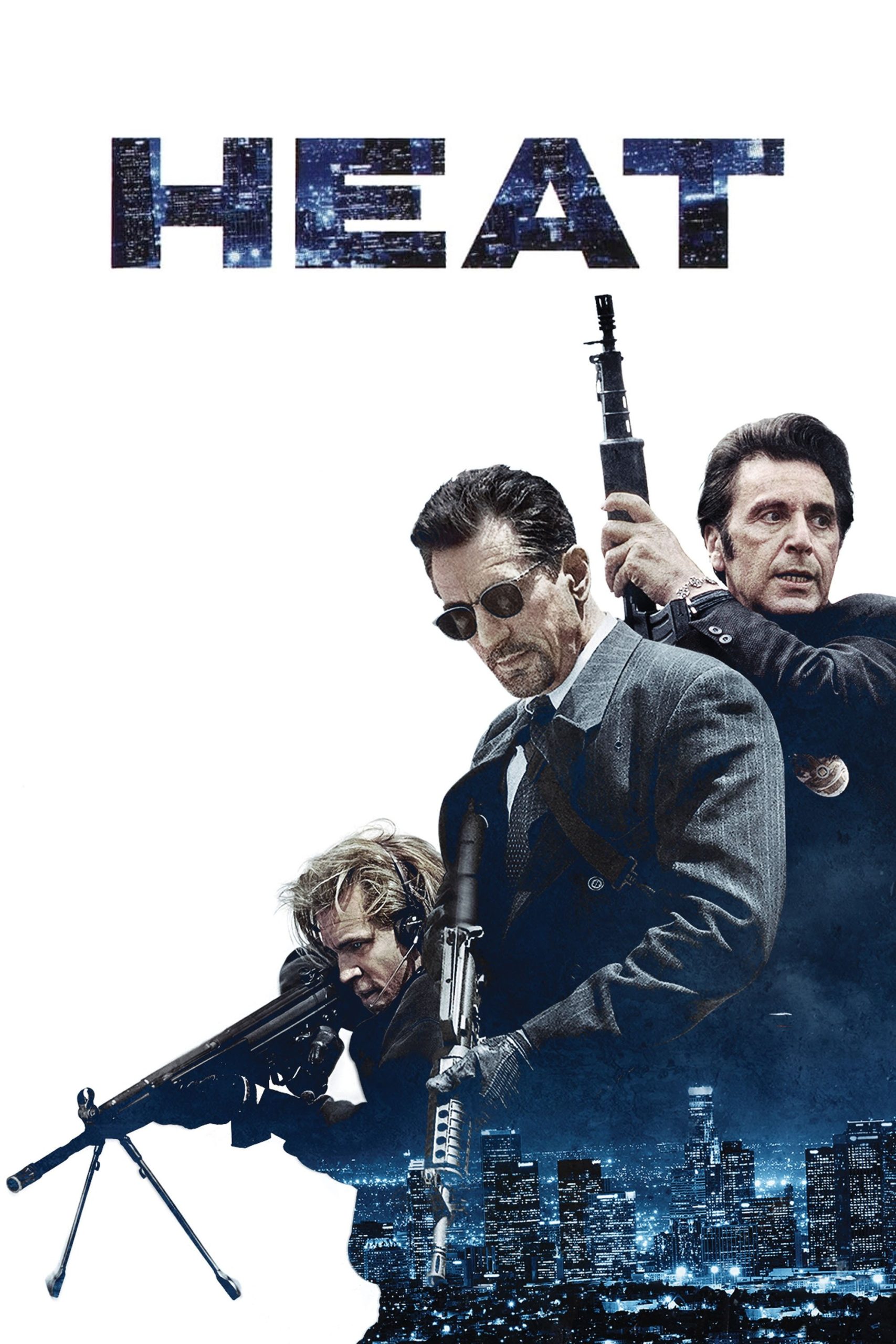
The Genre of This Film
When I first experienced “Heat,” released in 1995, I felt instantly immersed in a world defined by its robust sense of realism, taut suspense, and undercurrents of existential tension. To me, this film sits squarely in the crime thriller genre, with an unmistakable influence from the procedural subcategory. What made that so apparent wasn’t just the focus on cops and robbers—that’s a surface read. The entire framework of “Heat” lives and breathes through the complexities, tactics, and psychology of both law enforcement and highly professional criminals. Every moment, every brush with danger, radiates a pulsating urgency that defines the very essence of the crime thriller. I can’t watch “Heat” without feeling Michael Mann’s intense commitment to the conventions and nuances of this genre: the rhythm of stakeouts, the pressure of criminal masterminds balancing order and chaos, the inexorable build toward a showdown that feels both fated and deeply personal.
Key Characteristics of the Genre
- Common themes
When I think of crime thrillers, I’m always drawn to repeated motifs: the allure of criminal life, the cost of obsession, and the brutal collision between order and chaos. Most films in this genre thrive on stories of professionals—detectives, bank robbers, private eyes—locked in cat-and-mouse games. The themes circle around moral gray areas, loyalty among thieves, and what I can only describe as the perpetual tension between law enforcement and their quarry. Guilt and consequence are nearly always at play, driving characters to confront their own boundaries. There’s often a reverence for procedure—planning jobs, executing heists, performing surveillance—with the narrative energy built on the expectation that everything could unravel at any moment. - Typical visual style
What has always stood out to me visually is the sense of urbanity: cityscapes at night, slick with rain, punctuated by staccato bursts of violence. Crime thrillers have a visual grammar that is sleek, precise, and eerily restrained. Shadows spill over faces, streets glow under bruised neon, and the camera lingers on the tension simmering in a set jaw or stolen glance. Handheld camera work mingles with wide, clinical widescreen shots, making every meticulous detail—gunmetal glint, coded signal, or nearly imperceptible tremor—feel vital. Gunfights, when they come, are stripped of glamour: they’re sudden, loud, and realistically chaotic. The geography of action scenes matters, letting me follow movement and consequence in real time. - Narrative structure
From my perspective, the defining hallmark of a crime thriller’s structure is escalation. The genre often splits its attention between two opposing forces—criminals and detectives—giving equal weight to both sides. Stories like this are driven by inevitability; I almost always feel the story pulling in two magnetic directions, as if a collision is unavoidable. There’s an intricate layering of interconnected plotlines: characters’ personal lives, professional ambitions, and unintended consequences feed into each other. Pacing is deliberate but tense, with sequences that alternate between simmering deliberation and sudden, explosive action. The climax generally results in a reckoning—personal, violent, or moral—where the survival of one side feels inexorably linked to the downfall of the other. - Character archetypes
Whenever I return to classic crime thrillers, I notice certain archetypes that recur—each shaped by the genre’s demand for complexity. There’s the haunted professional, be it a cop or a criminal, so committed to his craft that personal life withers away. I often see loyal lieutenants, unyielding partners, or the unpredictable outsider who threatens the delicate order within a crew. Law enforcement figures are rarely cardboard heroes; instead, they embody dedication riddled with flaws, wrestling with bureaucracy, fatigue, or the grim erosion of idealism. On the criminal side, I’m drawn to masterminds obsessed with control, ruled as much by their code as by their need to outwit their pursuers. Both sides tend to have characters orbiting issues of loyalty, trust, and the inexorable cost of violence.
How This Film Exemplifies the Genre
Whenever I revisit “Heat,” I’m immediately reminded why it’s become, in my eyes, the very template for the modern crime thriller. The film doesn’t just borrow from the genre—it completely immerses me in its world. What strikes me first is Mann’s commitment to authenticity, both in the depiction of the criminal underworld and the methods of law enforcement. Watching De Niro and Pacino, I’m less interested in the old device of cops versus robbers as moral opposites; instead, “Heat” plunges deeply into the psyche of professionals whose lives are governed by the same relentless drive. Their confrontation is intimate, almost fated, and it’s their professionalism—rather than mere circumstance—that ties them together.
The themes that have always compelled me in crime thrillers—personal sacrifice, obsession, and the thin boundary between law enforcer and lawbreaker—are rendered with almost surgical clarity. Both Neil McCauley and Vincent Hanna are men consumed by their roles. When I watch them, I see two figures circling each other, each defined by their code and willingness to lose everything for the job. This symmetry, to me, is what gives “Heat” its extraordinary narrative tension.
Whenever I think about the film’s visuals, I’m struck by how meticulously Mann composes the Los Angeles nightscape. The city, both dazzling and profoundly empty, becomes an extension of the inner lives of its characters. There’s a cool, clinical precision to the shootouts—especially the infamous downtown heist—where geography, timing, and chaos entwine in breathtaking fashion. The commitment to audio realism (that thunderous, echoing gunfire) brings a level of immersion I rarely encounter elsewhere. I can almost feel myself present in these moments, sensing every shift in tactical advantage.
Narratively, the film interweaves the personal and professional with rare assurance. I find the supporting characters—Hanna’s weary team, McCauley’s tightly knit crew, the collateral stories swirling around them—to be much more than window dressing. Each subplot enriches the stakes, showing the ripple effect of violence and the fragile ecosystem of loyalty. In “Heat,” no one is untouched by consequence, and that, for me, is the mark of a crime thriller at its best.
The archetypes feel, at first, familiar but are intensely individualized. Pacino’s Hanna channels the driven detective, yet he’s undone by the very obsession that makes him great. De Niro’s McCauley is the consummate thief, but his hunger for connection becomes a liability. Watching their parallel descents is, for me, thrilling and tragic in equal measure—a dual portrait of men whose gifts are inseparable from their doom. That sense of mirror imaging, of reluctant kinship across enemy lines, elevates “Heat” into rare territory for this genre.
Other Essential Films in This Genre
- Thief (1981) – What stands out to me about this earlier Mann film is how rigorously it defines the life of a professional criminal—James Caan’s character is defined less by romance than by the hard parameters of discipline, skill, and the desire to escape his chosen world. The methodical pace, the urban nocturne aesthetics, and the granular technical details all echo what is found in “Heat.” Watching “Thief,” I always feel like I’m witnessing a dress rehearsal for the genre-defining maturity Mann achieves in his later work. The film’s sense of fatalism and existential yearning, paired with a dogged commitment to procedural accuracy, marks it as a foundational crime thriller in my estimation.
- L.A. Confidential (1997) – For me, this film masterfully combines the intricacies of multiple intersecting investigations with richly drawn archetypes—the bruised but idealistic detective, the ambitious careerist, the weary realist. Its narrative labyrinth, filled with betrayals, alliances, and shifting powers, exemplifies the genre’s backbone: blurred morality and the consequences of violence and corruption. I appreciate how it employs its period setting not as nostalgia, but as a way to further expose the genre’s timeless fascinations—power struggles, ambition’s cost, and the danger lurking beneath the city’s glamour.
- Collateral (2004) – I always return to “Collateral” for its fresh approach to the traditional crime thriller setup. What floors me is how Mann distills the genre’s volatile energy into one long urban night, making the city a living, breathing presence. The narrative drive—the forced alignment of a cab driver with an implacable hitman—creates a tense, intimate dynamic that demonstrates the genre’s obsession with chance, professionalism, and the unpredictability of violence. The film’s crisp digital visuals and soundscape heighten every encounter, reminding me how much the genre relies on immediacy and immersion.
- Inside Man (2006) – Whenever I revisit Spike Lee’s take on the bank heist thriller, I’m captivated by the genre’s capacity for reinvention. “Inside Man” distinguishes itself with its intricate, puzzle-like structure, relentless pacing, and an ensemble cast embodying sharply drawn, opposing forces. I enjoy how it leans into the genre’s love of mind games, power shifts, and moral ambiguity, while still delivering a riveting cat-and-mouse showdown. Watching it, I sense the same underlying DNA—procedural intensity, the battle of wits, and the ripple effects of each character’s choices—that links it to “Heat” and other signature entries.
Why This Genre Continues to Endure
Reflecting on my lifelong attraction to the crime thriller, I realize it’s the inherent dynamism and moral complexity that keeps bringing me—and countless others—back. I crave the combination of technical ingenuity and flawed humanity the genre offers. Watching professionals at the top of their game, I can’t help but be pulled into their world’s precision and urgency, but it’s the cracks—personal failings, moments of doubt, and the price of obsession—that make these stories matter.
For me, the crime thriller’s enduring appeal is deeply rooted in its capacity to probe universal anxieties. In a world where order always feels tentative and rules are made to be bent (or broken), seeing characters navigate high-stakes environments feels satisfying and cathartic. The genre allows me to safely explore questions of morality, loyalty, and consequence without simplistic answers. I find myself consistently drawn to the way these stories balance control and chaos, reason and emotion.
There’s also something uniquely cinematic about the genre’s focus on urban landscapes, professionalism, and the ballet of risk-taking. The craft involved—both on-screen, in the world of the story, and off, in the construction of suspenseful sequences—gives me a thrill I seldom find elsewhere. Knowing that each detail matters and every decision could shift the entire trajectory of a story keeps me engaged in a way that feels almost participatory.
The genre’s resilience lies in how it keeps evolving. Directors continually find new permutations—melding technology, shifting social norms, and fresh character perspectives—without losing sight of the critical elements that define the genre. Crime thrillers, in my view, will always matter because they speak to our need for order, our fascination with rebellion, and our comfort in tales of hard-won justice (and sometimes, irrevocable loss).
Whether it’s the surge of adrenaline from a perfectly executed heist, the bittersweet satisfaction of a lawman finally catching his man, or the pang of witnessing a tragic downfall, there’s something for every mood and era nestled within the crime thriller tradition. That complexity—and the fact that it continually reflects and interrogates our changing world—is what ensures this genre will remain vital, relevant, and irresistible to me and to new generations of viewers.
If you’re interested in how viewers respond beyond technique, you may want to explore audience and critical reception.
🎬 Check out today's best-selling movies on Amazon!
View Deals on Amazon