
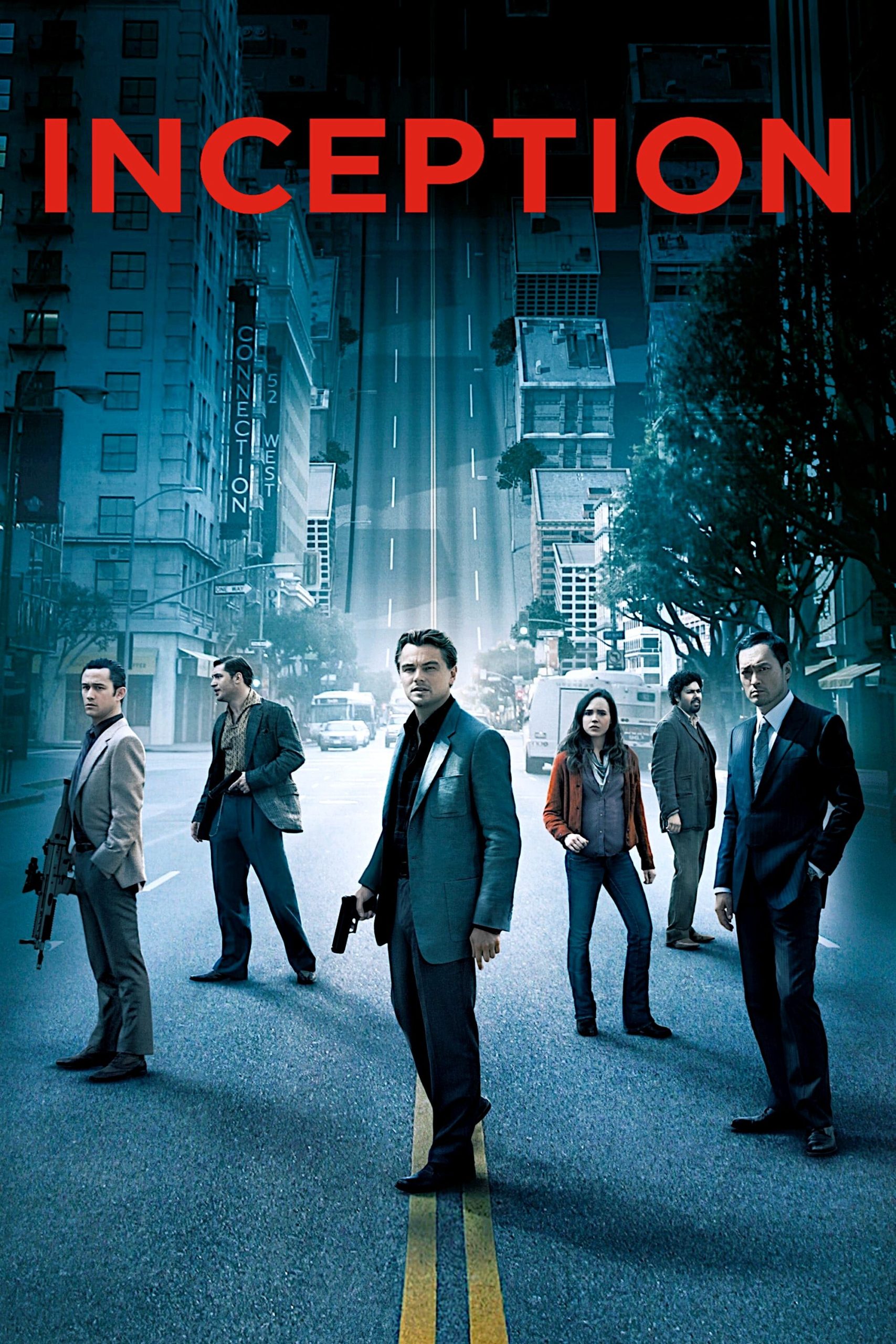
Film Movement Context
I remember the first time I watched “Inception”; the whir of Hans Zimmer’s score and the endless folding cityscape made something click in my own understanding of modern cinema. To me, “Inception” exists at the intersection of several late-20th and early-21st century film movements, but I place it most squarely within the framework of Postmodern Cinema—a movement characterized by fractured narratives, meta-awareness, genre hybridity, and self-referential storytelling. I also see the fingerprints of the so-called “mind-game film” subgenre, which erupted in the late 1990s and 2000s, just as digital craft matured. The movie belongs to a tradition that’s less interested in straightforward realism and far more invested in recognizing cinema’s artifice, using dreams, ambiguity, and unreliable realities as both narrative engine and thematic statement. Whenever I return to “Inception,” I notice how it revels in its own construction—layering dreams within dreams, pulling the rug out from under the audience’s sense of the real—making it a flagship of the kind of self-conscious, puzzle-oriented cinema that defines Postmodernism for me.
Historical Origins of the Movement
When I dig into the origins of the Postmodern Cinema movement, I trace its beginnings to a broader dissatisfaction with “truth” and grand narratives that swept through intellectual, artistic, and cultural realms in the late 20th century. Modernism was once about progress, certainty, formal innovation, and the search for deeper meaning; it prioritized auteurism, coherence, and style. But when the post-World War II era’s confidence began to wane, filmmakers mirrored the skepticism and fragmentation that philosophers like Derrida or Lyotard articulated. By the late 1960s, directors in Europe and Hollywood—think Godard, Altman, Antonioni—were openly questioning cinema’s ability to express objective truth.
Personally, I view the arrival of American New Wave cinema as a major turning point, especially as films like “Blow-Up” or “Chinatown” asked me to doubt everything I saw. With the subsequent boom in home video and digital technology, narrative conventions became fluid: films could morph into pastiche, recycle pop culture iconography, and indulge in labyrinthine plot structures. By the 1990s, directors like David Lynch, Charlie Kaufman, and the Wachowskis were harnessing these tools, and Hollywood grew increasingly comfortable with fragmented timelines and unreliable narrators. “Inception,” which I see as Christopher Nolan’s declaration of allegiance to this ethos, emerges directly from this lineage—not just because it’s a brain-bending puzzle-box, but because it wears its anxieties about representation, identity, and meaning so openly.
This Film’s Contribution to the Movement
When I examine “Inception” as a touchstone of Postmodern Cinema, I’m drawn to how Nolan deploys genre tropes only to undercut them or fold them into something deeply ambiguous. For me, the film takes the classic heist movie template—a genre with its own clear rules and audience expectations—and warps it through the lens of dream logic, memory, and psychic instability. It’s a movie about making movies: there’s a “director” (Cobb), a “set designer” (Ariadne), an “actor” (Eames), and an “audience” (Fischer), all performing within a carefully constructed, multi-layered narrative. When I rewatch it, I can’t help but feel invited into a dialogue about what storytelling itself means in the 21st century.
“Inception” advances the postmodern tradition by embracing simulacra and embracing artifice—not as a bug, but as a feature. I recognize how the film mistrusts the reliability of memory, identity, and even time. There are deliberate paradoxes (the Penrose stairs, the spinning top, shifting dream physics) that destabilize interpretation; I’m constantly aware that any layer of reality could collapse. At its core, the film is less an intricate story for its own sake and more a meditation on belief and meaning-making. That’s quintessentially postmodern: it asks us to engage with the uncertainties of constructed worlds and to recognize our complicity as audience members.
What fascinates me most is how “Inception” refuses to grant closure. I know many people fixate on the ending, the persistent spinning of the top. But it’s not a solution Nolan is after—it’s an indefinite suspension, a state of constant interpretation. The film trusts the viewer to supply meaning and to sift through layers in search of their own answers, which to me is both thrilling and a direct challenge to traditional, didactic narrative forms. In this way, “Inception” is a crystallization of how Postmodern Cinema decentralizes the “authority” of the creator and instead empowers the audience to reconstruct meaning from fragments.
Influence on Later Genres and Films
- Pop-Blockbuster Intelligence – The rise of “smart” spectacle: In my experience, “Inception” shattered the long-held belief that big-budget blockbusters need to sacrifice intellectual ambition for global mass appeal. After its runaway financial and critical success, I noticed how studios were emboldened to greenlight films with complex narrative structures and cerebral themes—think of “Arrival,” “Interstellar,” or even Marvel’s foray into metareality with “Doctor Strange” and “Loki.” Nolan’s approach convinced mainstream filmmakers (and perhaps more importantly, their financiers) that dense puzzles could coexist with box office success.
- Mind-Bending Narrative Devices – Normalizing chronological play: I often reflect on how “Inception” normalized the use of unreliable realities and temporal manipulation in genre films. Before, these devices lived mainly in the indie or avant-garde world. Now, I watch how they’ve become hallmarks of thrillers, horror, and science fiction, from “Tenet” to “Annihilation” and “Westworld.” This legacy of structural complexity seems indebted to Nolan’s demonstration that mainstream viewers can handle—and even crave—narrative mazes.
- Philosophical Blockbusters – Smuggling existential questions into spectacle: I’m fascinated by how “Inception” paved the way for films that don’t just entertain but openly grapple with the nature of reality, identity, memory, and free will. It’s not only about cool set pieces (although those are there, too), but about urging audiences to reflect on what’s real and what’s constructed. Films such as “Blade Runner 2049” and animated features like “Paprika” or “Spider-Man: Into the Spider-Verse” openly embrace philosophical inquiry—an attitude I often trace back, in part, to the groundwork “Inception” laid for complexity within the realm of spectacle.
The Movement’s Lasting Impact
Why does Postmodern Cinema—and specifically the sub-tradition represented by “Inception”—still matter to me? I see its influence everywhere, not just in the mechanics of films but in the questions those films insist we ask about ourselves and the world. “Inception” opened doors to a more interactive, interpretive kind of movie-going, dissolving the rigid barrier between storyteller and audience. It mirrors the media-saturated, hyperconnected world I live in, where truth is often elusive and narrative certainty is a privilege, not a birthright.
The tools and attitudes of this movement persist because they’re honest about how we experience reality today: piecemeal, digitally layered, ambiguous, and self-aware. Postmodern Cinema resists clear-cut answers, which sometimes frustrates me, but more often I welcome the invitation to work through meaning on my own. “Inception” isn’t just an entertaining heist-dream; it’s a statement on human uncertainty, the fragility of constructed meaning, and the exhilarating terror of never knowing if we’re dreaming or awake. That spirit of restlessness and skepticism continues to define the most daring, resonant work in mainstream and independent cinema alike—and I wouldn’t have it any other way.
To connect style and technique with broader context, you may find these perspectives useful.
🎬 Check out today's best-selling movies on Amazon!
View Deals on Amazon