
Film Movement Context
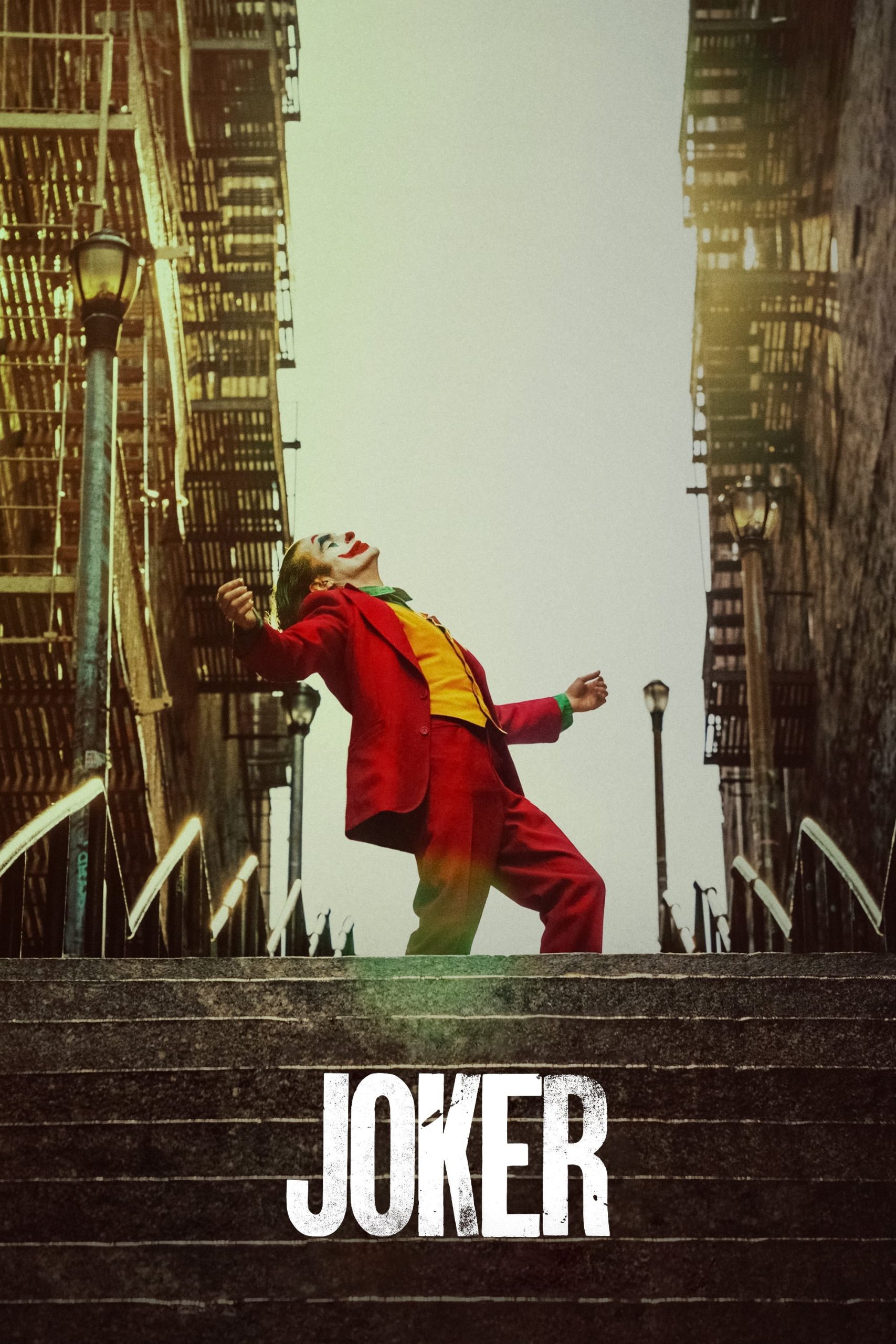
When I first watched Joker (2019), what struck me wasn’t the comic book foundation but rather how urgently the film seemed to speak from the heart of American cinema’s tradition of psychological realism and social critique. Though it’s tempting to view Joker strictly through the lens of the neo-noir revival or even as a “revisionist superhero movie,” I felt my attention draw again and again to its deep roots in American New Hollywood and its bold adoption of motifs from late-1970s and early-1980s Social Realism. If I were to pinpoint the film movement that informs every frame, I would identify the American New Hollywood movement—an era whose fingerprints are all over Joker’s character-driven storytelling—particularly as it evolved to engage with the post-Vietnam, post-Watergate malaise that directors like Martin Scorsese, Sidney Lumet, and others so famously captured. Even more specifically, the film echoes the gritty moral ambiguity of Taxi Driver and the stark urban decay of Scorsese’s early work. But whereas New Hollywood once expressed a generational disillusionment, Joker refashions those techniques for a society fractured by inequality, alienation, and rage—a psychological, gritty cinema where genre expectations collide with something urgent and darkly poetic.
Historical Origins of the Movement
When I trace the roots of American New Hollywood, especially as manifested in films like Joker, I find myself reflecting on how the breakdown of the studio system in the 1960s catalyzed a new generation of directors hungry for authenticity. The old Hollywood formula—predictable heroes, moral certainty, sanitized endings—crumbled under the weight of historical traumas: Vietnam War footage flickered nightly in suburban living rooms, while political corruption and urban blight gnawed at social optimism. The emergence of New Hollywood, to me, was a response to this lived anxiety—a crystallization of doubt and resistance in cinematic form. I’ve always admired how these directors, many influenced equally by European art film and 1950s method acting, insisted on fractured, sometimes unsympathetic protagonists. Films like The French Connection, Mean Streets, and Dog Day Afternoon replaced glamorous settings with graffiti-stained subways and creaking tenements. Even more than the aesthetics, it was the willingness to explore social decay and psychological fragmentation that set these films apart. As I see it, Social Realism and New Hollywood weren’t just aesthetics—they were acts of artistic self-examination, demanding cinema reflect the world’s messiness and the individual’s alienation within it.
In the late 1970s and into the early 1980s, I sense that psychological dramas evolved alongside the rise of the antihero. The optimism of postwar America faded, replaced by a pervasive sense of distrust in institutions—something I immediately feel in Taxi Driver’s brooding isolation or Network’s shrill cynicism. The city, stripped of its glamour, became a site of existential horror and economic despair. When I consider Joker, it’s clear to me that Todd Phillips reached deliberately into this troubled legacy, reactivating the mood and anxiety of New Hollywood, but in a way that feels shockingly of-the-moment. The socio-political upheaval of the 1970s created a language of cinematic despair—and that language, I believe, is precisely what Joker speaks.
This Film’s Contribution to the Movement
I see Joker as both an homage to, and a radical progression of, the tradition of psychological realism and social critique. When I watch Joaquin Phoenix’s performance, I don’t just see an actor portraying Arthur Fleck. I see a relentless intensification of the personal—the character’s mental illness isn’t a narrative device, but the very gravitational force around which the film orbits. This insistence on subjective experience, a kind of first-person horror, aligns powerfully with the New Hollywood approach, yet Joker amplifies it for today’s anxieties. The decision to frame the movie almost entirely from Arthur’s perspective—his unreliable perceptions, his flickering fantasies, his visceral suffering—struck me as a return to the emotionally volatile, psychologically daring style I’ve long admired in films like One Flew Over the Cuckoo’s Nest or even Raging Bull.
What fascinates me, personally, is Phillips’ commitment to urban realism. Gotham City in Joker isn’t a fantasy metropolis, but a barely fictionalized New York at the end of its rope: sanitation strikes, crumbling institutions, alienated service workers, news broadcasts littered with violence. It’s a city that echoes the urban dread captured by Scorsese and Lumet—places where the very idea of community has become unsustainable. Rather than offer catharsis, Joker seems to sharpen the sense of social futility, an approach that’s both a tribute to and an innovation on its cinematic predecessors. In the New Hollywood tradition, violence is not spectacle but consequence. Here, every act of cruelty or eruption of chaos feels like the logical endpoint of years of isolation and stigma. That commitment to harm as a symptom, not a solution, is, for me, a direct challenge to the escapism we so often find in the superhero genre—as if Joker is warning us about the stories we tell ourselves to anesthetize real pain.
Another aspect I find compelling is Joker’s use of genre and meta-narrative. The film pirouettes somewhere between psychological thriller, character study, and comic book mythology. The blend is seamless yet disorienting, a technique that, to my eyes, exposes the artificial boundaries between high art and popular entertainment. By invoking Robert De Niro’s turn as both interviewer and yet another lost soul, Phillips creates a dialogue with the past while questioning if any of its answers still make sense. The antihero tradition is both revered and interrogated; Arthur’s transformation into Joker is not just an identity shift but a social event, a spark for collective unrest. When I watch the film’s final crescendo—a riot, a laughing madman, a city on fire—I realize that Joker persists as a vital extension of the New Hollywood and Social Realist project: to force audiences to look unflinchingly at the world as it is, and maybe, tremble at how close we are to its narrative edge.
Influence on Later Genres and Films
- Influence 1 – The Antihero in Blockbusters: I am keenly aware of how Joker has redefined what mainstream audiences expect from antiheroes. After Joaquin Phoenix’s Arthur, I’ve seen a rush to complicate the moral clarity of blockbusters, offering characters whose traumas and contradictions are explored rather than papered over. Studios now gamble on tragedies and discomfort as engines for drama, not just seasoning. This trend, for me, signals an embrace of deeper complexity even in commercial narratives, giving rise to characters whose suffering shapes not just their actions, but the very arc of their worlds.
- Influence 2 – Psychological Realism as Spectacle: One of the signature legacies of Joker, as I experience it, is its willingness to place psychological disintegration front and center, delivered with the intensity of spectacle storytelling. I see echoes of this boldness in films that would once have been considered arthouse but are now major releases—movies like Nightmare Alley or Pieces of a Woman, which refuse to shy away from disturbed subjectivity and mental unraveling. Joker has, I believe, recalibrated what is permissible in the multiplex, making inner chaos as captivating (and as marketable) as action set pieces.
- Influence 3 – Reimagining Comic Book Narratives: I’ve noticed that since Joker, Hollywood has become bolder in questioning its own mythologies. The superhero genre’s usual binaries—good versus evil, hero versus villain—have been infected by ambiguity. The cultural impact, for me, goes beyond the film itself: studios now explore the vistas of origin stories not as celebrations of power, but as cautionary tales about society’s failures. Alternative takes on familiar figures, like The Batman or Logan before it, seem emboldened to court tragedy, insecurity, and radical uncertainty. I suspect this reorientation will continue to spread across genres and properties for years to come.
The Movement’s Lasting Impact
Every time I revisit Joker, I’m reminded why the New Hollywood and Social Realist ethos continues to electrify both artists and audiences. There is something timeless, I think, in the movement’s demand that cinema face the world’s chaos head-on, resisting easy answers or comforting illusions. The audacity to foreground subjectivity—the confusions and sufferings of idiosyncratic minds—is a direct challenge to both mass entertainment and personal denial. What matters most to me is how this movement’s legacy persists: directors still wrestle with society’s wounds, finding in cinema a kind of ethical laboratory. Joker, by reclaiming this tradition and translating it for the anxieties of the present—economic despair, alienation, institutional collapse—reminds me how vital the voice of cinema can be. The New Hollywood and its descendants give us a language for our darkest questions. And as long as those questions haunt us, I feel certain these films will endure—inspiring new stories, and new filmmakers, to pierce through the haze of spectacle in search of uncomfortable, necessary truths.
To connect style and technique with broader context, you may find these perspectives useful.
🎬 Check out today's best-selling movies on Amazon!
View Deals on Amazon