
Film Movement Context
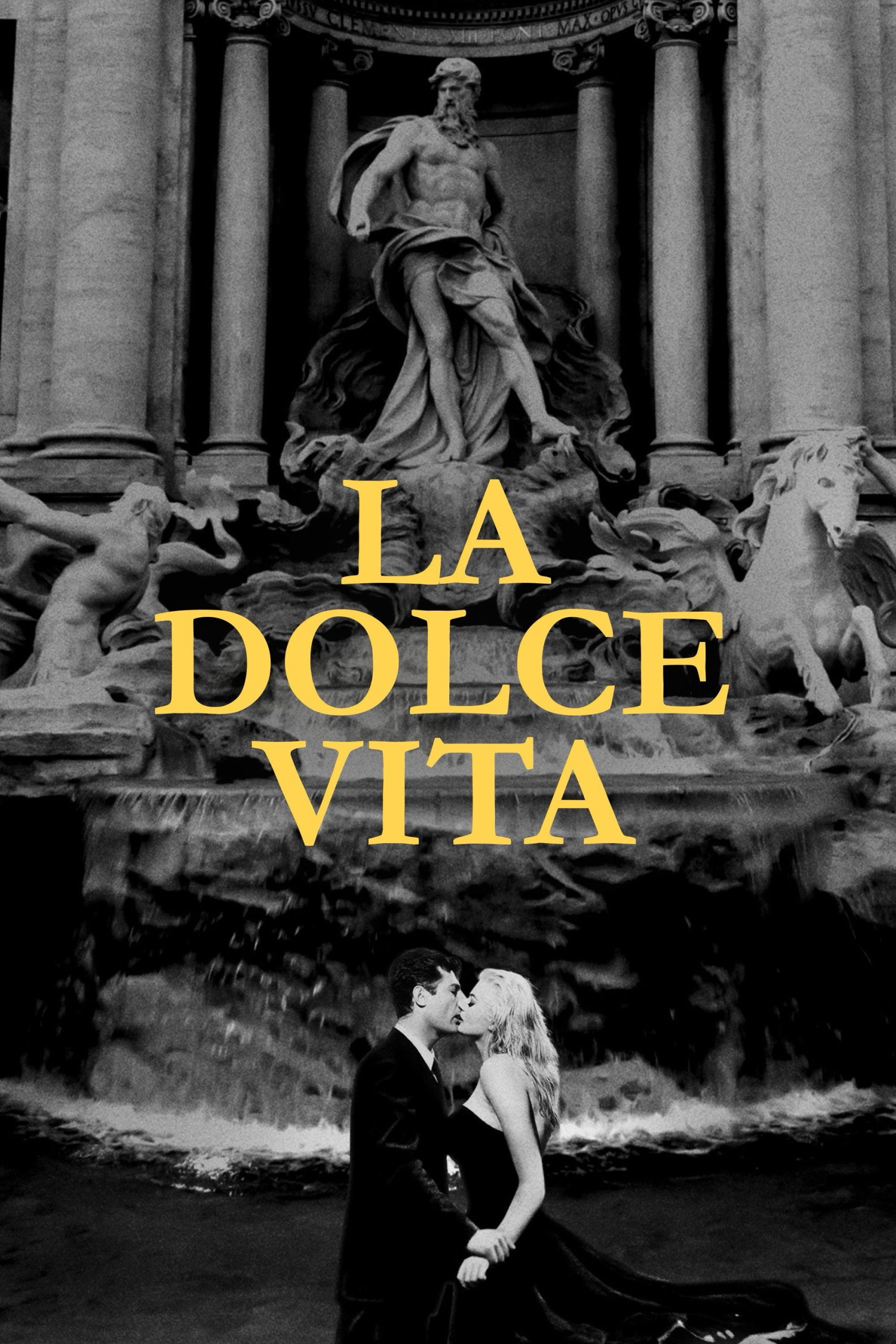
My first encounter with “La Dolce Vita” felt less like watching a movie and more like wandering through a society’s collective subconscious, and I can’t imagine placing it anywhere but the heart of the Italian art cinema movement, especially aligned with what many call the “Post-Neorealist” era. Most critics often shoehorn it into Italian Neorealism’s legacy, but to me, Fellini’s vision cracks open something wider, straddling the line between that movement’s documentary commitment and the emerging international wave of auteur-driven personal cinema. “La Dolce Vita” stands, in my eyes, as a landmark of Modernist cinema—where Neorealism’s street-level suffering gives way to the existential malaise of a newly prosperous but spiritually ambivalent Italy. I always experience this film as the hinge between worlds: grounded in postwar social commentary, yet bursting with self-reflexivity, surreal flourishes, and a deep skepticism of modern life’s dazzling surfaces. What matters most about its placement in cinematic tradition is how it embodies the relentless interrogation of meaning that would go on to define the very idea of “European Art Film”: a movement obsessed with alienation, ambiguity, and the psychological as much as the sociological.
Historical Origins of the Movement
When I trace the origins of this movement, I invariably return to the rubble and hope of post-World War II Italy, when filmmakers like Rossellini and De Sica dragged cumbersome cameras into the streets and reminded the world what destruction and endurance looked like up close. Neorealism, with its unfiltered lens on poverty and struggle, was born from necessity–lack of studios, professional actors, even film stock–but also from a desperate hunger to speak truth after Fascism. But by the late 1950s, as Italy rocketed into the “economic miracle,” I feel a subtle transformation bubbling beneath the surface. My reading is that the country’s material fortunes improved dramatically, and with prosperity came a new anxiety: what now? The compulsions of survival faded, exposing anxieties about moral and spiritual emptiness. This is exactly where “La Dolce Vita” finds its footing. I see in Fellini’s work and his contemporaries a reaction against not just material hardship but an existential hollowing out—a search for meaning that resists both didacticism and traditional narrative closure.
For me, Modernist cinema in Italy, evolving from Neorealism, was never about abandoning social realities altogether. Rather, it was about the painful recognition that material progress wasn’t enough. Directors started to view the city not just as a site of deprivation but as a kaleidoscope of sensations, aspirations, and anxieties. These years were saturated with a sense of loss: of innocence, of traditions, of shared certainties. So what emerged was, as I see it, a cinema of wandering, of questioning, of estrangement—both from one’s own identity and from the society in thrall to spectacle, gossip, and glamour. “La Dolce Vita” becomes the apotheosis of this evolution: gliding through Rome’s glittering nightlife and sunlit ruins, offering not a solution but a deeply felt meditation on how (or if) a person might find meaning in an age of surface and spectacle.
This Film’s Contribution to the Movement
When I revisit “La Dolce Vita,” I’m overwhelmed by how radically it broadens the boundaries of what art cinema could do. Fellini’s cinematic Rome isn’t merely a backdrop, but an active, disorienting labyrinth—a city alive with possibility and disillusionment, a perfect metaphor for modern spiritual drift. I find this film’s genius in its refusal to offer the neat grit of Neorealist films or the comfort of narrative closure. Instead, it spirals out into an episodic structure that mirrors its protagonist’s own restlessness. Each vignette is its own philosophical experiment, its own searchlight sweeping over the ruins of old values and the neon promises of the new.
One of the most thrilling aspects, for me, is how the film amplifies subjectivity over objectivity. Watching Marcello (the reporter at the heart of the film), I don’t just see a man reporting on others—I feel as though I’m drifting with him from sensation to sensation, seduction to emptiness. The camera’s obsession with faces, gestures, and fleeting moments makes every party, church, and dawn encounter shimmer with meaning just out of reach. This intense focus on interiority—Marcello’s longing, self-loathing, and inertia—strikes me as thoroughly modern, and astonishingly honest. Fellini’s visual style, too, seems intent on breaking rules: the sinuous, poetic tracking shots, the juxtaposition of decadence and ruin (truly, that opening sequence of the Christ statue flying over Rome’s rooftops still chills me with its secular awe). I can’t help but see “La Dolce Vita” as bravely opting for ambiguity: offering a vision of society where the lines between sacred and profane, authenticity and performance, desire and despair, are deliberately blurred.
The film’s handling of spectacle—from the hedonistic orgies of nightlife to the hounding of celebrities by paparazzi—moves, in my opinion, far beyond mere reportage. Instead, it becomes an autopsy: not just of a generation, but of the very structure of seeing and being seen. When I think about why it matters, it’s because “La Dolce Vita” lets me inhabit a world where searching itself is the answer, and where cinematic language expands to match the contradictions of the era.
Influence on Later Genres and Films
-
Influence 1 – The Rise of Art Cinema Narratives:
My view is that “La Dolce Vita” essentially invents what has since become a staple of international art cinema: the episodic, open-ended film, centered not on dramatic resolution, but on mood, character, and philosophical questioning. I see its DNA in countless later films—from Antonioni’s “L’Avventura” to the works of Alice Rohrwacher or even present-day festival favorites—where ambiguity and moral uncertainty are part of the fabric, not just narrative devices. For me, this model offers something much richer than plot: a sense that film can be about wandering, about looking, and about not knowing. -
Influence 2 – Depictions of Modern Alienation and Celebrity Culture:
Whenever I witness the modern glut of films dissecting media-saturated, image-obsessed societies, I can’t help but trace the lineage back to “La Dolce Vita.” Fellini’s relentless focus on the circus of celebrity, the invasive presence of the paparazzi, and the shallowness of fame feels eerily prescient. The film’s critique reverberates through the celebrity satires of Robert Altman, the hyper-stylized cultural dissections of Paolo Sorrentino’s “The Great Beauty,” and even in Sofia Coppola’s meditations on melancholic celebrity. Each of these, in my experience, deepens a cinematic language for representing that peculiar modern state: being seen everywhere, yet feeling deeply invisible to oneself. -
Influence 3 – Interrogation of Genre and Style:
I’ve always been fascinated by how “La Dolce Vita” both cannibalizes and transcends its genres—blending comedy, melodrama, satire, and spiritual inquiry. In doing so, it makes a persuasive case that genre is a tool, not a prison. I find echoes of this approach in the later French New Wave, in the American New Hollywood films of the 1970s, and in the genre-bending works of directors like Wong Kar-wai. For me, Fellini’s audacity opened up a world in which filmmakers could break down the boundaries between social critique, fantasy, and baroque visual pleasure, insisting that film’s power lies in resisting categorization as much as in defining it.
The Movement’s Lasting Impact
Reflecting on all this, I can’t overstate how formative this movement—and “La Dolce Vita” in particular—has been to my own understanding of cinema’s potential. What continues to matter, in my eyes, is how these films let us inhabit uncertainty and ambiguity, provoking questions rather than settling for answers. The movement’s willingness to expose the fragility of both social structures and personal identities feels newly urgent in times of upheaval and overabundance alike.
What keeps drawing me back isn’t just nostalgia for a vanished Italy, or a veneration of “classic” arthouse aesthetics. It’s a sense that the best modern cinema—across continents, styles, and platforms—still grapples with the same dilemmas that animate Marcello’s nocturnal wanderings: how to locate authenticity in a world of spectacle; how to search for grace amid confusion; how to find community, or solace, when old certainties are in ruins. To me, the legacy of this movement is not just its formal daring or sociological insight, but its emotional exactitude. Watching these films, I feel I’m part of a tradition of restless seekers—viewers who demand more from film than entertainment, who embrace uncertainty as a kind of freedom. That’s why “La Dolce Vita,” and the Modernist art cinema movement it crystallizes, still matter profoundly to the way I see, and think about, the movies.
To connect style and technique with broader context, you may find these perspectives useful.
🎬 Check out today's best-selling movies on Amazon!
View Deals on Amazon