
Film Movement Context
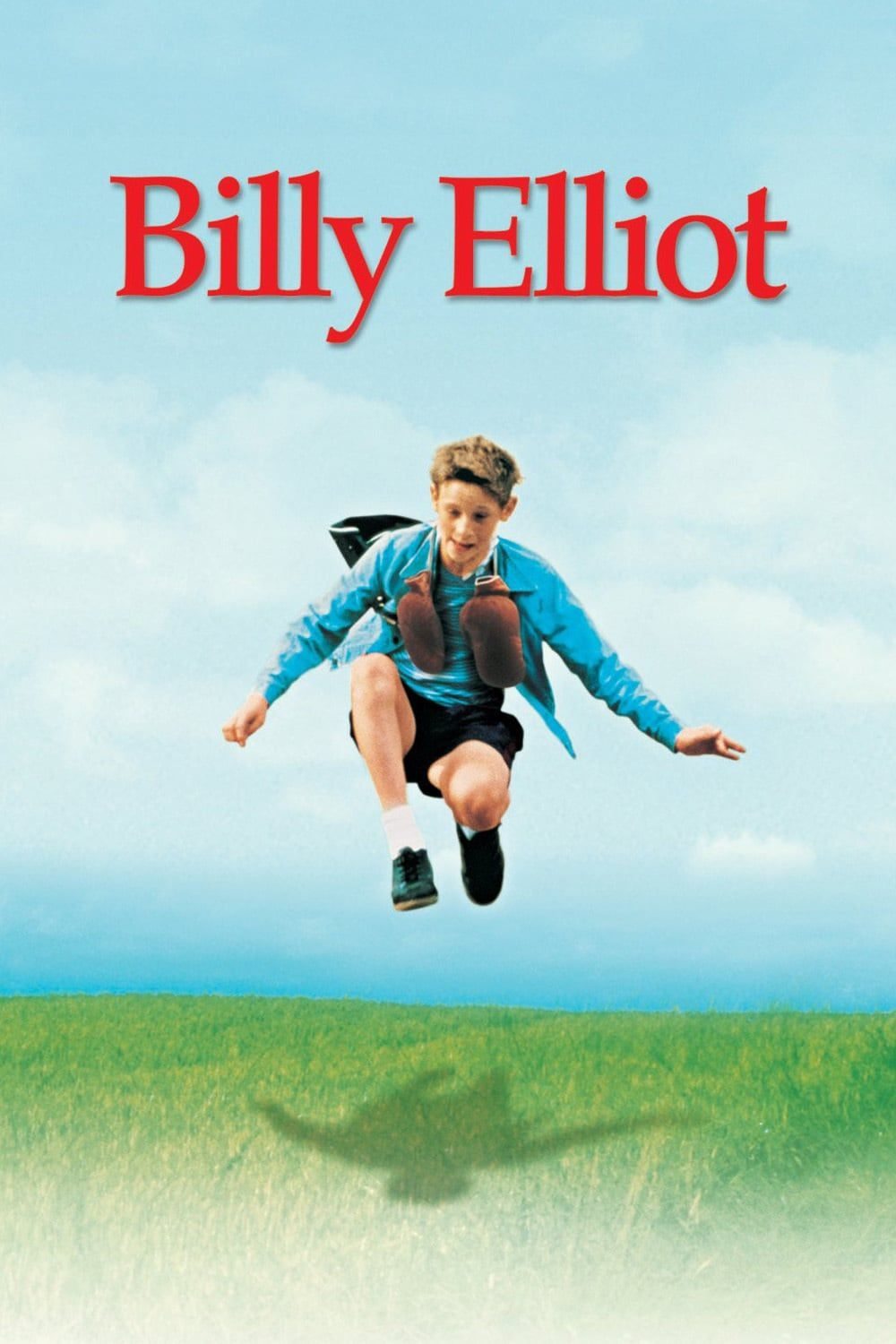
Whenever I rewatch Billy Elliot, I’m transported back to a period of British cinema that felt raw, immediate, and deeply alive: the era of what I personally identify as the British social realist revival at the turn of the millennium. I situate Billy Elliot firmly within this movement, and each time I see it, I’m struck by how it updates the template pioneered by earlier British New Wave filmmakers while infusing it with a queer and class-conscious coming-of-age narrative. To my eyes, social realism in the UK is less a single era than a series of resurgences, each responding to a fresh set of economic anxieties, class fissures, and political upheavals. For me, Billy Elliot belongs among the key works of social realism’s late twentieth-century revival—alongside films like The Full Monty and Brassed Off—all of which foreground not just working-class lives but the particular interiors of those lives: aspiration, shame, anger, transformation.
Yet, when I discuss Billy Elliot in academic spaces or among cinephile friends, I find that simply labeling it social realist is not enough. There’s a hybrid vigor in this film—a blending of social consciousness and genre play. I perceive echoes of kitchen sink dramas, yes, but also threads drawn from dance films, coming-of-age stories, even musicals. For me, that’s the crucial innovation: the way Billy Elliot takes inherited forms and repurposes them to dramatize collective struggle and individual transcendence. In this light, I’m convinced the film inhabits the evolving tradition of British social realism, reinvigorated through its intersection with genre, gender politics, and populist stylization.
Historical Origins of the Movement
Reflecting on my own engagement with social realism’s history, I always return to the lightning-bolt years of late 1950s and early 1960s Britain. I see this movement—I mean the original British New Wave—as emerging from a sense of necessity. Post-war austerity, a crumbling Empire, and entrenched class hierarchies laid the groundwork. Whenever I read the manifestos and interviews of Lindsay Anderson, Tony Richardson, or Karel Reisz, I sense a restlessness; their films sought to expose realities mainstream cinema ignored. These directors, influenced by European neorealists like De Sica and Rossellini, wanted to strip away artifice, taking to the streets of Northern England to find faces worn by labor, interiors marked by poverty, accents absent from theatrical RP tradition. In my own research, this approach always struck me as a radical assertion: working-class lives deserve cinematic space, and so do their particular textures—bruising humor, unvarnished language, realism in everything from lighting to dialect.
Yet social realism was never a static movement. Each new crisis seemed to provoke a fresh wave: Thatcher’s Britain in the 1980s, for example, gave us Loach’s Riff-Raff and Leigh’s Meantime. By the late 1990s and early 2000s, the country had been transformed by deindustrialization, new migration patterns, and a disintegrating welfare safety net. When I look back, it’s clear to me that filmmakers like Stephen Daldry—director of Billy Elliot—responded not only to the past’s legacies but to dire contemporary realities. In the film’s Durham mining town setting, I see a cinematically-charged relic just years removed from the miners’ strike, its aftermath still smoldering in the background. For me, the movement’s continued vitality lay in its capacity to adapt—to refract national anxieties (be they economic, sexual, or generational) through a new generation of protagonists and forms. It’s why films like Billy Elliot still feel so alive to me: they are conscious of their lineage, but never content to simply echo what came before.
This Film’s Contribution to the Movement
When I engage with Billy Elliot, the aspect I find most compelling—beyond its beautifully staged dance sequences or its memorable soundtrack—is how it broadens and complicates the language of social realism. The film is rooted in the everyday: kitchens cluttered with chipped mugs, vacant lots that double as playgrounds, battered hands and hollowed-out gazes. But Daldry’s direction disrupts the expected register of grim austerity; he introduces movement, lyricism, even moments of near-magical exuberance. For me, that merger is radical. Social realism, so often perceived as monochrome or dour, is here made kinetic and hopeful without losing its edge. Watching Billy dance—sometimes furiously, sometimes with ecstatic abandon—I sense the way personal aspiration intersects with systemic constraint.
I am often struck, too, by how the film reframes working-class masculinity. In earlier waves of social realism, a sort of stoic suffering dominated. In Billy Elliot, vulnerability becomes an engine for transformation. Billy’s father and brother, both scarred by political defeat and economic loss, are as much the film’s subject as Billy himself. Through their arcs, I witness the painful unlearning of inherited masculine codes—a process rendered all the more moving against the backdrop of collective defeat (the miners’ strike’s bitter end). What I find so novel—and so necessary—about Billy Elliot is that it navigates the intersection between private longing and public struggle, using dance not as escapism but as a means of rendering resistance visible and embodied.
I also notice how the film’s genre hybridity advances the social realist tradition. By incorporating sequences that borrow from dance musicals and sports films, Billy Elliot creates a grammar of emotional ascent that works in counterpoint to its setting’s pervasive sense of loss. I often point out to students that when Billy leaps in slow motion, or when the camera spins as he pounds through the empty streets, the cinematic technique extends beyond mere style—it becomes a political assertion. Hope, possibility, rupture: these are not outside the tradition of social realism but, as this film shows, absolutely integral to it.
Influence on Later Genres and Films
- Influence 1 – Renewed Hybridization in British Popular Cinema – I’ve seen Billy Elliot open the door for a wave of films that are both socially conscious and stylistically exuberant. Rather than adhere strictly to old templates, British filmmakers after 2000 seemed emboldened to blend realism with elements of musical, comedy, or melodrama, as seen in Pride (2014) and Sunshine on Leith (2013). This hybridization, I believe, owes much to Billy Elliot’s success and the way it proved that social and aesthetic pleasure could coexist without diluting political critique.
- Influence 2 – Expanded Representations of Masculinity and Sexuality – What resonates for me is how Billy’s narrative validated alternative masculinities and queer-coded experience within the context of working-class Britain. The sympathetic depiction of a boy diverging from gendered family norms rippled outwards, influencing subsequent films (think of This Is England or The History Boys) that were less afraid to interrogate gender binaries or celebrate subcultural difference among working-class youth.
- Influence 3 – Mainstream Films About Labor and Class After Deindustrialization – I’ve noticed that after Billy Elliot, there was a newfound willingness in mainstream British cinema to tackle not only the romantic aspects of marginalization but the structural forces—economic collapse, unemployment, the legacy of union defeat—that shape characters’ lives. Films such as Fish Tank (2009) and even I, Daniel Blake (2016) echo this commitment to showing the aftershocks of deindustrialization, but often with a lyric or kinetic touch inspired by Daldry’s work.
The Movement’s Lasting Impact
For me, social realism’s importance is not just an academic matter, nor is it merely about tracing influence or cataloging style. I see it as an aesthetic and a political stance—a refusal to let fantasy dominate at the expense of the lived challenges and quiet revolutions unfolding in ordinary lives. When I return to films like Billy Elliot, I’m reminded that British cinema’s social realist tradition, while often seen as a chronicler of hardship, is also a champion of transformation. Its continued allure for me lies in this paradox: it captures the slow grind of defeat and the improbable lift of individual and collective hope. In a film culture so often seduced by escapism or spectacle, social realism’s persistence ensures that the stories of those on the margins are not just seen, but seen in context—with all their messy aspirations, contradictions, and unheralded victories.
Watching Billy Elliot through this lens, I’m left with a conviction that social realism’s evolution—its riffing with genre, its centering of the body as both a site of struggle and liberation, its willingness to expand the parameters of who counts as a cinematic subject—is not only relevant but urgent. For me, this movement matters because it insists that art and life are intertwined, and that the hurdles faced by characters onscreen are echoing real-world struggles outside the theater’s walls. That’s why, as a historian and lover of film, I find myself returning to social realism again and again—not despite its discomforts, but because of its capacity to trouble, delight, and finally, illuminate.
To connect style and technique with broader context, you may find these perspectives useful.
🎬 Check out today's best-selling movies on Amazon!
View Deals on Amazon