
Film Movement Context
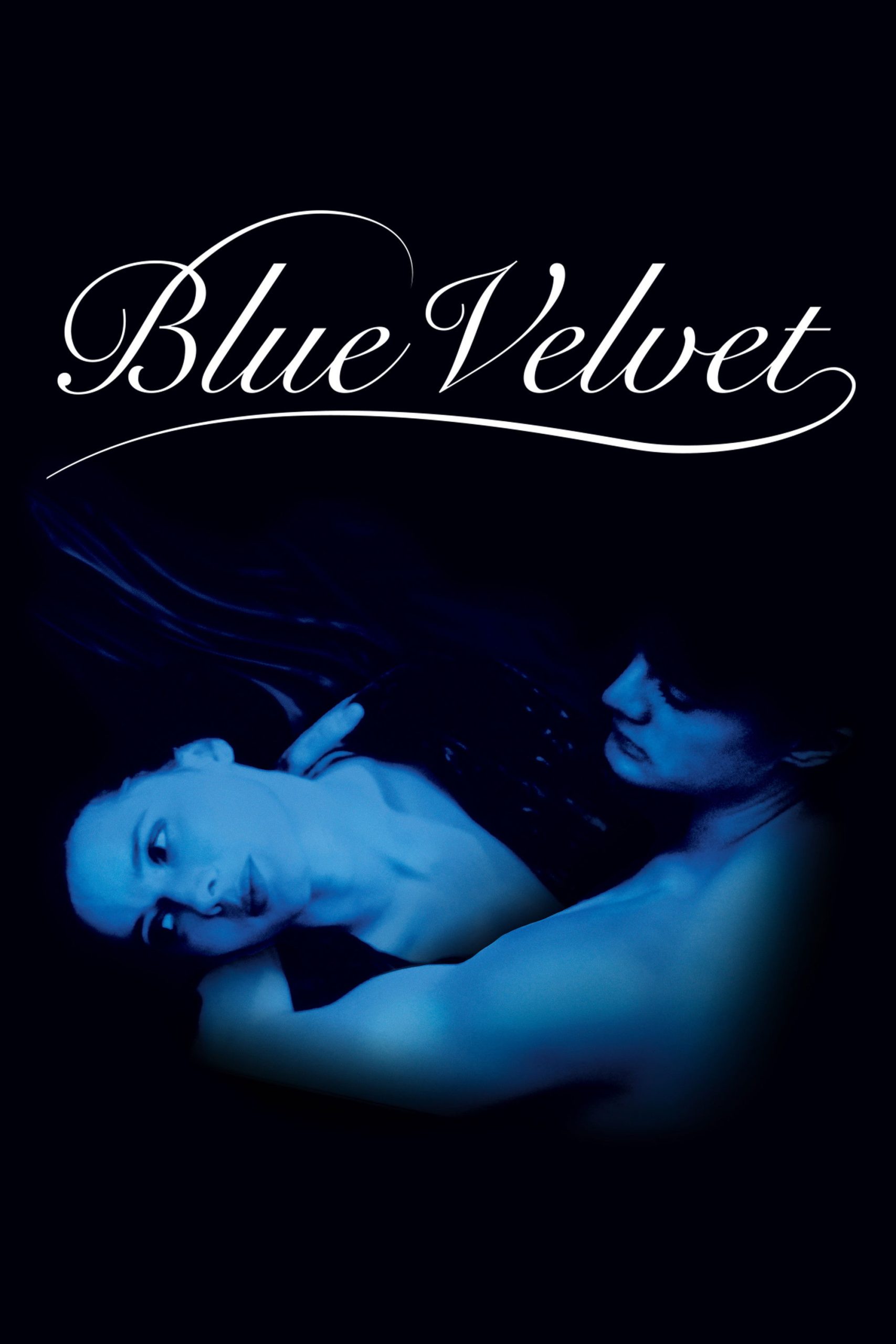
Nothing could have prepared me for the strange and seductive world I met in Blue Velvet. Every time I revisit David Lynch’s masterpiece, I recognize just how deeply it embodies the spirit of American Neo-Noir—a movement that is as elusive and unsettling as the film itself. For me, Blue Velvet doesn’t just belong to one clear-cut movement; it’s perched at the intersection of Neo-Noir and what I personally would call “American Surrealism,” borrowing from existential dread, off-kilter suburban gothic, and that post-1970s sense of disillusionment. But if I had to choose, I’d call it a defining work of Neo-Noir, forever colored by Lynch’s singular ability to shape the everyday into something at once nightmarish and enchanting. The film’s uneasy contrast of idyllic suburbia and rotting underbelly seems to me to crystallize the essence of Neo-Noir—where shadows fall not only across city alleyways but over manicured lawns and children’s playgrounds. Blue Velvet matters because it is the rare kind of film that doubles as a thesis statement for its movement: restyling the language of Noir, but addled with contemporary paranoia, sexuality, and a surrealist sting that continues to resonate.
Historical Origins of the Movement
As someone drawn to movements rather than individual masterpieces, I’ve found the origins of Neo-Noir rooted firmly in the ashes of Classic Noir—those hard-boiled, black-and-white crime dramas that thrived in Hollywood between the early 1940s and late 1950s. By the late 1960s, this earlier tradition felt almost quaint, and the world’s creeping cynicism—fueled by Vietnam, Watergate, the disintegration of old social contracts—began to permeate American cinema. For me, the birth of Neo-Noir wasn’t simple revival, though; it was an act of both homage and rebellion. Directors like Roman Polanski (Chinatown), Robert Altman (The Long Goodbye), and Arthur Penn (Night Moves), took favorite Noir trappings—the doomed antihero, shadow-soaked visuals, the blurred line between virtue and vice—and twisted them into new shapes fit for an age defined by uncertainty and moral drift. This new movement brought forth images both cinephile and grotesque, injecting postmodern irony, psychological fragmentation, and, occasionally, a surreal sensibility inflected by the likes of the French New Wave and the boundary-breaking works of European art cinema. When I watch classics of the era, I note how traditional private eyes gave way to amateur sleuths or even accidental voyeurs, caught in situations beyond their comprehension. It’s this sense of ordinary individuals being swallowed by absurdity or darkness—so central to Neo-Noir—that I see echoed, perhaps most unnervingly, in Blue Velvet.
This Film’s Contribution to the Movement
When I first saw Blue Velvet, I felt like I’d stumbled across a cipher for the American unconscious. What Lynch brings to Neo-Noir, in my mind, is the audacity to split suburbia open at the seams and expose the chaos and perversity lurking inside. Rather than the anonymous city, Lynch’s camera prowls the picket-fenced neighborhoods, tracking a college boy (Jeffrey) who, in true Neo-Noir fashion, descends from mere curiosity to obsession. I’ve always been awestruck at how Lynch subverts the role of the detective—making his protagonist a naïve voyeur, compelled by both horror and excitement, who is neither hero nor villain. The opening—lush American lawns, roses, fire trucks—serves as a bait-and-switch, a faux innocence that’s methodically shattered by the discovery of a severed human ear. For me, the ear is not just a classic “MacGuffin,” but a literal portal into the film’s abyss, drawing Jeffrey (and by extension, the audience) out of the daylight and deep into shadow.
Lynch’s contribution lies in the way he saturates genre conventions with surreal motifs, and—I have to say—an almost Lynchian flavor of dread I’ve never encountered elsewhere. The film’s infamous villain, Frank Booth, isn’t merely a criminal; to me, he’s the very embodiment of shadow id, as if all the aggression and desire repressed by polite society has escaped the basement. Lynch doesn’t simply revive the visual stylings of Noir—he reimagines them through nightmare logic: lighting flickers between bright and luridly underlit; sound design warps Doris Day into a siren song and Roy Orbison into an incantation. What really strikes me is how the film prioritizes discomfort over catharsis—the world is as familiar as it is alien.
In this sense, Blue Velvet acts as a “meta-Noir,” constantly aware of the genre’s tropes yet free enough to mutate them. I see it as the cinematic equivalent of ripping back the wallpaper to see what’s writhing behind. And by pointing its lens at American suburbia rather than rain-slicked big cities, Lynch, to my eye, expands the movement’s scope, arguing that darkness is omnipresent and, crucially, that no one is immune to its lure. I find this expansion crucial. For all its stylish aspiration, what Neo-Noir lacked was this hallucinatory intimacy: Lynch’s vision is not just critical of old Hollywood conventions, it practically turns them on their head, flooding them with existential panic and perverse beauty.
Influence on Later Genres and Films
- The Mainstreaming of “Lynchian” Surrealism – I was always fascinated by how swiftly “Lynchian” became a descriptive shorthand across both independent cinema and television. After Blue Velvet, a generation of filmmakers (like the Coen Brothers with Barton Fink and the early works of David Fincher) incorporated not just Noir conventions but destabilizing dream logic, awkward deadpan humor, and awkwardly lyrical violence. It’s impossible for me to imagine a series like Twin Peaks—or the wave of “quirky darkness” in television that followed—without Lynch bridging the gap between genre cinema and avant-garde experimentation. His particular recipe of small-town creepiness and narrative disruptions inspired a slew of “weird Americana” explorations, threading gonzo surrealism into the texture of mainstream storytelling.
- The Redefinition of the Neo-Noir Detective – What I admire about Blue Velvet is the way it permanently altered the detective figure. No longer a stoic gumshoe or grizzled ex-cop, the modern Neo-Noir protagonist could be a vulnerable everyperson—uncertain, frequently complicit, and deeply psychologically fragmented. I see echoes of Jeffrey’s wide-eyed curiosity in characters from Sam Esmail’s Mr. Robot to Paul Thomas Anderson’s Inherent Vice, where protagonists are both inside and outside the darkness they investigate. By stripping the protective armor of Noir heroes and making their weaknesses part of the plot’s architecture, Lynch inspired narratives far less certain about the difference between good and evil, frequently disorienting their audience with unreliable perceptions and ambiguous endings.
- Amplification of Noir’s Gender Politics and Sexuality – Lynch doesn’t shy away from the grotesque and the sexual, and it’s hard for me to identify another major Neo-Noir film so uncomfortably explicit about desire, submission, and violence. I saw in Blue Velvet a proto-dialogue with later works exploring gender, sexuality, and the power dynamics therein—think of Jane Campion’s In the Cut, Todd Haynes’s Safe, or even Park Chan-wook’s South Korean Oldboy. Where older Noir was invested mostly in femmes fatales and male anxieties, Lynch complicated both victim and villain archetypes (especially through Isabella Rossellini’s Dorothy). Watching many post-Lynch works, I feel his influence in the way filmmakers treat women not only as objects of desire or narrative devices but also as active participants in the genre’s murky moral world—both complicit and resistant, traumatized and empowered. The discomfort I felt watching Dorothy’s ordeal speaks to the movement’s willingness—after Lynch—to confront trauma and sexuality in much more nuanced, disconcerting ways.
The Movement’s Lasting Impact
Why does all this matter, at least to me? Neo-Noir, of which Blue Velvet is among the most radical expressions, persists because it understands that darkness is no longer an external force but something stitched into the very fabric of modern life. Each time I reflect on the movement, I’m struck by how it offers a kind of mirror for the chaos and contradiction within the American psyche—a reminder that beneath every act of domestic ritual, beneath every well-tended lawn, lies a seething potential for violence, repression, or even transcendence. The genre is alive and endlessly adaptable: it absorbs new anxieties (technology, identity, surveillance), morphs into new settings (cyberpunk cities, backwater towns, digital landscapes), and welcomes directors intent on exploring both the underbelly of society and the tangle of their own obsessions.
Blue Velvet matters not because it rehashes familiar Noir themes, but because—for me, and many others—it distills the era’s confusion, desire, and horror, pressing us to contend with discomfort rather than resolve it. I consider this the signal achievement of Neo-Noir as a movement: its refusal of easy answers, its endless capacity for reinvention, and its embrace of the surreal, the ambiguous, and the morally fraught. The movement continues to shape not only genre filmmakers but anyone reckoning with the anxieties of the contemporary world. In my mind, that’s the mark of true cultural vitality.
To connect style and technique with broader context, you may find these perspectives useful.
🎬 Check out today's best-selling movies on Amazon!
View Deals on Amazon