
Film Movement Context
I remember the first time I watched Butch Cassidy and the Sundance Kid, I was caught off guard by its tone—a wry, melancholic humor infused into the very bones of what I had always thought of as the classic Western. It didn’t fit the old formulas of heroism and manifest destiny writ large across Monument Valley backdrops. Instead, it belonged, in my assessment, to the New Hollywood movement, sometimes called the American New Wave. I’ve come to see this film as emblematic of a seismic shift in American cinema during the late 1960s and early 1970s, when directors, writers, and actors—often working in uneasy tandem with the studios—crafted films that bled ambiguity, skepticism, and a kind of restless stylistic experimentation. Butch Cassidy and the Sundance Kid occupies a fascinating borderline, both a late echo of the revisionist Western and a declaration of intent from the New Hollywood generation.
Historical Origins of the Movement
Tracing the backdrop to New Hollywood, I’m always struck by how cultural fragmentation and political tumult spurred artistic rebellion. In the postwar decades, the studio system that had defined American cinema for decades was collapsing. Television siphoned audiences away from the theaters; the old production codes lost their authority as viewers, especially younger ones, turned to cinema for fresh voices and unconventional stories. I view the emergence of the New Hollywood movement as an upwelling—a generational revolt that paralleled larger societal currents. In my mind, it was less a formal manifesto than a new attitude about storytelling. Influenced by European art cinema (especially the French New Wave), young filmmakers sought to dismantle neat moral binaries and experiment with character psychology and film structure. The result, by the late 1960s, was a wave of films that played with narrative, indulged flawed or ambivalent protagonists, and questioned the status quo. Often set against the dying embers of familiar genres like the Western or gangster film, these works remixed cinematic DNA with doses of realism, irony, and self-awareness.
It’s easy for me to see how Butch Cassidy and the Sundance Kid springs from this context. Released in 1969—at the cusp of a new decade and on the threshold of monumental cultural shifts—this film channels the irreverence, cynicism, and stylistic playfulness that I associate with the New Hollywood vanguard. It retains the visual grandeur and mythic setting of the classic Western, but its dialogue, character dynamics, and unexpectedly downbeat emotional undertones push hard against the genre’s old conventions. In my view, that’s what makes the film fascinating: it is as much about the end of an era—in cinema, and in myth—as about the exploits of two real-life outlaws.
This Film’s Contribution to the Movement
Every time I revisit Butch Cassidy and the Sundance Kid, what jumps out at me is the subversive spirit that runs alongside its undeniable entertainment value. For me, this film is less a celebration of the Western outlaw than a wry post-mortem on the mythology of the American frontier. The screenplay by William Goldman, filled with witty banter and a knowing absurdism, pulls the rug out from under any pretense of heroism. I notice how Cassidy and Sundance seem fully aware of their anachronism; revolution is coming, and they can’t outrun it. This sense of obsolescence is at the core of both film and movement: much like the characters, the Western genre here is being chased by the future and knows it may not survive.
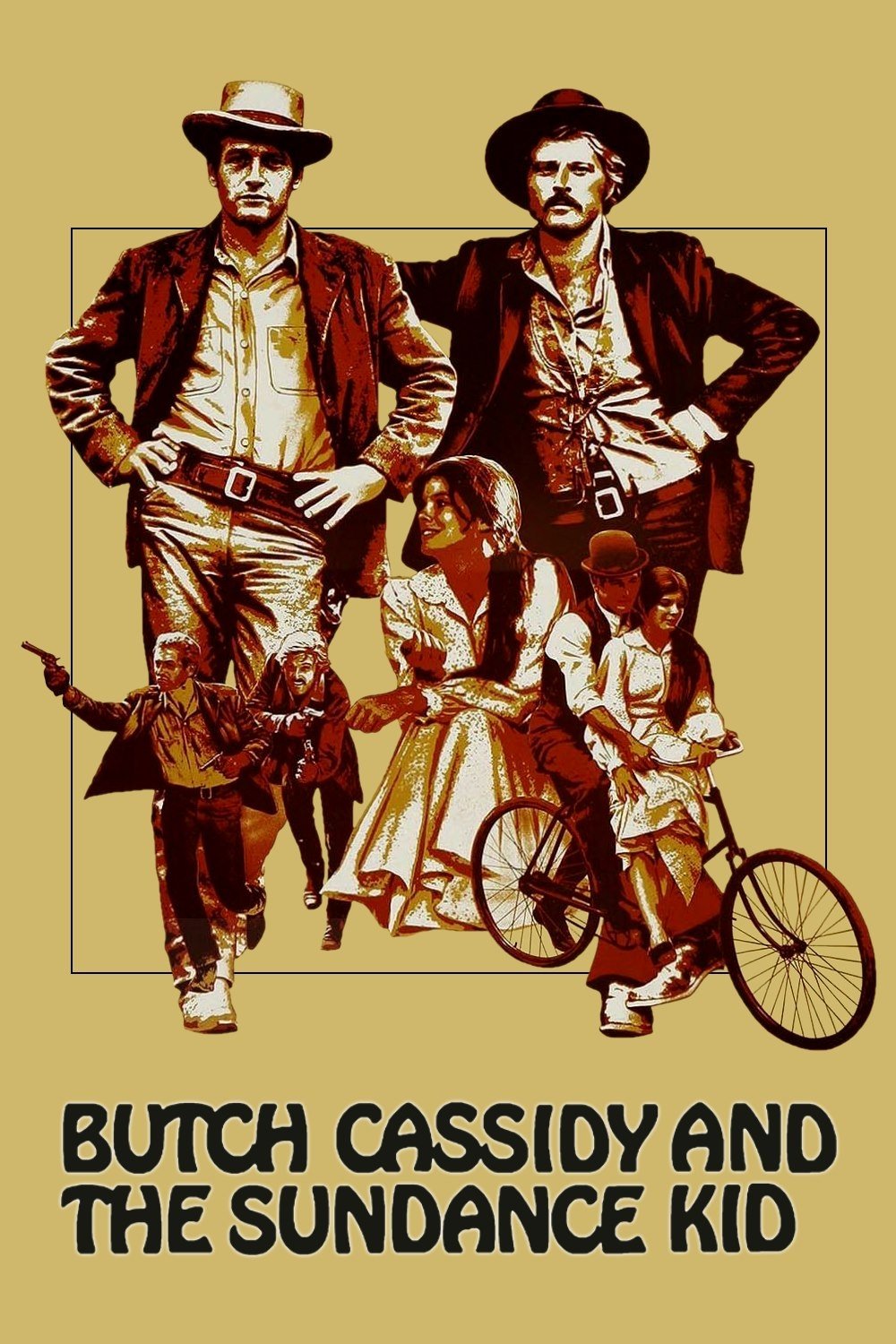
Stylistically, I love how director George Roy Hill embraces the freedoms of the New Hollywood era without entirely abandoning studio gloss. The film’s structure feels loose and improvisational at times, dallying on a bicycle with Raindrops Keep Fallin’ on My Head or letting the protagonists banter in a way that’s self-consciously modern. While older Westerns often foregrounded fate and gloomy inevitability, Butch Cassidy and the Sundance Kid toys with tone in ways I find both playful and mournful—never tipping fully into parody, but never letting me forget that this is a Western made by filmmakers keenly aware of all the Westerns that came before.
Even the casting—Paul Newman and Robert Redford as antiheroes with charisma to burn—was a calculated break from tradition. These weren’t the stoic, granite-jawed cowboys of earlier decades; they were witty, vulnerable, and alarmingly likable even as they committed crime after crime. I find this touch disarming. It’s a sly update on genre archetypes, an injection of contemporary neurosis and self-reflection that marked so much of late-60s cinema. If Hollywood before was built on icons, here was a film built on fallible humans, and the West it depicted was shifting—much like American society around the time of the film’s release.
One of the more radical things, for me, is how the film uses humor—not as relief from seriousness, but as a tonal strategy that signals a kind of existential resignation. Encounters that in an older Western might have ended in high drama are brushed aside with quips or shrugs, as if to say: heroism, like the West itself, is up for debate. The final freeze-frame, with its audacious refusal to grant closure, feels less like a storytelling gimmick to me and more like a manifesto for the possibilities of genre revision and formal experiment. It is a cinematic wink, and a mournful one at that—an ending that asks me to contemplate not just what happens to the characters, but what happens to myth when the world stops believing.
Influence on Later Genres and Films
- Influence 1 – The Buddy Film Template – I’ve always credited Butch Cassidy and the Sundance Kid as the archetype for the modern “buddy” movie. Watching the rapport between Newman and Redford, I sense the DNA of so many later duos: charm, banter, deep platonic intimacy. In my view, the film set a new standard for how screen partnerships could drive narrative and audience investment. The easy chemistry and comic interplay between the leads echo through later films like Lethal Weapon and Midnight Run; you can trace a straight line from this film’s dialogue-driven camaraderie to the structure of action-comedies decades later, where relationships matter as much as plot mechanics.
- Influence 2 – Revisionist Westerns as Cultural Commentary – When I engage with contemporary Westerns from the 1970s onward, the shadow of this film always seems to loom. The film’s decision to center ambiguity, irony, and defeat paved the way for works like McCabe & Mrs. Miller, Pat Garrett & Billy the Kid, and even later meditations on myth like Unforgiven. For me, Butch Cassidy and the Sundance Kid is part of a lineage that turned the Western into a space for adult themes and critique—a place to wrestle with nostalgia, masculinity, and the lies that power our collective sense of history. Its playful but unsparing gaze set the terms for genre self-examination, and I see its spirit echoing in films that challenge, rather than reinforce, national myths.
- Influence 3 – Stylistic Play and Tonal Experimentation – Few films before Butch Cassidy and the Sundance Kid were as overt about mixing tones; that shifting register—one moment comic, the next mournful—opened a door. In my experience, this encouraged a new permissiveness in American film, inviting directors to adopt elliptical narrative structures, break storytelling “rules,” and weave pop culture touchstones (like Hal David and Burt Bacharach’s contemporary score) directly into period settings. I see its fingerprints in postmodern works from Pulp Fiction to the Coen brothers’ entire filmography. The blending of old and new, sincerity and satire, became a hallmark of later American genre films.
The Movement’s Lasting Impact
Reflecting on the New Hollywood movement and the genre revisionism at the heart of Butch Cassidy and the Sundance Kid, I continue to find relevance for today’s films. The movement endures for me not because it romanticized the past, but because it was so attuned to social and existential doubt. The skepticism that suffused its best work challenged the old morality plays and reassured me—both as a historian and a viewer—that film could be self-aware without surrendering emotional force. That spirit of questioning, of genre hybridization and aesthetic boldness, continues to inform the evolution of cinema worldwide. The film reminds me that inherited forms—like the Western—can be interrogated, reconfigured, or even mourned in ways that reflect both their historical origins and their living, mutating meaning.
In navigating the tension between myth and reality, style and substance, Butch Cassidy and the Sundance Kid encapsulates what I value most about New Hollywood: a willingness to cut through sentimentality, to face loss and obsolescence with creativity and wit. This, to me, is why the movement—and this film—remain vital. They remind me that cinema is not static, but endlessly subject to reinvention, as long as filmmakers are willing to question the stories we keep and the stories we let go.
To connect style and technique with broader context, you may find these perspectives useful.
🎬 Check out today's best-selling movies on Amazon!
View Deals on Amazon