
Film Movement Context
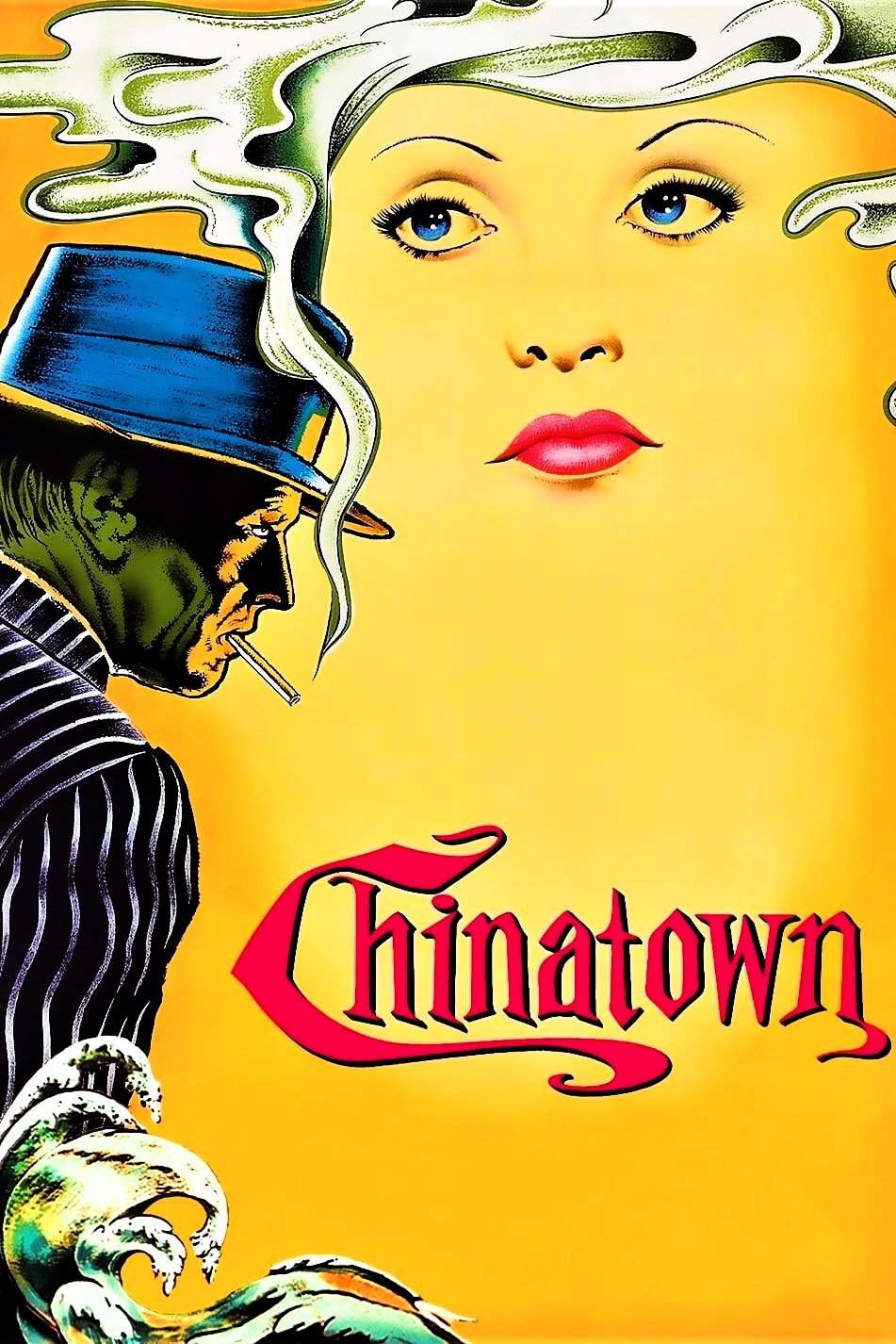
To this day, whenever I revisit Chinatown, I’m instantly drawn not only to the wash of sunlit disillusionment that saturates each frame, but to where this sense of unsparing pessimism comes from. For me, it’s impossible to appreciate Chinatown without placing it squarely in the neo-noir movement—an outgrowth and radical revision of the original film noir tradition that swept through Hollywood’s post-WWII landscape. Yet, I see Chinatown as more than just a stylish genre exercise; it’s an existential meditation rendered through the gritty lens of 1970s American cinema. More than that, it embodies the social and artistic turbulence of New Hollywood, the era when the old studio system gave way to a new generation of auteurs, unafraid to challenge convention or optimism. For me, Chinatown exemplifies the marriage between the private eye mythos and this period’s skepticism—a hybridization cradled within the turbulent energies of neo-noir and New Hollywood filmmaking alike. The film’s lineage is as much about narrative subversion as it is about chiaroscuro shadows and tightly coiled mysteries; I can’t help but see it as the moment where noir’s broodiness and the 1970s’ cultural malaise merge, challenging both genre and viewer assumptions.
Historical Origins of the Movement
When I think about the birth of neo-noir, I have to start with the chaos and uncertainty that enveloped America in the decades following WWII. The original noir movement, to me, always signified a reaction to wartime anxiety—a cinematic visualization of paranoia, alienation, and the collapse of coherent morality, especially as seen in the shadowy alleys and grim urbanity of 1940s and ’50s films. But as the 1960s and 1970s rolled forward, I notice that something began to shift. America was burning with unrest: the Vietnam War, Watergate, assassinations, and a public steadily losing faith in long-held national myths. Hollywood itself was in crisis, the garish optimism of the Golden Age evaporating as new filmmakers, many inspired by international auteurs and educated in film schools, seized creative control from faltering studios. I see New Hollywood as less a direct movement, more a rupture—a gateway to uncensored stories, antiheroes, downbeat endings, and a refusal to sugarcoat the American experience. Within this creative ferment, filmmakers reached back to the dark well of noir, but reimagined its conventions. Neo-noir became a vessel for existential dread flavored with 1970s uncertainty. Classic noir antiheroes turned into flawed, haunted modern protagonists. The mystery shifted from whodunit to why-does-it-even-matter. I always find it jarring and exhilarating how neo-noir absorbs all that was once subtext in early noir and spills it out into aching cynicism and moral ambiguity—no longer just implied, but deeply felt and sometimes unresolvable. Chinatown isn’t just an aesthetic update; it’s born of a specific cultural disillusionment that I believe remains palpable in every sun-bleached frame.
This Film’s Contribution to the Movement
My appreciation for Chinatown deepens every time I consider how it both honors and unmoors the conventions of its noir ancestry. I often marvel at how Polanski takes a genre rooted in shadows and transposes it onto the blinding daylight of 1930s Los Angeles—a city painted with dust, corruption, and sun-bleached despair. For me, this context is everything; the film doesn’t want to hide darkness in the night, but to show how corruption thrives in open, everyday life. The conventions of classic noir—private detectives, sexual intrigue, compromised authority, labyrinthine conspiracies—are all integral to Chinatown. But what separates this movie from its predecessors is how it strips away any illusions of heroism or closure that classic noir occasionally allowed. The private eye, Jake Gittes, isn’t just hard-boiled, but deeply out of his depth, a man rendered impotent by forces infinitely more powerful than himself.
Every time I watch the film, I’m struck by how Gittes’ journey morphs into a descent, not into criminal underworlds, but into the pervasiveness and banality of evil. Unlike the noir classics that hinge on fate or twisted romance, Chinatown leans into something bleaker: a sense that no matter how skilled or savvy you are, the machinery of power and corruption is too vast to dismantle. What makes the film’s contribution profound, in my view, is its deliberate way of denying catharsis. The infamous ending, which leaves me shaken every time, isn’t simply a twist designed to shock—it’s a statement. It says, in effect, that the old mechanisms for justice or personal redemption are not merely ineffective but irrelevant. The spiral of futility Polanski captures is, to my mind, the ultimate statement of the neo-noir movement: a narrative architecture where knowledge doesn’t save you, morality doesn’t prevail, and the city remains as fractured and unknowable as ever.
I also find the film’s technical craftsmanship integral to its genre-defining status. Robert Towne’s script is precise yet sprawling, echoing the dialogue-driven riddles of Chandler and Hammett but infusing them with the fragmentation of 1970s narrative experimentation. John Alonzo’s cinematography mesmerizes me with its sharp, almost clinical lighting; I’m always fascinated by how the radiant haze of LA daylight becomes metaphorical for obfuscation rather than clarity. All these elements converge for me into a work that feels at once traditional and relentless in its exposure of systemic rot—a feat that, in my eyes, defines the best of neo-noir and justifies Chinatown as its gold standard.
Influence on Later Genres and Films
- Resonance with Contemporary Neo-Noir – I am continually reminded of how Chinatown rewrote the rules for the neo-noir revival that would thrive through the ’80s and ’90s. I often think of L.A. Confidential or Body Heat, which borrow not just the tropes—corrupt officials, femme fatales, doomed detectives—but the relentless sense that evil isn’t hidden in shadows but enmeshed in daylight and bureaucracy. In my view, the film’s blunt refusal to deliver payoff or resolution set a new standard: audiences could now expect ambiguity, tragedy, and a refusal to vindicate the hero.
- Shaping Modern Psychological Thrillers – What fascinates me most is how Chinatown seeded the psychological thriller genre, especially films that obsess over corruption, power, and personal impotence. I see direct echoes in Zodiac, where the protagonist’s obsession with truth spirals into a void, or Prisoners, with its meticulous unraveling of personal and institutional failures. The DNA of Gittes’ existential quandary is present whenever I watch modern thrillers that sideline easy answers in favor of emotional exhaustion and unresolved trauma.
- Reinvigorating Social Critique in Cinema – I can’t overlook how Chinatown reframed genre films as vehicles for trenchant social commentary. Whether I look at the environmental message rooted in California’s water wars, or the harrowing depiction of generational abuse, Chinatown showed mainstream directors that genre conventions could smuggle fierce critiques of capitalism, patriarchy, and municipal corruption into gripping narratives. For me, this paves the way for socially conscious neo-noirs like Blade Runner and even more recent works such as Nightcrawler, which use atmosphere and narrative uncertainty to interrogate the social and ethical fabric of their times.
The Movement’s Lasting Impact
Some films lose their bite with time, but I find neo-noir and Chinatown growing only more relevant as the years pass. Neo-noir matters to me because it’s more than a stylistic resurgence—it’s a form that honestly interrogates persistent anxieties. I see its value in the way it refuses easy comfort, subverts nostalgia, and lays bare the cycles of power and corruption that haunt both history and the present. Chinatown is a monument to the transformative spirit of 1970s filmmaking, embodying a cultural reconciliation with ambiguity, failure, and loss that would come to define so many subsequent American films.
When I return to Chinatown or its fellow neo-noir descendants, I sense that it’s not just about genre or even about cinema; it’s about the national mythos itself, peeled back to expose fault lines that never fully close. For me, the enduring power of neo-noir lies in its embrace of contradiction and complexity—the idea that, in searching for answers, we often find only more confusion. Yet, I’m continually inspired by how this movement refuses to give up on the act of searching, or on the fraught pursuit of truth. Cinema, at its best, is not about closure but about confrontation—and I believe Chinatown embodies this impulse as few films ever have.
To connect style and technique with broader context, you may find these perspectives useful.
🎬 Check out today's best-selling movies on Amazon!
View Deals on Amazon