
Film Movement Context
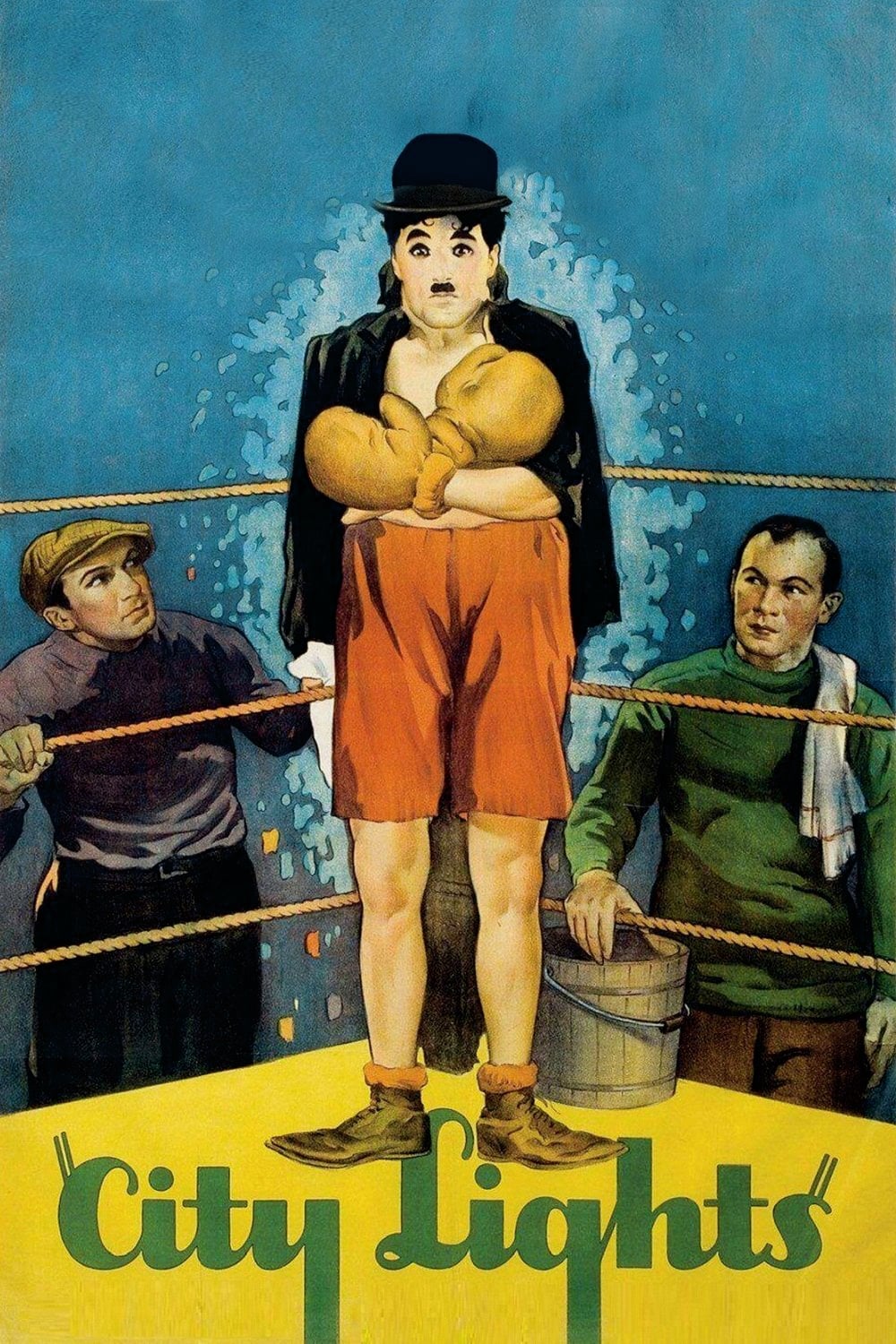
Whenever I revisit “City Lights,” I’m transported to a pivotal moment in cinema’s evolution—an era when the language of film was still finding its form, and every shot felt like an act of invention. For me, “City Lights” sits squarely within the tradition of silent-era comedy, but more precisely, it channels the sensibilities of the Silent Comedy movement and the broader international strain of Humanist Realism that emerged in early twentieth-century cinema. What compels me about “City Lights” is how it both crystallizes the conventions of silent screen comedy—think physical gags, balletic slapstick, and visual wit—while simultaneously embodying that earnest, emotionally resonant humanism one finds pulsing through films of the same period in the work of directors like René Clair and, later, Vittorio De Sica. The film’s roots in the silent comedy movement are inextricable from its larger project: advocating for empathy and humanity through the simplest gestures. When I watch Chaplin’s Tramp wander through a city teeming with both cruelty and grace, I’m reminded that “City Lights” isn’t just an artifact of a bygone era—it’s an active participant in, and innovator of, a movement that defined what cinema could do with silence, gesture, and heart.
Historical Origins of the Movement
The movement that “City Lights” embodies, in my view, has its origins not only in the silent comedy era but also in the crucible of social upheaval and artistic experimentation that marked the first decades of the twentieth century. I always find it astonishing to recall that the roots of silent comedy trace back to vaudeville, slapstick stage routines, and the quicksilver performances of the music hall. But it’s in the emergence of film as a mass medium—when directors like Mack Sennett and Buster Keaton began translating slapstick to celluloid—that a distinctive movement takes root. What fascinates me about this period is the way these films embraced the limitations of silence, transforming them into creative tools: exaggerating movement, perfecting visual timing, and letting camera placement and physical choreography do the narrative heavy lifting.
For me, the international context matters greatly. Films from France—such as Clair’s “Sous les toits de Paris”—and Soviet comedies like Grigori Alexandrov’s “Jolly Fellows” extended the reach of silent comedic and humanist aesthetics worldwide. Yet it was in Hollywood that the tradition flourished with a kind of exuberance unmatched elsewhere. I’m drawn to how the movement responded to modernity’s complexities—urban growth, industrial alienation, the ravages of war—through an emphasis on the ordinary person, told via an accessible, visual language. During the late 1920s, as the synchronized sound revolution began encroaching on the silent era, I sense a tension: a refusal by figures like Chaplin to abandon the delicacy and universality afforded by visual storytelling, even as the industry raced toward dialogue-heavy productions. By resisting the technological current, “City Lights” belongs, in my mind, to a movement at once rooted in tradition and fiercely experimental—using silence as both necessity and ethic, and transforming vulnerability into a site of collective identification.
This Film’s Contribution to the Movement
Every time I immerse myself in “City Lights,” I’m left awestruck by how Chaplin’s creation elevates the silent comedy form into something sublime and unexpected. Unlike many comedies of its time (or today, frankly) that traffic in simple gags and rapid-fire punchlines, “City Lights” crafts a visual poetry from its choreography, timing, and careful gradations of feeling. What stands out for me is how Chaplin achieves a remarkable synthesis: he uses the physical logic of slapstick as a vessel for deeply felt emotion, encouraging me to laugh in one moment and ache with sympathy in the next. There’s a palpable tension in the film between the ridiculousness of the Tramp’s circumstances—a mistimed step, a runaway car, a spilled flower—and the profound gravity of his devotion to the blind flower girl. This duality is, for me, the essence of silent comedy’s magic: the ability to make us recognize our own desperate follies while inviting us to imagine ourselves capable of selfless love.
I regard “City Lights” not as a break from its movement, but as the apotheosis of everything that silent comedy aspired to achieve. What moved me most—beyond even Chaplin’s timeless pantomime—was the bravery he displayed in creating a silent film in 1931, well after the sound era had taken hold. Rather than capitulate to changing trends, Chaplin doubled down on the communicative power of gesture and silence. He shows, through every meticulously composed frame, that human connection transcends words. My own experience watching the film is transformed by this approach: I’m invited to slow down, to attend to small things—the hopeful turn of a hand, the gentle offering of a coin—and to realize that meaning is constructed not through grand speeches, but through humble, often overlooked details. In this way, Chaplin pushes the genre beyond its archetypal forms, establishing a more mature, narratively rich, and emotionally sophisticated kind of comedy that, to me, stands as the apex of its movement.
Influence on Later Genres and Films
- Influence 1 – Fusion of Comedy and Melodrama in World Cinema: Whenever I trace the lineage of bittersweet cinematic storytelling, I find “City Lights” as a pivotal reference point. One way the film revolutionized subsequent genres was by seamlessly blending uproarious comedy with the contours of melodrama. My studies lead me to films as disparate as Jacques Tati’s “Monsieur Hulot’s Holiday” and Satyajit Ray’s “The Apu Trilogy,” both of which borrow from Chaplin’s genius in mixing physical humor with tender, recurring emotional motifs. This legacy endures in the dramedy genre, from Billy Wilder’s “The Apartment” to Asghar Farhadi’s “A Separation.” By marrying laughter with pathos, “City Lights” taught subsequent filmmakers that comedy could carry profound emotional and ethical stakes without dissolving into sentimentality.
- Influence 2 – The Outsider Archetype in Modern Cinema: When I consider the proliferation of the outsider—or “holy fool”—archetype in later cinema, I recognize Chaplin’s Tramp as a seminal figure. “City Lights” provides a blueprint for films that explore alienation from modern life through eccentric, wandering protagonists. Think of Peter Sellers’s Chance in “Being There,” Roberto Benigni’s Guido in “Life is Beautiful,” or Forrest Gump. Each of these characters owes a debt to the Tramp’s ability to navigate—and quietly subvert—the cruelty of their social environments with innocence and resilience. Watching these later films, I always sense echoes of Chaplin’s physical expressiveness and emotional honesty, which create a kind of empathetic identification uncommon in more conventional hero narratives.
- Influence 3 – Visual Storytelling Techniques and Minimalism: As someone especially attuned to the evolution of cinematic technique, I see “City Lights” as a masterclass in nonverbal narrative. The film’s reliance on composition, movement, and rhythm over dialogue challenged filmmakers to innovate visually. I see this influence in modern-day directors—such as the visual minimalism of Aki Kaurismäki, whose use of static shots and deadpan gags nods directly to Chaplin; or in the wordless montages of Pixar films like “WALL·E,” where story and emotion are conveyed almost entirely via gesture, expression, and mise-en-scène. The ethos of “show, don’t tell,” taken to its logical extreme in “City Lights,” continues to inspire directors who seek to communicate with cross-cultural immediacy and economy.
The Movement’s Lasting Impact
For me, the enduring significance of the silent comedy and humanist realism movement—embodied so fully by “City Lights”—is found in its assertion of the universality and resiliency of human feeling. Every time I introduce someone to this film, I’m reminded of how its humor and aching sincerity continue to resonate, even in a world saturated by technological spectacle and narrative excess. The movement matters because it reveals the possibilities inherent in limitation: silent cinema, far from being technologically backward, showed me that creativity thrives on constraint. What moves me most is how this tradition, and “City Lights” in particular, insists that the simplest stories—a glance, a small act of kindness, a comic stumble—carry the greatest emotional power. That ethos lingers in the DNA of countless films, reminding me, again and again, why I believe in the capacity of cinema to bridge differences, foster empathy, and provoke joy in even the bleakest of circumstances. When I return to “City Lights,” I’m not just engaging with film history; I’m reconnecting with the inexhaustible reserve of hope the movement bequeathed to all of us who cherish movies as a window onto our essential, shared humanity.
To connect style and technique with broader context, you may find these perspectives useful.
🎬 Check out today's best-selling movies on Amazon!
View Deals on Amazon