
Film Movement Context
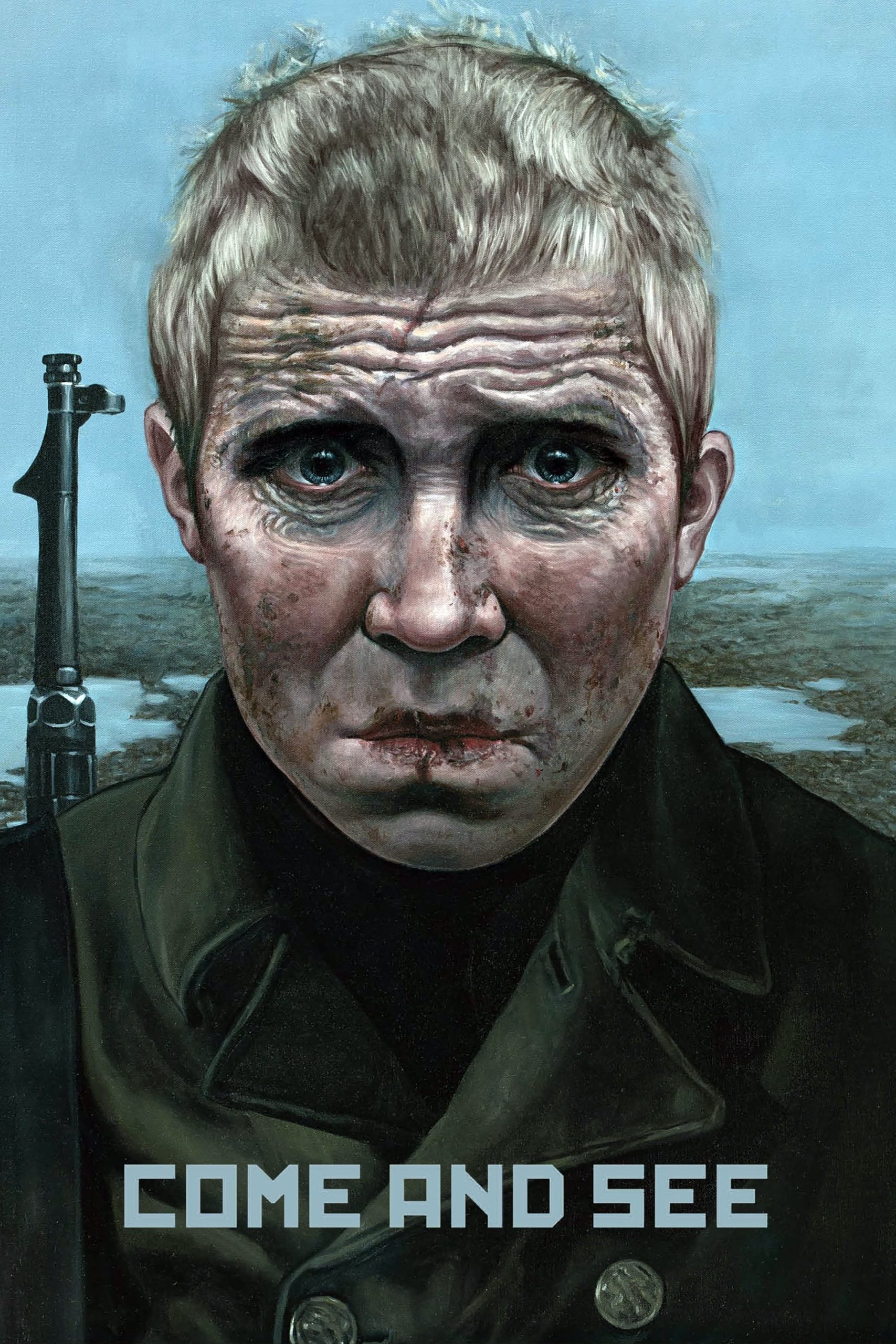
Watching “Come and See” for the first time, I felt the disintegration of narrative comfort and cinematic boundaries in a way few war films attempt, let alone achieve. As I see it, this agonizing journey into wartime Belarus doesn’t simply inherit the tradition of Soviet cinema—it tears at its fabric, exposing raw nerves and existential dread. When critics and historians talk about the film’s alliances, they most often connect it to the late-Soviet era’s strain of socialist realism, but what resonates with me is its decisive alignment with the so-called Soviet anti-war movement—those post-thaw films that scorned triumphant heroics and immersed us in the suffocating oppressiveness of war’s horror. To me, the film occupies the powerful nexus where the declining authority of state-sanctioned narratives gave rise to an unprecedented emotional candor; in this sense, “Come and See” resonates with the philosophical and visual intensity of art cinema and the psychorealism that emerged as a defiant voice in Eastern European filmmaking. It radically diverges from what I once thought of as the ‘classic’ war film, instead pursuing a feverish realism that undermines any abstraction or romanticism of wartime suffering.
Historical Origins of the Movement
My journey through the history of Soviet film movements has shown me how purposely cinema dovetailed with ideology—especially during the Stalinist period. The so-called “socialist realism,” mandated from the 1930s, insisted on glorifying the collective experience and the heroic struggle of the Soviet people. But what I find most fascinating is how, after the thaw following Stalin’s death, something splintered: younger filmmakers, shaped by the traumas and contradictions they’d inherited, began quietly, and then insistently, to challenge the purpose of cinema itself. The line between historical record and personal memory blurred. In the late 1960s through the 1980s, I saw a palpable transformation—a movement often called Soviet anti-war realism, where filmmakers replaced mythic heroism with visceral immersion in the lived, unendurable reality of conflict. These films, made possible by the gradual loosening of censorship and a deepening skepticism about the state’s grand historical narratives, favored ambiguity, subjectivity, and emotional devastation over confidence or closure. For me, the emergence of works like Larisa Shepitko’s “The Ascent” or Elem Klimov’s own earlier films began to dismantle the melodramatic architecture of approved war cinema, carving out a cinematic space where trauma itself became the protagonist and the audience’s complicity was demanded, not avoided.
There was something in the air, too, a post-war philosophical reckoning everywhere, from Italian neorealism to New German Cinema to the Czech New Wave. Yet, the specificity of the Soviet experience—the omnipresence of collective trauma and the silence that surrounded personal loss—gave rise to a haunting filmic language. What I really appreciate is how directors of the Soviet anti-war tradition didn’t just want to show war’s physical brutality but to communicate, in an almost bodily way, its corrosion of the human soul. The legacy of filmmakers like Tarkovsky and Shepitko set the terms for this, while international crosscurrents, like the imported art films that smuggled existentialism through the Iron Curtain, provided the vocabulary. By the time “Come and See” arrived, I can sense how all of this history, all of these conflicting pressures and ambitions, accumulated into something that no longer simply depicted wartime experience, but forced the audience to inhabit and endure it alongside its characters.
This Film’s Contribution to the Movement
Reflecting on “Come and See” as a film historian, I’m always struck by its absolute refusal of comfort—both visually and ethically. What I find so electrifying about Klimov’s approach is its demolition of cinematic mediation; I don’t watch this film, I suffer through it. The film essentially weaponizes the grammar of Soviet realism, wrenching it away from statist messaging toward an almost ontological confrontation with violence and despair. Its central character, Florya, is not a symbolic vessel for the proletariat, but a child whose journey is a sustained exercise in psychological devastation. For me, the unblinking close-ups, the hallucinatory sound design, the grotesque compositions—these all amount to a radical evolution in anti-war cinema’s technique and worldview.
In my reading, the film’s use of subjective camerawork and expressionist flourishes bends the supposed ‘objectivity’ of the realist tradition out of shape. Where earlier Soviet anti-war films sometimes maintained an observational stance, “Come and See” traps me within Florya’s consciousness—I become a participant in horror rather than a witness. This participatory realism, in my estimation, amounts to a devastating commentary on the costs of war, not as state tragedy, but as an endless, unresolvable psychic wound. Every instance of surreal disorientation or visual grotesquerie in the film feels like a direct affront to the very notion of historical coherence or catharsis. By juxtaposing the mundane and the monstrous—the banality of peasants eating potatoes with the apocalyptic slaughter of whole villages—Klimov suggests, to my mind, that horror is not exceptional but endemic, denied only by force of willful forgetting.
If I had to identify the film’s major innovation within this lineage, it’s the way it transforms genre boundaries: it’s a war film only in the sense that war is omnipresent, but it resembles, at moments, the psychological horror or even dystopian genres. I see echoes of Bosch and Goya in its tableaux, reminders that the task of representing atrocity will always exceed the usual comfort zones of genre. In resisting narrative closure—denying the viewer any sense of victory or meaning—”Come and See” stands for me as both a summation and destruction of the anti-war tradition: it cannot go any further without consuming itself.
Influence on Later Genres and Films
- Influence 1 – Redefining the Language of War Cinema: When I watch contemporary war films, especially those that attempt to unsettle rather than reassure, I immediately think of “Come and See” as a foundational text. Films like “Saving Private Ryan” or “The Thin Red Line” echo Klimov’s commitment to immersive subjectivity and the displacement of heroics by ethical ambiguity. I see how the radical empathy and unflinching brutality of “Come and See” have loosened the boundaries of representation, legitimizing cinematic tactics—the long take, hand-held cameras, overwhelming aural landscapes—that immerse the viewer in disorientation rather than guided understanding. It’s not just about showing suffering, but asking viewers, as I was asked, to bear it with the characters.
- Influence 2 – Shaping Psychological and Trauma-Based Genres: The film, for me, isn’t simply echoing through explicit war films. Its DNA suffuses genres that deal with trauma—be it post-apocalyptic fiction, horror, or psychological drama. I often think of how Darren Aronofsky (“Requiem for a Dream,” “Mother!”), for instance, employs the collapse of aesthetic boundaries to evoke psychological collapse, reminiscent of “Come and See’s” techniques. The sense of continual violation, of subjective reality torn apart by external violence, sets a template for subsequent films that want to narrate not only historical but psychic devastation. This film’s willingness to embody trauma—as opposed to simply narrating it—has inspired an entire lineage of filmmakers worldwide, from Michael Haneke to Gaspar Noé, whose work is unthinkable to me without “Come and See’s” precedent.
- Influence 3 – Opening the Canon for Transgressive Art Cinema: Personally, I credit “Come and See” as one of the key films that exploded Western critics’ and programmers’ appetite for so-called transgressive or extreme cinema. Its uncompromising formal intensity and moral ambiguity broadened what international festivals and critics recognized as artistically valid war cinema. Festivals like Cannes began to champion films that might otherwise have been deemed too traumatic or politically destabilizing. In my experience, the film’s reception—and its afterlife on lists of “greatest war films”—opened the gates for the international acknowledgment of Central and Eastern European cinemas. Its blend of brutality and lyricism, to my eyes, forced a consideration of aesthetics in ethical rather than simply formal terms. That kind of blurring empowered later filmmakers globally to take risks that, I believe, would have been unthinkable a generation earlier.
The Movement’s Lasting Impact
For me, the Soviet anti-war movement’s power resides precisely in its restlessness and refusal—its skepticism toward historical closure and moral certainty. Watching its films now, decades removed from their contexts, I feel a profound sense of loss for cultural projects that refuse the seductions of triumphalism. “Come and See,” as its culmination, endures not because it offers hope, but because it demands humility in the face of history’s violence. The ideas and sensibilities it introduced—unmooring narrative from consolation, immersing viewers in the instability of trauma, creating ethical discomfort rather than resolution—have bleed into cinema’s bloodstream worldwide. When I think about the continuing evolution of war films and trauma narratives, I see “Come and See’s” intensity every time I’m forced to reckon with violence not as spectacle, but as irremediable wound. The anti-war movement, for all its specificity, endures as a challenge: how do we tell stories about atrocity without betraying their gravity, and can art ever measure up to the task? For me, those questions are not only unresolved—they remain cinema’s most vital, unsettling inheritance.
To connect style and technique with broader context, you may find these perspectives useful.
🎬 Check out today's best-selling movies on Amazon!
View Deals on Amazon