
Film Movement Context
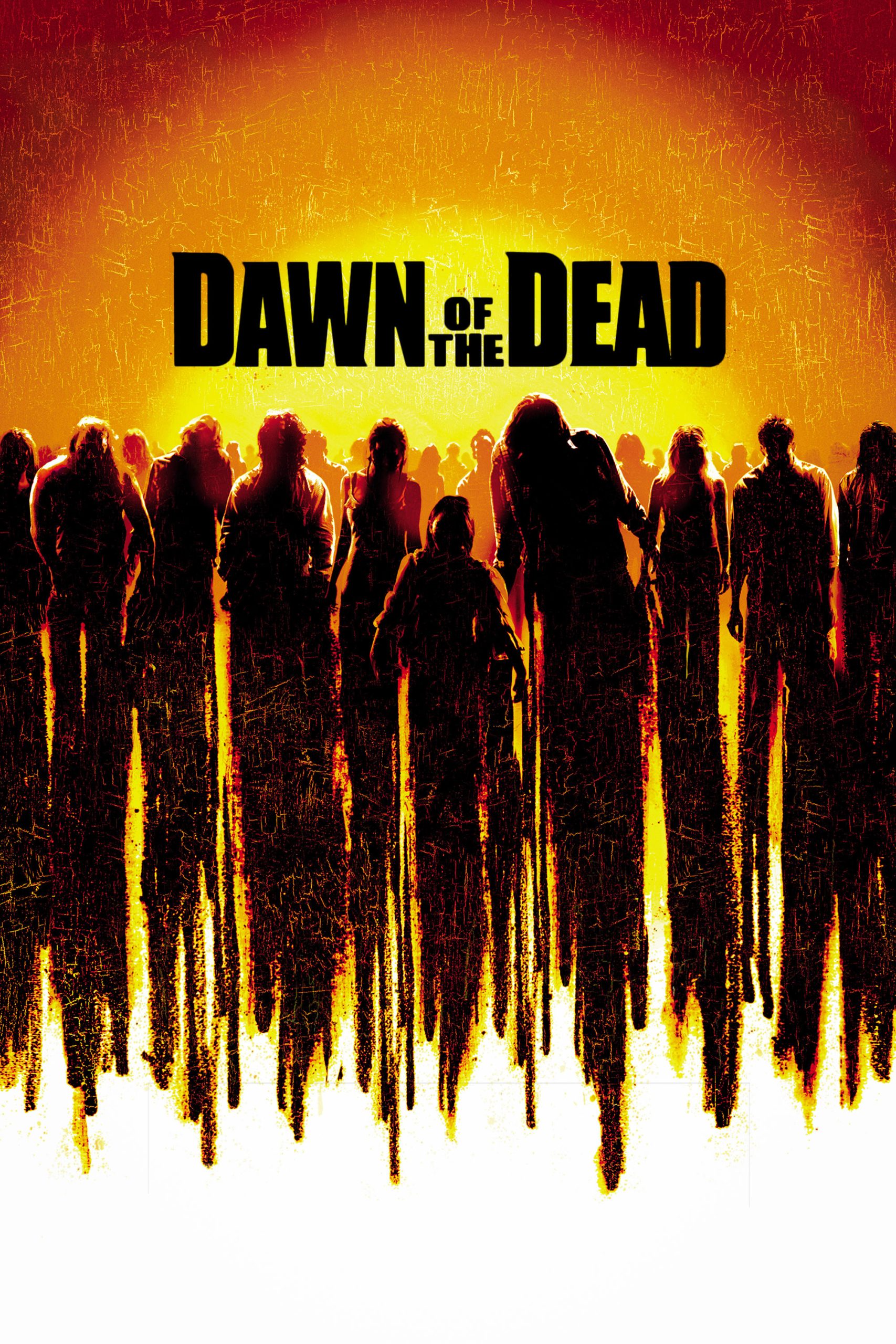
Every time I revisit George A. Romero’s “Dawn of the Dead” (1978), I find myself drawn not only to its vivid horror but to the cinematic lineage it represents. For me, this film is practically a manifesto for the American independent horror tradition that flourished in the late 1960s and 1970s, which I’ve often thought of as a wild, creative response to both the constraints of mainstream studio filmmaking and the disillusionment pervading American society at the time. Yet, “Dawn of the Dead” doesn’t settle into just one box: it straddles the American “New Horror” wave, often referred to as “New American Horror,” and embodies the vital urgency of late exploitation cinema. What strikes me most is how it bridges the countercultural radicalism of the American New Wave with the gory, taboo-shattering drive of exploitation auteurs. Romero’s refusal to deliver clean, comforting narratives aligns him with the radical social critique and pessimism of the period, but the film’s visual and thematic audacity places it firmly within the tradition of the splatter horror subgenre—a movement Romero himself pioneered with his earlier work. I see “Dawn of the Dead” as a linchpin in the evolution of horror, representing both a reinvention and a sharp critique of the genre’s classical roots.
Historical Origins of the Movement
When I look at the historical roots of the movement that spawned “Dawn of the Dead,” I trace it to several overlapping cultural fault lines in the United States. In the late 1960s and through the 1970s, traditional studio filmmaking was faltering. Censorship codes were slipping—most notably with the demise of the Production Code in 1968—and audiences were hungry for films that spoke to the complexities and anxieties of the era. I see the rise of independent, low-budget horror in this period as inseparable from the political and economic instability of post-Vietnam, post-Watergate America. There’s a reason “Night of the Living Dead” (1968) and other gritty, socially pointed horrors went viral (to use today’s parlance): they channeled widespread fears about consumerism, racial tension, and governmental failure, all with an immediacy and bluntness mainstream films lacked.
The movement I identify with “Dawn of the Dead” was partly a backlash, a push against the sanitized, safe spectacles of Hollywood. It was also a declaration of autonomy—here were filmmakers like Romero, John Carpenter, and Tobe Hooper expressing what they wanted, on shoestring budgets, unencumbered by studio taste. I’ve always been fascinated by how horror, considered so peripheral for decades, became a vehicle for addressing America’s darkest truths. Without the censors breathing down their necks or studios demanding “happy endings,” these directors could explore violence, nihilism, and social collapse in a way that felt urgent, almost reckless. Romero, in particular, carved out a subgenre that would come to be labeled as “splatter film,” which, to me, wasn’t just about creating a visual spectacle of gore—it was a strategy for making literal what was once metaphorical in horror. If older films hinted at social decay, Romero showed the flesh falling off its bones.
But “Dawn of the Dead” wasn’t just born from American anxieties. I often think about how its lineage is tangled up with European art cinema and international exploitation. The Italian giallo movement, with its stylized violence and lurid color, deeply influenced the shameless spectacle of gore, and Romero’s own collaboration with Italian filmmaker Dario Argento on the film cements this cross-pollination. In my eyes, “Dawn of the Dead” owes as much to European horror’s willingness to shock and provoke as it does to American indie DIY spirit. That collision of influences is, to me, what sets this period of horror apart—a bold, cosmopolitan refusal to play it safe, and a conviction that horror can speak to the here and now with a directness few genres could match.
This Film’s Contribution to the Movement
When I reflect on “Dawn of the Dead,” I see a film that doesn’t just participate in its movement; it explodes its possibilities. I have always been struck by how Romero expands on the foundations he laid in “Night of the Living Dead.” What I find so radical is how he uses the zombie, a figure once relegated to supernatural parable, as a scalpel to dissect American life—most memorably by turning a shopping mall, that temple of late-’70s consumerism, into a theater of carnage and absurdity. My reading of the film always returns to its use of space: The mall becomes a microcosm for the failures and ironies of American capitalism, with zombies shuffling endlessly past storefronts, enacting a grotesque parody of living consumers. I can’t help but marvel at Romero’s combination of satire and horror—he blurs the lines between the living and the dead not just as a plot device, but as a disturbingly apt metaphor for spiritual emptiness and social inertia.
For me, “Dawn of the Dead” transforms the aesthetic of horror. The stylized explosions of violence, Tom Savini’s practical makeup effects, and the garishly bright blood all mark a turning point: horror here is not only about fear, but about the spectacle of bodily collapse. I always find the film’s explicitness to be both liberating and disturbing—it refuses to let violence be sanitized, insisting that the viewer confronts it head-on. In this way, it advances the “splatter film” ethos, where gore isn’t mere adolescent provocation, but a visual strategy to shatter complacency about violence and decay. Viewed through my own lens, the gore in “Dawn of the Dead” feels purposeful, a collision of shock and social commentary.
Another aspect that continually fascinates me is the film’s character dynamics. Unlike so many earlier horrors, Romero populates his narrative with protagonists who are complex, flawed, and—crucially—diverse. The interracial relationships and the presence of a competent female lead offer a subtle subversion of genre norms for 1970s horror. It seems to me that Romero isn’t just making a horror movie; he’s smuggling in an entire critique of gender, race, and class dynamics within the genre’s framework. I find this particularly meaningful because it cracks open the genre’s possibilities, inviting other directors to grapple with societal fault lines, not just scares.
Finally, “Dawn of the Dead” pushes the boundaries of genre duration and structure. It isn’t content to deliver scares and then wrap up. Through its languorous pacing and alternation between horrific violence and mundane moments, the film dares us to sit with the boredom and monotony of apocalypse—a bold narrative risk that always reminds me how horror, at its best, asks us to face not just monsters, but our own ennui and despair. That, to me, is its greatest contribution: horror as sustained reflection, not just a jolt of adrenaline.
Influence on Later Genres and Films
- Reinvention of Zombie Mythology – I see “Dawn of the Dead” as the single most influential modern zombie text—its vision transformed the zombie from a Haitian folklore figure or supernatural oddity into a vehicle for social satire and existential despair. I can’t think of any subsequent zombie film or series—from “28 Days Later” and the “Resident Evil” franchise to “The Walking Dead”—that doesn’t owe a debt to Romero’s vision of the zombie horde as both threat and mirror to society. The film cemented the idea of zombies as emblematic of mindless consumption and mass behavior, themes that still dominate the genre today.
- Normalizing Graphic Gore and Splatter – When I consider the legacy of “Dawn of the Dead,” what leaps out is its unapologetic embrace of explicit, stylized violence. The splatter film subgenre, with all its gloriously excessive gore, suddenly had permission to go mainstream. This film gave rise to directors and creators who weren’t afraid to treat the body as a site of spectacle, from Peter Jackson’s “Braindead” (“Dead Alive”) to Sam Raimi’s “Evil Dead II.” Even outside horror, I read echoes of Romero’s approach in the violence of Quentin Tarantino and Robert Rodriguez—artists who use carnage as commentary and provocation rather than mindless shock.
- Socio-Political Horror – What excites me most about “Dawn of the Dead” is how it inspired a generation of filmmakers to infuse horror with political and philosophical inquiry. I’m reminded of the way Jordan Peele’s “Get Out” uses genre conventions to decode racism, or how recent films like “Us” and “It Follows” explore society’s collective anxieties through horror allegory. “Dawn of the Dead” proved that the genre could be fiercely intelligent and skeptical—capable of interrogating real-world fears without falling into didacticism.
The Movement’s Lasting Impact
I’m convinced that the horror movement epitomized by “Dawn of the Dead” continues to matter—perhaps more than ever—because it marked the moment when horror stopped apologizing for itself and started owning its role as a social commentator. There’s something uniquely potent about stories that can both terrify and satirize, that expose societal wounds while refusing to offer tidy resolutions. The willingness of Romero and his contemporaries to operate outside the constraints of major studios paved the way for generations of independent filmmakers—each daring to challenge audiences with uncomfortable truths, experimental forms, and unapologetic subjectivity. Every time I watch “Dawn of the Dead,” I’m reminded that horror is at its most radical when it refuses containment: by genre, by audience expectation, or by cultural taboo.
I would argue that this movement laid the foundation for today’s “prestige horror,” which now regularly attracts not just genre fans but mainstream audiences and awards attention. The blending of visceral spectacle with social critique that Romero perfected has shaped my own understanding of the genre’s potential. For me, the real legacy of “Dawn of the Dead” is that it transformed horror’s reputation from disposable entertainment into serious art—a medium uniquely equipped to diagnose and unsettle the world around us. That transformation continues to ripple outward in film culture, challenging me, as both viewer and critic, to keep asking: What are we really afraid of, and what might those fears reveal about the societies we build?
To connect style and technique with broader context, you may find these perspectives useful.
🎬 Check out today's best-selling movies on Amazon!
View Deals on Amazon