
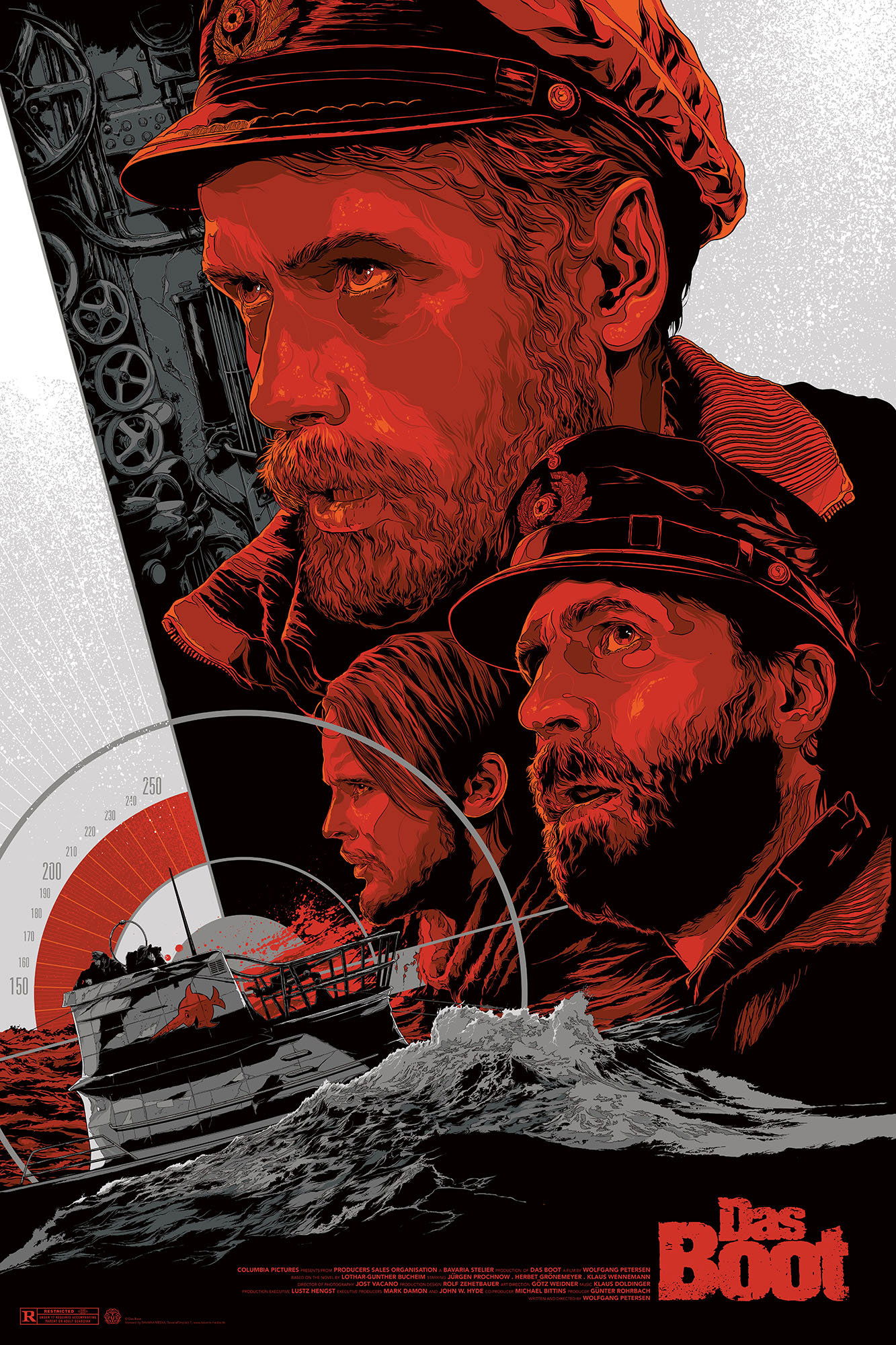
The Genre of This Film
Before I ever heard the steel creak and felt the weight of water above the hull in Das Boot, I already associated it squarely with the war film genre. More specifically, I’ve always experienced it as a war drama, with a tightly focused submarine setting that brings the chaos and relentless claustrophobia of World War II alive in an unusually personal way. For me, the film belongs to the war drama genre because it immerses me in the immediate human experience of battle—far from sweeping troop movements, here the war is intimate, relentless, and psychological. The film’s visceral impact emerges from how stealth, endurance, and survival become the primary currencies, and there’s no escaping the confrontations of fear, leadership, and camaraderie that I see as defining hallmarks of great war dramas. Rather than glorifying battle or strategies, the film traps me inside the tension and monotony of the U-boat, making the wartime realities intensely personal and, therefore, all the more harrowing.
Key Characteristics of the Genre
- Common themes
When I think about war dramas, I instantly recall the way they gravitate toward gigantic themes: sacrifice, loss, the absurdity of conflict, bravery under pressure—not just on the battlefield but in how characters react to seemingly everyday moments between battles. Most of the classics I gravitate toward also explore the erosion or testing of moral certainties and focus on how ordinary people navigate or are deformed by the violence and politics around them. The struggle is never merely external—the question always becomes what war does to the internal landscape of the people trapped within it. - Typical visual style
My mental images of the war drama genre are often washed in muted palettes—grays, blues, khakis, muddy colors that whisper desperation or fatigue. These films are very physical, with a focus on grime, sweat, uniforms, weapons, and settings that feel uncomfortably lived-in. There’s a constant sense of tightness and immediacy in their camerawork: whether it’s a hand-held camera snaking through foxholes or the unyielding confinement of a submarine corridor. Natural and practical lighting—flickering bulbs, flashes from above, the phosphorescent glow of instrument panels—make those environments tactile, augmenting the sensation that I am right there with the crew. - Narrative structure
For me, the heartbeat of the war drama is an escalating, episodic structure where simmering tension is interrupted by spikes of chaotic, unpredictable action. Often there’s an initial calm—possibly even moments of humor or routine—before the rhythm of threat and response kicks in, punctuated by quiet aftermaths. These stories rarely adhere to straightforward heroics; instead, they thrive on ambiguity and reversals, subverting expectations about victory or defeat. I find the pacing deliberately uneven, to mirror real wartime experience: prolonged boredom or terror interrupted by sudden, intensely compressed moments of crisis that leave scars on the survivors and the viewer alike. - Character archetypes
In my experience, the genre always invites a cross-section of personalities that bounce off one another under pressure. There’s almost always a conflicted leader—someone whose authority is constantly being tested by events beyond their control. Beside them, I find an ensemble reflecting a microcosm of society: the hardened veteran, the idealistic newcomer, the skeptic or cynic, the comic relief (often a way to stave off despair), and sometimes the figure who carries the audience’s own perspective—often an outsider or observer. Bonds between these characters aren’t necessarily built on friendship, but on the enforced intimacy and interdependence of war, which the best films use to strip away facades and expose the raw mechanics of courage, fear, loyalty, and, sometimes, betrayal.
How This Film Exemplifies the Genre
Every time I watch Das Boot, I get swept up in how it distills the war drama right down to its tense, human core. Instead of grand battlefield panoramas, I am imprisoned with the crew in the iron belly of a U-boat, squeezed between torpedoes and bunks, and forced to ride the same emotional rollercoaster as they do. The tension isn’t only in the gunmetal settings or depth charge attacks, but in the psychological toll that constant alertness extracts from every man aboard. That’s what strikes me the hardest: I am never allowed to watch from a safe emotional distance. The director, Wolfgang Petersen, draws out every bead of sweat and flare of desperation, so the typical distance between audience and warfare collapses. Scenes linger on faces, on hands trembling over instruments, on gnawed nails and brief, haunted laughter—it’s in these details that I see what the war drama does best: force its characters into making impossible, often soul-shrinking choices.
For me, the film’s structure is quintessential: boredom interrupted by horror. Long sequences depict routine, repetitive, almost maddeningly slow daily life punctuated by sudden, deafening, and deadly crisis. It’s a structure that always makes the danger feel more real. I especially appreciate how the camaraderie isn’t forced—sometimes it’s playful, sometimes resentful, always respectful of how proximity and necessity breed relationships no one would have imagined in peacetime. The archetypal figures are all present: the exhausted commander torn between professional duty and personal vulnerability, the rookie correspondent who can barely process the realities he’s recording, the skeptical officers and the men who look to humor or storytelling to survive another hour. Each confrontation, each brief taste of hope or despair, reminds me why war drama endures as a genre and why Das Boot is one of its purest expressions—its focus is always the human soul under unspeakable pressure.
Other Essential Films in This Genre
- Paths of Glory (1957) – In my mind, this Stanley Kubrick film stands as one of the most scathing portraits of the futility and hypocrisy of war. I admire how it confines most of its action to trenches and courtrooms, making every personal and strategic decision a matter of life and death—and highlighting, for me, the ways war twists morality until it becomes almost unrecognizable.
- The Thin Red Line (1998) – I’ve always been fascinated by how Terrence Malick reimagines the World War II drama, layering philosophical ruminations over lush, almost indifferent landscapes. What really moves me is how he lets the inner voices of soldiers bleed through the chaos, so nature and conflict become intertwined and the characters are defined as much by what they think and feel as what they endure.
- Stalingrad (1993) – Watching this German production, I can’t help but draw parallels with Das Boot in its relentless focus on disintegration—of morale, of body, of purpose. The agony of the Eastern Front and the winter siege conveys a similar collapse of certainty and control, which, for me, is central to the genre’s emotional resonance.
- Aces High (1976) – I return to this World War I aviation film when I want to see how the intimacy and tragedy of war drama can play out above the clouds. What sets it apart in my viewing is how it embodies the sense of escalating dread and hopeless repetition, as young pilots’ fates seem sealed before they ever leave the ground.
Why This Genre Continues to Endure
There’s always an urgency I feel in war dramas that I can’t quite find anywhere else in cinema. What keeps me coming back is the blend of high-stakes intensity and stripped-bare character study; no other genre makes people reveal themselves from the inside out under such duress. Even as the specifics of conflict change with the times, the central questions—how should one act when so much is at stake, what does loyalty mean, can hope survive trauma—remain universal. I think it’s the ambiguity and absence of neat resolutions that make these films profoundly, sometimes uncomfortably, relevant. Whether it’s the camaraderie I see between crew members on a doomed U-boat or the haunted silences of survivors trying to make sense of the senseless, these stories acknowledge that, in war, easy answers don’t exist.
I find that audiences seek these films not only for spectacle or suspense but because, on some level, we want to measure ourselves against extremes—wondering what we would do, how we would endure, or if we’d buckle and break. The tensions of confinement, hierarchy, and raw survival continue to offer piercing metaphors for contemporary struggles—personal, political, and social. But at the end of the day, I return to war dramas like Das Boot because they approach history not as dates and data but through lived, deeply textured human experience, turning collective trauma into stories that echo through generations. That’s why, for me, the war drama remains as compelling and necessary as ever.
If you’re interested in how viewers respond beyond technique, you may want to explore audience and critical reception.
🎬 Check out today's best-selling movies on Amazon!
View Deals on Amazon