
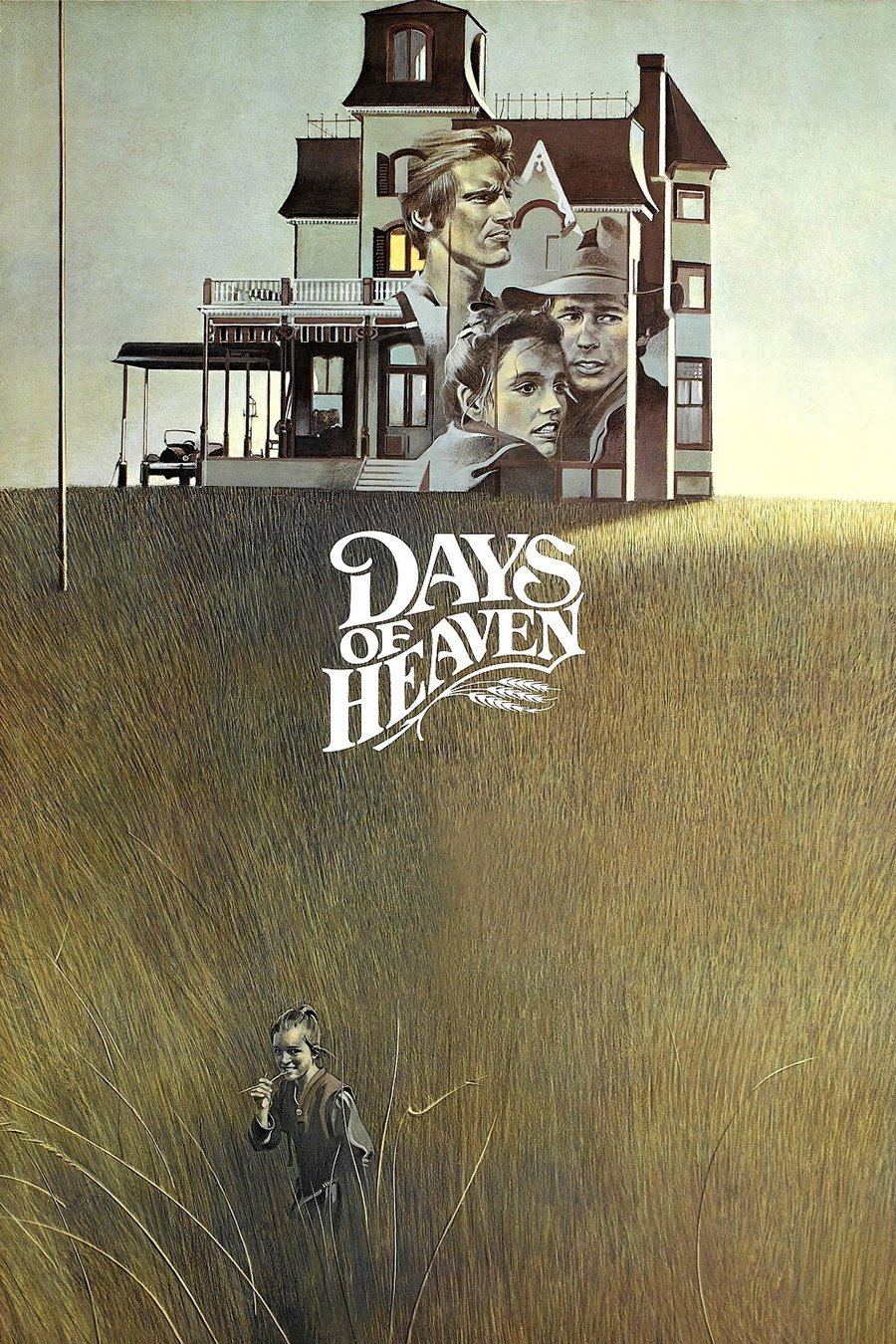
The Genre of This Film
From my very first encounter with “Days of Heaven,” I was struck by how strongly it aligns with the American romantic drama, inflected with pastoral and period elements that blend it into the unique space often described as the “historical drama.” When I think about genre, I’m rarely content to just slap a label on a film. Instead, I like to consider how the film lives and breathes within its narrative tradition, what cinematic language it speaks, and what emotional register it strikes. “Days of Heaven” exudes the spirit of romantic drama — not in the sense of a simplistic love story, but rather as an elegiac meditation on human emotion, longing, exile, and tragic choices, all against the evocative backdrop of rural America in the early twentieth century. What makes me so steadfast in this genre assignment is the way the movie pairs sweepingly romantic visuals and music with stories of love, betrayal, and yearning, hallmarks that always feel to me like the signposts of a true romantic drama. At the same time, its period detail and agrarian setting reveal a deep fascination with the texture of the past — right in line with what I expect from a historical drama that foregrounds atmosphere and setting in shaping its emotional core.
Key Characteristics of the Genre
- Common themes
- Typical visual style
- Narrative structure
- Character archetypes
When I think of classic romantic dramas, I inevitably find myself reflecting on themes like forbidden love, class division, fate, displacement, and the consequences of passionate decisions. These films tend to dwell on how emotion drives people across lines of morality and social expectation. There’s frequently a sense that love — in whatever form — will collide with outside forces: economic hardship, social disapproval, or the demands of a changing world. Historical dramas, especially those like “Days of Heaven,” take these intimate themes and amplify them by setting them in eras of significant transformation, often using history’s sweep to emphasize the powerlessness of individuals in the face of larger forces. For me, it’s the collision of intense internal states with inexorable external change that marks the genre so vividly.
Visually, romantic and historical dramas evoke a painter’s touch: golden fields, enormous skies, dilapidated mansions or farms, costumes rich with period accuracy — all rendered with more emphasis on mood than action. I always notice how these films use light, often lingering over sunsets, candle-lit rooms, or other moments where the natural world seems to participate in the drama’s emotional current. The camera work is often patient, favoring long takes, gliding movements, and compositions that highlight both isolation and intimacy. In my view, the visual style is not just decorative but essential, investing the personal conflicts of the characters with mythic weight.
I’ve come to recognize a pattern in the way romantic dramas, particularly those with a historical flavor, structure their narratives. There’s a deliberate pacing — slow yet purposeful — that mirrors the gradual unfolding of emotional revelations. Exposition is frequently restrained or non-linear, sometimes even filtered through the subjective narration of a character, lending the events a storybook or folk-tale quality. Conflicts arise not simply from plot mechanics but from the agony and ecstasy of love itself: a love triangle, unspoken desires, quiet betrayals, or the tug-of-war between aspiration and necessity. For me, the narrative’s shape is always informed by a sense of inevitable tragedy or bittersweet resolution, often foreshadowed by the landscape or setting.
Romantic and historical dramas love their archetypes, but not in the sense of cardboard cutouts. There’s the dreamer — someone who wants more from life and love than the world is willing to grant. There’s the innocent or naif, whose perspective brings a kind of unworldly purity. I frequently spot characters shaped by their environment: itinerant laborers, melancholy landowners, figures of authority representing social order, and sometimes children who witness the actions of adults with bafflement or awe. All stand for complex ideas: longing, ambition, fragility, and the cost of pursuing or forsaking love. It’s the subtle spinning of characters like these that keeps me enraptured, reminding me that archetypes, when layered and humanized, still have enormous power in cinema.
How This Film Exemplifies the Genre
From the gentle opening moments all the way through to its haunting conclusion, “Days of Heaven” strikes me as the epitome of a romantic drama seen through the lens of historical transformation. What most compels me is how the film uses every resource at its disposal — narration, cinematography, score, and environment — to build an almost mythic ambiance around the simplest of emotional dilemmas. I notice immediately that the romance at the center is not one of unalloyed happiness but driven by desperation, deception, and the ache for a better life. The relationships depicted are fraught, contingent upon circumstance as much as feeling, which for me is a classic trait of the genre: love threatened by fate and class.
The aesthetic language here is perhaps the purest expression of what I expect from this cinematic tradition. As I watch, I’m hyper-aware of the way the camera lingers on wheat fields, distant storms, and the constant glow of the setting sun. These choices are never idle; they lend a near-spiritual quality to the drama, underscoring the vulnerability of its characters amid the grandeur and indifference of nature. Moments where dialogue recedes and music rises — a particular favorite of mine — are plentiful, binding emotion to the very landscape itself. I am always left with the impression that internal and external worlds are deeply entwined, just as they should be in a great period romance.
Perhaps most revealing is how the film structures its narrative. Rather than offer tidy exposition, it largely unfolds through the eyes and voice of an innocent bystander — a young girl whose outsider perspective lends the entire tale an elusive, almost fable-like energy. This framing device is immensely effective: I feel the narrative sliding into memory, half-remembered and tinged with melancholy, as if the very events are slipping away with time. The slow pacing invites me to inhabit these moments, not rush past them, and rewards attention with subtle shifts in character and setting.
Characterization, too, speaks to the genre’s conventions — and its willingness to complicate them. The leads each embody, yet transcend, their archetypes: there’s the yearning lover, the tragic idealist, the naïve observer, and the enigmatic patriarch. What I appreciate most is that none are reduced to mere functions of the plot. Each is animated by longing, vulnerability, and the ever-present shadow of loss. Their decisions, even when destructive, never feel arbitrary but are rooted in circumstance and emotion. Watching these relationships unfold, I’m reminded why historical and romantic dramas so often achieve a kind of universality in their storytelling — it’s not simply about the trappings, but about grounding emotional conflicts in a world that feels as tactile and real as our own memories.
Other Essential Films in This Genre
- “Gone with the Wind” (1939) – This is the North Star for many romantic dramas, especially those set against grand historical backdrops. Anytime I revisit it, I’m swept up not just by its epic scope or iconic performances but by how the romance between Scarlett O’Hara and Rhett Butler is shaped by, and ultimately subordinate to, the immense social upheaval of its era. For me, it’s a film where personal longing and historical transition are utterly inseparable.
- “Out of Africa” (1985) – Every time I watch this film, I marvel at how it takes the conventions of the romantic drama and transposes them onto the vast, sun-drenched landscapes of colonial Kenya. The love story is at once intimate and epic, suffused with yearning, melancholy, and the sense that the past cannot be reclaimed — all themes and moods I also find in “Days of Heaven.”
- “Far from Heaven” (2002) – In Todd Haynes’s exploration of 1950s American suburbia, I see a modern riff on mid-century melodrama and romantic longing. The emotional restraint, lush visuals, and quietly devastating social conflicts all echo the classic strategies of the genre, reminding me that even contemporary films wield these conventions to powerful, nuanced effect.
- “The Remains of the Day” (1993) – I’m always struck by how this film distills the tension between personal duty and unspoken emotion. Set within a historical frame — the postwar English countryside — it’s a masterclass in the genre’s ability to plumb the depths of repression, regret, and the fleeting nature of true connection. Its careful construction and subtle performances stand as a testament to the enduring power of romantic and historical drama.
Why This Genre Continues to Endure
Whenever I reflect on why romantic and historical dramas continue to captivate audiences, I return to a central truth: this genre mines the deepest veins of human experience. Every time I immerse myself in films like “Days of Heaven,” I find myself drawn in by the promise of love in the shadow of loss. These stories offer a space where feeling is unashamedly central, where yearning is given its due, and where the past is not something distant but intimately alive. The appeal, for me, lies in their generosity towards human emotion — these works ask not for cynicism but for feeling, for a willingness to be moved by the sight of a lover across a golden field or a single, fateful decision made in a moment of need.
I also believe that the genre’s visual and narrative beauty has a restorative power in an often disenchanted, frantic world. Whether it’s the sunlight slanting across a prairie, the swirl of period costume, or the solitary figure against an endless horizon, these images refresh my sense of the poetic possibilities of cinema. As a viewer and analyst, I find myself returning to these films whenever I crave a reminder that film can still be art, and emotion can still be the heart of the spectacle.
What endures, finally, is the way these dramas render the specific universal. Through meticulously recreated pasts and particularized romances, they manage to reflect fears, hopes, and desires that feel as relevant now as ever. We still long, suffer, and dream; we still reckon with the forces of history and fate. For me, this is the secret of their appeal — an ability to make me feel, across any gulf of time or place, that my own life is part of some grand, tragic, and beautiful tradition.
If you’re interested in how viewers respond beyond technique, you may want to explore audience and critical reception.
🎬 Check out today's best-selling movies on Amazon!
View Deals on Amazon