
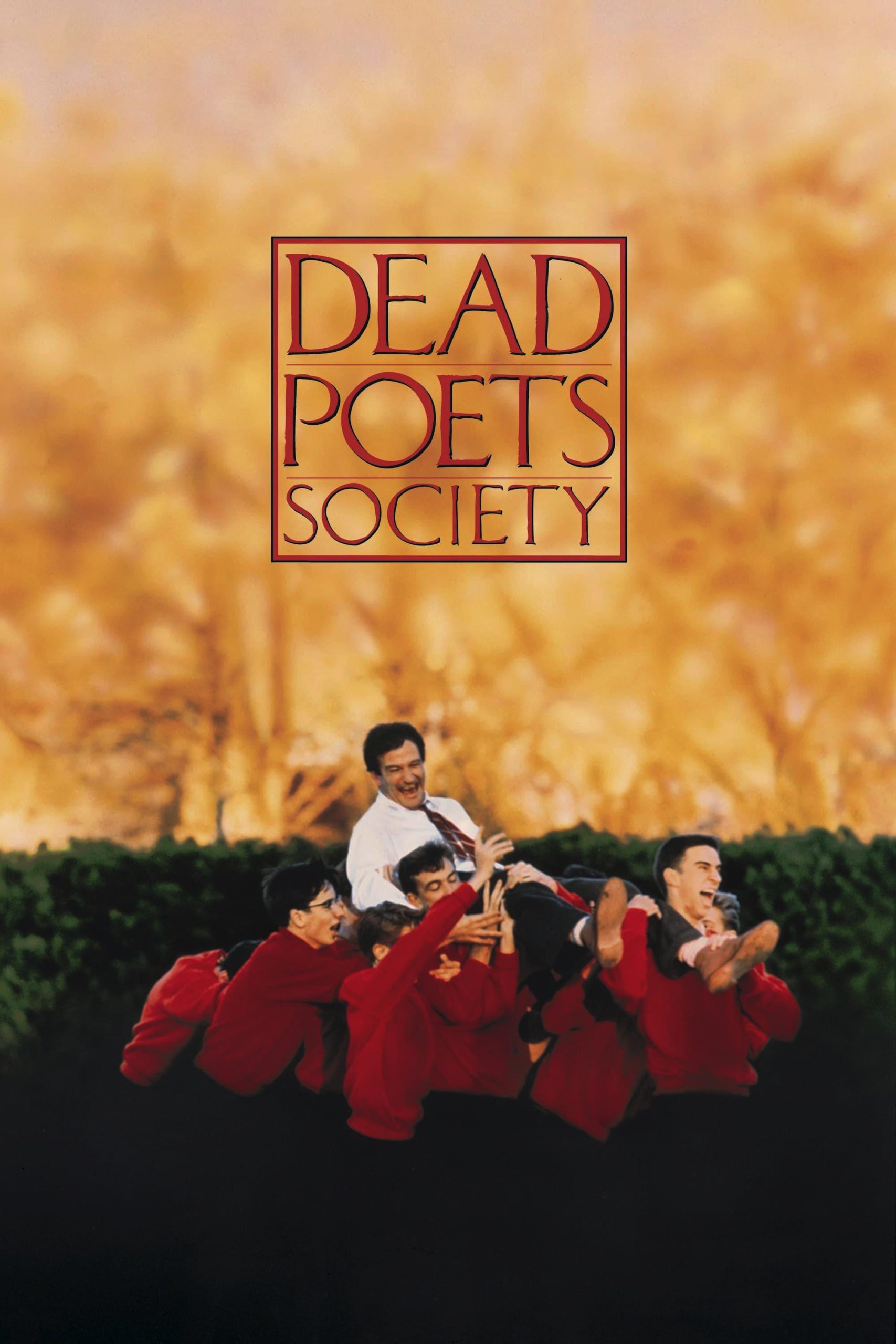
Film Movement Context
Thinking back to my first encounter with Dead Poets Society, I remember being instantly swept up in its atmospheric melancholy, the sense of longing that breathes through every corridor of Welton Academy. Yet, as I ponder the film’s place within the canon of cinema, I don’t see it simply as a “coming-of-age” piece or just another school drama. Instead, I’d argue it’s intricately woven into the fabric of the late 20th-century American Humanist film movement. For me, this film resonates most as a meditation within Humanist cinema—those works that grapple with existential meaning, individual agency, and societal conformity, and that use poetic style to pull the audience into these deeply personal struggles.
When I revisit the film, I’m always reminded that Humanist cinema, especially the American iteration from the late 1970s through the early 1990s, was less a formalized movement and more a collection of filmmakers and storytellers intent on dignifying the emotional and intellectual quests of ordinary people. I see Dead Poets Society as a crystallization of this trend—poised somewhere between the institutional critique of 1970s American New Wave films and the earnest spirit of character-focused independent cinema gaining ground in the late ’80s. The movement here is less about camera trickery or narrative innovation than about the searching, unguarded interiority of its characters.
Historical Origins of the Movement
My own sense of American Humanist cinema’s origins traces back to a cultural exhaustion felt by filmmakers and audiences in the aftermath of the Vietnam War, Watergate, and a decade of political disillusionment. Directors like Hal Ashby, Robert Altman, and later Peter Weir (who made Dead Poets Society) gravitated toward stories about individuals wrestling with institutional rigidity and the crushing expectations of tradition. I’m struck by how, collectively, this movement grew in response to the hard-boiled cynicism of New Hollywood and a mounting desire to restore meaning and ethical substance to film narratives.
It’s no accident, I think, that directors of this loose movement foregrounded teachers, doctors, artists, and adolescents—characters who seemed forever caught between their burgeoning ideals and the discouraging pressure of established social norms. During the 1980s, this impulse took on a new urgency, matched by a cultural longing to reclaim the lost possibilities of youth and individual purpose in an era increasingly defined by careerism, consumerism, and restrictive educational systems. I see films like Stand and Deliver and Educating Rita as spiritual siblings to Dead Poets Society—all portraits of intellectual and emotional awakening in the face of bureaucratic inertia.
Yet what’s crucial here, in my view, is how these films refuse to treat rebellion as mere spectacle. The movement’s filmmakers—among whom Peter Weir is key—draw their power not from overt revolution or radical aesthetic departures, but from a slow-burning, intimate focus on what it feels like to desire more from life than what the world offers. It’s this emotional authenticity, played out quietly through dialogue, gesture, and environment, that forms the beating heart of Humanist cinema. For me, Dead Poets Society sits at the movement’s apex because it dramatizes not just the costs of nonconformity but the agony of yearning itself.
This Film’s Contribution to the Movement
Whenever I return to Dead Poets Society, I’m struck less by its narrative twists than by its stubborn belief in the transformative potential of art—both poetry and film itself. There’s a vulnerability to each of Weir’s compositions, a trust in letting characters breathe and doubt, that I see as central to Humanist film. More than many contemporaries, Weir deploys the language of cinema—lingering shots, chiaroscuro lighting, and carefully orchestrated silences—not merely to tell a story but to draw the audience into a web of competing desires and ethical dilemmas. To me, that’s profoundly more affecting than any didactic messaging ever could be.
I’m compelled by how the film renders authority both omnipresent and brittle. The figure of Mr. Keating, played by Robin Williams with luminous restraint, isn’t simply a rebel or an iconoclast; he’s flesh and bone, wounded by his own history. This deeply layered characterization feels, to me, utterly in step with the Humanist movement’s determination to probe the intersections of personal conviction and institutional constraint. As a historian, I see the choice to anchor the film in the late 1950s not as mere period nostalgia, but as a way to amplify the timeless cycles of adolescence—the pain of lost innocence and the pressures that try to shape young minds into predictable adulthood.
Above all, what distinguishes Dead Poets Society within Humanist cinema, at least to my eyes, is its refusal to offer easy catharsis or unambiguous heroes. The film’s famous rallying cry, “Carpe Diem,” is wielded less as a slogan than a provocation—a dare to risk uncertainty in pursuit of authenticity. The aftermath of tragedy is not resolved, but lingers, haunting both the boys and the viewer with the stakes of seeking one’s voice. This devotion to emotional uncertainty, to ambiguity as a condition of genuine experience, feels, to me, like the movement’s most radical gesture. The film advances Humanist cinema by challenging us not just to empathize, but to remain unsettled by its moral complexity long after the credits roll.
Influence on Later Genres and Films
- Influence 1 – Reshaping the School Drama: I’m often amazed by how Dead Poets Society reconfigured the conventions of the school-set drama for decades to follow. While classroom films existed before, this movie introduced a new seriousness about adolescent longing and existential choice. After this, I saw an influx of films—from Rushmore to The Emperor’s Club—that treated the emotional lives of students and teachers as fertile ground for probing questions about purpose, individuality, and the price of conformity. The sense of academic space as both a battleground and a sanctuary owes everything, in my mind, to the path struck by this film’s meditative tone and ethical concerns.
- Influence 2 – Complex Portrayal of Educators: For me, one of the subtlest but most pervasive legacies is how teachers are depicted onscreen. Mr. Keating’s blend of humility, playfulness, and haunted vulnerability shattered the simple mold of teacher-as-martyr or teacher-as-villain. I notice subsequent educator characters, whether in Good Will Hunting or Akeelah and the Bee, bear the imprint of Weir’s approach—insisting that mentorship is fraught, the teacher as lost and searching as the student. I think this has humanized the genre, permitting richer, more three-dimensional stories about learning as a collaborative, often fraught, process.
- Influence 3 – Mainstreaming Philosophical Themes in Youth Cinema: One of the most rewarding legacies for me is how Dead Poets Society paved the way for mainstream movies to wrestle openly with philosophical questions. Concepts like “seizing the day” or questioning received wisdom now animate films as different as The Perks of Being a Wallflower and Lady Bird. I’m convinced that the willingness of millennial coming-of-age movies to explore alienation, purpose, and authenticity—rather than just romance or rebellion—flows straight from the precedent set by this movement. Young protagonists are now expected, not just permitted, to have intellectual and existential yearnings.
The Movement’s Lasting Impact
If I’m honest, what keeps me returning to American Humanist cinema, and to Dead Poets Society especially, is its capacity to keep the conversation unfinished. The films are less about giving viewers answers than about dramatizing the turbulent, ongoing search for meaning in a world that rarely accommodates it. In my experience, this movement endures because it gives shape to the interior lives of characters—and, by extension, to ours—without shrinking from the difficulty, or even the danger, of asking “why” and “how else.”
I am moved by the way Humanist cinema legitimizes doubt and longing as components of character, refusing to caricature rebellion or prescribe tidy formulas for fulfillment. In classrooms, homes, and solitary moments, these films insist that dignity arises from questioning, and from the courage to face consequences, not from mere achievement. As an analyst and viewer, I constantly find myself drawn to revisit these works, recognizing in them a kind of cinematic empathy that acknowledges the ordinary heroism in uncertainty, mentorship, and self-invention.
For me, the long shadow cast by these films is seen every time a movie slows down to truly listen to its characters, or when a seemingly ordinary conflict—between a student and a teacher, a son and a father—becomes the arena for epic soul-searching. The movement still matters, not because it prescribes solutions, but because it dares to frame the lives of young people, educators, and misfits as worthy of philosophical attention. Dead Poets Society, in particular, matters to me because it remains a touchstone for art that honors both the beauty and the pain of seeking to live authentically, even when that quest ends in heartbreak.
To connect style and technique with broader context, you may find these perspectives useful.
🎬 Check out today's best-selling movies on Amazon!
View Deals on Amazon