
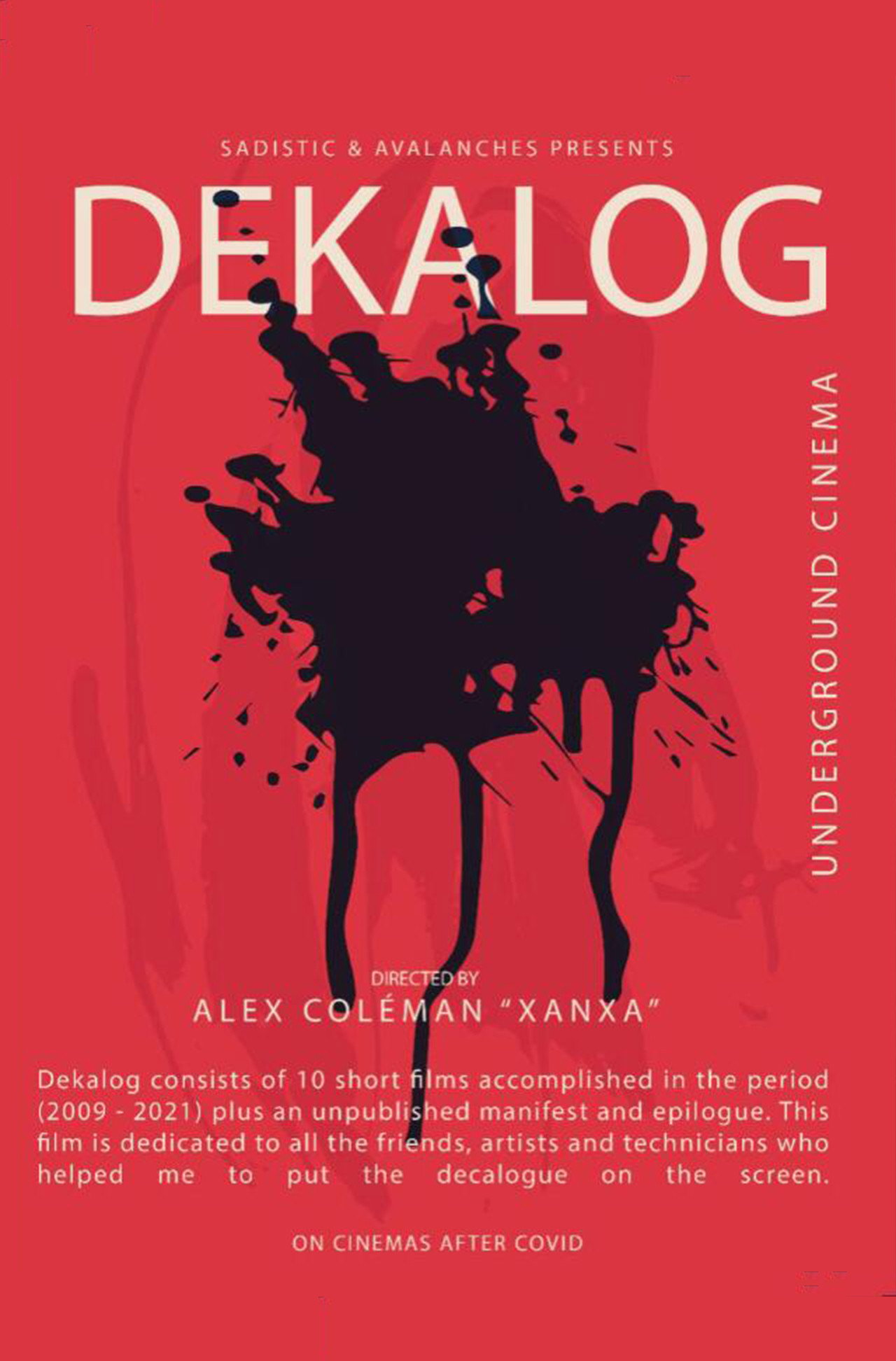
The Genre of This Film
When I first encountered “Dekalog,” I was immediately struck by how it refused the straightforward boundaries of conventional narrative, forcing me to consider what truly constitutes the modern drama. For me, the series stands as an exemplar of philosophical drama—a genre that fuses intimate human experience with intellectual and ethical inquiry. “Dekalog” achieves this through its meditations on morality, responsibility, and the deep ambiguities of choice, all inspired by the framework of the Ten Commandments. I perceive drama here not simply through depictions of conflict or crisis, but through the ongoing struggle of characters wrestling with intangible, existential stakes. What sets this apart, in my view, is the rare emphasis on philosophical questioning as a dramatic engine. The essence of the drama genre is heightened within “Dekalog” by rooting tension in the personal and the philosophical, blurring the line between individual fate and universal quandaries.
Key Characteristics of the Genre
-
Common themes
When I think about philosophical drama, I immediately associate it with stories that probe the ethical, spiritual, or existential dimensions of human life. The genre routinely explores themes like the conflict between personal desire and ethical responsibility, the unknowability of truth, fate versus free will, the limits of forgiveness, and the loneliness that often arises from moral decision-making. In my experience, these dramas insist that the audience ask themselves, “What would I do in this situation?” rather than simply observe the choices of others. -
Typical visual style
In my eyes, the philosophical drama emerges visually as something understated, subtle, and often meticulously composed. Muted color palettes, naturalistic lighting, and static or composed camera work contribute to a feeling of realism and emotional proximity. There’s a kind of visual honesty to these films—they don’t rely on spectacle or visual manipulation, but rather on framing the actor within their particular environment, accentuating the psychological landscape of the story. Often, the camera lingers on faces caught in moments of doubt or pain, making the viewer feel complicit, almost as though eavesdropping on a personal revelation. In “Dekalog,” I remember how the gray, wintry Polish housing estate became a kind of blank slate, letting the characters’ interior lives dominate. -
Narrative structure
What I love most about the philosophical drama is its elasticity in narrative structure. While traditional dramas tend to build towards clear resolution, I often find that philosophical dramas are content with ambiguity, open-endedness, or even anti-climax. These stories embrace nonlinear narrative, elliptical plotting, and sometimes modular structures—each episode or segment might stand alone while echoing a larger idea. “Dekalog,” with its ten-part, loosely connected structure, epitomizes this. For me, the pleasure lies in following the way these pieces rhyme with one another, allowing themes to echo without spelling out clear answers. This genre, as I see it, mirrors the slipperiness of real-life dilemmas rather than confining itself to dramatic closure. -
Character archetypes
I have always found that philosophical dramas thrive on complex, morally ambiguous protagonists. Rather than archetypes defined by clear desires or goals, these characters exist in a fog of doubt—they are citizens, parents, lovers, friends, each defined more by their questions than their certainties. The genre often includes ethical bystanders, silent witnesses, and figures who provoke introspection, such as the enigmatic observer in “Dekalog.” These characters invite us to interrogate our own beliefs because, unlike in more plot-driven drama, the drama here is internal as much as external. I find myself drawn to the small, intimate gestures and regrets that pass between these people, each stemming from their struggle to reconcile lived experience with abstract ideals.
How This Film Exemplifies the Genre
No other work of cinema captures the spiritual flavor of philosophical drama as completely as “Dekalog.” From the first episode, I found myself confronted not just with characters but with their internal deliberations—the inner debates that are never really resolved. Each segment approaches an elemental aspect of life (family, faith, honesty, loss), yet does so with a specificity that feels staggering. The setting, a drab Communist-era housing block in Warsaw, acts as the perfect psychological backdrop—a landscape neither overtly oppressive nor comforting, instead mirroring the ambiguity in which these characters live. The mood is somber and introspective, with few distractions from the moral or emotional gravity of the situations.
What I find particularly defining is Kieslowski’s refusal to preach or provide didactic solutions. Each episode presents a scenario that, while rooted in everyday existence, spins out into profound philosophical contemplation: a teacher guiding his son through questions of science and faith, a woman deciding what truths can be told to her dying relative, a man wrestling with the legacy of love and guilt. These are not melodramatic crises but subtle, sometimes mundane collisions between principle and passion. Watching, I am reminded again and again that philosophical drama is less about the event itself than about the aftermath—the silent, sometimes tortured reflection upon what’s been done or left undone.
The stylistic choices make the experience even more immersive for me as a viewer. Kieslowski employs understated beautiful cinematography and long, unhurried takes; the camera seems to wait for emotional resonance, trusting the audience to meet the film on its own terms. Emotional highs are rare; instead, the emotional depth emerges through silence, pauses, or the shifting expressions on the actors’ faces. The presence of a silent onlooker, recurring across episodes, reinforces the idea that we, too, are observers—responsible not just for what we see, but for how we respond. The absence of narrative closure in many episodes strikes me as the greatest fidelity to the genre: life, after all, rarely offers final answers.
What stays with me, long after watching, is how “Dekalog” invests unassuming lives with cosmic significance. The minutiae of everyday existence—a quarrel, a careless word, an honest mistake—spiral outward into touching, often tragic inquiry. This is the heart of philosophical drama as I experience it: encouraging the audience to feel both the vastness and the intimacy of ethical struggle.
Other Essential Films in This Genre
-
“Winter Light” (1963, dir. Ingmar Bergman) –
Whenever I think about films probing spiritual and existential crises, Bergman’s “Winter Light” stands out. Here, the drama hinges entirely on a pastor’s hollowing loss of faith during a single wintry afternoon. The film languishes in silences and tense, muted conversations, encapsulating the loneliness and doubt often found at the core of philosophical drama. It forces me, as a viewer, to sit with questions about faith, duty, and human frailty. -
“The Double Life of Véronique” (1991, dir. Krzysztof Kieslowski) –
Kieslowski’s work has always spoken to me in its focus on metaphysical uncertainty. “The Double Life of Véronique” tells two parallel lives—one in Poland, another in France—each echoing the other in mysterious, poetic ways. The sense of interconnected fate and spiritual yearning is palpable, with ambiguity reigning supreme. Watching it, I am reminded how philosophical drama revels in unexplained phenomena and the mysteries of existence. -
“Three Colors: Blue” (1993, dir. Krzysztof Kieslowski) –
Another Kieslowski masterpiece, “Blue”, utilizes the thematic aftermath of bereavement to explore both personal freedom and moral obligation. The main character’s attempt to extricate herself emotionally from the past is rendered through quiet observation and internal struggle. The film’s use of color, silence, and musical motifs allows me to experience the protagonist’s inner world—rarely does a drama feel this deeply subjective. -
“A Separation” (2011, dir. Asghar Farhadi) –
Farhadi’s “A Separation” examines the breakdown of a marriage and its twin impacts on family and justice within Iranian society, never resorting to simple answers. For me, the genius of the film lies in its narrative ambiguity—every character is both sympathetic and flawed, every decision admirable and questionable in equal measure. I find myself drawn into the same spiral of ethical confusion as the protagonists, which is exactly where philosophical drama intends to place its audience.
Why This Genre Continues to Endure
When I reflect on the enduring appeal of philosophical drama, I keep returning to its uncommon honesty. Audiences, myself included, tend to hunger for works that dignify internal struggle, that don’t gloss over the messiness of what it means to live with conscience. In a world cracking with cynicism, distraction, and showmanship, the genre’s slow, reflective pace can feel like an act of resistance. I find myself grateful for filmmakers who resist the rush to conclusion, who invite uncertainty into the frame, who let awkward silence and unresolved questions lead the way.
People change, technologies evolve, but the core dilemmas—regret, yearning, responsibility, guilt—linger unchanged. The philosophical drama gives us permission to pause and reckon, to see ourselves reflected in stories that embrace ambiguity and heartbreak. What moves me most is the genre’s generosity toward human limitation; it refuses to condemn, choosing instead to trace how people persist in the search for understanding. In that search, audiences discover not only the characters’ humanity but their own. That reciprocity, that difficult kinship across the screen, is why I return to these films, and why so many others keep watching, year after year.
If you’re interested in how viewers respond beyond technique, you may want to explore audience and critical reception.
🎬 Check out today's best-selling movies on Amazon!
View Deals on Amazon