
Film Movement Context
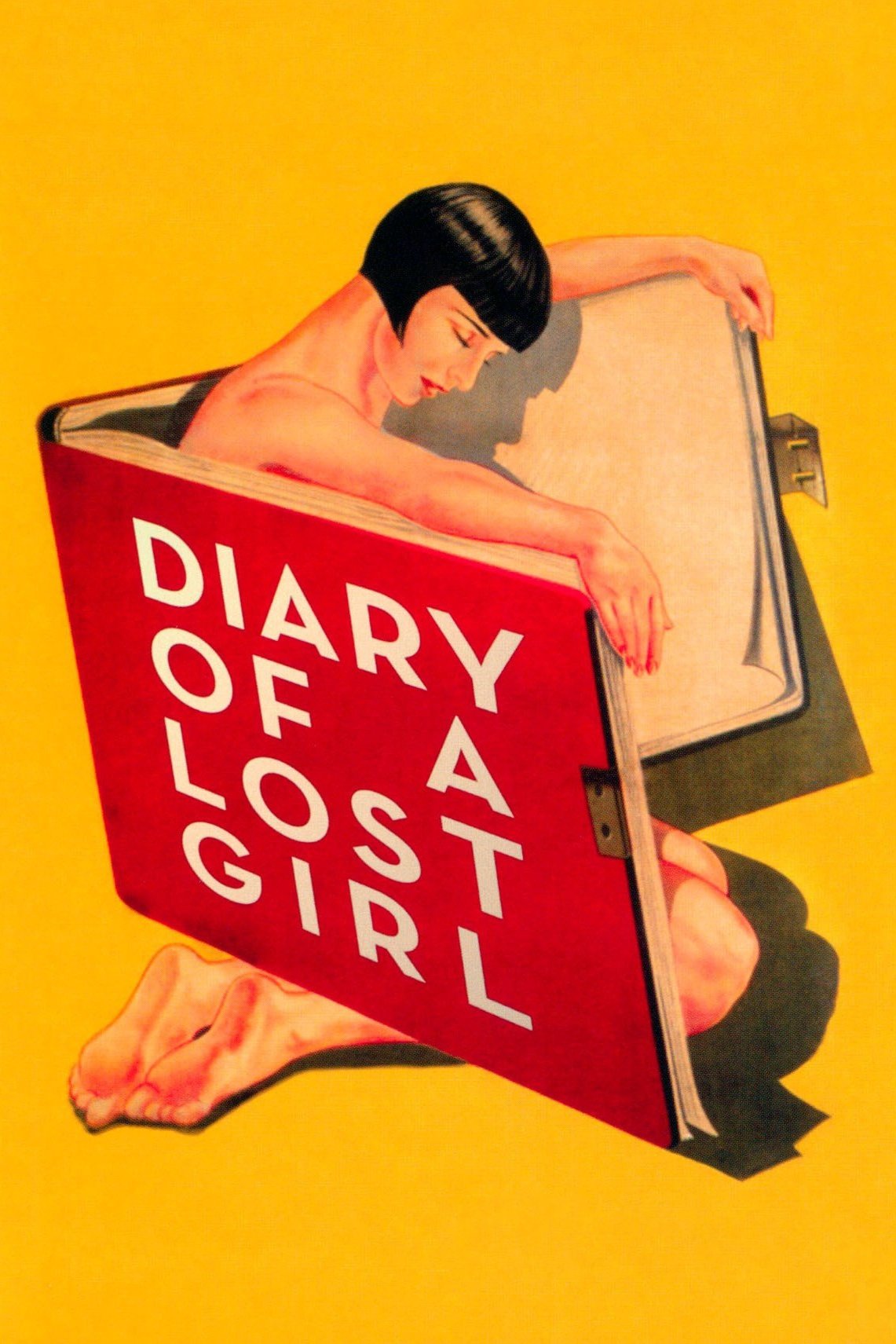
From the first time I sat through the hypnotic images of “Diary of a Lost Girl,” I found myself drawn into a cinematic tradition that feels both literary and visual—a movement I always think of as one of cinema’s most quietly subversive eras. In my view, this film belongs firmly to the tradition of Weimar Cinema, with distinct fingerprints of German Expressionism, but it also moves toward what I see as the more humanist, socially critical side of German silent film that scholars often call “Neue Sachlichkeit” or New Objectivity. Unlike the shadow-draped nightmares of “The Cabinet of Dr. Caligari” or the abstracted monsters of Murnau’s work, “Diary of a Lost Girl,” directed by G.W. Pabst, confronts lived experience with a matter-of-fact clarity that I find both uncomfortable and revelatory. To me, it’s impossible to separate this film from the complex, often ambiguous, psychological and social tendencies that marked Germany’s film culture in the late 1920s—where melodrama, critique, and expressionist flourishes existed side by side within a unique cultural tension. The way the film navigates social issues, moral ambiguity, and emotional realism typifies what made Weimar Cinema so enduringly relevant for me as a film historian.
Historical Origins of the Movement
Reflecting on how Weimar Cinema and its related movements arrived at their artistic convictions, I often consider the environment from which they sprang. For me, the Weimar Republic functioned as both a literal and figurative laboratory for cinematic style: after the devastation of the First World War and the German Revolution, artists and intellectuals found themselves in a world where the ground seemed to shift from under their feet. Out of that uncertainty, German Expressionism splintered into various directions. At the outset, Expressionist film grabbed me with its obsession for psychological depth, distortion, and visual symbolism; shadows danced across sets like manifestations of repressed trauma. But by the mid-1920s, new filmmakers like G.W. Pabst were in search of a way to connect art cinema to social reality, so Neue Sachlichkeit (New Objectivity) emerged. In my reading, New Objectivity arose as a kind of counterpoint to Expressionism’s flair: it was cool where Expressionism was feverish, descriptive where Expressionism was symbolic. Directors such as Pabst and Joe May wanted to expose broken social systems, economic hierarchies, and the everyday dehumanization present in modern society. I find it striking how these films use real locations, unvarnished performances, and scripts that echo contemporary anxieties—the impact of Berlin’s sexual politics, the failures of bourgeois morality, and the relentless machinery of bureaucracy. “Diary of a Lost Girl” is where I see these two trends, Expressionist intensity and New Objectivity’s scrutiny, coming together in a perfectly uneasy marriage.
This Film’s Contribution to the Movement
When I revisit “Diary of a Lost Girl,” I’m consistently struck by how boldly it seizes the tenets of its movement and infuses them with modern urgency. Rather than leaning into Expressionist abstraction, I found the film’s imagery and psychological complexness to operate in a more muted, yet harrowing, register. What makes Pabst’s direction stand out for me is the gaze it directs not at monsters in the dark, but at the suffocating pressures of everyday society—pointing his camera toward institutions like the family, the state, and the reformatory. Each shot feels meticulously calibrated to translate internal distress into cinematic language: Louise Brooks’s face, with its minimal gestures and understated agony, becomes a silent protest against a world determined to punish women for their sexuality and vulnerability.
I think it’s essential to acknowledge how this film mines a very raw vein of realism, but does so with a sensitivity to atmosphere and subjective perspective that keeps it from veering into plain social realism. As a film historian, I’ve always admired the way Pabst constructs environments with painterly detail—the stifling orderliness of the bourgeois house, the mechanistic coldness of the institution, the fleeting moments of camaraderie among the women in the reformatory. These aren’t just backdrops; in my eyes, they are psychological spaces, echoing the protagonist’s isolation and resistance. It’s this dialectic between exterior world and internal experience that, for me, allows “Diary of a Lost Girl” to crystallize a movement in transition. While it inherits elements of Expressionist mise-en-scène (purposeful lighting, expressive set design), my reading is that it privileges clarity and emotional directness—precisely the hallmarks of New Objectivity. Watching the film, I sense the constraints and injustices tightening like a noose, and yet, through Brooks’s performance and Pabst’s measured style, there’s a quiet insistence that some form of agency is possible, no matter how fragile.
Above all, I find “Diary of a Lost Girl” to be a crucial text in the evolution of the “fallen woman” narrative in 20th-century cinema. Rather than trafficking in moralizing spectacle, it forces me as a viewer to interrogate the social structures that manufacture its tragedies—be it patriarchy, institutional authority, or the relentless policing of female autonomy. The film wields ambiguity with purpose; there are no easy villains, only systems and conventions grinding individuals down. It is this refusal to yield to either sensationalism or sentimentality that, in my experience, places “Diary of a Lost Girl” at the threshold of multiple movements: never quite abandoning the visual vocabulary of Expressionism, pushing for the lucidity and focus of New Objectivity, and always—always—anchored in a quest to make cinema matter.
Influence on Later Genres and Films
- Influence 1 – Reimagining Female Agency: When I reflect on the many cinematic descendants of Weimar Cinema’s socially critical strain, it’s evident how “Diary of a Lost Girl” endows later depictions of women’s resistance—especially films about fallen or ostracized women—with a new layer of psychological complexity. Directors like Rainer Werner Fassbinder and Chantal Akerman, decades later, would carry forward this spirit of critical introspection. For me, the kinship between Brooks’s stoic suffering and, say, Hanna Schygulla’s roles in Fassbinder’s melodramas is unmistakable. I see “Diary of a Lost Girl” as an ancestor to the subversive women’s pictures of mid-century Hollywood (Pixote, Mildred Pierce) and even to independent films that challenge the status quo around female desire and autonomy.
- Influence 2 – Realism and Social Critique in European Art Cinema: As I track the aftershocks of New Objectivity’s approach, I can’t help but notice how its cool-eyed realism and ruthless honesty about social systems became core tenets of Italian Neorealism. Though separated by a decade and a war, I often draw connections in my writing between the depiction of suffering, injustice, and survival in “Diary of a Lost Girl” and the everyday struggles found in Rossellini’s “Rome, Open City” or De Sica’s “Bicycle Thieves.” Both movements leverage realism not as a fetish for authenticity, but as a tool for critical engagement and empathy—a legacy I see originating in the best Weimar films.
- Influence 3 – Aesthetic Blending of Subjectivity and Social Critique: Another influence that I’ve tracked is the willingness to combine visual lyricism with sociopolitical observation—a trait that later flourished in the French New Wave and beyond. Watching “Diary of a Lost Girl,” I often think of the way later auteurs like Jean-Luc Godard or Agnès Varda use camera movement, editing, and performance to question not just society, but the act of looking itself. Pabst’s juxtaposition of stylized images with documentary-like environments, in my eyes, paved the way for cinema that can be both poetic and unflinchingly aware, always negotiating between the personal and the collective.
The Movement’s Lasting Impact
Whenever I revisit the era of Weimar Cinema—and particularly films like “Diary of a Lost Girl”—I’m reminded of how deeply this moment in film history continues to shape my understanding of what movies can do. The persistent tension between expression and objectivity, between stylization and social critique, has never felt to me like an old debate; rather, it is a living dialogue that stretches through contemporary cinema. I’m often moved by how New Objectivity’s obsession with systems, failures, and small acts of resistance finds echoes in so much global filmmaking: from postwar Japanese melodrama to British kitchen-sink realism, and even in the subtext of modern auteurs confronting the ties between self and society.
I think the importance of this movement lies in its capacity to hold up a mirror—not just to the era that produced it, but to every viewer who encounters its images anew. The questions Pabst poses about shame, complicity, and the possibility of dignity in a world structured by cruelty are questions I still find unsettlingly relevant. These films don’t resolve the contradictions of modernity; they help me recognize them, sit with them, and acknowledge the contours of despair and hope that define both history and art. In short, my study of Weimar Cinema—and my repeated encounters with “Diary of a Lost Girl”—continue to convince me that film movements do not belong to the past, but exist as ongoing provocations, inviting each generation to look harder, feel deeper, and imagine otherwise.
To connect style and technique with broader context, you may find these perspectives useful.
🎬 Check out today's best-selling movies on Amazon!
View Deals on Amazon