
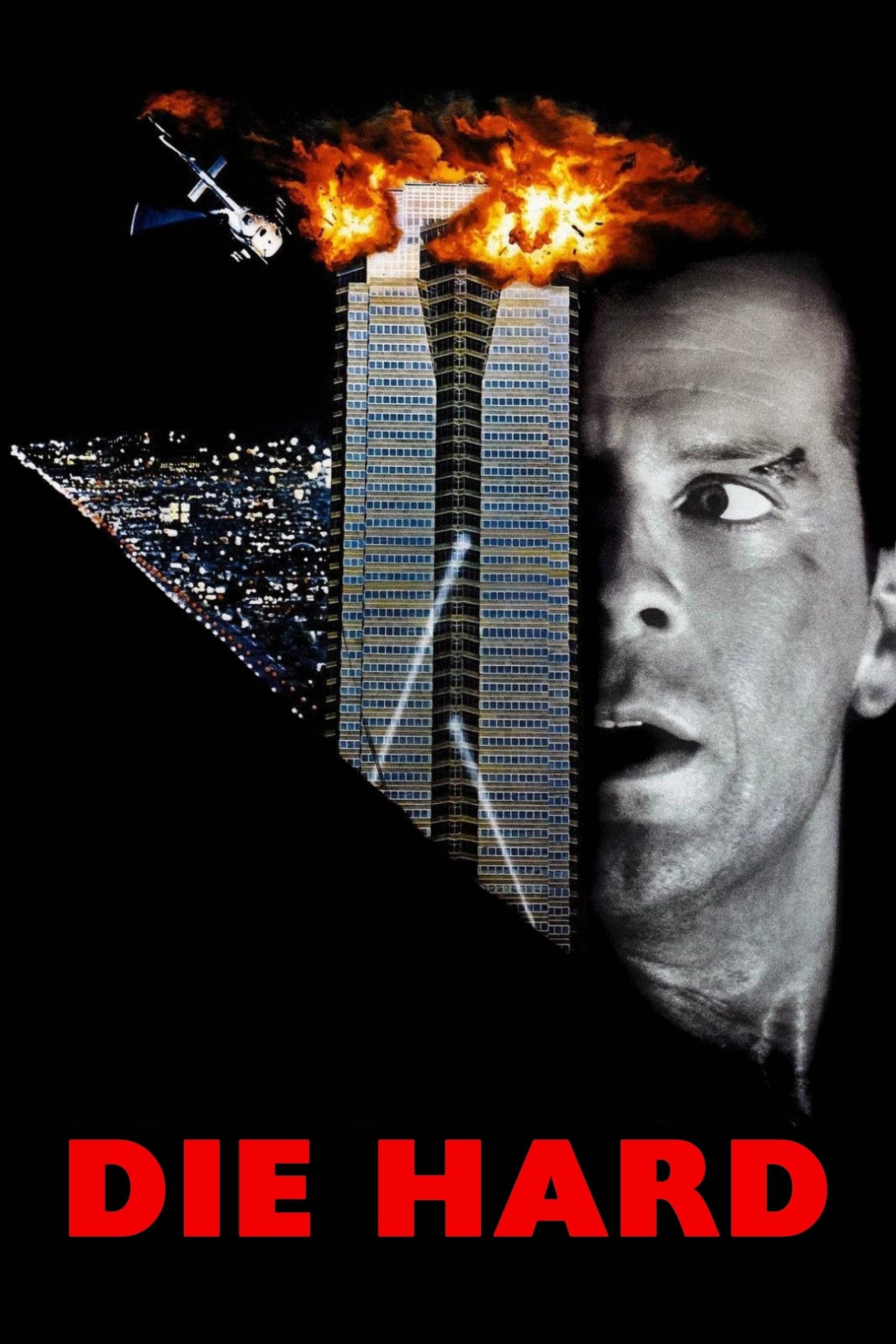
The Genre of This Film
Every time I revisit “Die Hard,” I’m struck by an almost electric recognition—this is, without a doubt, a pure action film, arguably one of the definitive examples of the genre in the last quarter of the twentieth century. For me, the essence of what places “Die Hard” so squarely in the action category is the film’s commitment to relentless tension, physical danger, and that pulse-pounding emotional rollercoaster. It’s not just bullets or explosions for the sake of spectacle; “Die Hard” brings every genre hallmark crashing together within the tight, pressure-cooker setting of a single building. I see it as a film that doesn’t flirt with action convention—it invents new standards, fusing suspense, heroism, and physical peril into a single, gripping event. The continual dance between peril and triumph, driven by visceral, tangible stakes, leaves me with no doubt: this film belongs at the very heart of the action genre.
Key Characteristics of the Genre
- Common themes
- Typical visual style
- Narrative structure
- Character archetypes
I notice that action films thrive on the theme of the individual pitted against overwhelming odds. It’s a genre that’s almost obsessed with resilience—the protagonist, no matter how battered, defiant, or outnumbered, finds a way to survive and fight back. I often see motifs of justice, personal sacrifice, and a commitment to righting wrongs, even when doing so comes at great risk. In my view, another recurring theme in the best examples is the tension between ordinary life and sudden, extraordinary violence. When I watch an action film, I sense this genre channeling primal emotions: fear, courage, and the instinct to protect.
One of the signatures I instantly recognize in action films is their kinetic energy—camera movements that mirror the urgency of the story, tight editing that never lets the adrenaline flag, and an unmistakable partnership between stunts and cinematography. I’m always drawn to the way these films use physical spaces: narrow corridors, sweeping cityscapes, or, as in “Die Hard,” a single skyscraper. Lighting tends toward high-contrast, chilly blues or warming ambers, depending on whether the scene is meant to emphasize danger or relief. Squibs, practical effects, and shattered glass are not just visual noise in this genre—they’re essential punctuation marks that give every moment impact. For me, the true action film stands apart in its refusal to let the audience’s attention settle for even a moment.
In my personal experience, action films build their stories on a foundation of clear, escalating conflict. I find that the action genre rarely indulges in intricate, multi-layered timelines or abstract mysteries; instead, it’s all about the clock ticking down, the stakes getting higher, and the threat growing more immediate. There’s a satisfying clarity to it: protagonist, antagonist, ticking time bomb (sometimes literally). The genre, as I see it, respects the three-act structure but amplifies it—introducing the ordinary world, detonating it, then forcing the hero’s hand. For me, the genre’s narrative power comes from its focus on progression: every action has consequence, and each confrontation brings the climax closer.
What I love as I look across action films is their devotion to familiar, almost mythic character types. There’s usually the everyman hero—relatable, reluctant, fiercely resourceful. He’s no superhuman; in fact, I’m drawn most to action protagonists because they’re battered, vulnerable, and internally conflicted. There’s always a nemesis cut from a different cloth: calculating, charismatic, sometimes nihilistic, often with motives that mirror and distort the protagonist’s sense of justice. Supporting the hero, I consistently see allies (often underused or unexpectedly courageous) and authority figures— frequently skeptical, incompetent, or, at times, actively obstructive. The action genre, to me, is built on moral clarity; I almost always know who to root for and why, and that clarity provides ballast for the chaos on screen.
How This Film Exemplifies the Genre
When I think of “Die Hard,” what stands out most to me is how it doesn’t just fit into the action genre—it redefines it. Bruce Willis’s John McClane isn’t a superhero; he’s bloodied, bruised, constantly on the verge of collapse, yet never gives up. That vulnerability draws me in every time, because I recognize, in his struggle, something fundamentally human about the action hero’s journey—this isn’t just about pyrotechnics, but about pushing through seemingly impossible odds. The tight, vertical arena of Nakatomi Plaza feels like a crucible. The building’s claustrophobic halls and vertiginous heights turn every chase and gunfight into a pointed exercise in terror and ingenuity. It’s not only about who’s got the bigger gun—it’s about whose nerves hold out longer under pressure.
I’m particularly fascinated by the way the film manages tension. The script refuses to offer easy outs. Every setback for McClane is a physical and emotional blow—he’s battered by glass, isolated from help, taunted ceaselessly by Alan Rickman’s Hans Gruber, who, in my eyes, is one of the most riveting antagonists in action cinema. Rickman’s villainy isn’t overtly sadistic; instead, his elegance masks a ruthless pragmatism, and for me, that makes his confrontations with McClane electric. The supporting cast—hostages, police, fellow criminals—are chess pieces in a conflict mapped with deadly precision. Even the LAPD’s outside perspective provides both comic relief and a grindstone for McClane’s ingenuity: he receives no real assistance from the outside, which amplifies the genre’s focus on self-reliant heroism.
Yet beneath the gunfire and explosions, I find myself returning to a subtler facet of what makes “Die Hard” such a textbook action film. The script inserts moments of dark humor and emotional confession, giving McClane dimension that many earlier action protagonists lacked. I’m always struck by the vulnerability he displays in moments alone—on the radio with a sympathetic cop, gasping out regrets. The tension operates on dual levels: the external, physical danger and the internal, emotional struggle add up to what I regard as an exceptionally rich action narrative.
Ultimately, my experience with “Die Hard” is shaped most by pacing—set piece after set piece, each logically growing out of the one before, never losing momentum, never letting me catch my breath until the final, cathartic release. This is action cinema at its most distilled, and the very qualities that define the genre are present in pure form here—moral stakes, explosive tension, physical duress, and triumphant (if battered) heroism.
Other Essential Films in This Genre
- Lethal Weapon (1987) – For me, “Lethal Weapon” fuses the buddy cop formula with the explosive set pieces and relentless pacing I expect in action cinema. The raw chemistry between Mel Gibson’s unpredictable Martin Riggs and Danny Glover’s world-weary Roger Murtaugh is so central to the film’s energy that I can’t help but view it as a touchstone for all subsequent action duos. Every shootout and chase scene is charged by their clashing philosophies about violence and order, making it a genre essential in my eyes.
- First Blood (1982) – When I watch “First Blood,” I see a film that emphasizes the isolation and survival elements that run deep in action storytelling. Sylvester Stallone’s John Rambo is a very different action hero—wounded by war, misunderstood by authority, forced to fight back not for glory but in sheer desperation. To me, the wilderness setting becomes its own adversary, and the escalating conflict with small-town law enforcement highlights the “one against many” motif that I’ve always found so compelling in action narratives.
- Speed (1994) – “Speed,” for my money, updates the action genre’s core thrill—a protagonist locked in an escalating, time-bound crisis. Keanu Reeves and Sandra Bullock are thrown together under duress on a bomb-rigged city bus, and what grips me is the film’s ingenious use of geography. The endlessly perilous, ever-moving bus becomes a crucible for both ingenuity and endurance, exemplifying the genre’s penchant for trapping its characters in nearly inescapable scenarios and watching them claw their way out.
- Commando (1985) – If there’s a film that embodies the larger-than-life action hero for me, it’s “Commando.” Arnold Schwarzenegger’s John Matrix is unstoppable, dispatching endless waves of adversaries to rescue his kidnapped daughter. What I find so quintessentially action about this film is its unambiguous sense of justice, hyperbolic violence, and the sheer muscular bravado of its set pieces. There’s little subtlety, but a relentless energy that encapsulates much of what genre fans crave.
Why This Genre Continues to Endure
As someone continually drawn back to action cinema, I often find myself asking why these films—year after year, decade after decade—never lose their appeal. What I’ve come to believe is that the action genre taps into something basic and universal: the urge to survive, to protect, to overcome fear and impossibility. These are emotions that cross boundaries of language or culture, and for me, the best action films distill them into visual and emotional shorthand. No matter how wild their premises or stylized their set pieces, I feel consistently invested in the peril and catharsis they promise.
There’s also something about the genre’s structure that, to my mind, makes it endlessly rewatchable. The rhythm of suspense and release, the carefully engineered escalation, the clockwork of stakes—all of this puts me in a space where adrenaline and empathy work hand in hand. I also think that the action film’s tradition of flawed, reluctant, or “everyman” protagonists makes the fantasy accessible. Unlike superheroes, these heroes bleed, sweat, improvise, and fail, sometimes spectacularly. When I see John McClane hopping barefoot over shattered glass, I’m reminded that the essence of heroism lies not in invincibility, but endurance and adaptability in the face of chaos.
Through decades of sequels, remakes, and reinventions, I notice that action films often mirror back to us the dangers, uncertainties, and anxieties of our times. Whether the threat is personal (as in “Die Hard”), communal, or global, I see the genre doing something remarkable: offering us short, thrilling blueprints for maintaining courage amid the unthinkable. It’s in these moments—when disaster feels imminent and impossible, and a hero rises to meet it—that I find the roots of the genre’s enduring popularity. That has kept me returning to films like “Die Hard” with the same sense of exhilaration year after year, always ready for one more wild ride.
If you’re interested in how viewers respond beyond technique, you may want to explore audience and critical reception.
🎬 Check out today's best-selling movies on Amazon!
View Deals on Amazon